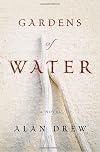
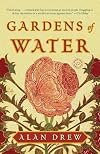
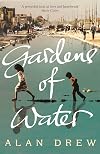
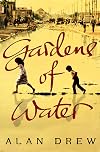
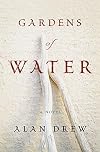
Gardens of Water
by Alan Drew
On This Page
Description
Fiction. Literature. HTML:Powerful, emotional, and beautifully written, Alan Drew's stunning first novel brings to life two unforgettable families–one Kurdish, one American–and the sacrifice and love that bind them together.In a small town outside Istanbul, Sinan Basioglu, a devout Muslim, and his wife, Nilüfer, are preparing for their nine-year-old son's coming-of-age ceremony. Their headstrong fifteen-year-old daughter, ?rem, resents the attention her brother, Ismail, receives from show more their parents. For her, there was no such festive observance–only the wrapping of her head in a dark scarf and strict rules that keep her hidden away from boys and her friends. But even before the night of the celebration, ?rem has started to change, to the dismay of her Kurdish father. What Sinan doesn't know is that much of her transformation is due to her secret relationship with their neighbor, Dylan, the seventeen-year-old American son of expatriate teachers.
?rem sees Dylan as the gateway to a new life, one that will free her from the confines of conservative Islam. Yet the young man's presence and Sinan's growing awareness of their relationship affirms Sinan's wish to move his family to the safety of his old village, a place where his children would be sheltered from the cosmopolitan temptations of Istanbul, and where, as the civil war in the south wanes, he hopes to raise his children in the Kurdish tradition.
But when a massive earthquake hits in the middle of the night, the Basioglu family is faced with greater challenges. Losing everything, they are forced to forage for themselves, living as refugees in their own country. And their survival becomes dependent on their American neighbors, to whom they are unnervingly indebted. As love develops between ?rem and Dylan, Sinan makes a series of increasingly dangerous decisions that push him toward a betrayal that will change everyone's lives forever.
The deep bonds among father, son, and daughter; the tension between honoring tradition and embracing personal freedom; the conflict between cultures and faiths; the regrets of age and the passions of youth–these are the timeless themes Alan Drew weaves into a brilliant fiction debut. show less
Tags
Recommendations








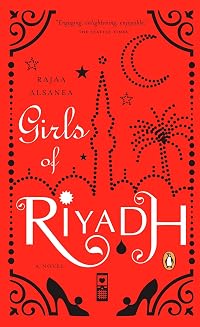
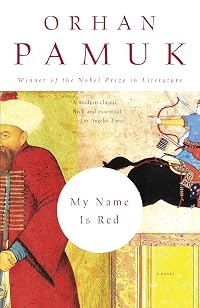

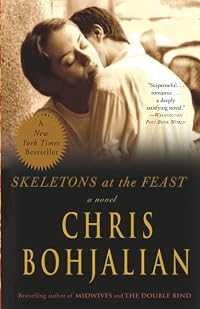
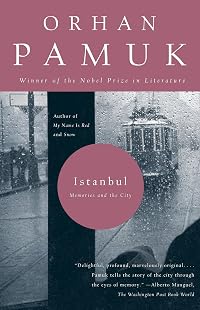






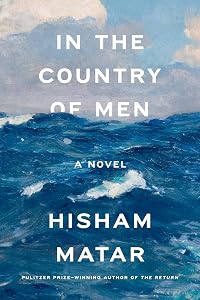
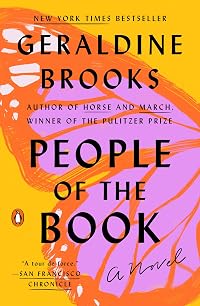

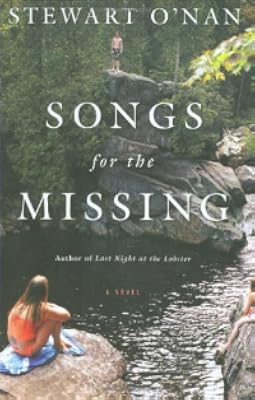
Member Recommendations

Limelite The life of a modern Cairo Muslim family, heartwarming, full of conflict, but also of the ties that bind. More uplifting portrayal of Islam than in "Gardens of Water."
Member Reviews
An earthquake in Turkey displaces two families who lived in the same apartment building, connecting them forever at that moment in time, yet creating an unbridgeable distance between them. In a sense, both families were already displaced when the earthquake hit. Sinan Basioglu and his family are Kurds living outside the Kurdish homeland, while Marcus Hamm and his family are Americans affiliated with an American missionary school.
The teenage romance between Sinan's daughter, Irem, and Marcus's son, Dylan, is predictably tragic. The Hamm family's effect on Sinan's young son, Ismail, is more surprising. Points of tension include Muslim and Christian, fundamentalist and moderate, East-West/Europe-Asia, American worldview vs. Middle Eastern show more worldview, parents and children, male and female. This novel illuminates cultural divides without imagining resolutions for them. show less
The teenage romance between Sinan's daughter, Irem, and Marcus's son, Dylan, is predictably tragic. The Hamm family's effect on Sinan's young son, Ismail, is more surprising. Points of tension include Muslim and Christian, fundamentalist and moderate, East-West/Europe-Asia, American worldview vs. Middle Eastern show more worldview, parents and children, male and female. This novel illuminates cultural divides without imagining resolutions for them. show less
Seven years ago, Sinan, his wife Nilüfer, his daughter Irem, and his son Ismail moved from their village in Southeast Turkey to the larger city of Gölcük to avoid the dangers of war. Sinan and his family are Kurds and have continued to live as devout Muslims in Gölcük, but when an earthquake hits, they must move into a refugee camp run by Americans, and Irem begins to resist her father’s restrictions. The tensions between Islam and Christianity, traditional and modern, father and daughter play out as the family attempts to piece their lives back together.
Overall, I enjoyed this book. Drew tells a compelling story. The plot moves along quickly. The details about the context, the war, and the earthquake are nicely integrated with show more the story. And the two primary characters Sinan and Irem are complex and well-detailed. Neither is the hero, neither is the villain. They are simply a father and a daughter struggling to understand each other and to figure out how to live in a complex world.
My one complaint is that the other characters in the book were not as complex as Sinan and Irem. Both Ismail and Nilüfer are integral to the story, yet each is somewhat one-dimensional.
But overall, this is an excellent debut novel. show less
Overall, I enjoyed this book. Drew tells a compelling story. The plot moves along quickly. The details about the context, the war, and the earthquake are nicely integrated with show more the story. And the two primary characters Sinan and Irem are complex and well-detailed. Neither is the hero, neither is the villain. They are simply a father and a daughter struggling to understand each other and to figure out how to live in a complex world.
My one complaint is that the other characters in the book were not as complex as Sinan and Irem. Both Ismail and Nilüfer are integral to the story, yet each is somewhat one-dimensional.
But overall, this is an excellent debut novel. show less
This book started off so well. I love historical, and cultural fiction. This story immerses us in Turkey within the life of a Kurdish Muslim family and their American neighbors. I liked the romance between Irem and Dylan and how she struggled with her Muslin beliefs and her desire to be more freedom in the male-dominated Muslim social/cultural system.
The earthquake hits, and everyone's life is turned upside down. However, it gives Irem some more freedom, and she takes the chance to enjoy this silver lining amidst the chaos and turmoil of her family's near-homelessness. She still struggles, of course, not just with herself, but her parents, especially her mother, who frankly, comes off at times as something that rhymes with 'witch'.
I show more found myself appalled and tuned off by the ending. For a story that I was enjoying so much with its descriptions of life in a different land as well as coping with a earthquake and the aftermath of it, the ending was like driving a car head-on into a wall. I didn't expect the ending to be all lovey-happy-dappy, but Dylan intoxicated Irem with alcohol and then raped her, and then she killed herself. I mean, wtf? When she comes back to her parents crying about being raped, her mother coldly turns her away, and her father actually contemplated killing her! I was hoping for some sort of solution that while not perfect, was workable, and instead all i got was this. The only reason I didn't give this book just one star was because the writing/prose itself is good. show less
The earthquake hits, and everyone's life is turned upside down. However, it gives Irem some more freedom, and she takes the chance to enjoy this silver lining amidst the chaos and turmoil of her family's near-homelessness. She still struggles, of course, not just with herself, but her parents, especially her mother, who frankly, comes off at times as something that rhymes with 'witch'.
I show more found myself appalled and tuned off by the ending. For a story that I was enjoying so much with its descriptions of life in a different land as well as coping with a earthquake and the aftermath of it, the ending was like driving a car head-on into a wall. I didn't expect the ending to be all lovey-happy-dappy, but Dylan intoxicated Irem with alcohol and then raped her, and then she killed herself. I mean, wtf? When she comes back to her parents crying about being raped, her mother coldly turns her away, and her father actually contemplated killing her! I was hoping for some sort of solution that while not perfect, was workable, and instead all i got was this. The only reason I didn't give this book just one star was because the writing/prose itself is good. show less
So many losses occur in this multi-layered book, beginning with the earthquake that crumbled buildings, society, and family connections in an Istanbul suburb before the millenium.
The characterization of Sinan was faultless. I never thought I could feel the pain of a Muslim man, but his essence was convincingly conveyed despite its many facets. In his heart, he knew the Americans were a threat to his Kurdish way of life, but the obligation of his son's life overruled his doubts and caused him to let his guard down. His emotional conflicts were as distressing to me as was his male pride and poor treatment of his daughter.
Most distressing, however, was the surreptitious religious imperialism. The prejudices and judgments that often show more accompany organized religion showed up in the "relief" camps. People who had lost everything now had their traditions and beliefs questioned, resulting in the ultimate degradation. With all this upheaval, it was no wonder that Irem (Sinan's 15-year-old daughter) was so confused by her first small taste of freedom and the attention of an equally confused American teen.
What a spellbinding book. I was transported to a fascinating and complicated part of the world. My understanding of this bewildering culture was greatly enriched by the author's comments at the end. I highly recommend Alan Drew's well-researched and heartfelt first novel. show less
The characterization of Sinan was faultless. I never thought I could feel the pain of a Muslim man, but his essence was convincingly conveyed despite its many facets. In his heart, he knew the Americans were a threat to his Kurdish way of life, but the obligation of his son's life overruled his doubts and caused him to let his guard down. His emotional conflicts were as distressing to me as was his male pride and poor treatment of his daughter.
Most distressing, however, was the surreptitious religious imperialism. The prejudices and judgments that often show more accompany organized religion showed up in the "relief" camps. People who had lost everything now had their traditions and beliefs questioned, resulting in the ultimate degradation. With all this upheaval, it was no wonder that Irem (Sinan's 15-year-old daughter) was so confused by her first small taste of freedom and the attention of an equally confused American teen.
What a spellbinding book. I was transported to a fascinating and complicated part of the world. My understanding of this bewildering culture was greatly enriched by the author's comments at the end. I highly recommend Alan Drew's well-researched and heartfelt first novel. show less
 This review was written for LibraryThing Early Reviewers.
A terrific debut novel about a conservative Kurdish family in transition in Turkey -- geographic transition, due first to military instability and then an earthquake; and cultural transition, initially sandwiched between Islamic fundamentalists and secularists, then among Western (American) Christians.
Alan Drew develops sympathetic and true characters, and his writing style, sprinkling of foreign-language terms, and evocative settings immerse the reader in 1999 Turkey (on a par with Khaled Hosseini's style). Short chapters and alternating viewpoints (a father and his 15-year-old daughter) keep the story moving, though at a leisurely pace until the final 75 pages.
This novel entertained and informed me, but it also did the best thing a show more book can do: it inspired me to learn more -- outside of the story -- by seeking and exploring additional sources on my own. Highly recommended! show less
Alan Drew develops sympathetic and true characters, and his writing style, sprinkling of foreign-language terms, and evocative settings immerse the reader in 1999 Turkey (on a par with Khaled Hosseini's style). Short chapters and alternating viewpoints (a father and his 15-year-old daughter) keep the story moving, though at a leisurely pace until the final 75 pages.
This novel entertained and informed me, but it also did the best thing a show more book can do: it inspired me to learn more -- outside of the story -- by seeking and exploring additional sources on my own. Highly recommended! show less
This review was written for LibraryThing Early Reviewers.It always amazes me that after a disaster, such as this earthquake, religious people thank God and call him merciful for sparing them. Where is the mercy in allowing the earthquake at all? In fact, I would like to ask intelligent design advocates of the intelligence behind hurricanes, tornados, and earthquakes. This novel is full of people thanking a merciful God without much thought to the lack of mercy shown to the more than 17,000 people crushed in the terrible 1999 Marmara earthquake and its aftershocks.
At times I was annoyed at the Christians using a disaster as an opportunity to convert people who only want to be left alone. During a conversation between father (Sinan) and his son, Ismael, Sinan asks himself if there is any place show more we can be left alone. In an interview with the author, he reflects on his visit to Turkey. He arrived four days before the quake, and he seems to chide the Christians for taking advantage of desperate people, yet he places words in the mouth of Marcus, a relief worker, who also tries to convert Ismael, that seems to excuse his behavior, claiming he was only offering hope to the young boy, who was depressed and suffering over all the loss of life around him.
What Drew has done is subtly hint that Christianity is better than Islam because the latter offers no hope. I wonder if this is an example of Christian fiction I have assiduously avoided. I have always been staunchly against missionaries. They have caused enormous damage to cultures, art, artifacts and whole populations over the last 2,000 years. Why missionaries believe they can simply go to a village, or a city, or a foreign country and tell native peoples what they have believed for generations is all wrong, but the missionaries have the correct answer, never ceases to mystify me.
This novel is the third I have read recently in which the characters refer to his or her father as “Baba.” Pashtuns in 20th century Afghanistan, Chinese peasants in the early 19th century, and now Kurds in Turkey in the 1990s. It is also the third recent read which describes the horrific treatment of women and female children at the hands of males, including fathers and brothers. Ismael and his sister try to break out of the family traditions with an innocent view of the world, life, and love. But this is the ultimate loss that so threatens the Muslim world. If their children turn away from the old ways and the old beliefs, Islam has no future in the eyes of the Muslim fundamentalists. This inability to accept an updating of their beliefs, and acceptance of some modern ways, has stunted growth in the Middle East. These people are refusing to accept the birth pangs of a new way of looking at the world, which the West endured during the Renaissance to throw off the stranglehold the Catholic Church held over Europe in the Middle Ages.
The description of the earthquake is gripping, the exploration of Sinan’s anguish at his losses, are touching, and overall, Alan Drew has written an interesting story, but he is no Orhan Pamuk, the recent Nobel Prize winning author from Turkey. Four stars of five.
--Jim, 2/24/08 show less
At times I was annoyed at the Christians using a disaster as an opportunity to convert people who only want to be left alone. During a conversation between father (Sinan) and his son, Ismael, Sinan asks himself if there is any place show more we can be left alone. In an interview with the author, he reflects on his visit to Turkey. He arrived four days before the quake, and he seems to chide the Christians for taking advantage of desperate people, yet he places words in the mouth of Marcus, a relief worker, who also tries to convert Ismael, that seems to excuse his behavior, claiming he was only offering hope to the young boy, who was depressed and suffering over all the loss of life around him.
What Drew has done is subtly hint that Christianity is better than Islam because the latter offers no hope. I wonder if this is an example of Christian fiction I have assiduously avoided. I have always been staunchly against missionaries. They have caused enormous damage to cultures, art, artifacts and whole populations over the last 2,000 years. Why missionaries believe they can simply go to a village, or a city, or a foreign country and tell native peoples what they have believed for generations is all wrong, but the missionaries have the correct answer, never ceases to mystify me.
This novel is the third I have read recently in which the characters refer to his or her father as “Baba.” Pashtuns in 20th century Afghanistan, Chinese peasants in the early 19th century, and now Kurds in Turkey in the 1990s. It is also the third recent read which describes the horrific treatment of women and female children at the hands of males, including fathers and brothers. Ismael and his sister try to break out of the family traditions with an innocent view of the world, life, and love. But this is the ultimate loss that so threatens the Muslim world. If their children turn away from the old ways and the old beliefs, Islam has no future in the eyes of the Muslim fundamentalists. This inability to accept an updating of their beliefs, and acceptance of some modern ways, has stunted growth in the Middle East. These people are refusing to accept the birth pangs of a new way of looking at the world, which the West endured during the Renaissance to throw off the stranglehold the Catholic Church held over Europe in the Middle Ages.
The description of the earthquake is gripping, the exploration of Sinan’s anguish at his losses, are touching, and overall, Alan Drew has written an interesting story, but he is no Orhan Pamuk, the recent Nobel Prize winning author from Turkey. Four stars of five.
--Jim, 2/24/08 show less
This review was written for LibraryThing Early Reviewers.In the debut novel Gardens Of Water, an earthquake, both physically and metaphorically, shatters the lives of two very different families. This collision sets the families on a path of sacrifice and pain so deep the reader is compelled to continue, hoping for happy ending, yet unable to imagine what that resolution might look like.
Sinan, a devout Kurdish Muslim, lives with his wife, teenage daughter, and young son outside the city of Istanbul. In the apartment above them lives an American Christian, Marcus, with his own wife and teenaged son. After a party celebrating Sinan’s son’s entry to manhood, a devastating earthquake strikes. The earthquake does more than destroy these two families’ homes; it destroys everything each man show more holds dearest.
Soon Sinan’s family is living in an American refugee camp where Marcus attempts to befriend them. What was once an innocent flirtation between the two teenagers turns into a dangerous march toward rebellion. Their story is in some ways so typical of any teen love story, yet so much more dangerous in their setting. As his daughter’s rebellion swells and his son’s nightmares unfurl, Sinan labors to gather funds in order to return his family to the unspoiled small-town of his youth. There, Sinan believes, he can protect his family from Western influences. But, as the teen lovers hover dangerously close to an edge, the tension builds like a wall of loose brick awaiting another earthquake. The reader knows it’s coming, can feel the little aftershocks; yet when the proverbial earthquake happens, the reader is devastated along with the characters left standing.
Gardens Of Water might first appear a convoluted read, but the actual reading is so smooth and well driven one forgets the multi-layered complications involved in Muslim and Christian relations. The writing is vivid and enlightening with perfectly building tension. The teen scenes are Romeo and Juliet inspired, each heartbeat quickening the tale. My favorite quote from the novel is so very poignant (especially to this empty nest Mom): “Our children are not ours. That is our mistake. We think they are. It seems so for awhile – but they aren’t. They never were.”
This story also provides an exceptional look at the American influence in the world and the Muslim desire to hold onto it’s own traditions. There are enumerable cultural perspectives and the negatives of each religion are evenly portrayed. The appendix of author conversations offers further enlightenment.
Gardens Of Water is a brilliant story to be especially enjoyed by lovers of historical fiction, or those enjoying themes of conflict between religion, culture and modern ideals, or remorse for past decisions, or the blossoming danger of forbidden love.
Review first published on Many A Quaint & Curious Volume show less
Sinan, a devout Kurdish Muslim, lives with his wife, teenage daughter, and young son outside the city of Istanbul. In the apartment above them lives an American Christian, Marcus, with his own wife and teenaged son. After a party celebrating Sinan’s son’s entry to manhood, a devastating earthquake strikes. The earthquake does more than destroy these two families’ homes; it destroys everything each man show more holds dearest.
Soon Sinan’s family is living in an American refugee camp where Marcus attempts to befriend them. What was once an innocent flirtation between the two teenagers turns into a dangerous march toward rebellion. Their story is in some ways so typical of any teen love story, yet so much more dangerous in their setting. As his daughter’s rebellion swells and his son’s nightmares unfurl, Sinan labors to gather funds in order to return his family to the unspoiled small-town of his youth. There, Sinan believes, he can protect his family from Western influences. But, as the teen lovers hover dangerously close to an edge, the tension builds like a wall of loose brick awaiting another earthquake. The reader knows it’s coming, can feel the little aftershocks; yet when the proverbial earthquake happens, the reader is devastated along with the characters left standing.
Gardens Of Water might first appear a convoluted read, but the actual reading is so smooth and well driven one forgets the multi-layered complications involved in Muslim and Christian relations. The writing is vivid and enlightening with perfectly building tension. The teen scenes are Romeo and Juliet inspired, each heartbeat quickening the tale. My favorite quote from the novel is so very poignant (especially to this empty nest Mom): “Our children are not ours. That is our mistake. We think they are. It seems so for awhile – but they aren’t. They never were.”
This story also provides an exceptional look at the American influence in the world and the Muslim desire to hold onto it’s own traditions. There are enumerable cultural perspectives and the negatives of each religion are evenly portrayed. The appendix of author conversations offers further enlightenment.
Gardens Of Water is a brilliant story to be especially enjoyed by lovers of historical fiction, or those enjoying themes of conflict between religion, culture and modern ideals, or remorse for past decisions, or the blossoming danger of forbidden love.
Review first published on Many A Quaint & Curious Volume show less
This review was written for LibraryThing Early Reviewers.Members
- Recently Added By
Lists

The Immigrant's Stories
74 works; 18 members

BingoDOG - Books With Natural Disasters: Fiction
39 works; 11 members
Author Information

7+ Works 713 Members
Common Knowledge
- Canonical title
- Gardens of Water
- Original title
- Gardens of Water
- Original publication date
- 2008
- People/Characters
- Sinan Basioglu; Ismail Basioglu; Nilufer Basioglu; Irem Basioglu; Marcus; Dylan
- Important places
- Turkey
- Dedication
- For Miriam
- First words
- In the rush of bodies to board the ferry leaving Istanbul for Golcuk, Sinan lost his son.
- Last words
- (Click to show. Warning: May contain spoilers.)The donkey was old, its hip bones poking against its graying hide, but for a brief moment, just a few wonderful seconds, the man and his cart sped along faster than the train.
- Blurbers
- Li, Yiyun; Aboulela, Leila
Classifications
Statistics
- Members
- 483
- Popularity
- 62,561
- Reviews
- 50
- Rating
- (3.68)
- Languages
- 6 — Danish, Dutch, English, Finnish, German, Italian
- Media
- Paper, Audiobook, Ebook
- ISBNs
- 30
- ASINs
- 3