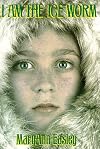
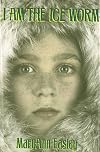
I am the ice worm (Republished as: Alone in the ice world)
by Maryann Easley
On This Page
Description
When the plane carrying her to visit her mother crashes above the Arctic Circle, fourteen-year-old Allison Atwood is rescued by an Inupiat man who takes her back to his village, where she slowly comes to admire their very different way of life.Tags
Recommendations



















Member Reviews
Young Adult Fiction
Protagonist: 14-year-old Allison Atwood
Setting: present-day, an Inupiat village above the Arctic Circle
First Line: The coldest wind I'd ever felt in my life blasted me across the ice.
Allison's parents are divorced. She's been living with her father in southern California, but she's tired of the status quo and decides to hop a plane to visit her mother who's teaching in a small village in Alaska. On the last leg of her journey, the small plane she's in crashes, and the pilot is killed. Allison is stranded out in the ice and snow until she's found by an Inupiat trapper. Allison packs one duffle with her most prized makeup, music and clothes and climbs aboard the sled for the ride to the trapper's home.
Allison is far show more from ready for the intense culture shock. A true child of the ease and comfort of southern California, she can't get used to the smelly, dirty dwelling and the smelly, dirty people. They don't even have a bathroom or running water!
Matu still lived in the Dark Ages as far as I was concerned. He'd never even eaten a pizza or ridden a surfboard or gone to Disneyland. He had a blank look on his face when I told him about some of my favorite rock groups.
After a few days have passed, she persuades a young Inupiat boy to hitch his dogs to his sled and take her to the village where her mother is teaching. They don't get far due to the weather. Allison now has to live in a village of people whose ways she does not understand or like. Will she ever be reunited with her mother?
I quite enjoyed this little tale of a young girl learning tolerance and acceotance of a culture so different from her own. I think it's something that everyone should experience at least once in their lives to curtail the onset of self-righteousness and bigotry. show less
Protagonist: 14-year-old Allison Atwood
Setting: present-day, an Inupiat village above the Arctic Circle
First Line: The coldest wind I'd ever felt in my life blasted me across the ice.
Allison's parents are divorced. She's been living with her father in southern California, but she's tired of the status quo and decides to hop a plane to visit her mother who's teaching in a small village in Alaska. On the last leg of her journey, the small plane she's in crashes, and the pilot is killed. Allison is stranded out in the ice and snow until she's found by an Inupiat trapper. Allison packs one duffle with her most prized makeup, music and clothes and climbs aboard the sled for the ride to the trapper's home.
Allison is far show more from ready for the intense culture shock. A true child of the ease and comfort of southern California, she can't get used to the smelly, dirty dwelling and the smelly, dirty people. They don't even have a bathroom or running water!
Matu still lived in the Dark Ages as far as I was concerned. He'd never even eaten a pizza or ridden a surfboard or gone to Disneyland. He had a blank look on his face when I told him about some of my favorite rock groups.
After a few days have passed, she persuades a young Inupiat boy to hitch his dogs to his sled and take her to the village where her mother is teaching. They don't get far due to the weather. Allison now has to live in a village of people whose ways she does not understand or like. Will she ever be reunited with her mother?
I quite enjoyed this little tale of a young girl learning tolerance and acceotance of a culture so different from her own. I think it's something that everyone should experience at least once in their lives to curtail the onset of self-righteousness and bigotry. show less
Comparisons to Hatchet are misleading. Our gal is not alone - she just feels that way until she learns to accept the community's perspective. A tiny bit implausible, maybe, or a tiny bit forced, but still interesting and involving.
14-year-old Allison Atwood is traveling to visit her mother in Alaska when her plane crashes near the Arctic Circle. The pilot is killed, leaving Allison stranded among ice and snow until she's found by an Inupiat trapper. He takes her to his village which is nothing like her home in California. In the village, she learns the meaning of daily hardship and survival.
A story about a girl living with some Eskimo/Inuit people. It's moderately entertaining and not too long.
Grade Levels: 6-9 Category: Realistic Fiction
Read Alouds: pp. 5-11 (Johnny Skye); 18-25 (rescue); 41-51(white-out); 76-86 (sign language); 117-127 (last chapter)
Summary: It is February, 1977 when fourteen-year-old Allison Atwood gets on a bush plane to meet her mother who is a teacher in Northwest Alaska. The plane crashes, killing the pilot, and Allison is rescued by an Inupiat trapper. She travels by dogsled to an Inupiat village where she awaits the mail plane that will take her to the coast and her mother. During her stay, she becomes accustomed to the village and Inupiat ways. She realizes her life has been filled with materialistic things and ideas.
Themes: This novel explores the idea of survival versus comfort. In the very first show more chapter the bush pilot Johnny Syke makes Allison change her boots and coat. Alison is upset by the lack of fashion they have, but they probably save her life after the plane crashes. She learns to eat dried fish and comes to appreciate the beauty and functionality of Matu’s mukluks. Another prevalent idea in this book is the coming together of two cultures. Easley subtlety shows the reader how white interaction has interrupted Inupiat Eskimo culture. Alcohol has poisoned the spirit of Aqsuk. When the men use their snow machines to bring him back to the village, they run out of gas and have to walk. The store that provides them with necessities of the white world burns down. The mail plane is weathered out for many days. These are all examples of white culture that contrast with Ikayauq, the trapper, who lives a much more traditional lifestyle than the villagers.
Discussion Questions:
Discuss how Allison changes from the beginning of the novel to the end of the novel.
Even though Matu is only thirteen, he is treated as a man by his village. Give some examples of why he should be considered a man. Give some examples of how he is still a child.
How does Allison change Oolik’s life? How does the change in Oolik change the village?
Give two examples of how alcohol is a destructive force in this book.
Reader Response: Because I taught Yupik Eskimos (who have a different, but similar culture to the Inupiat) for several years, I really identified with some of the cultural shifts that Allsion had to make in this book. What is interesting to me is that although this story takes place thirty years ago, many things are still the same. Most Eskimos still rely on hunting and trapping for food and fur. Teacher turn-over is very high (at the school I taught at, two teachers left in the middle of the school year). Many villages still do not have running water or flushing toilets. This is a must read for anyone who wishes to live among the Eskimos. show less
Read Alouds: pp. 5-11 (Johnny Skye); 18-25 (rescue); 41-51(white-out); 76-86 (sign language); 117-127 (last chapter)
Summary: It is February, 1977 when fourteen-year-old Allison Atwood gets on a bush plane to meet her mother who is a teacher in Northwest Alaska. The plane crashes, killing the pilot, and Allison is rescued by an Inupiat trapper. She travels by dogsled to an Inupiat village where she awaits the mail plane that will take her to the coast and her mother. During her stay, she becomes accustomed to the village and Inupiat ways. She realizes her life has been filled with materialistic things and ideas.
Themes: This novel explores the idea of survival versus comfort. In the very first show more chapter the bush pilot Johnny Syke makes Allison change her boots and coat. Alison is upset by the lack of fashion they have, but they probably save her life after the plane crashes. She learns to eat dried fish and comes to appreciate the beauty and functionality of Matu’s mukluks. Another prevalent idea in this book is the coming together of two cultures. Easley subtlety shows the reader how white interaction has interrupted Inupiat Eskimo culture. Alcohol has poisoned the spirit of Aqsuk. When the men use their snow machines to bring him back to the village, they run out of gas and have to walk. The store that provides them with necessities of the white world burns down. The mail plane is weathered out for many days. These are all examples of white culture that contrast with Ikayauq, the trapper, who lives a much more traditional lifestyle than the villagers.
Discussion Questions:
Discuss how Allison changes from the beginning of the novel to the end of the novel.
Even though Matu is only thirteen, he is treated as a man by his village. Give some examples of why he should be considered a man. Give some examples of how he is still a child.
How does Allison change Oolik’s life? How does the change in Oolik change the village?
Give two examples of how alcohol is a destructive force in this book.
Reader Response: Because I taught Yupik Eskimos (who have a different, but similar culture to the Inupiat) for several years, I really identified with some of the cultural shifts that Allsion had to make in this book. What is interesting to me is that although this story takes place thirty years ago, many things are still the same. Most Eskimos still rely on hunting and trapping for food and fur. Teacher turn-over is very high (at the school I taught at, two teachers left in the middle of the school year). Many villages still do not have running water or flushing toilets. This is a must read for anyone who wishes to live among the Eskimos. show less
Members
- Recently Added By
Lists

Survival, plane crash -- children's/young adult fiction
112 works; 3 members
Author Information
4 Works 340 Members
Awards and Honors
Common Knowledge
- Canonical title
- I am the ice worm (Republished as: Alone in the ice world) (Republished as: Alone in the ice world)
- Original title
- I am the ice worm
- Disambiguation notice
- I am the ice worm (Republished as: Alone in the ice world)
Classifications
Statistics
- Members
- 337
- Popularity
- 94,209
- Reviews
- 7
- Rating
- (3.23)
- Languages
- English
- Media
- Paper
- ISBNs
- 7