
Susan Fletcher (1) (1951–)
Author of Shadow Spinner
For other authors named Susan Fletcher, see the disambiguation page.
About the Author
Susan Fletcher's previous books include the trilogy of Dragon's Milk, Flight of the Dragon Kyn, and Sign of the Dove, and most recently, Shadow Spinner. Ms. Fletcher lives in Lake Oswego, Oregon, with her husband, their daughter, and a black cat named Nimbus
Image credit: Photo by Cyrus Hamidi
Series
Works by Susan Fletcher
Tagged
Common Knowledge
- Birthdate
- 1951-05-28
- Gender
- female
- Occupations
- writer
waitress
dishwasher
bookstore clerk - Awards and honors
- Willamette Writers' Distinguished Writer Award, 2003
- Nationality
- USA
- Birthplace
- Pasadena, California, USA
- Places of residence
- Texas, USA
Ohio, USA
Michigan, USA
Colorado, USA
Minnesota, USA
Oregon, USA - Associated Place (for map)
- USA
Members
Discussions
YA Fantasy about young female falconer who tames dragons in Name that Book (January 2013)
Reviews
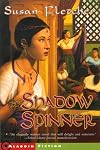
The story of Shahrazad has always puzzled me. This King kills his wives day after day and his people just let it happen? They didn't revolt? Monarchies have been tumbled for much less! Yet this slip of a girl manages to stand up to this King and save her people.
She has never gotten her proper due in my opinion.
Fletcher's book however is a decent step in that direction. Though about Marjan, we see what it must be like for Shahrazad. Night after night for years, constantly frightened and show more stressed that at any moment the wrong word, the word turn of phrase will get her family killed.
Marjan is just as brave and clever as Shahrazad, which is both a blessing and curse for women in those days. A muslim hired out to a Jewish man and his wife, her life isn't easy, but they care for her like a daughter and she is happy at least. Its not that Marjan does reckless things--impetuous perhaps, but not reckless. She emphasizes with Shahrazad and reveres her like a hero, willing to do anything (including putting her life at risk) to save hers.
The outside 'force' in the story, that of the Sultan's greedy, waspish, over indulgent mother Khatun, is necessary. Her actions are just this side of evil, but they are covered with 'I need to protect my sons!'.
Just as in life, in Shadow Spinner things do not end 'perfectly'. A measure of happiness for most, but no real 'justice' is given to Khatun's actions and Marjan is forced to flee the city, never seeing her Aunt and Uncle, or friends at the palace again. I could almost wish for a sequel, to make sure that Marjan's life hereafter isn't a let down after this adventure, but sometimes a story needs an ending. show less
She has never gotten her proper due in my opinion.
Fletcher's book however is a decent step in that direction. Though about Marjan, we see what it must be like for Shahrazad. Night after night for years, constantly frightened and show more stressed that at any moment the wrong word, the word turn of phrase will get her family killed.
Marjan is just as brave and clever as Shahrazad, which is both a blessing and curse for women in those days. A muslim hired out to a Jewish man and his wife, her life isn't easy, but they care for her like a daughter and she is happy at least. Its not that Marjan does reckless things--impetuous perhaps, but not reckless. She emphasizes with Shahrazad and reveres her like a hero, willing to do anything (including putting her life at risk) to save hers.
The outside 'force' in the story, that of the Sultan's greedy, waspish, over indulgent mother Khatun, is necessary. Her actions are just this side of evil, but they are covered with 'I need to protect my sons!'.
Just as in life, in Shadow Spinner things do not end 'perfectly'. A measure of happiness for most, but no real 'justice' is given to Khatun's actions and Marjan is forced to flee the city, never seeing her Aunt and Uncle, or friends at the palace again. I could almost wish for a sequel, to make sure that Marjan's life hereafter isn't a let down after this adventure, but sometimes a story needs an ending. show less
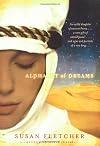
I’m a sucker for well-known stories re-told from a different perspective, Wicked by Gregory Maguire being one of my favorites along with books by Donna Jo Napoli, so Fletcher’s novel caught my attention right away. As a former Catholic school girl, I know the New Testament story of the Three Magi pretty well, but Fletcher tells the story from the perspective of a Persian princess reduced to living in caves and stealing food after her family is slaughtered by her father’s enemies. Mitra show more discovers quite by accident that her little brother, Babek, can dream other people’s dreams, a skill that brings him to the attention of the Magus Melchior. Mitra and Babek journey to Bethlehem with Melchior and two other Magi to witness the birth of Christ, enduring all sorts of hardships and learning a thing or two about family in the process. I really liked Mitra — as my grandmother used to day, she has pluck! –and I found Babek’s gift fascinating and a little scary. The characters are well-drawn, especially the three Magi and the bodyguard who keeps Mitra and Babek safe. A lovely story all around… show less

A polar bear from the Arctic north of Norway is gifted by King Haakon IV to King Henry III of England in this historical picture book set in the mid 13th century. The narrative imagines what her life would have been like in freedom, and then in captivity, as she was shipped across the seas and imprisoned in the Tower of London's famous menagerie. Although the narrative admits that we do not know what Henry III thought of this ursine gift, the record does tell us that he had a long chain maid show more for her, so that she could fish in the Thames every day, rather than be confined to a small cage. Here, perhaps she found some semblance of the rightness of her former life. The book closes with a note from the author about the history of the bear and the menagerie in the Tower of London, as well as a note from the illustrator, and a selected bibliography...
Although I am familiar with Susan Fletcher because of her middle-grade dragon fantasies, as well as other children's novels, I sought out A Bear Far from Home because of my enjoyment of illustrator Rebecca Green's work, and my desire to see more of it. There I was not disappointed, finding the artwork, created in acrylic gouache and colored pencil and then edited digitally, quite lovely. The story itself was well told, and evoked a strong emotional reaction in me—namely, one of great sadness at the bear's capture and her captivity so far from her native home. Fletcher has apparently also written a novel for young people on the subject of this bear, Journey of the Pale Bear, published a few years before this picture book, and appears to know her subject well. Her narrative is well crafted, being careful (as she declares in her author's note) to clarify what is known and what is imagined. The subject is interesting, and the story shines a spotlight on a footnote of history—the menagerie kept in the Tower of London, and the gift of this specific bear—of which many young people might be unaware. Although fictional, as it concerns the experiences of the bear, I think there is still enough factual information here to consider this non-fiction, and the book's theme of captive animals could be used to spark discussion of menageries as a precursor to modern zoos. I would recommend it for that purpose, with the caution that parents, teachers and other caregivers might want to use caution, if their children are very sensitive, as they too might find this one a very melancholy tale. show less
Although I am familiar with Susan Fletcher because of her middle-grade dragon fantasies, as well as other children's novels, I sought out A Bear Far from Home because of my enjoyment of illustrator Rebecca Green's work, and my desire to see more of it. There I was not disappointed, finding the artwork, created in acrylic gouache and colored pencil and then edited digitally, quite lovely. The story itself was well told, and evoked a strong emotional reaction in me—namely, one of great sadness at the bear's capture and her captivity so far from her native home. Fletcher has apparently also written a novel for young people on the subject of this bear, Journey of the Pale Bear, published a few years before this picture book, and appears to know her subject well. Her narrative is well crafted, being careful (as she declares in her author's note) to clarify what is known and what is imagined. The subject is interesting, and the story shines a spotlight on a footnote of history—the menagerie kept in the Tower of London, and the gift of this specific bear—of which many young people might be unaware. Although fictional, as it concerns the experiences of the bear, I think there is still enough factual information here to consider this non-fiction, and the book's theme of captive animals could be used to spark discussion of menageries as a precursor to modern zoos. I would recommend it for that purpose, with the caution that parents, teachers and other caregivers might want to use caution, if their children are very sensitive, as they too might find this one a very melancholy tale. show less
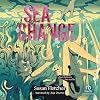
Turtle was born with an illegal genetic modification; meant to increase her lung capacity, the mod instead gave her gills and the ability to breathe underwater. Later in life, the mod began to create unusual health issues and all of the illegally modded children were rounded up and placed in a group home on a boat, The Mermaid, with volunteer caretaker, Constance. Ever vigilant and overprotective, Constance slowly cut off all of the kids from the rest of the world. Now, as kids living off of show more the coast of the slowly sinking Spoonbill Island, Turtle and the other teenage Mer scavenge drowned houses in order to sell items for Constance. However, on Constance's last scavenging trip, a chance encounter with a human diver will change her perspective on being a Mer and lead her on a fight for rights in a changing world.
Sea Change is a young adult, speculative fiction story that delves much deeper than romance. In the beginning, Turtle seems like a very typical teen, concerned about romance, friendships and her own internal struggles. While she values her ability as a Mer, she also longs for connection with the "normal" world, especially after meeting Kai, a human boy. Her desire to reunite with her family, from whom Constance has isolated her, is also a driving force. I found it engaging to learn about the daily life aboard The Mermaid and the different Mer's viewpoints on their unique existence and interactions with human society. Although the budding romance between Turtle and Kai, and the decisions Turtle makes as a result, appear to be central to the plot, the narrative extends beyond this. The story skillfully explores the complexities of the situation on Spoonbill Island, where there isn't a clear antagonist. The choices made by different characters, including Constance's overprotective actions that lead to isolation and the subsequent prejudice from the outside world, are presented with understandable, albeit flawed, intentions. The Mer children are victims of non-consensual genetic modification, leading to their separation from society and eventual displacement. Turtle's personal journey, as she navigates her identity between the Mer community and the human world, creates a compelling dynamic as she strives to help the Mer survive and reconnect with their families while also seeking her own place within the family she lost. Furthermore, the looming threat of climate change serves as a significant backdrop, influencing the characters' decisions as they grapple with survival in a sinking world.
Overall, *Sea Change* is a thought-provoking story that delves into themes of acceptance, prejudice, and the impact of climate change.
I received this book for free in exchange for an honest review. show less
Sea Change is a young adult, speculative fiction story that delves much deeper than romance. In the beginning, Turtle seems like a very typical teen, concerned about romance, friendships and her own internal struggles. While she values her ability as a Mer, she also longs for connection with the "normal" world, especially after meeting Kai, a human boy. Her desire to reunite with her family, from whom Constance has isolated her, is also a driving force. I found it engaging to learn about the daily life aboard The Mermaid and the different Mer's viewpoints on their unique existence and interactions with human society. Although the budding romance between Turtle and Kai, and the decisions Turtle makes as a result, appear to be central to the plot, the narrative extends beyond this. The story skillfully explores the complexities of the situation on Spoonbill Island, where there isn't a clear antagonist. The choices made by different characters, including Constance's overprotective actions that lead to isolation and the subsequent prejudice from the outside world, are presented with understandable, albeit flawed, intentions. The Mer children are victims of non-consensual genetic modification, leading to their separation from society and eventual displacement. Turtle's personal journey, as she navigates her identity between the Mer community and the human world, creates a compelling dynamic as she strives to help the Mer survive and reconnect with their families while also seeking her own place within the family she lost. Furthermore, the looming threat of climate change serves as a significant backdrop, influencing the characters' decisions as they grapple with survival in a sinking world.
Overall, *Sea Change* is a thought-provoking story that delves into themes of acceptance, prejudice, and the impact of climate change.
I received this book for free in exchange for an honest review. show less
Lists
Awards


You May Also Like


Associated Authors
Statistics
- Works
- 15
- Members
- 4,529
- Popularity
- #5,543
- Rating
- 3.9
- Reviews
- 90
- ISBNs
- 250
- Languages
- 7
- Favorited
- 3