On This Page
Description
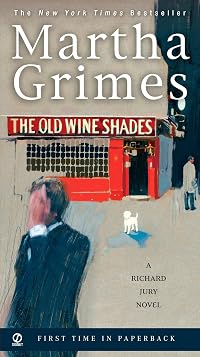
Richard Jury considers the authenticity of a fantastical tale, told by a stranger and fellow patron at the Old Wine Shades pub in London, about a string theory scientist's wife, son, and dog, who disappeared without a trace nine months earlier.Tags
Recommendations

Member Reviews
I used to love the Richard Jury books, but I have been getting less enamoured of them for the last 4 books or so. This book was absolutely infuriating, and it completely turned me off the series for good.
First, Richard Jury is awfully broody. I don't find people moping about interesting at all, especially when there is no earthly reason for them to be so depressed all the time. Also, the animal stuff is just crazy! She has a dog that is aware of, and thinking about, a conversation that is taking place a hundred miles away. This same dog has the brilliant idea of using one his master's slippers to track blood (from the cook's accident with a can opener) through the house, because he doesn't like his master. And, as if that wasn't totally show more ridiculous on the face of it, it is then never mentioned again! On top of this, maybe to make up for the excessive personality for the dog (and later, the cat), the wonderful characters Grimes created at the beginning of this series completed their descents into total caricatures.
But the the really fatal flaw is that the ending is totally unsatisfactory. I read mysteries because I like the way that they are self-contained. I like to know what happened when we get to the end. I don't like books that just seem to sort of end. I guess you sort of know what happened in this book, and I suppose she is trying to show the realities of police work--you can know who did the crime without being able to legally prove it. But it just felt like a random ending, with an attempt to get you to read the next book to find out what happens. It felt manipulative and extremely irritating. I found this book incredibly disappointing, especially given how much I enjoyed the first 15 or so books in the series. show less
First, Richard Jury is awfully broody. I don't find people moping about interesting at all, especially when there is no earthly reason for them to be so depressed all the time. Also, the animal stuff is just crazy! She has a dog that is aware of, and thinking about, a conversation that is taking place a hundred miles away. This same dog has the brilliant idea of using one his master's slippers to track blood (from the cook's accident with a can opener) through the house, because he doesn't like his master. And, as if that wasn't totally show more ridiculous on the face of it, it is then never mentioned again! On top of this, maybe to make up for the excessive personality for the dog (and later, the cat), the wonderful characters Grimes created at the beginning of this series completed their descents into total caricatures.
But the the really fatal flaw is that the ending is totally unsatisfactory. I read mysteries because I like the way that they are self-contained. I like to know what happened when we get to the end. I don't like books that just seem to sort of end. I guess you sort of know what happened in this book, and I suppose she is trying to show the realities of police work--you can know who did the crime without being able to legally prove it. But it just felt like a random ending, with an attempt to get you to read the next book to find out what happens. It felt manipulative and extremely irritating. I found this book incredibly disappointing, especially given how much I enjoyed the first 15 or so books in the series. show less
The Old Wine Shades was my first Martha Grimes title and introduction to the character of Richard Jury. It was not a typical murder mystery. First off, there is no murder until two-thirds through the book. Second, parts of the story follow the perspective of the dog Mungo (which is fun). And third, it doesn't tie off neatly at the end. Jury has discovered who the murderer is, but it can't be proven and this plausible, deceptive character has almost everyone else fooled. I'm sure this person will turn up again, and I don't really mind the fact that the strand of this story will run through later books. It's just different from the usual one-shot, stand-alone mystery novel.
Chief Inspector Richard Jury of Scotland Yard is on suspension show more because apparently in the preceding story, he entered a house without a warrant. So he's off duty at the moment and dangling around a bit. On one of those dangling evenings, he becomes wrapped up in the strangest story a man tells him in the pub. About a year ago a woman, her son, and her dog just disappeared into thin air while househunting. Not a trace was ever found of them — but after eight or nine months, the dog came back. And the story just gets more fantastic from there. Jury, unsure of whether or not to believe the tale, is nevertheless drawn in and begins unofficial investigations. Mixed up in all this is a lot about quantum mechanics, string theory (the idea that there are ten dimensions), and Schroedinger's cat (the hypothesis that we cannot measure something without becoming a factor in it, thereby making our measurement invalid). Interesting stuff... but I did want to point out that using a glass box would solve the cat-in-the-box conundrum for Schroedinger. Just saying.
Coming into the lives of these characters midstride, as it were, I spent a lot of time trying to figure out their relationships. The characters are fairly well written and Grimes does a good job making Jury accessible and relatable, with his envy of other men's more posh clothes and financial stability. Melrose was fun too, and I liked the children as well. The villain is chilling because he's so atypical, one of those characters you don't know is the villain until almost the end.
As I listened to this story I realized, with something of a shock, how few novels I read that are set in contemporary times. Just the mention of mobile phones took me aback! I guess my reading diet is pretty much fantasy, historical fiction, or mysteries set at least 70–80 years back.
I didn't care for the occasional profanity and general flavor of cynicism, but as the story picked up it bothered me less. John Lee did a great job reading this story, and I think I'd pick up more of Grimes' novels on audiobook — if only to discover if Jury ever gets the goods on the devious villain of this installment, and how. show less
Chief Inspector Richard Jury of Scotland Yard is on suspension show more because apparently in the preceding story, he entered a house without a warrant. So he's off duty at the moment and dangling around a bit. On one of those dangling evenings, he becomes wrapped up in the strangest story a man tells him in the pub. About a year ago a woman, her son, and her dog just disappeared into thin air while househunting. Not a trace was ever found of them — but after eight or nine months, the dog came back. And the story just gets more fantastic from there. Jury, unsure of whether or not to believe the tale, is nevertheless drawn in and begins unofficial investigations. Mixed up in all this is a lot about quantum mechanics, string theory (the idea that there are ten dimensions), and Schroedinger's cat (the hypothesis that we cannot measure something without becoming a factor in it, thereby making our measurement invalid). Interesting stuff... but I did want to point out that using a glass box would solve the cat-in-the-box conundrum for Schroedinger. Just saying.
Coming into the lives of these characters midstride, as it were, I spent a lot of time trying to figure out their relationships. The characters are fairly well written and Grimes does a good job making Jury accessible and relatable, with his envy of other men's more posh clothes and financial stability. Melrose was fun too, and I liked the children as well. The villain is chilling because he's so atypical, one of those characters you don't know is the villain until almost the end.
As I listened to this story I realized, with something of a shock, how few novels I read that are set in contemporary times. Just the mention of mobile phones took me aback! I guess my reading diet is pretty much fantasy, historical fiction, or mysteries set at least 70–80 years back.
I didn't care for the occasional profanity and general flavor of cynicism, but as the story picked up it bothered me less. John Lee did a great job reading this story, and I think I'd pick up more of Grimes' novels on audiobook — if only to discover if Jury ever gets the goods on the devious villain of this installment, and how. show less
I enjoy Martha Grimes' mysteries up to a point. I get tired of hearing about the same large group of people who live in the same little village, along with all of their quirks (her regular cast of characters). It's just too much and too cute. I like it when Richard Jury does most of the work, with a little help from friend Melrose Plant. I don't like "cozy" mysteries, and these often get into that category.
This one does involve a number of villagers peripherally. Not a whole lot, fortunately. More than I'd like, of course.
The story is a bit different. Jury is on light duty following a heroic action that put him in hot water. Thus he finds his way into a wine bar - wine pub - and meets another patron, Harry Johnson. Johnson chooses to show more tall Jury a story that "has no end". The basic story is about a married woman, who, with her young son and dog, visit two houses in the country, because she is interested in buying property there. Some time during that afternoon the three of them disappear. But then, months later, the dog returns.
Johnson is stuck on the dog returning, and it certainly is a point of interest for Jury. Jury has not identified himself as a representative of Scotland Yard, and he, after listening to the ever-expanding tale night after night, decides to do a little investigating on his own. If only to decide if Johnson is "having him on". He meets the realtor, talks to the people in the first house, visits the second house, where he meets a little girl who sneaks in sometimes from a neighboring location, and even visits a psychiatric clinic, where the woman's husband has voluntarily signed on. The story seems odd but the elements are starting to look like they are true.
With a little more digging, Jury, with help from Plant, goes farther, investigating the owner of the second property, who lives in Italy.
He even does some reading, into Quantum theory and superstrong theory, given that this is a field of interest for Johnson as well as for Hugh, the husband of the missing woman. Harry suggests that Hugh thinks that his wife and son stepped into another dimension.
All intrigue until a body is found. Then the local police are involved, but they are happy to include Jury, who couldn't let it go anyway.
A curious puzzle with an interesting ending that made me wonder. show less
This one does involve a number of villagers peripherally. Not a whole lot, fortunately. More than I'd like, of course.
The story is a bit different. Jury is on light duty following a heroic action that put him in hot water. Thus he finds his way into a wine bar - wine pub - and meets another patron, Harry Johnson. Johnson chooses to show more tall Jury a story that "has no end". The basic story is about a married woman, who, with her young son and dog, visit two houses in the country, because she is interested in buying property there. Some time during that afternoon the three of them disappear. But then, months later, the dog returns.
Johnson is stuck on the dog returning, and it certainly is a point of interest for Jury. Jury has not identified himself as a representative of Scotland Yard, and he, after listening to the ever-expanding tale night after night, decides to do a little investigating on his own. If only to decide if Johnson is "having him on". He meets the realtor, talks to the people in the first house, visits the second house, where he meets a little girl who sneaks in sometimes from a neighboring location, and even visits a psychiatric clinic, where the woman's husband has voluntarily signed on. The story seems odd but the elements are starting to look like they are true.
With a little more digging, Jury, with help from Plant, goes farther, investigating the owner of the second property, who lives in Italy.
He even does some reading, into Quantum theory and superstrong theory, given that this is a field of interest for Johnson as well as for Hugh, the husband of the missing woman. Harry suggests that Hugh thinks that his wife and son stepped into another dimension.
All intrigue until a body is found. Then the local police are involved, but they are happy to include Jury, who couldn't let it go anyway.
A curious puzzle with an interesting ending that made me wonder. show less
I was listening to this novel as I was finishing reading The Thirteenth Tale and I noticed that this is also a story within a story and it is this “story” quality that kept me listening during the times the book bogged down and Grimes became repetitive—I guess to make the book novel length? Somehow, I couldn’t put it aside because I wanted to know how the “story in the story” ended. The basic plot concerns Jury meeting Harry Johnson in a pub where Harry starts to tell his the story of the disappearance of the young woman, her son and their dog nearly a year ago but the dog came back. Jury starts to unofficially investigate the case, continuing to meet Harry at regular intervals to hear more of the story. Both the reader and show more jury are fascinated by the tale as it unfolds. Jim and I started it on the plane to Provence and he got bored—he had no trouble letting it go. Unfortunately the ending was very unsatisfactory—and somewhat contrived. It was disappointing and reminded me why I no longer eagerly look for the new Jury novels. The only excuse for this ending is that Grimes plans to bring Harry back in another novel. Or maybe she has developed Michael Crichton’s unfortunate malady of coming up with beautiful plots and exciting twists without knowing how to bring about a satisfactory conclusion so that the reader is left “flat.” show less
This is the twentieth installment in the series (by my count and I believe that I own them all; the book jacket says 21). Superintendant Jury, on a sort of probation after violating police rules in the previous novel, becomes entangled in the story of a mysterious disappearance. The story is quite intriguing for the first half of the novel, but then takes a strange turn that includes a heroic omniscient dog. This may be the author's attempt to inject some freshness into a series which has developed some distinct patterns--very unusual lonely children, the aristocratic sidekick going undercover. Since I have been a long-time fan of this series, I hate to say it but it seems like the characters may have run their course.
Grimes has a nice voice, with well-developed characters and an interesting story line that somehow goes astray.
A man sits next to Richard Jury in The Old Wine Shades, a local wine bar, and proceeds to tell him a fantastical story about the disappearance of a mother, son and dog, with the father so upset he closets himself into a sanitarium. Then, according to the man's story, after nine months the dog comes back.
Jury, on a kind of supersuspension, uses his personal time to follow up on the story and even encourages friends from his club, Borings, to postulate different scenarios.
Grimes uses a few unusual gimmicks and a denouement that may not satisfy all, but shows she is a competent storyteller willing to take some chances.
A man sits next to Richard Jury in The Old Wine Shades, a local wine bar, and proceeds to tell him a fantastical story about the disappearance of a mother, son and dog, with the father so upset he closets himself into a sanitarium. Then, according to the man's story, after nine months the dog comes back.
Jury, on a kind of supersuspension, uses his personal time to follow up on the story and even encourages friends from his club, Borings, to postulate different scenarios.
Grimes uses a few unusual gimmicks and a denouement that may not satisfy all, but shows she is a competent storyteller willing to take some chances.
This was an interesting and well-written look into the psyche of a criminal. Grimes' book was entertaining and thought-provoking and not the usual murder mystery, which has created negative comments from some fans. I enjoyed the departure because it was still a mystery and the ending was not wholly predictable. It's hard to go into much more without giving away the plot but I think Grimes fans should approach this with an open mind and just enjoy Richard Jury's journey!
Members
- Recently Added By
Lists

Books Read in 2014
2,344 works; 89 members
Author Information

59+ Works 29,757 Members
Martha Grimes was born on May 2, 1931 in Pittsburgh, Pennsylvania. She received a B.A. and an M.A. from the University of Maryland. The idea for Martha Grimes' first British detective novel, The Man with a Load of Mischief (1981), was inspired by the name of a British pub she noticed while leafing through a travel book. A longtime Anglophile, she show more has continued to use a British pub as both the title and part of the setting in each subsequent novel in the series which features Scotland Yard Detective Richard Jury, his assistant, Melrose Plant, and Plant's interfering Aunt Agatha. The Anodyne Necklace (1983) won her the Nero Wolfe Award. Her other works include The Stargazey, The Case Has Been Altered, The End of the Pier, Biting the Moon, and Dust. Her title, Vertigo 42, made The New York Times Best Seller List in 2014. (Bowker Author Biography) show less
Some Editions
Awards and Honors
Distinctions
Series

Work Relationships
Is contained in
Common Knowledge
- Canonical title
- The Old Wine Shades
- Original title
- The Old Wine Shades
- Original publication date
- 2006
- People/Characters
- Richard Jury; Melrose Plant; Harry Johnson; Glynnis Gault; Hugh Gault; Mungo, the dog (show all 8); Tilda; Timmy
- Important places
- London, England, UK; Lark Rise, England, UK
- Dedication
- To Vicki and in memory of Dodger
- First words
- They sat in silence for a moment.
- Last words
- (Click to show. Warning: May contain spoilers.)That, he tossed in the gutter.
Classifications
Statistics
- Members
- 1,108
- Popularity
- 23,043
- Reviews
- 28
- Rating
- (3.30)
- Languages
- English, French, German
- Media
- Paper, Audiobook, Ebook
- ISBNs
- 21
- UPCs
- 1
- ASINs
- 13