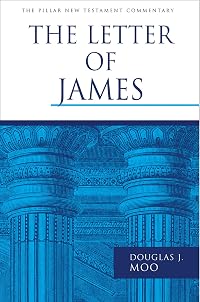
The Letter of James (Pillar New Testament Commentary)
by Douglas J. Moo
Pillar New Testament Commentary (16)
On This Page
Description
Few New Testament books have been as controversial and misunderstood as the letter of James. Its place in the canon was contested by some early Christians, and the reformer Martin Luther called it an "epistle of straw." The sometimes, negative view of the letter among modern theologians, however, is not shared by ordinary believers. Well-known and often quoted, James is concise, intensely practical, and filled with memorable metaphors and illustrations. As such, it has become one of the most show more popular New Testament books in the church. This highly original commentary on James by respected New Testament scholar Douglas Moo combines penetrating scholarship with the simplicity of style and pastoral tone characteristic of James itself. After discussing such background issues as authorship, genre, purpose, structure, and theology, Moo provides a verse-by-verse exposition of the text that leads readers to the heart of James's message- wholehearted commitment to Christ. In addition to expounding the meaning of James, Moo also takes care to provide practical insights for applying that meaning in the church today. show lessTags
Recommendations



Member Reviews
Biblical scholars make a name for themselves by writing a commentary on Romans. The ability to survey the vast amount of secondary literature, follow the arguments in the text, and chart your own course are daunting. When I took a class on Romans in Seminary, I was assigned two commentaries: James D. G. Dunn (Word Biblical Commentary) and Douglas J. Moo (New International Commentary on the New Testament). While I lean more towards Dunn's interpretation or Romans, I was struck by the depth and readability of Moo's work.
Imagine my surprise when I discovered that the Romans scholar also wrote a commentary on James! Those two books seem to go together like oil and water! Moo highlights the difficulty (140):
- Jas. 2:24: A person is justified show more by works and not by faith alone
- Rom. 3:28: A person is justified by faith and not by works of the law
I had to know how a Pauline scholar came to grips with the message of James.
James is famous for being a disjointed tract. While Moo acknowledges its frequent shift in foci, he does an excellent job at drawing the isolated pericopae together across the chapters and explaining how they aid in the interpretation of each other. A good example of this is how he relates the patience that James requires of his audience despite their trials (James 5:7) with the introductory comments on joy in trials (James 1:2-4).
As for the central conundrum between Paul and James—justification by works or by faith—Moo makes three points:
Paul's "works of the law" is different from James' "works". James is speaking of any good deed, while Paul has something specific in mind. (If Moo were a New Perspective on Paul theologian, this point would be easier to make!)
Paul speaks of "faith" where James speaks of "faith alone". James is criticizing the sort of "faith alone" (without works) that Paul would equally criticize.
Paul uses "justify" to refer to "the initial declaration of a sinner's innocence before God" (141), where James has God's eschatological verdict in mind.
Moo does a fine job at acknowledging the difficulty while charting a reasonable way forward.
The Letter of James is a readable commentary for the thoughtful layperson with more than enough depth to keep the pastor engaged. I'm richer for having read it. show less
Imagine my surprise when I discovered that the Romans scholar also wrote a commentary on James! Those two books seem to go together like oil and water! Moo highlights the difficulty (140):
- Jas. 2:24: A person is justified show more by works and not by faith alone
- Rom. 3:28: A person is justified by faith and not by works of the law
I had to know how a Pauline scholar came to grips with the message of James.
James is famous for being a disjointed tract. While Moo acknowledges its frequent shift in foci, he does an excellent job at drawing the isolated pericopae together across the chapters and explaining how they aid in the interpretation of each other. A good example of this is how he relates the patience that James requires of his audience despite their trials (James 5:7) with the introductory comments on joy in trials (James 1:2-4).
As for the central conundrum between Paul and James—justification by works or by faith—Moo makes three points:
Paul's "works of the law" is different from James' "works". James is speaking of any good deed, while Paul has something specific in mind. (If Moo were a New Perspective on Paul theologian, this point would be easier to make!)
Paul speaks of "faith" where James speaks of "faith alone". James is criticizing the sort of "faith alone" (without works) that Paul would equally criticize.
Paul uses "justify" to refer to "the initial declaration of a sinner's innocence before God" (141), where James has God's eschatological verdict in mind.
Moo does a fine job at acknowledging the difficulty while charting a reasonable way forward.
The Letter of James is a readable commentary for the thoughtful layperson with more than enough depth to keep the pastor engaged. I'm richer for having read it. show less
The best written of the lot that I own on James. Moo is clearly in the evangelical camp, and also clearly and unabashedly holds to a traditional view of the letter. However, at times, he spends too much ink on minor matters, while giving an opinion on major matters quickly with little discussion. While this is usually a highly regarded commentary by most reviewers, I maybe was expecting too much, and was therefore I little disappointed in the end.
The best written of the lot that I own on James. Moo is clearly in the evangelical camp, and also clearly and unabashedly holds to a traditional view of the letter. However, at times, he spends too much ink on minor matters, while giving an opinion on major matters quickly with little discussion. While this is usually a highly regarded commentary by most reviewers, I maybe was expecting too much, and was therefore I little disappointed in the end.
Few New Testament books have been as controversial and misunderstood as The Letter of James. Its place in the canon was contested by some early Christians, and the reformer Martin Luther called it an "epistle of straw". The sometimes negative view of the letter among modern theologians, however, is not shared by ordinary believers. Few books in the New Testament are better known or more often quoted, and because James is so concise, so intensely practical, and so filled with memorable metaphors and illustrations, it has become one of the two or three most popular New Testament books in the church.
The highly original commentary on James by respected New Testament scholar Douglas Moo combines penetrating scholarship with the simplicity of show more style and pastoral tone characteristic of James itself. After discussing such background issues as authorship, genre, purpose, structure, and theology, Moo provides a verse-by-verse exposition of the text that leads readers to the heart of James's message - wholehearted commitment to Christ. In addition to expounding the meaning of James, Moo also takes care to provide practical insights for applying the meaning in the church today. A number of years in the making, interacting with the best and most recent works on James, and written for readers at all levels, this volume will quickly become a standard commentary on James. show less
The highly original commentary on James by respected New Testament scholar Douglas Moo combines penetrating scholarship with the simplicity of show more style and pastoral tone characteristic of James itself. After discussing such background issues as authorship, genre, purpose, structure, and theology, Moo provides a verse-by-verse exposition of the text that leads readers to the heart of James's message - wholehearted commitment to Christ. In addition to expounding the meaning of James, Moo also takes care to provide practical insights for applying the meaning in the church today. A number of years in the making, interacting with the best and most recent works on James, and written for readers at all levels, this volume will quickly become a standard commentary on James. show less
Logos Library
Bible, N.T. Commentary
Members
- Recently Added By
Published Reviews
The general editor describes this series as one that is "designed for serious pastors and teachers of the Bible" and "a blend of rigorous exegesis and exposition, with an eye alert both to biblical theology and the contemporary relevance of the Bible."
added by lhungsbe
Lists

Blake’s Recommended Commentaries
69 works; 1 member

bestcommentaries.com - Top 2 NT Commentaries by Book
39 works; 1 member
Author Information

65+ Works 8,126 Members
Douglas J. Moo is Kenneth T. Wessner Professor of New Testament at Wheaton College, Wheaton, Illinois.
Series

Common Knowledge
- Original publication date
- 2000
Classifications
Statistics
- Members
- 1,152
- Popularity
- 21,918
- Reviews
- 7
- Rating
- (4.12)
- Languages
- English, French, Spanish
- Media
- Paper, Ebook
- ISBNs
- 8
- ASINs
- 5