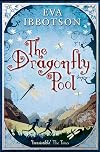
The Dragonfly Pool
by Eva Ibbotson
On This Page
Description
"At first Tally doesn't want to go to the boarding school called Delderton. But she soon discovers that it is a wonderful place where freedom and self expression are valued. Tally organizes a ragtag dance troupe so the school can participate in an international folk dancing festival in Bergania in the summer of 1939. There she befriends Karil, the crown prince, who would love nothing more than to have ordinary friends and attend a school like Delderton. When Karil's father is assassinated, show more it is up to Tally and her friends to help Karil escape the Nazis and the bleak future he has inherited"--Publisher. show lessTags
Recommendations








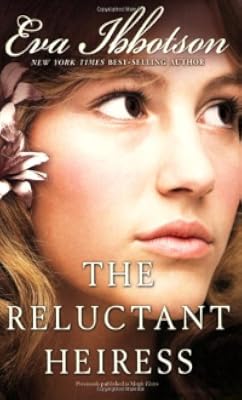
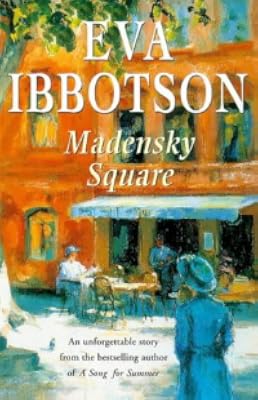
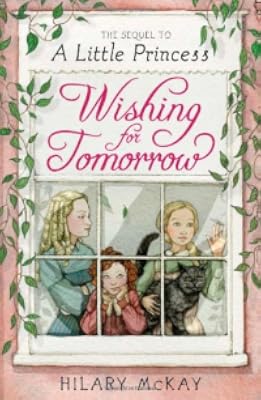
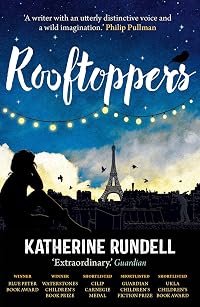


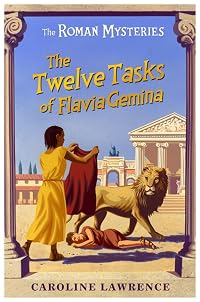

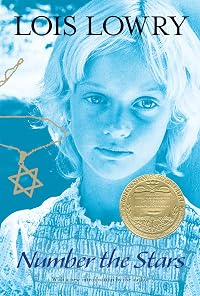

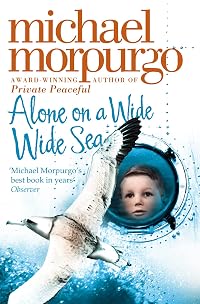
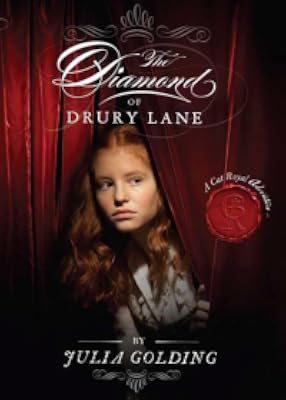
Member Recommendations
Member Reviews
The king of a Bergania (a fictional country, though one that seems a lot like Switzerland) refuses to allow Hitler's troops to march through his country. Seeing this on a newreel at the movies, Tally is struck by his courage, and also interested in the prince, who's face she can't really see, obscured as it is by the plumes from his helmet. When the headmaster of Delderton (her boarding school) brings up an invitation to go to Bergania to participate in a folk dancing festival, Tally jumps at the chance, even though neither she nor any of her friends have any experience with folk dancing. Little do they know that their arrival in Bergania will coincide with a Nazi plot to get rid of the king and kidnap the prince.
That Tally and her show more friends are able to smuggle the prince out of the country is really only half of this story. The other half is what happens to the prince once he's safely in England. Because he has family there, and as in other Ibbotson stories, his family is fairly horrible. They are convinced that they must continue his training so that he can assume his rightful place on the throne of Bergania after the war. Except that he doesn't really want to be king. He wants to join Tally and her friends at Delderton.
And that's what this book is really about. It's about finding your place in the world, or making your place in the world, if the one that's set out for you isn't right. It's also about friendship and family and justice. If you've read other books by Ibbotson, you may find her books to be a bit formulaic, but this book is none the less charming for being similar to others. show less
That Tally and her show more friends are able to smuggle the prince out of the country is really only half of this story. The other half is what happens to the prince once he's safely in England. Because he has family there, and as in other Ibbotson stories, his family is fairly horrible. They are convinced that they must continue his training so that he can assume his rightful place on the throne of Bergania after the war. Except that he doesn't really want to be king. He wants to join Tally and her friends at Delderton.
And that's what this book is really about. It's about finding your place in the world, or making your place in the world, if the one that's set out for you isn't right. It's also about friendship and family and justice. If you've read other books by Ibbotson, you may find her books to be a bit formulaic, but this book is none the less charming for being similar to others. show less
As Europe seems headed toward another war with Germany, 11-year-old Tally’s family decides to accept an offer to send her to a boarding school in Devon. Tally soon gets over her homesickness at Delderton, a progressive school where children thrive. Kindhearted Tally easily makes friends with the other children. When an opportunity presents itself for the children to participate in a folk dancing festival in the European kingdom of Bergania, Tally wills it to happen. There she meets Karil, the young prince of Bergania, and their friendship changes both of their lives.
I would have loved this book as a child. As an adult reader, I found the children’s worldview too idealistic. It seems to me that the Delderton contingent would be right show more at home in Lake Wobegon, where “all the women are strong, all the men are good-looking, and all the children are above average.” show less
I would have loved this book as a child. As an adult reader, I found the children’s worldview too idealistic. It seems to me that the Delderton contingent would be right show more at home in Lake Wobegon, where “all the women are strong, all the men are good-looking, and all the children are above average.” show less
Tally gets sent to boarding school (someplace safe to wait out the war), which she is determined not to like. But her school is unconventional and she makes friends despite herself. Then she gets involved in a dance festival for peace and her life gets entangled with Prince Karil. I loved the idea of children making a difference when adults find themselves powerless to do so.
Eva Ibbotson might give Edith Nesbit a run for her money with this story loosely based in Europe at the beginning of World War II. Though not a historical novel, readers will find this Hitler to be the source of a delicious plot to steal a throne and kidnap the child prince, when a group of British schoolchildren come to the rescue. Tally, the heroine, is a girl with a wonder for nature and a thoroughly good instinct in caring for other people. Ibbotson departs from her usual ghosts and magic to investigate the human magic of compassion and succeeds more than admirably.
I have read a lot of Eva Ibbotson's books - some of them for children, like "Which Witch", some of them for adults, like "The Morning Gift". They have in common a certain fairytale quality, a feel-good mood. All characters are a bit more polished than in life, either better people or more villainous. And a happy end is practically garuanteed, which makes Ibbotson's books well-written comfort reads. I don't have to say that I enjoyed them all.
Until I read "The Dragonfly Pool", I'm afraid to say. I was prepared to be enchanted once more and ended up between disaffected and disgusted.
The story is set in 1939 just before the start of WW II, when our heroine Tally is send to the progressive boarding school of Delderton. Tally is one of show more Ibbotson's typical characters - good-natured, caring for others, gifted and pretty.
She makes fast friends in Delderton, and by chance becomes enamored of Bergania, a country in Middle-Europe beset by the Nazis. She convinces her school to send a troupe to a folk dance festival there, meets the crown prince, finds out that her teacher has been the king's best friend in his youth, sees the king murdered, ropes everybody in to help the crown prince escape through Switzerland to England under pursuit of two dastardly spies, parts with the crown prince and feels forgotten by him, only to realize he was held captive by his relatives and be united in the end.
Perhaps you could deduce from the summary that I'm a bit impatient with the plot. It feels like Ibbotson threw in every ingredient from her previous book that ever worked and stirred it. Maybe it's just that my reading expectations were wrong - this is not a book for adults, but a children's book. Everyone of her books sugarcoats reality (and history), but this story is imbearably saccharine.
But even if I allow for it being a children's book, the plot still feels stale. None of the many components are well developed, and in the same way the characters remain sketchy. They really feel like the echo of Ibbotson's former heroes and heroines. It's not that there aren't charming scenes but they never come together as a whole.
And I admit that I found the way that the onset of World War II is used as a plot device distasteful. All of Ibbotson's adult books are placed in this particular period of time but this is the first time I'm aware that she has invented a European country with an own king for her purposes - a country right out of a fairytale, with snowy mountains, green valleys, quaint little villages etc. Juxtaposing this fictious country with the real Nazi politics makes the Nazi horror seem shallower; they become part of the fairytale stockpile of villains. Nothing in this story rings true, and that is a disservice to the real people persecuted by Hitler. I may sound moralizing here, but I don't object to use Nazism in fiction on principle - as I said at the beginning, I liked Ibbotson's other novels set in this period extremely well.
In the end, I didn't rate the book even lower than I did because Ibbotson knows how to write well, and some parts are amusing and enjoyable - unfortunately they're a minority. show less
Until I read "The Dragonfly Pool", I'm afraid to say. I was prepared to be enchanted once more and ended up between disaffected and disgusted.
The story is set in 1939 just before the start of WW II, when our heroine Tally is send to the progressive boarding school of Delderton. Tally is one of show more Ibbotson's typical characters - good-natured, caring for others, gifted and pretty.
She makes fast friends in Delderton, and by chance becomes enamored of Bergania, a country in Middle-Europe beset by the Nazis. She convinces her school to send a troupe to a folk dance festival there, meets the crown prince, finds out that her teacher has been the king's best friend in his youth, sees the king murdered, ropes everybody in to help the crown prince escape through Switzerland to England under pursuit of two dastardly spies, parts with the crown prince and feels forgotten by him, only to realize he was held captive by his relatives and be united in the end.
Perhaps you could deduce from the summary that I'm a bit impatient with the plot. It feels like Ibbotson threw in every ingredient from her previous book that ever worked and stirred it. Maybe it's just that my reading expectations were wrong - this is not a book for adults, but a children's book. Everyone of her books sugarcoats reality (and history), but this story is imbearably saccharine.
But even if I allow for it being a children's book, the plot still feels stale. None of the many components are well developed, and in the same way the characters remain sketchy. They really feel like the echo of Ibbotson's former heroes and heroines. It's not that there aren't charming scenes but they never come together as a whole.
And I admit that I found the way that the onset of World War II is used as a plot device distasteful. All of Ibbotson's adult books are placed in this particular period of time but this is the first time I'm aware that she has invented a European country with an own king for her purposes - a country right out of a fairytale, with snowy mountains, green valleys, quaint little villages etc. Juxtaposing this fictious country with the real Nazi politics makes the Nazi horror seem shallower; they become part of the fairytale stockpile of villains. Nothing in this story rings true, and that is a disservice to the real people persecuted by Hitler. I may sound moralizing here, but I don't object to use Nazism in fiction on principle - as I said at the beginning, I liked Ibbotson's other novels set in this period extremely well.
In the end, I didn't rate the book even lower than I did because Ibbotson knows how to write well, and some parts are amusing and enjoyable - unfortunately they're a minority. show less
Very cute story that reminded me of Enid Blyton's boarding school books. Talley does not want to go away to school, but she finds the school delightful. When the chance comes to attend a festival in another country, Talley pulls together a show. But when they get to the European continent, WWII breaks out.
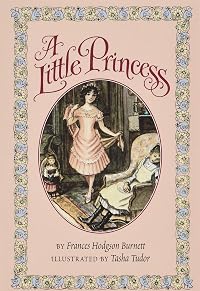
Tally has a bit of Sara Crewe of A Little Princess about her; although her father is still alive, she is a singularly compassionate and generous person, well-liked by almost all who meet her; luckily, her worries and occasional imperfections make her wisdom lovely rather than irritating. Prince Karil and several adults receive meticulous and fascinating character development, but many characters remain rather one-dimensional, known mainly by one or two eccentric traits. The unsympathetic characters, and in particular Karil’s awful London-based relatives, come across as ludicrous cartoons, so unremittingly negative is their depiction. Although the battle between good and evil is painted with a broad brush, Ibbotson treats most issues show more with a wise, subtle, and always humorous touch. The epilogue, taking place six years later, is most satisfying and will have readers giggling through their tears. show less
Members
- Recently Added By
Lists

Books in the Bibliography of Humans: A Monstrous History by Surekha Davies
346 works; 1 member
Author Information

40+ Works 22,436 Members
Eva Ibbotson was born in Vienna, Austria, on January 21, 1925. She graduated from Bedford College, London with a degree in physiology in 1945 and the University of Durham with a degree in education in 1965. Her first book, The Great Ghost Rescue, was published in 1975. She primarily wrote children's book and romance novels for adults and young show more adults. Her other works include The Secret of Platform 13, The Star of Kazan, Which Witch?, Island of the Aunts, Dial-a-Ghost, The Ogre of Oglefort, A Company of Swans, and A Song For Summer. She won the Nestlé Smarties Book Prize for Journey to the River Sea. She died on October 20, 2010 at the age of 85. (Bowker Author Biography) show less
Awards and Honors
Awards
Common Knowledge
- Canonical title
- The Dragonfly Pool
- Original title
- The Dragonfly Pool
- Original publication date
- 2008
- People/Characters
- Talitha "Tally" Hamilton; Prince Karil of Bergania
- Important events
- World War II
- Dedication
- I would like to thank my son Toby Ibbotson for the help he gave me in the writing of this book
- First words
- 'I don't think you ought to be crying at your age.'
- Quotations
- 'Duty exists and it's real. It means sharing any gift or talent that you have with people who need it.'
- Last words
- (Click to show. Warning: May contain spoilers.)Then from higher up the mountain there came the sound of 'The Last Trump' played on Matteo's sackbut - and realizing that nobody could have had a more fitting send-off, the mourners linked hands and ran down to the buses that were waiting to take them to the station - and home.
Classifications
- Genres
- Fiction and Literature, Tween, Kids, Children's Books
- DDC/MDS
- 823.914 — Literature & rhetoric English & Old English literatures English fiction 1900- 1901-1999 1945-1999
- LCC
- PZ7 .I117 .D — Language and Literature Fiction and juvenile belles lettres Fiction and juvenile belles lettres Juvenile belles lettres
- BISAC
Statistics
- Members
- 773
- Popularity
- 36,227
- Reviews
- 32
- Rating
- (3.93)
- Languages
- 6 — English, Estonian, French, German, Italian, Swedish
- Media
- Paper, Audiobook, Ebook
- ISBNs
- 44
- ASINs
- 11