
The Sittaford Mystery
by Agatha Christie
On This Page
Description
The Sittaford Mystery is Dame Agatha at her most intriguing, as a séance in a snowbound house predicts a particularly grisly murder. In a remote house in the middle of Dartmoor, six shadowy figures huddle around a table for a seance. Tension rises as the spirits spell out a chilling message: "Captain Trevelyan . . . dead . . . murder." Is this black magic or simply a macabre joke? The only way to be certain is to locate Captain Trevelyan. Unfortunately, his home is six miles away and, with show more snowdrifts blocking the roads, someone will have to make the journey on foot. . . . show lessTags
Recommendations















Member Reviews
'The Sittaford Mystery' is a standalone Agatha Christie book that didn't really work for me. I know it's a firm favourite among Christie fans, mainly because of Emily, the spirited heroine who works relentlessly to clear the name of the man she's decided to let marry her. Emily is a fine creation and it was fun to watch her get her way. She is credible, clever and indomitable. She uses men (all of whom deserve what they got - or don't get in most cases) ruthlessly and is kind to other women.
Sadly, she doesn't appear until 40% through the book and I'd almost given up by then.
It should have been a strong start: a group of people who barely know each other, meeting in the big house at the edge of Dartmoor, on a night when the snow is show more falling hard enough to make the roads impassable, who amuse themselves with a semi-serious 'table turning' seance only to be spooked when the table announces that death of the man the big house has been rented from. One of the party, a close friend of the man named, is so disturbed that he heads off into the blizzard to the next village where he finds his friend has been murdered. A detective is called to work everything out and set's about interviewing everyone involved.
Sounds good, doesn't it?
But the storytelling was flat and the characters were hard to engage with. The detective was competent and the facts are clearly and succinctly laid out but, apart from thinking that the murdered man wasn't very nice - hated women, hated change, travelled the world collecting elephants feet and tiger skins and hippo tusks - and would be no great loss - I didn't feel connected to anyone.
Even the snow thing didn't play properly. We get set up for all that fierce weather and then one of the characters hikes six miles through the dusk and dark with no problem. So the snow mattered why?
The seance scene didn't fly for me. It seemed like Christie couldn't decide if it was just a parlour game or something more.
At the time, I slowly came around to the view that Christie was writing a cosy mystery that was meant to be a piece of light-hearted devilment. there were all those playful references to Conan Doyle both with the Dartmoor setting and the spiritualism. Then she threw in an escaped prisoner to get a Dickens vibe. Finally, she added Emily, a whirlwind blowing through the story like a fairy godmother waving her wand.
Emily is a whirlwind and the embodiment of Christie's devilment. It's hard not to like her or at least admire her. She's bright and determined and resourceful. She's also an expert in pressing men's buttons not just to get them to do her bidding but to be really pleased to be allowed to do her bidding. She understands the rules of the patriarchy and knows how to subvert them by getting men less talented than herself to wield the power she's not allowed to have. Even the fiancé Emily is spending so much energy rescuing has been chosen as acceptable husband material because Emily judges him to be malleable enough for her to shape into someone useful.
Emily's approach works because most of the men in this story, with exception of the Inspector, are fine examples of how strange single men can become. Christie gives us a whole catalogue of weak men from the vacuous and inept, through the bellicose and narcissistic, the self-servingly romantic through to the openly misogynistic with an undertone of repressed homosexuality.
I worked out who the murderer had to be about 60% of the way through (that involves some spoilers so I've put it below the SoundCloud link) but that was OK because I didn't know the how and the why gave me some things to think about.
My problem with the book was that I couldn't settle into its tone. It seemed to me to be a mostly unkind book. Its humour was the kind that laughs at people for being who they are and invites you to join in demeaning them. Which means if it doesn't work, you take offence and if it does work you feel bad about it later.
Christie takes a pop at the older generation throughout the book. All those military men on the Empire who survived Public School and then went through World War I and/or ran the Raj have their dignity stripped, their values mocked and their inadequacies put on display. Then there's the approach to Spiritualism and Conan Doyle. I'm an atheist with no belief in an afterlife and this still annoyed me. 'The Sittaford Mystery' was published in 1931, when Spiritualism was starting to wane but, at its peak ten years earlier, it had been driven by grief. It was how a generation, mostly of women, tried to cope with the slaughter of millions of young men. How parents tried to deal with the loss of the yet to make thirty sons. Yes, there were charlatans and yes there was self-deception but it seemed to me that in this book is became just another sign of weakness for Christie to target.
As usual, Christie makes fun of the rough colonials. They're not quite one of us, are they? And watching them try to fit in and still fail so badly is such fun. And of course, everyone will always suspect that they've done something nefarious so that stirs the pot. I know that makes this an authentic English mystery but it's a side of the English that I despise.
Take a look at the spoiler material to see another, better hidden, target.
Anyway, my reading of this book is likely to be atypical. I couldn't relax enough to just accept it as easy entertainment with a humorous intent. If you can do that, then Emily's energy and Hugh Fraser's narration will probably be enough for you to have a good time.
https://soundcloud.com/harpercollinspublishers/the-sittaford-mystery-by
Spoilers
I worked out who must have done that murder about 60% of the way through. Once I saw that the time of death was a distraction - that the murder could have happened earlier. It was obvious who would have done it. I didn't figure out the skiing thing but it made a lot of sense and finally justified all that snow.
The motive for the killing was the trickiest part and I think Christie was being subtle with it and maybe also taking a shot at suppressed homosexuality without ever daring to say its name. Christie offers a not insubstantial financial motive for the killing and I'm sure it played a part but I wonder if it's a bit of a beard for the emotional attachment between the two men which eventually led to fury. The dead man left his sporting trophies, the ones in which he exceeded his friend's prowess at every sport, to his friend while leaving him no money. wasn't that a middle finger raised from the grave? And the killing seems like rage and seemed to be followed by grief..That doesn't seem to speak to money as a motive. show less
I learnt to read with turn of the century German editions of Sherlock Holmes - set in Fraktur. I still remember lying in front of the bookcase and deciphering those weird letters - and I prevailed!
Having thus been “initiated” it isn’t surprising I turned to other mystery authors once Conan Doyle’s Sherlock retired to beekeeping.
Whom else would I turn to than two masters of the field: Edgar Wallace (who has largely been forgotten in his native UK but whose books are still in-print here in Germany!) and Agatha Christie.
I think I’ve read every of Christie’s Miss Marple and Poirot books and greatly enjoyed them. Over the years, I’ve revisited Christie, reading her “The Secret Adversary” for example. (Three stars, no show more written review.)
When I came across a very favourable review of “The Sittaford Mystery” I found myself eager to revisit this childhood icon of mine - which usually is a bad idea.
Captain Trevelyan lies slain, a retired soldier of some royal windbag’s Navy, and a simpleton nephew of his, Jim, who fled the scene after unsuccessfully trying to beg some money out of his uncle is charged. Never fear, though, Simple-Jim, your smart fiancee comes to your rescue!
Introduced as being “not strikingly beautiful” but having an unforgettable “face which was arresting and unusual”. Featuring “common sense, savoir faire, invincible determination and a most tantalizing fascination” Emily Trefusis proceeds to go after every single one of the numerous red herrings Christie introduces.
Emily also enlists the help of a young journalist who immediately falls for her, of course. Suspects are almost as plentiful as motives for the murder and mystery after mystery is presented or at least alluded to but most of those are left behind among all the other plot holes.
Set in Dartmoor, near the moorland and not far from a prison even the escape of a violent convict over the moorland ends anti-climactic - the poor wretch runs 20 miles in a circle only to return to from where he fled.
Compare that to Conan Doyle’s “Hound of the Baskervilles” and you’ll see how much potential Christie fails to realise.
The ending is achieved by a severe case of “deus ex machina” - the victim’s missing boots point by almost artistic literary convulsions to the one person Christie took pains to keep unsuspected only to condemn them in the end.
All of that combined with the dated language, the cliches, the wooden characters and the lacklustre execution of it all leads me to believe that I should probably let Dame Agatha rest in peace and remember all the good times I had in the past with her books instead of trying to recreate them.
Three out of five stars.
Blog | Facebook | Twitter | Instagram show less
Having thus been “initiated” it isn’t surprising I turned to other mystery authors once Conan Doyle’s Sherlock retired to beekeeping.
Whom else would I turn to than two masters of the field: Edgar Wallace (who has largely been forgotten in his native UK but whose books are still in-print here in Germany!) and Agatha Christie.
I think I’ve read every of Christie’s Miss Marple and Poirot books and greatly enjoyed them. Over the years, I’ve revisited Christie, reading her “The Secret Adversary” for example. (Three stars, no show more written review.)
When I came across a very favourable review of “The Sittaford Mystery” I found myself eager to revisit this childhood icon of mine - which usually is a bad idea.
Captain Trevelyan lies slain, a retired soldier of some royal windbag’s Navy, and a simpleton nephew of his, Jim, who fled the scene after unsuccessfully trying to beg some money out of his uncle is charged. Never fear, though, Simple-Jim, your smart fiancee comes to your rescue!
Introduced as being “not strikingly beautiful” but having an unforgettable “face which was arresting and unusual”. Featuring “common sense, savoir faire, invincible determination and a most tantalizing fascination” Emily Trefusis proceeds to go after every single one of the numerous red herrings Christie introduces.
Emily also enlists the help of a young journalist who immediately falls for her, of course. Suspects are almost as plentiful as motives for the murder and mystery after mystery is presented or at least alluded to but most of those are left behind among all the other plot holes.
Set in Dartmoor, near the moorland and not far from a prison even the escape of a violent convict over the moorland ends anti-climactic - the poor wretch runs 20 miles in a circle only to return to from where he fled.
Compare that to Conan Doyle’s “Hound of the Baskervilles” and you’ll see how much potential Christie fails to realise.
The ending is achieved by a severe case of “deus ex machina” - the victim’s missing boots point by almost artistic literary convulsions to the one person Christie took pains to keep unsuspected only to condemn them in the end.
All of that combined with the dated language, the cliches, the wooden characters and the lacklustre execution of it all leads me to believe that I should probably let Dame Agatha rest in peace and remember all the good times I had in the past with her books instead of trying to recreate them.
Three out of five stars.
Blog | Facebook | Twitter | Instagram show less
The Sittaford Mystery by Agatha Christie is a 1931 whodunit that starts with a seance being held in a country home during a heavy winter storm. A message comes through from “the other side” to say that the owner of the home, Captain Trevelyan is dead. His body is indeed found later that evening. The seance was being held by Mrs. Willett, the Captain’s winter tenant, who along with her daughter have taken residence for the winter months.
Agatha Christie has done it again, I was so sure that I had worked out the answer to this murder puzzle, but when all is revealed in the closing chapter, I wasn’t even close. The story is full of red herrings and false clues. The police charge one of the Captain’s nephews with the murder, but show more his clever fiancee, Emily makes it her mission to clear him.
I really enjoyed The Sittaford Mystery. The characters are well drawn, and the plot is well engineered. This book is considered her homage to The Hound of Baskervilles by Sir Arthur Conan Doyle, and there are certain elements that both stories have in common, such as the setting of Dartmoor and an escaped prisoner wandering the moor. But this is Agatha Christie and her style shines through with the country house setting and the big reveal at the end of the book. A fun and imaginative read. show less
Agatha Christie has done it again, I was so sure that I had worked out the answer to this murder puzzle, but when all is revealed in the closing chapter, I wasn’t even close. The story is full of red herrings and false clues. The police charge one of the Captain’s nephews with the murder, but show more his clever fiancee, Emily makes it her mission to clear him.
I really enjoyed The Sittaford Mystery. The characters are well drawn, and the plot is well engineered. This book is considered her homage to The Hound of Baskervilles by Sir Arthur Conan Doyle, and there are certain elements that both stories have in common, such as the setting of Dartmoor and an escaped prisoner wandering the moor. But this is Agatha Christie and her style shines through with the country house setting and the big reveal at the end of the book. A fun and imaginative read. show less
Despite ITV twisting this to be a Marple story, Marple (nor Poirot) is anywhere to be found in this story. Instead we have an intelligent young woman who gets involved investigating a murder when her fiancée gets accused of doing the crime.
Big houses, death of the owner, small villages, suspicious characters, ouija boards predicting death (apparently correctly), money, snow drifts on Dartmoor and an escaped prisoner from the local criminal mental facility all leads to a compact mystery story.
Christie does write rather strong, forward women investigators, especially if they're on the young side - lots of vigour etc.
Big houses, death of the owner, small villages, suspicious characters, ouija boards predicting death (apparently correctly), money, snow drifts on Dartmoor and an escaped prisoner from the local criminal mental facility all leads to a compact mystery story.
Christie does write rather strong, forward women investigators, especially if they're on the young side - lots of vigour etc.
A classic-era mystery by one of the world’s most praised and revered mystery writers. First published in 1931, it was a stand-alone tale (no Poirot and his little grey cells! No Marple and her knitting!) of crimes thought buried rising up from their unmarked graves to feed, zombie-like, on the perpetrators in the present day. Sadly, the whole world they inhabit gets to suffer along with the perpetrators; after all, crime doesn’t pay so much as it pays back. The setting of a snowbound country house with bored wealthy guests is chilly enough. When the pieces of the criminal puzzle start coming apart (or together, depending on your perspective), the emotional chills go from the fridge to the freezer.
What an awful place to live in show more England is...If it isn't snowing or raining or blowing it's misty. And if the sun does shine it's so cold that you can't feel your fingers or toes.
By the time you’ve finished this modest-in-scope (288 pages) novel, you’re unlikely to feel your fingers for a few hours. Though in this case it will be from gripping the darn thing so tight in sheer desperation to see why anyone would kill the victim, shifting to a desperate need to know what took someone so long to kill the bastard. $9.99 for the Kindle edition. show less
What an awful place to live in show more England is...If it isn't snowing or raining or blowing it's misty. And if the sun does shine it's so cold that you can't feel your fingers or toes.
By the time you’ve finished this modest-in-scope (288 pages) novel, you’re unlikely to feel your fingers for a few hours. Though in this case it will be from gripping the darn thing so tight in sheer desperation to see why anyone would kill the victim, shifting to a desperate need to know what took someone so long to kill the bastard. $9.99 for the Kindle edition. show less
"Major Burnaby drew on his gum boots, buttoned his overcoat collar round his neck, took from a shelf near the door a hurricane lantern, and cautiously opened the front door of his little bungalow and peered out."
I love this opening paragraph. It sets the scene for one of my favourite cozy mysteries: A small village near Dartmoor - you know, the misty remote parts of Baskerville fame.
Some of the villagers have are gathering for tea and enjoy a game of table-turning, adding a supernatural edge to the already eerie setting.
As the party enjoys the movements of the ouija board, it spells out a name and the party is stunned:
"Supposing something had happened to Captain Trevelyan…
Supposing…"
Anyway, not to take too much away from the show more ensuing story, there is a murder and a subsequent investigation, and a number of potential culprits. After all, this is Christie mystery.
What makes The Sittaford Mystery stand out for me is that there is lightheartedness and humor in this story which is lacking in some of her other books, and there is a female lead who cracks the confines of her role:
So, one hand she proclaims that:
"One can’t do anything without a man. Men know so much, and are able to get information in so many ways that are simply impossible to women."
And on the other, only a few pages later she takes charge of the investigation:
"‘Well,’ said Emily rising to her feet. ‘It’s about time we went back to the Three Crowns, and I will pack my suitcase and do a short weeping act on Mrs Belling’s shoulder.’
‘Don’t you worry,’ said Mr Enderby rather fatuously. ‘You leave everything to me.’
‘That’s just what I mean to do,’ said Emily with a complete lack of truth. ‘It’s so wonderful to have someone you can really rely on.’ Emily Trefusis was really a very accomplished young woman."
A brilliant read for admirers of the cozy mystery and the classic Christie who-dunnit. I still have to re-read some of the stories that pre-date The Sittaford Mystery (1931) but at the time of writing this one, Christie had already found her forte of setting the story in a confined space and letting psychology drive the story.
Review first posted on BookLikes: http://brokentune.booklikes.com/post/774243/the-sittaford-mystery show less
I love this opening paragraph. It sets the scene for one of my favourite cozy mysteries: A small village near Dartmoor - you know, the misty remote parts of Baskerville fame.
Some of the villagers have are gathering for tea and enjoy a game of table-turning, adding a supernatural edge to the already eerie setting.
As the party enjoys the movements of the ouija board, it spells out a name and the party is stunned:
"Supposing something had happened to Captain Trevelyan…
Supposing…"
Anyway, not to take too much away from the show more ensuing story, there is a murder and a subsequent investigation, and a number of potential culprits. After all, this is Christie mystery.
What makes The Sittaford Mystery stand out for me is that there is lightheartedness and humor in this story which is lacking in some of her other books, and there is a female lead who cracks the confines of her role:
So, one hand she proclaims that:
"One can’t do anything without a man. Men know so much, and are able to get information in so many ways that are simply impossible to women."
And on the other, only a few pages later she takes charge of the investigation:
"‘Well,’ said Emily rising to her feet. ‘It’s about time we went back to the Three Crowns, and I will pack my suitcase and do a short weeping act on Mrs Belling’s shoulder.’
‘Don’t you worry,’ said Mr Enderby rather fatuously. ‘You leave everything to me.’
‘That’s just what I mean to do,’ said Emily with a complete lack of truth. ‘It’s so wonderful to have someone you can really rely on.’ Emily Trefusis was really a very accomplished young woman."
A brilliant read for admirers of the cozy mystery and the classic Christie who-dunnit. I still have to re-read some of the stories that pre-date The Sittaford Mystery (1931) but at the time of writing this one, Christie had already found her forte of setting the story in a confined space and letting psychology drive the story.
Review first posted on BookLikes: http://brokentune.booklikes.com/post/774243/the-sittaford-mystery show less
This is not one of the better known Christie novels, featuring neither Hercule Poirot not Miss Marple, but this gives an opportunity for other characters to breathe and take centre stage, especially in this case Emily Trefusis, girlfriend of the main suspect to this mysterious murder. In the isolated settlement of Sittaford on Dartmoor on a snowy winter night a seance takes place, in which a "spirit" announces the murder of the non-present owner of the house, a Captain Trevelyan. It emerged that he had in fact been murdered at the same time. The eventual solution turns out to be anything but paranormal, relying on, in my view, a rather unconvincing means of rapid travel. The Inspector investigating the crime is sharp enough, but lacking show more the intuition of Miss Trefusis who, as the sharpest tool in the whole box, gets to the solution first. There is an interesting set of characters and even a Dickensian-style convict escaped on the Moor situation. A good read, though as I say, I didn't find the resolution very satisfactory. show less
Members
- Recently Added By
Lists

Crime and Mysteries to Read
746 works; 31 members

British Mystery
469 works; 14 members

Agatha Christie
28 works; 3 members

Christmas Reading
142 works; 5 members

Books About Murder
313 works; 7 members

75 Books Challenge Halloween Read "Official" Selections
71 works; 7 members

Detective Stories
343 works; 5 members

Books Read in 2024
4,623 works; 126 members

TBR
77 works; 1 member

Agatha Christie Chronology
93 works; 1 member
Author Information

One of the most successful and beloved writer of mystery stories, Agatha Mary Clarissa Christie was born in 1890 in Torquay, County Devon, England. She wrote her first novel, The Mysterious Affair at Styles, in 1920, launching a literary career that spanned decades. In her lifetime, she authored 79 crime novels and a short story collection, 19 show more plays, and six novels written under the name of Mary Westmacott. Her books have sold over a billion copies in the English language with another billion in 44 foreign languages. Some of her most famous titles include Murder on the Orient Express, Mystery of the Blue Train, And Then There Were None, 13 at Dinner and The Sittaford Mystery. Noted for clever and surprising twists of plot, many of Christie's mysteries feature two unconventional fictional detectives named Hercule Poirot and Miss Jane Marple. Poirot, in particular, plays the hero of many of her works, including the classic, The Murder of Roger Ackroyd (1926), and Curtain (1975), one of her last works in which the famed detective dies. Over the years, her travels took her to the Middle East where she met noted English archaeologist Sir Max Mallowan. They married in 1930. Christie accompanied Mallowan on annual expeditions to Iraq and Syria, which served as material for Murder in Mesopotamia (1930), Death on the Nile (1937), and Appointment with Death (1938). Christie's credits also include the plays, The Mousetrap and Witness for the Prosecution (1953; film 1957). Christie received the New York Drama Critics' Circle Award for 1954-1955 for Witness. She was also named Dame Commander of the Order of the British Empire in 1971. Christie died in 1976. (Bowker Author Biography) show less
Some Editions
Awards and Honors
Series
Belongs to Publisher Series
Work Relationships
Is contained in
Murder in the Manor : Murder at Hazelmoor | The Secret of Chimneys | The Seven Dials Mystery by Agatha Christie
Five Complete Novels of Murder and Detection: And Then There Were None / Peril at End House / The Murder at Hazelmoor / Easy to Kill / Evil Under the Sun by Agatha Christie
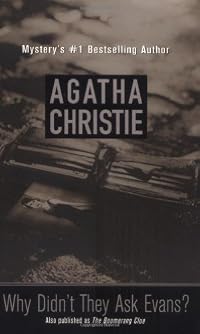
1930s Omnibus: The Sittaford Mystery, Why Didn't They Ask Evans, And Then There Were None, Murder is Easy by Agatha Christie
Common Knowledge
- Canonical title
- The Sittaford Mystery
- Original title
- The Sittaford Mystery
- Alternate titles
- Murder at Hazelmoor (US) (US)
- Original publication date
- 1931-09-07
- People/Characters
- Inspector Narracott; Emily Trefusis; Mrs. Willet; Captain Trevelyan; Violet Willet; Major John Burnaby (show all 21); Charles Evans; Mr. Duke; Mr. Rycroft; Ronnie Garfield; Jennifer Gardner; Evans; Captain Gardner; James Pearson; Sylvia Pearson; Martin Dering; Brian Pearson; Charles Enderby; Ronald Garfield; Mrs. Curtis; Captain Wyatt
- Important places
- Sittaford, Devon, England, UK (fictional); Exhampton, Devon, England, UK (fictional); Exeter, Devon, England, UK; London, England, UK; Wimbledon, London, England, UK; Dartmoor, Devon, England, UK
- Related movies
- The Sittaford Mystery (2006 | IMDb)
- Dedication
- To M.E.M
with whom I discussed the plot of this book,
to the alarm of those around us. - First words
- Major Burnaby drew on his gum boots, buttoned his overcoat collar round his neck, took from a shelf near the door a hurricane lantern, and cautiously opened the front door of his little bungalow and peered out.
- Quotations
- It's so wonderful to have someone you can really rely on.
- Last words
- (Click to show. Warning: May contain spoilers.)"Ah!" said Mr. Curtis.
- Original language
- English
- Disambiguation notice
- aka Murder at Hazelmoor
Classifications
Statistics
- Members
- 3,327
- Popularity
- 5,074
- Reviews
- 77
- Rating
- (3.55)
- Languages
- 22 — Arabic, Catalan, Czech, Danish, Dutch, English, Estonian, Finnish, French, German, Greek, Hungarian, Italian, Norwegian (Bokmål), Norwegian, Polish, Portuguese, Russian, Serbian, Spanish, Swedish, Turkish
- Media
- Paper, Audiobook, Ebook
- ISBNs
- 130
- ASINs
- 97