On This Page
Description
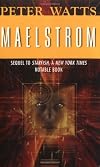
An enormous tidal wave on the west coast of North America has just killed thousands. Lenie Clarke, in a black wetsuit, walks out of the ocean onto a Pacific Northwest beach filled with the oppressed and drugged homeless of the Asian world who have gotten only this far in their attempt to reach America. Is she a monster, or a goddess? One thing is for sure: all hell is breaking loose. This dark, fast-paced, hard SF novel returns to the story begun in Starfish: all human life is threatened by show more a disease (actually a primeval form of life) from the distant prehuman past. It survived only in the deep ocean rift where Clarke and her companions were stationed before the corporation that employed them tried to sterilize the threat with a secret underwater nuclear strike. But Clarke was far enough away that she was able to survive and tough enough to walk home, 300 miles across the ocean floor. She arrives carrying with her the potential death of the human race, and possessed by a desire for revenge. Maelstrom is a terrifying explosion of cyberpunk noir by a writer whose narrative, says Robert Sheckley, "drives like a futuristic locomotive." show lessTags
Recommendations




























Member Reviews
So your team of misfits maintaining a geothermal power plant at the bottom of the ocean have come into contact with a really nasty microbe that has the potential to usurp the basic functions of Earth's biosphere and end life as we know it. Do you (a) inform them of the problem and put them in quarantine or (b) attempt to quietly set off a five hundred megaton fusion warhead right next to their facility in hopes of sterilizing the contagion, and incidentally releasing a few hundred years' worth of tectonic energy and triggering a massive earthquake that wrecks the West Coast?
The corporate types in Starfish chose (b)... but didn't keep it quiet enough. One of the rifters, Lenie Clarke, managed to get out before the bomb went off-- and show more she's a little bit unhappy about being nuked. And wherever she goes, she unknowingly spreads the contagion named βehemoth, while some people scramble to stop her and others try to help her.
Watts keeps up the pace he starts in Starfish with yet more of his unpleasant future, and provides excellent reasons not to use evolutionary algorithms to run your Internet. show less
The corporate types in Starfish chose (b)... but didn't keep it quiet enough. One of the rifters, Lenie Clarke, managed to get out before the bomb went off-- and show more she's a little bit unhappy about being nuked. And wherever she goes, she unknowingly spreads the contagion named βehemoth, while some people scramble to stop her and others try to help her.
Watts keeps up the pace he starts in Starfish with yet more of his unpleasant future, and provides excellent reasons not to use evolutionary algorithms to run your Internet. show less
This one I didn't read on my phone, this one I had a real hard paper copy of, so quaint and real, an artifact of a forgotten age. I ALSO had it on my phone, though, and I did read a few chapters that way, torn between the ancient and the modern! What will become of me!
Nothing nice, according to Peter Watts. If we thought things were dark on the bottom of the ocean, we had no idea how inky-black things were going to get back on the surface.
In an effort to destroy a planet-threatening microbe, a nuclear bomb was set off at a deep-sea vent, triggering an earthquake and tsunami that killed millions. It was all for nothing, as Leni Clarke swims ashore on the Colorado coast with vengeance in mind and the Behemoth bug in her blood. Everywhere show more she goes, death follows on a horrible scale, but not from the bug, from the authorities desperate to sterelise Behemoth out of existence. She becomes a legend, a myth, a messiah, and in the howling wilderness that used to be the internet, she inadvertently causes something unprecedented and incredibly dangerous to evolve.
The scope broadens, from the inky depths to the sprawling continent of North America, as forces marshal to help or hinder Leni on her insane odyssey. This is an epic, action-packed tale of doom and destruction, the very bleeding edge of science fiction. Brilliant. show less
Nothing nice, according to Peter Watts. If we thought things were dark on the bottom of the ocean, we had no idea how inky-black things were going to get back on the surface.
In an effort to destroy a planet-threatening microbe, a nuclear bomb was set off at a deep-sea vent, triggering an earthquake and tsunami that killed millions. It was all for nothing, as Leni Clarke swims ashore on the Colorado coast with vengeance in mind and the Behemoth bug in her blood. Everywhere show more she goes, death follows on a horrible scale, but not from the bug, from the authorities desperate to sterelise Behemoth out of existence. She becomes a legend, a myth, a messiah, and in the howling wilderness that used to be the internet, she inadvertently causes something unprecedented and incredibly dangerous to evolve.
The scope broadens, from the inky depths to the sprawling continent of North America, as forces marshal to help or hinder Leni on her insane odyssey. This is an epic, action-packed tale of doom and destruction, the very bleeding edge of science fiction. Brilliant. show less
Maelstrom is the second book in Watts's Rifters trilogy, and forms part of a continuous story. This review has spoilers for the first book.
So, the news is bad:
"It just lives, Killjoy. It lives, and it eats, and I think it does that better than anything else on the planet so we either stamp it out or kiss the whole biosphere goodbye."
He couldn't believe it. "One bug? How is that even possible?"
(...)
"It gets better," Jovellanos went on. "This thing's a veritable black hole of sulfur assimilation. I don't know where it learned this trick but it can snatch the stuff right out of our cells. Some kind of lysteriolysin analog, keeps it from getting lysed. That gums up glucose transport, protein synthesis, lipid and carb metabolism—shit, it show more gums up everything."
(...)
"You think this is about protecting the biosphere?" she cried. "You think they'd give a shit about environmental apocalypse if we could just synthesise our way out of the hole? You think they're launching all these cleansing strikes to protect the frigging rainforest?"
He stared at her.
Jovellanos shook her head. "Killjoy, it can get right inside our cells. Calvin cyclers don't matter. Sulfur supplements don't matter. Nothing we take in does us any good until our cells metabolise it—and whatever we take in, as soon as it gets past the cell membrane…there's ßehemoth, pushing to the front of the line."
The end of the biosphere isn't even the worst news. That's one character being brought up to speed about the ßehemoth (that's a Greek letter beta at the front) microorganism. It was safely confined to deep-ocean thermal vents for billions of years, until humans picked it up while running geothermal power stations in the first volume, Starfish. Nuking its home vent didn't stop it, partly because some of the human workers made it out. The corporate powers that be must carry out a stealth campaign against the microbe, incinerating any patches of ground - and human beings - that it infests.
The story tells a dangerous dance between those corporations and the people involved. There's Ken Lubin. a fine-tuned corporate assassin who nevers causes more than the minimum biologically necessary amount of pain and mayhem needed. There's Achilles Desjardins, a net-cop riding herd on Maelstrom, which is what the internet has become in the 2050s, a wild region of agressive computer viruses where getting your email safely may require deletion of legitimate parts of your message. Achilles's behavior is ruled by the neural modifications called Guilt Trip, rendering him unable to doing anything unethical - where "ethical" may mean killing thousands of people to save millions. In his data he spots the secret campaign against ßehemoth.
Through the story, we meet a number of secondary characters, who appear and then are left behind, whose fates we learn much later, or not at all. Both evolution and Watts are unsentimental about individuals. And there's our heroine Lenie Clark, making her way across North America, leaving infestations and ever-greater incinerations in her wake, becoming a meme with the aid of Maelstrom viruses, and thus imitated and helped by a growing popular audience. Lenie is driven by rage at a lifetime of abuse - but the reality, we learn, is even worse. Of course it is; this is Peter Watts, silly. As James Nicoll said, "Whenever I find my will to live becoming too strong, I read Peter Watts." As always, there's a Notes and References section at the end, with endnotes to scientific articles and other references from where the author got some of his springboard ideas.
Maelstrom complicates and deepens the Rifters story in a more convincing manner than most second volumes of trilogies, and the story of a (probably) world-ending plague feels just right for the Spring of 2020. On to the third volume, ßehemoth, and what I expect to be even worse news. show less
So, the news is bad:
"It just lives, Killjoy. It lives, and it eats, and I think it does that better than anything else on the planet so we either stamp it out or kiss the whole biosphere goodbye."
He couldn't believe it. "One bug? How is that even possible?"
(...)
"It gets better," Jovellanos went on. "This thing's a veritable black hole of sulfur assimilation. I don't know where it learned this trick but it can snatch the stuff right out of our cells. Some kind of lysteriolysin analog, keeps it from getting lysed. That gums up glucose transport, protein synthesis, lipid and carb metabolism—shit, it show more gums up everything."
(...)
"You think this is about protecting the biosphere?" she cried. "You think they'd give a shit about environmental apocalypse if we could just synthesise our way out of the hole? You think they're launching all these cleansing strikes to protect the frigging rainforest?"
He stared at her.
Jovellanos shook her head. "Killjoy, it can get right inside our cells. Calvin cyclers don't matter. Sulfur supplements don't matter. Nothing we take in does us any good until our cells metabolise it—and whatever we take in, as soon as it gets past the cell membrane…there's ßehemoth, pushing to the front of the line."
The end of the biosphere isn't even the worst news. That's one character being brought up to speed about the ßehemoth (that's a Greek letter beta at the front) microorganism. It was safely confined to deep-ocean thermal vents for billions of years, until humans picked it up while running geothermal power stations in the first volume, Starfish. Nuking its home vent didn't stop it, partly because some of the human workers made it out. The corporate powers that be must carry out a stealth campaign against the microbe, incinerating any patches of ground - and human beings - that it infests.
The story tells a dangerous dance between those corporations and the people involved. There's Ken Lubin. a fine-tuned corporate assassin who nevers causes more than the minimum biologically necessary amount of pain and mayhem needed. There's Achilles Desjardins, a net-cop riding herd on Maelstrom, which is what the internet has become in the 2050s, a wild region of agressive computer viruses where getting your email safely may require deletion of legitimate parts of your message. Achilles's behavior is ruled by the neural modifications called Guilt Trip, rendering him unable to doing anything unethical - where "ethical" may mean killing thousands of people to save millions. In his data he spots the secret campaign against ßehemoth.
Through the story, we meet a number of secondary characters, who appear and then are left behind, whose fates we learn much later, or not at all. Both evolution and Watts are unsentimental about individuals. And there's our heroine Lenie Clark, making her way across North America, leaving infestations and ever-greater incinerations in her wake, becoming a meme with the aid of Maelstrom viruses, and thus imitated and helped by a growing popular audience. Lenie is driven by rage at a lifetime of abuse - but the reality, we learn, is even worse. Of course it is; this is Peter Watts, silly. As James Nicoll said, "Whenever I find my will to live becoming too strong, I read Peter Watts." As always, there's a Notes and References section at the end, with endnotes to scientific articles and other references from where the author got some of his springboard ideas.
Maelstrom complicates and deepens the Rifters story in a more convincing manner than most second volumes of trilogies, and the story of a (probably) world-ending plague feels just right for the Spring of 2020. On to the third volume, ßehemoth, and what I expect to be even worse news. show less
Continuing with Rifters, we've jumped out of the water and taken our horribly damaged cyberpunk gene-modded abuse-victim/victimizer plague-carrying corpse-runner MERMAID with us.
Special mentions go to the gel packs that pack a horribly efficient computational punch, a 4-billion-year-old biological computer from the deepest Trench, and a death count of most of the world's population.
Woah, right?
Well, this IS Peter Watts and when he writes, he throws in ALL THE BEST SF GOODIES, making one hell of a spicy narrative soup that, in general, outcompetes and eats all the other modern SF out there. On ideas alone, he is one of the masters.
On narrative, in this case, however, I have to say it has a few weak points. It's not bad at all and I show more loved how Clarke became a world-destroying meme through fast-replicating viruses of a VERY old version. I loved the quest for discovery, too, regarding how she victimized and was made into a victim. And of course... ALL the rifters fit that bill. It was a major theme of the first book, where early victims, survivors, made the very best adaptations for deep-trench work.
Following Clarke above the water was almost as good as below, but not quite.
Still, this was a great setup for the future, and the devil is truly in the details. :) show less
Special mentions go to the gel packs that pack a horribly efficient computational punch, a 4-billion-year-old biological computer from the deepest Trench, and a death count of most of the world's population.
Woah, right?
Well, this IS Peter Watts and when he writes, he throws in ALL THE BEST SF GOODIES, making one hell of a spicy narrative soup that, in general, outcompetes and eats all the other modern SF out there. On ideas alone, he is one of the masters.
On narrative, in this case, however, I have to say it has a few weak points. It's not bad at all and I show more loved how Clarke became a world-destroying meme through fast-replicating viruses of a VERY old version. I loved the quest for discovery, too, regarding how she victimized and was made into a victim. And of course... ALL the rifters fit that bill. It was a major theme of the first book, where early victims, survivors, made the very best adaptations for deep-trench work.
Following Clarke above the water was almost as good as below, but not quite.
Still, this was a great setup for the future, and the devil is truly in the details. :) show less
Watts, Peter. Maelstrom. Tor, 2001. Rifters 2.
If there is such a thing as biopunk, Peter Watts is its William Gibson. In Maelstrom, all the things that started to go wrong in Starfish (a much better book, by the way) continue to go wrong and get worse. An ancient computer virus threatens the biosphere as we know it, and corporate bosses use a nuke on it and cause a tidal wave. People continue to do terrible things to one another with the best of motives. Watts says that he is an optimist and that however bad things get, they are not the result of human perfidy. He doesn’t want the typical array of TV and movie villains. But that does not save us, because like one of his characters, “on some level he’d believed in the Collective show more Unconscious for years. He just hadn’t realized that the fucking thing had a death wish.” On rereading, I found the narrative arc as murky as ever, but 4 stars for invention. show less
If there is such a thing as biopunk, Peter Watts is its William Gibson. In Maelstrom, all the things that started to go wrong in Starfish (a much better book, by the way) continue to go wrong and get worse. An ancient computer virus threatens the biosphere as we know it, and corporate bosses use a nuke on it and cause a tidal wave. People continue to do terrible things to one another with the best of motives. Watts says that he is an optimist and that however bad things get, they are not the result of human perfidy. He doesn’t want the typical array of TV and movie villains. But that does not save us, because like one of his characters, “on some level he’d believed in the Collective show more Unconscious for years. He just hadn’t realized that the fucking thing had a death wish.” On rereading, I found the narrative arc as murky as ever, but 4 stars for invention. show less
Two of the Rifters escape the nuclear explosion targeted to kill them and the competing extremophile lifeform that evolved in the undersea, geothermal abyss. Quarantines and mass murder follow as shadowy government agencies try to stop (or assist?) Lenie Clarke and the extinction microbe she is spreading.
Why I picked it up: I'm all-in with this series. (Of course I am—bionic mermaids?) I'd intended to listen to this on Hoopla, but disliked the performer. As Watts has released the book via Creative Commons license, I ended up reading it via Open Library and the SimplyE app.
Why I finished it: Watts' hard science and speculation is engaging, and the action keeps moving. Also, I had insomnia, so this kept me company.
I'd give it to: You show more don't need to have read [Starfish] to read this, and while the abuse and trauma psychology still plays a role in the narrative, it's less raw than in the first book, and may be more palatable to some readers. show less
Why I picked it up: I'm all-in with this series. (Of course I am—bionic mermaids?) I'd intended to listen to this on Hoopla, but disliked the performer. As Watts has released the book via Creative Commons license, I ended up reading it via Open Library and the SimplyE app.
Why I finished it: Watts' hard science and speculation is engaging, and the action keeps moving. Also, I had insomnia, so this kept me company.
I'd give it to: You show more don't need to have read [Starfish] to read this, and while the abuse and trauma psychology still plays a role in the narrative, it's less raw than in the first book, and may be more palatable to some readers. show less
I really enjoyed Maelstrom. The second book in the Rifters trilogy took the speculative fiction I love from Charles Stross and William Gibson and totally geeked it out. The way Watts takes real science (complete with footnotes) and builds a story around it makes for a very compelling story, and I love that he doesn't use the unexplained as a plot device. In this, he reminds me a lot of Brandon Sanderson, a writer who creates detailed and well-defined (if impossible) magic systems and then builds a story around them.
Concepts I loved -
* Gene-based systems that can pass turing tests if they mutate fast enough
* Humans modified for pattern recognition
* Not being sure what neural network based AI systems learn when we teach them
* Modifying show more humans to enforce behaviors at the chemical level
* Organisms fitter than us that also outconsume us and can cause giantism (and the end of the world)
* The concept of self as mutable (what are memories if you can edit a brain?)
* An inkling of the concept of the Chinese Room problem that was central to the later-published Blindsight; if you can pass a note under a door and get a valid response back does that mean the thing on the other side of the door understands you?
It was interesting how much viewpoints bounced around. In contrast, Blindsight and Starfish were much more told from a single point of view, rather than parallel stories. I like both styles, but liking Achilles' story so much is what made me really embrace it in Maelstrom, and I don't think any of the viewpoints could have stood by themselves. Not that you'd want to read a story from the point of view of Lenie in Maelstrom; she was filled with nothing but hate.
Peter Watts is quickly becoming a favorite author. show less
Concepts I loved -
* Gene-based systems that can pass turing tests if they mutate fast enough
* Humans modified for pattern recognition
* Not being sure what neural network based AI systems learn when we teach them
* Modifying show more humans to enforce behaviors at the chemical level
* Organisms fitter than us that also outconsume us and can cause giantism (and the end of the world)
* The concept of self as mutable (what are memories if you can edit a brain?)
* An inkling of the concept of the Chinese Room problem that was central to the later-published Blindsight; if you can pass a note under a door and get a valid response back does that mean the thing on the other side of the door understands you?
It was interesting how much viewpoints bounced around. In contrast, Blindsight and Starfish were much more told from a single point of view, rather than parallel stories. I like both styles, but liking Achilles' story so much is what made me really embrace it in Maelstrom, and I don't think any of the viewpoints could have stood by themselves. Not that you'd want to read a story from the point of view of Lenie in Maelstrom; she was filled with nothing but hate.
Peter Watts is quickly becoming a favorite author. show less
Members
- Recently Added By
Lists

Books Read in 2017
4,248 works; 130 members

Books Read in 2018
4,360 works; 110 members

Female Protagonist
1,056 works; 56 members
Author Information

47+ Works 8,785 Members
Peter Watts is a reformed marine biologist whom Canada's Globe and Mail has proclaimed "one of the very best hard-SF writers alive"
Some Editions
Awards and Honors
Awards
Distinctions
Series

Common Knowledge
- Canonical title
- Maelstrom
- Original publication date
- 2001
- People/Characters
- Lenie Clarke; Anemone
- Important places
- North America; Pacific Ocean; Pacific Northwest, USA; Sudbury, Ontario, Canada
- Dedication
- For Laurie
"Though she be but little, she is fierce." - First words
- The day after Patricia Rowan saved the world, a man named Elias Murphy brought a piece of her conscience home to roost.
- Last words
- (Click to show. Warning: May contain spoilers.)He cocoons her from behind, wrapping her flesh in his, and stares off into darkness while the real world falls asleep around him.
- Publisher's editor
- Hartwell, David G.
Classifications
Statistics
- Members
- 685
- Popularity
- 41,483
- Reviews
- 18
- Rating
- (3.78)
- Languages
- English, French, German, Polish
- Media
- Paper, Audiobook, Ebook
- ISBNs
- 13
- ASINs
- 6