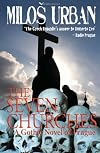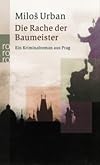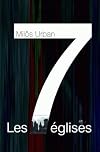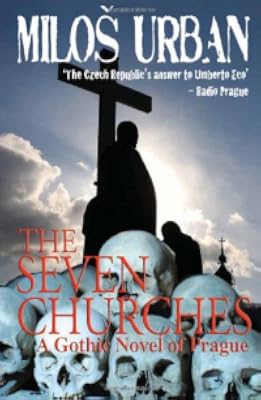
The Seven Churches
by Miloš Urban
On This Page
Description
A bloody, atmospheric modern classic of crime literature and one of the most haunting and terrifying thrillers to come out of Europe in recent years Written in the spirit of the sensational murder story and combined with a rich Gothic atmosphere, this tale, now translated into 11 languages, traces the steps of a killer through the seven cathedrals of modern day Prague. The narrator, a policeman known simply as K, witnesses a bizarre accident followed by a series of mysterious murders. show more This event triggers a series of meetings with Gothic characters who appear to be trying to reconstruct the medieval "golden age" of Prague in the reign of Charles IV under the noses if its modern-day inhabitants. The book's bloody and nightmarish plot will dazzle readers of thrillers, but ultimately the novel is much more--it's a brilliant postmodern interpretation of the historical topography of late-medieval Prague and a vision of a civilization in decline. show lessTags
Recommendations




















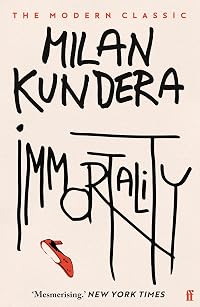


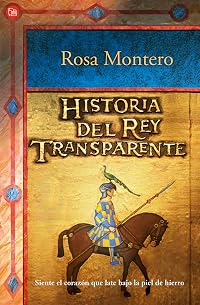




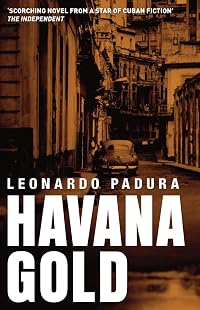
Member Recommendations

bluepiano Another unsettling depiction of places in Prague and a less forgettable one.
Member Reviews
Discharged from the Police after a botched job, K. is unexpectedly asked to rejoin the force and given a very specific assignment – that of accompanying and protecting Matthias Gmünd, an eccentric aristocrat who intends to restore the Gothic churches of Prague to their original glory. At first, K is in his element – after all, he is himself a failed historian obsessed with the Middle Ages and suspicious of the contemporary world. But his visits to Prague’s historic churches are increasingly accompanied by terrifying fits in which K has mysterious visions of the past. More worryingly, a serial killer is on the loose, seemingly targeting anybody who dares defy the sacred sites of the town.
Miloš Urban’s atmospheric 1999 Gothic show more novel The Seven Churches was a bestseller in Spain and the Czech Republic and has been translated into twelve languages. Hats off, then, to Peter Owen Publishers for securing the publication of Robert Russell’s English translation. Indeed, I am rather surprised that it has not enjoyed the runaway success obtained by other, less-deserving novels.
Urban has been compared to Umberto Eco but, frankly, that is the type of lazy analogy which nowadays tends to be applied to any literary thriller associated with the Middle Ages. The novel is reminiscent of Eco in its erudition and in its author’s evident love for literature and cultural history. However, the novel has supernatural undercurrents which are not particularly typical of the Italian author. The Seven Churches reminds me rather of Peter Ackroyd’s [b:Hawksmoor|67729|Hawksmoor|Peter Ackroyd|https://d.gr-assets.com/books/1411397981s/67729.jpg|65684]. There is a resemblance in the subject-matter (a serial killer obsessed with historical churches) and a similar concern with psycho-geography – the quasi-mystical idea that buildings can carry “memories” of ages past. In the novel we roam through a Prague in which the Middle Ages unexpectedly reassert themselves, in which chasms open up in the road swallowing cars into medieval crypts; in which unicorns appear on dissecting tables and buxom beauties wear chastity belts; in which centuries-old secret societies live on, hidden from the hustle and bustle of the modern world.
At one point, K. is drawn into a literary discussion about Gothic novels – he tends to prefer supernatural Gothic to the rational strand of the genre in which all puzzling occurrences are tidily explained at the end. In Urban’s book, there seems to be a struggle between the two types of Gothic. Some mysteries are solved – other questions remain tantalisingly unanswered. In fact, the novel just gets weirder with each chapter. The ambiguous ending is somewhat unsatisfying from a narrative point of view. However, one cannot help feeling that it fits this haunting, uncanny novel like a glove. show less
Miloš Urban’s atmospheric 1999 Gothic show more novel The Seven Churches was a bestseller in Spain and the Czech Republic and has been translated into twelve languages. Hats off, then, to Peter Owen Publishers for securing the publication of Robert Russell’s English translation. Indeed, I am rather surprised that it has not enjoyed the runaway success obtained by other, less-deserving novels.
Urban has been compared to Umberto Eco but, frankly, that is the type of lazy analogy which nowadays tends to be applied to any literary thriller associated with the Middle Ages. The novel is reminiscent of Eco in its erudition and in its author’s evident love for literature and cultural history. However, the novel has supernatural undercurrents which are not particularly typical of the Italian author. The Seven Churches reminds me rather of Peter Ackroyd’s [b:Hawksmoor|67729|Hawksmoor|Peter Ackroyd|https://d.gr-assets.com/books/1411397981s/67729.jpg|65684]. There is a resemblance in the subject-matter (a serial killer obsessed with historical churches) and a similar concern with psycho-geography – the quasi-mystical idea that buildings can carry “memories” of ages past. In the novel we roam through a Prague in which the Middle Ages unexpectedly reassert themselves, in which chasms open up in the road swallowing cars into medieval crypts; in which unicorns appear on dissecting tables and buxom beauties wear chastity belts; in which centuries-old secret societies live on, hidden from the hustle and bustle of the modern world.
At one point, K. is drawn into a literary discussion about Gothic novels – he tends to prefer supernatural Gothic to the rational strand of the genre in which all puzzling occurrences are tidily explained at the end. In Urban’s book, there seems to be a struggle between the two types of Gothic. Some mysteries are solved – other questions remain tantalisingly unanswered. In fact, the novel just gets weirder with each chapter. The ambiguous ending is somewhat unsatisfying from a narrative point of view. However, one cannot help feeling that it fits this haunting, uncanny novel like a glove. show less
Discharged from the Police after a botched job, K. is unexpectedly asked to rejoin the force and given a very specific assignment – that of accompanying and protecting Matthias Gmünd, an eccentric aristocrat who intends to restore the Gothic churches of Prague to their original glory. At first, K is in his element – after all, he is himself a failed historian obsessed with the Middle Ages and suspicious of the contemporary world. But his visits to Prague’s historic churches are increasingly accompanied by terrifying fits in which K has mysterious visions of the past. More worryingly, a serial killer is on the loose, seemingly targeting anybody who dares defy the sacred sites of the town.
Miloš Urban’s atmospheric 1999 Gothic show more novel The Seven Churches was a bestseller in Spain and the Czech Republic and has been translated into twelve languages. Hats off, then, to Peter Owen Publishers for securing the publication of Robert Russell’s English translation. Indeed, I am rather surprised that it has not enjoyed the runaway success obtained by other, less-deserving novels.
Urban has been compared to Umberto Eco but, frankly, that is the type of lazy analogy which nowadays tends to be applied to any literary thriller associated with the Middle Ages. The novel is reminiscent of Eco in its erudition and in its author’s evident love for literature and cultural history. However, the novel has supernatural undercurrents which are not particularly typical of the Italian author. The Seven Churches reminds me rather of Peter Ackroyd’s [b:Hawksmoor|67729|Hawksmoor|Peter Ackroyd|https://d.gr-assets.com/books/1411397981s/67729.jpg|65684]. There is a resemblance in the subject-matter (a serial killer obsessed with historical churches) and a similar concern with psycho-geography – the quasi-mystical idea that buildings can carry “memories” of ages past. In the novel we roam through a Prague in which the Middle Ages unexpectedly reassert themselves, in which chasms open up in the road swallowing cars into medieval crypts; in which unicorns appear on dissecting tables and buxom beauties wear chastity belts; in which centuries-old secret societies live on, hidden from the hustle and bustle of the modern world.
At one point, K. is drawn into a literary discussion about Gothic novels – he tends to prefer supernatural Gothic to the rational strand of the genre in which all puzzling occurrences are tidily explained at the end. In Urban’s book, there seems to be a struggle between the two types of Gothic. Some mysteries are solved – other questions remain tantalisingly unanswered. In fact, the novel just gets weirder with each chapter. The ambiguous ending is somewhat unsatisfying from a narrative point of view. However, one cannot help feeling that it fits this haunting, uncanny novel like a glove. show less
Miloš Urban’s atmospheric 1999 Gothic show more novel The Seven Churches was a bestseller in Spain and the Czech Republic and has been translated into twelve languages. Hats off, then, to Peter Owen Publishers for securing the publication of Robert Russell’s English translation. Indeed, I am rather surprised that it has not enjoyed the runaway success obtained by other, less-deserving novels.
Urban has been compared to Umberto Eco but, frankly, that is the type of lazy analogy which nowadays tends to be applied to any literary thriller associated with the Middle Ages. The novel is reminiscent of Eco in its erudition and in its author’s evident love for literature and cultural history. However, the novel has supernatural undercurrents which are not particularly typical of the Italian author. The Seven Churches reminds me rather of Peter Ackroyd’s [b:Hawksmoor|67729|Hawksmoor|Peter Ackroyd|https://d.gr-assets.com/books/1411397981s/67729.jpg|65684]. There is a resemblance in the subject-matter (a serial killer obsessed with historical churches) and a similar concern with psycho-geography – the quasi-mystical idea that buildings can carry “memories” of ages past. In the novel we roam through a Prague in which the Middle Ages unexpectedly reassert themselves, in which chasms open up in the road swallowing cars into medieval crypts; in which unicorns appear on dissecting tables and buxom beauties wear chastity belts; in which centuries-old secret societies live on, hidden from the hustle and bustle of the modern world.
At one point, K. is drawn into a literary discussion about Gothic novels – he tends to prefer supernatural Gothic to the rational strand of the genre in which all puzzling occurrences are tidily explained at the end. In Urban’s book, there seems to be a struggle between the two types of Gothic. Some mysteries are solved – other questions remain tantalisingly unanswered. In fact, the novel just gets weirder with each chapter. The ambiguous ending is somewhat unsatisfying from a narrative point of view. However, one cannot help feeling that it fits this haunting, uncanny novel like a glove. show less
No se ni como reseñar este libro, por supuesto puedo decir que me ha gustado, pero me parece muy poca cosa que decir siendo el libro que es.
Tiene una historia de asesinatos, pero no creo que lo pudiera encuadrar en un thriller o al menos no en uno convencional, lo que sucede es que los asesinatos que ocurren no son, ni de lejos, la parte central de la historia.
Para empezar, es un libro que se centra mucho sobre la historia del estilo arquitectónico de unas iglesias de Praga, basándose en siete iglesias de estilo gótico de la edad media y que en la actualidad se encuentran casi en ruinas.
Vamos conociendo de alguna manera la historia arquitectónica de estas iglesias a través de la vida de su protagonista, un policía mucho más show more allá de mediocre el cual antes de entrar a la policía abandona sus estudios de historia, en fin, es un personaje realmente patético que se ve envuelto en una serie de asesinatos que lo hacen regresar a la policía, pero todo a través de otro personaje por demás peculiar.
La cuestión aquí es que, entre lo gótico, lo extraño, lo extravagante de la historia vamos conociendo esta parte de historia arquitectónica de una de las ciudades, para mi gusto, más hermosas del mundo, sin embargo, no es un libro convencional en ningún sentido, su estilo narrativo es errático, el ritmo de la historia tiene altibajos, la narrativa es pausada, extraña, tanto como la historia misma.
Es un libro peculiar, pero interesante en su extraña manera, me ha costado mucho sacarme el chip de la cabeza de un thriller tradicional para cambiarlo a uno de estilo gótico con un final que no es para nada lo que se puede esperar, aquí no importa si adivinamos o no quien o quienes son los responsables de las muertes, aquí lo que importa es conocer a nuestro protagonista y perdernos en sus extrañas maneras y en lo que le está sucediendo de otra manera será imposible de leer. show less
Tiene una historia de asesinatos, pero no creo que lo pudiera encuadrar en un thriller o al menos no en uno convencional, lo que sucede es que los asesinatos que ocurren no son, ni de lejos, la parte central de la historia.
Para empezar, es un libro que se centra mucho sobre la historia del estilo arquitectónico de unas iglesias de Praga, basándose en siete iglesias de estilo gótico de la edad media y que en la actualidad se encuentran casi en ruinas.
Vamos conociendo de alguna manera la historia arquitectónica de estas iglesias a través de la vida de su protagonista, un policía mucho más show more allá de mediocre el cual antes de entrar a la policía abandona sus estudios de historia, en fin, es un personaje realmente patético que se ve envuelto en una serie de asesinatos que lo hacen regresar a la policía, pero todo a través de otro personaje por demás peculiar.
La cuestión aquí es que, entre lo gótico, lo extraño, lo extravagante de la historia vamos conociendo esta parte de historia arquitectónica de una de las ciudades, para mi gusto, más hermosas del mundo, sin embargo, no es un libro convencional en ningún sentido, su estilo narrativo es errático, el ritmo de la historia tiene altibajos, la narrativa es pausada, extraña, tanto como la historia misma.
Es un libro peculiar, pero interesante en su extraña manera, me ha costado mucho sacarme el chip de la cabeza de un thriller tradicional para cambiarlo a uno de estilo gótico con un final que no es para nada lo que se puede esperar, aquí no importa si adivinamos o no quien o quienes son los responsables de las muertes, aquí lo que importa es conocer a nuestro protagonista y perdernos en sus extrañas maneras y en lo que le está sucediendo de otra manera será imposible de leer. show less
I thought this book sounded interesting; but the author really takes ambient description way too seriously. When the story starts to get going and you are very into it, he cuts it off and begins describing the streets, the surroundings, and the places too deeply and he completely looses you. Besides, he constantly uses the names in dutch of all the places he mentions, so there's another goner.
Unos macabros asesinatos. Siete iglesias de Praga como escenario. Un tenebroso secreto oculto durante siglos. "Y se me ocurrió entrar en la policía. Yo mismo me reí imaginándome de uniforme, protegiendo, con un arma al cinturón, a todos esos lelos obcecados que viven en esta pobre ciudad. Me daban tales ataques de risa, que encontré en ésta una salida de la perenne tristeza que embargaba mi alma." Kvetoslav Svach, conocido como K, nunca ha sido muy bien visto dentro del cuerpo de policía. Su carácter especial y su pasión por la historia y arte medievales son considerados como rarezas. Por ello, su expulsión del cuerpo, debido a la muerte de una persona de cuya seguridad era responsable, es recibida con indiferencia por la show more mayoría de sus compañeros. Ahora K tiene tiempo para deambular por las calles de Praga y dejarse seducir por su arquitectura gótica, cuyos detalles analiza con unos prismáticos que siempre le acompañan. Pero el asesinato de una serie de personas en las inmediaciones de unas iglesias, lleva al jefe de policía a pedir la reincorporación de K. Éste se adentra en la investigación del caso y descubre que los crímenes están firmados por un asesino cuyos motivos podrían remontarse a siglos atrás. show less
Dec 25, 2010Spanish
Ratings
Members
- Recently Added By
Lists

Global Reads: Books Set in Eastern Europe
45 works; 10 members

Llibres que he llegit el 2013
47 works; 1 member
Author Information

25+ Works 280 Members
Some Editions
Common Knowledge
- Canonical title
- The Seven Churches
- Original title
- Sedmikostelí
- Original publication date
- 1999
- People/Characters
- K
- Important places
- Prague, Czech Republic
- Original language*
- Tsjechisch
*Some information comes from Common Knowledge in other languages. Click "Edit" for more information.
Classifications
- Genres
- Fiction and Literature, Suspense & Thriller, Horror
- DDC/MDS
- 891.8636 — Literature & rhetoric Literatures of other languages East Indo-European and Celtic literatures West and South Slavic languages (Bulgarian, Slovene, Polish, Czech, Slovak, Serbo-Croatian, and Macedonian) Czech Czech fiction 1989–
- LCC
- PG5039.31 .R294 .S413 — Language and Literature Slavic languages and literatures. Baltic languages. Albanian language Slavic. Baltic. Albanian Slavic Czech
- BISAC
Statistics
- Members
- 109
- Popularity
- 298,927
- Reviews
- 5
- Rating
- (2.88)
- Languages
- 9 — Czech, Dutch, English, French, German, Hungarian, Italian, Slovenian, Spanish
- Media
- Paper, Ebook
- ISBNs
- 15
- ASINs
- 1