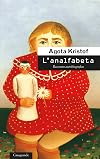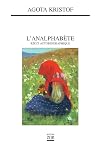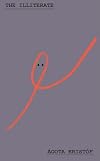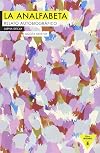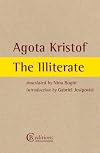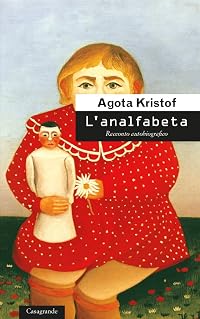
The Illiterate
by Ágota Kristóf
On This Page
Description
"Narrated in a series of stark, brief vignettes, The Illiterate is Ágota Kristóf's memoir of her childhood, her escape from Hungary in 1956 with her husband and small child, her early years working in factories in Switzerland, and the writing of her first novel, The Notebook. Few writers can convey so much in so little space. Fierce yet almost pointedly flat and documentarian in tone, Kristóf portrays with a disturbing level of detail and directness an implacable message of loss: first, show more she is forced to learn Russian as a child (with the Soviet takeover of Hungary, Russian became obligatory at school); next, at age twenty-one, she finds herself required to learn French to survive: I have spoken French for more than thirty years, I have written in French for twenty years, but I still don't know it. I don't speak it without mistakes, and I can only write it with the help of dictionaries, which I frequently consult. It is for this reason that I also call the French language an enemy language. There is a further reason, the most serious of all: this language is killing my mother tongue"-- show lessTags
Recommendations









Member Recommendations

Oct326 Due frammenti autobiografici da due scrittrici che hanno avuto vite simili e dolorose: entrambe ungheresi, hanno attraversato gli orrori della guerra e del dopoguerra, e subìto lo sradicamento, l'esilio, e la migrazione anche linguistica.
Member Reviews
Şifreli yazılarımı tuttuğum hatıra defterimi ve ilk şiirlerimi Macaristan’da bıraktım. Erkek kardeşlerimi, annemi babamı, haber bile vermeden, bir veda bile etmeden geride bıraktım. Ama hepsinden de önemlisi o gün, 1956’nın o Kasım sonu, bir halka olan aidiyetimi kesin olarak kaybettim.
Macaristan’daki ilk mutlu yıllar, savaş sonrası yoksulluk, yatılı okul dönemi, “çocukluğun gümüş ipliği”nin kopuşu, Stalin’in ölümü, sürgün, Lozan yılları, yeni bir ülke, anadil ve düşman dil... Ágota Kristóf bebeği ve kocasıyla yirmi bir yaşında sığınmacı olarak yerleştiği İsviçre’de hiçbir zaman tam anlamıyla hâkim olamayacağı, asla kendine ait kılamayacağı, ne yazabildiği ne show more de okuyabildiği düşman bir dille tanışır. Bundan böyle kendini bir halkın parçası hissedemediği gibi ötekilik hissini de her daim içinde taşır.
Yazarın tek otobiyografik metni olan Okumaz Yazmaz ölçülü, kısa cümleleri, ne eksik ne de fazla sözcükleriyle doğrudan okurun kalbine sesleniyor.
“Bu kitap küçük bir mücevher.”
Kirkus Reviews
“Kristóf yaklaşık elli sayfada, başkalarının bütün bir kariyeri boyunca hedefleyebileceği şeyi başarıyor. Katıksız bir deha.”
Max Porter show less
Macaristan’daki ilk mutlu yıllar, savaş sonrası yoksulluk, yatılı okul dönemi, “çocukluğun gümüş ipliği”nin kopuşu, Stalin’in ölümü, sürgün, Lozan yılları, yeni bir ülke, anadil ve düşman dil... Ágota Kristóf bebeği ve kocasıyla yirmi bir yaşında sığınmacı olarak yerleştiği İsviçre’de hiçbir zaman tam anlamıyla hâkim olamayacağı, asla kendine ait kılamayacağı, ne yazabildiği ne show more de okuyabildiği düşman bir dille tanışır. Bundan böyle kendini bir halkın parçası hissedemediği gibi ötekilik hissini de her daim içinde taşır.
Yazarın tek otobiyografik metni olan Okumaz Yazmaz ölçülü, kısa cümleleri, ne eksik ne de fazla sözcükleriyle doğrudan okurun kalbine sesleniyor.
“Bu kitap küçük bir mücevher.”
Kirkus Reviews
“Kristóf yaklaşık elli sayfada, başkalarının bütün bir kariyeri boyunca hedefleyebileceği şeyi başarıyor. Katıksız bir deha.”
Max Porter show less
http://msarki.tumblr.com/post/76144017497/the-illiterate-by-agota-kristof
Gabriel Josipovici wrote an exquisite introduction to this slim volume. In his introduction Josipovici states that upon first reading Kristof’s most famous work titled [b:The Notebook|19921345|The Notebook|Ágota Kristof|https://d202m5krfqbpi5.cloudfront.net/books/1387750717s/19921345.jpg|26619540] he understood immediately he was in the presence of greatness. I could not agree more with that statement as I can attest to it happening to me as well. It isn’t often enough that this phenomenon happens. Though I am amazed at how many talented writers there are, and have been, among us. Seems each week I am introduced to a writer I had not been aware of previously. show more But the label of greatness is kept for only the very few. Ágota Kristof is most definitely one of these specific icons we certainly must treasure and be so grateful for their willingness to write in the first place and work so diligently to perfect their craft.
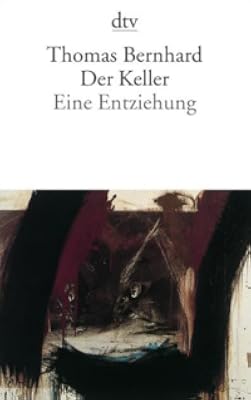
I think it is also remarkable to discover later in this memoir that Kristof considers [a:Thomas Bernhard|7745|Thomas Bernhard|https://d202m5krfqbpi5.cloudfront.net/authors/1326833554p2/7745.jpg] the greatest of all examples for what it means to be a writer, especially for those persons claiming to be one. She also affirms that Bernhard never seized to criticize and denounce his country with both hate and love, but his humor in doing so remains to this day unequaled by any other, though I have to believe most of us who read Kristof are aware she can be quite funny at times herself. But it isn’t the humor that draws me so much to the writing of Ágota Kristof. Rather it is this adorableness, if you will excuse the pert term, that she maintains in the face of her story’s extremes. Though I cannot actually see her, she just feels so damn cute to me. And her personality is so to-the-point, piercingly direct in a manner that is very hard to explain. The violence in some of her scenes is so exact as to cause a shocking affect, and as I have mentioned in previous remarks I made due to Kristof, she writes a damn titillating sex scene, no less extreme in its provocation on the page.
Reading this slim, but still voluminous work was a treat just to get an inside look at the life of Ágota Kristof, in her own words, and to learn firsthand how she became a writer. Obviously, it is not enough to wish to be something or other. One must persevere, at times, and often, against great odds. But the important object to note here is that Kristof would have written no matter her success at finding, or not finding, a commercial publisher for her work. Writing was something she just had to do, of course, after she became literate enough to be coherent composing within a foreign language in a country so unlike her one of origin.
Ágota Kristof is a treasure just as Thomas Bernhard is a treasure, and it is with great gratitude and satisfaction that we have both their work to share among us and to have exampled a good bit of writing from. There are still a few books written by Ágota Kristof left to be translated from French into English. It is my hope that this occurs sooner rather than later as I am unfortunately running out of time. And I am confident in my solemn sadness that I am not alone, but rather inclusively stirring, in my sinking ship. show less
Gabriel Josipovici wrote an exquisite introduction to this slim volume. In his introduction Josipovici states that upon first reading Kristof’s most famous work titled [b:The Notebook|19921345|The Notebook|Ágota Kristof|https://d202m5krfqbpi5.cloudfront.net/books/1387750717s/19921345.jpg|26619540] he understood immediately he was in the presence of greatness. I could not agree more with that statement as I can attest to it happening to me as well. It isn’t often enough that this phenomenon happens. Though I am amazed at how many talented writers there are, and have been, among us. Seems each week I am introduced to a writer I had not been aware of previously. show more But the label of greatness is kept for only the very few. Ágota Kristof is most definitely one of these specific icons we certainly must treasure and be so grateful for their willingness to write in the first place and work so diligently to perfect their craft.
I think it is also remarkable to discover later in this memoir that Kristof considers [a:Thomas Bernhard|7745|Thomas Bernhard|https://d202m5krfqbpi5.cloudfront.net/authors/1326833554p2/7745.jpg] the greatest of all examples for what it means to be a writer, especially for those persons claiming to be one. She also affirms that Bernhard never seized to criticize and denounce his country with both hate and love, but his humor in doing so remains to this day unequaled by any other, though I have to believe most of us who read Kristof are aware she can be quite funny at times herself. But it isn’t the humor that draws me so much to the writing of Ágota Kristof. Rather it is this adorableness, if you will excuse the pert term, that she maintains in the face of her story’s extremes. Though I cannot actually see her, she just feels so damn cute to me. And her personality is so to-the-point, piercingly direct in a manner that is very hard to explain. The violence in some of her scenes is so exact as to cause a shocking affect, and as I have mentioned in previous remarks I made due to Kristof, she writes a damn titillating sex scene, no less extreme in its provocation on the page.
Reading this slim, but still voluminous work was a treat just to get an inside look at the life of Ágota Kristof, in her own words, and to learn firsthand how she became a writer. Obviously, it is not enough to wish to be something or other. One must persevere, at times, and often, against great odds. But the important object to note here is that Kristof would have written no matter her success at finding, or not finding, a commercial publisher for her work. Writing was something she just had to do, of course, after she became literate enough to be coherent composing within a foreign language in a country so unlike her one of origin.
Ágota Kristof is a treasure just as Thomas Bernhard is a treasure, and it is with great gratitude and satisfaction that we have both their work to share among us and to have exampled a good bit of writing from. There are still a few books written by Ágota Kristof left to be translated from French into English. It is my hope that this occurs sooner rather than later as I am unfortunately running out of time. And I am confident in my solemn sadness that I am not alone, but rather inclusively stirring, in my sinking ship. show less
Njëmbëdhjetë kapituj për njëmbëdhjetë momente të jetës së saj, nga vajza e vogël që përpin libra në Hungari në shkrimin e romaneve të parë në frëngjisht. Fëmijëria e lumtur, mjerimi i pasluftës, vitet e vetmisë në konvikt, vdekja e Stalinit, gjuha e nënës dhe gjuhët armike që janë gjermanishtja dhe rusishtja, arratisja në Austri dhe mbërritja në Lozanë, me foshnjën e saj.
Once breves capítulos para once momentos de la intensa vida de Agota Kristof. Una obra autobiográfica que sintetiza en estos bellos fragmentos los once momentos fundamentales de una existencia apasionada. Estas páginas han sido definidas por la crítica como «un regalo para el intelecto»; un trayecto vital que describe primero a una joven que devora libros en húngaro para luego dar la palabra a una escritora mundialmente reconocida en otro idioma, el francés.
De una infancia feliz a la pobreza después de la guerra, pasando por los años de soledad en el internado, la muerte de Stalin, la lengua materna y las lenguas enemigas como el alemán y el ruso, la huida de Austria y la llegada a Lausanne con su bebé. Las palabras de Agota show more Kristof nunca son tristes, son implacables, justas y precisas. Todo el mundo de Agota Kristof está aquí, en este libro caracterizado por frases breves, minimalistas, diminutas en las que se concentran en todo momento las grandes reflexiones y los poderosos pensamientos que las han provocado. show less
De una infancia feliz a la pobreza después de la guerra, pasando por los años de soledad en el internado, la muerte de Stalin, la lengua materna y las lenguas enemigas como el alemán y el ruso, la huida de Austria y la llegada a Lausanne con su bebé. Las palabras de Agota show more Kristof nunca son tristes, son implacables, justas y precisas. Todo el mundo de Agota Kristof está aquí, en este libro caracterizado por frases breves, minimalistas, diminutas en las que se concentran en todo momento las grandes reflexiones y los poderosos pensamientos que las han provocado. show less
Dec 21, 2021Spanish
Hamaika atal laburretan jasotzen ditu egileak bere bizitzaren une erabakigarrienak. Jaioterri izan zuen Hungariatik Austriara, eta handik Suitzara emigratu zuenean lau hilabeteko bere alabarekin, hungarieraz irakurtzen zuen, eta asko; baina gero, frantsesez –alegia, erbestearen hizkuntzan– idatziko du bere literatur obra osoa. Liburu honetan, ama hizkuntzaz eta “hizkuntza etsaiez” dihardu (alemana eta errusiera, baita frantsesa bera ere) besteak beste, idazkera minimalista batez ondutako kontakizun autobiografiko zorrotz, gupidagabe eta doi batean.
Oroimen eta bizipen propioez –eta oroimen eta bizipen haiei buruzko azterketa zorrotzez– literatur esperientzia hunkigarri bezain gozagarria eraikitzeko gauza izan diren idazle show more maisu-maistren multzoan dugu, betiko, Agota Kristof. show less
Oroimen eta bizipen propioez –eta oroimen eta bizipen haiei buruzko azterketa zorrotzez– literatur esperientzia hunkigarri bezain gozagarria eraikitzeko gauza izan diren idazle show more maisu-maistren multzoan dugu, betiko, Agota Kristof. show less
May 11, 2021Spanish
La biografia de l'Agota Kristof té una novel·la, però no és aquest llibre. Semblen les notes per un projecte més ambiciós.
May 9, 2009Catalan
No me ha emocionado.
Y el prólogo es críptico a matar.
Y el prólogo es críptico a matar.
Jun 12, 2015Spanish
Members
- Recently Added By
Lists

Writers at Risk
106 works; 17 members
Author Information

Some Editions
Awards and Honors
Distinctions
Common Knowledge
- Canonical title*
- L'analfabeta: racconto autobiografico
- Original title
- L'Analphabète
- Original publication date
- 2004 (original French) (original French); 2004; 2014 (English: Bogin) (English: Bogin)
- People/Characters*
- Agota; Tila; Yano
- Important places*
- Ungheria; Austria; Svizzera
- Important events*
- Avanzata dell'armata rossa 1956
- First words*
- Leggo. È come una malattia. Leggo tutto ciò che mi capita sottomano, sotto gli occhi...
- Quotations*
- Cinque anni dopo essere giunta in Svizzera parlo il francese, ma continuo a non saperlo leggere. Sono tornata analfabeta.
Questa lingua, il francese, non l'ho scelta io. Mi è stata imposta dal caso, dalle circostanze. So che non riuscirò mai a scrivere come scrivono gli scrittori francesi di nascita. Ma scriverò come meglio potrò. È una sfi... (show all)da. la sfida di un'analfabeta. - Last words*
- (Click to show. Warning: May contain spoilers.)Ho detto:
― È divertente, non trova?
― Divertente? Sì, è proprio la parola giusta. - Original language
- French
*Some information comes from Common Knowledge in other languages. Click "Edit" for more information.
Classifications
Statistics
- Members
- 283
- Popularity
- 114,171
- Reviews
- 8
- Rating
- (3.91)
- Languages
- 12 — Catalan, Dutch, English, French, German, Greek, Hebrew, Italian, Slovenian, Spanish, Swedish, Turkish
- Media
- Paper, Audiobook, Ebook
- ISBNs
- 29
- ASINs
- 5