On This Page
Description
Helen fears that lack of improvement in her reading may leave her stuck in the sixth grade forever, until a good teacher recognizes her reading problem.Tags
Recommendations









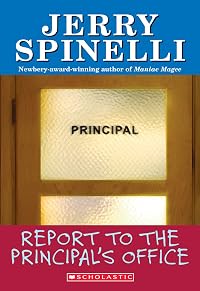
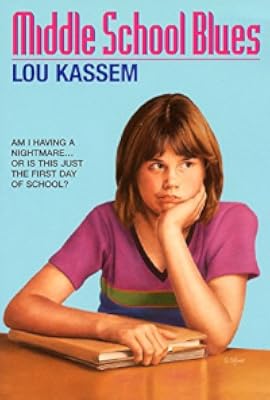

























Member Recommendations



by bookel

Member Reviews
For such a short book, this was stupid and incredibly annoying. I am not noting that to take a crack against people with dyslexia. The attitude towards dyslexia was shockingly insensitive in this book, and I have no idea whether or not that was common in the mid-80s, which is when this book was written. I've only ever heard people with dyslexia refer to it as, "It means you can't read," said curtly and they don't discuss it further. I asked a person, ignorantly and meaning well, if red cellophane might help. She shook her head and didn't look at me. "What does it do?" someone else asks. "Well, it slows you down," she mumbled. She said increased font sizes and time to read through things in advance helped her. I felt awful; I'd handed show more her a project with a ton of big, strange words that -everyone- had to ask me about. It wasn't my intent. I make sure now to ask people what accommodations they need, while still realizing I won't get it. So that's a blatant "look at me, I'm one of the good ones!'" and it -still- is less offensive than this book.
The MC, Helen, is hard to relate to. She likes baseball. I couldn't care less. This takes place in a small town maybe half an hour driving outside of Seattle, which the book mentions at least twice per page. It also repeatedly mentions other places in Washington State that would ordinarily have me, as someone who lived in Seattle during the 90s and has been there my whole life, going, "Yes! Woohoo! My state!" Instead, it had me going, "Yeah, I've been there. Move on, please." Helen mentions baseball often, but never mentions the Mariners, who had been around for nine seasons by that time. Okay then. In an effort to hide that she's dyslexic, she pulls mean-spirited pranks that increasingly had me wondering if she was a sociopath.
In the opening chapter, she's a mean-spirited girl who uses string to trip the teacher. By the end of the book, she's lighting off firecrackers. She cannot shut up about the fact that she wears a bra and is able to hide stuff in it. Ew. Also, she's eleven, so please be quiet. She is quite proud of her jewelry that is made of precious gemstones and ugh, I do not care. What she's describing sounds so tacky, not like the fine jewelry the author was probably aiming for. I like fine jewelry and precious gemstones, so that was a letdown. The mean pranks are sometimes to get out of reading out loud, but they--keep going.
I don't know about school in Washington State in the mid-80s, when this took place. However, I do know about school in the 90s and 2000s. Her school had a definite overreaction to her not being able to read, and was giving out discipline slips (ugh, that brought back memories) for her academic shortfalls. They were gonna have all her teachers in one room and discuss right in front of her...whether to hold her back a grade. HAVING ALL THE TEACHERS IN ONE ROOM IS DECIDIING WHETHER TO EXPEL A STUDENT. WHAT THE FUCK. If you're getting held back, they send a bunch of letters to your parents, and you meet with the principal, and beforehand, you have to get your teachers to fill out multiple progress reports and sign and comment on them for -months-. It takes a long time, NOT LIKE THIS BOOK. Was--was this a scare tactic the author was using towards dyslexics? And in the acknowledgments section, she thanks real-life teachers for their expertise! AAAAGH!
But that's -nothing- compared to the firecrackers. An eleven-year-old student tags the school with black spray paint and the principal intimidates her about it. I just--ugh. We did that in middle school, too, and they just gave kids in-school suspension or detention if they got caught. In -high school-, the teachers laughed and secretly hoped you'd tag a specific wall with nasty remarks about them. Sure, they gave you detention, but I asked a teacher about it later and honestly, tagging was a joke. Being nasty -to their faces-, however, had real consequences and was an entirely different situation. So, this same eleven-year-old, in this book for children, escalates from tripping her teacher with string, to tagging walls at school, to throwing an alarm clock in a wastebasket to simulate a fire alarm, to -lighting off firecrackers.-
She has a lot of behavioral and emotional issues. They have nothing to do with her dyslexia. She -chooses- to light off firecrackers, trip her teacher, and try to simulate a fire alarm. And yet, she was examined by shrinks repeatedly and they found nothing wrong with her. YOU ARE BAD AT YOUR JOBS, unless she's a good liar. That would explain a lot. An eleven-year-old lights off firecrackers. The school is not evacuated. They don't go into lockdown. Lockdown, in the 90s and 2000s, was a proto-school shooter drill. They shut the lights off, you huddled in a corner for fifteen minutes, and were absolutely still...until you started giggling and whispering. Nothing like today. At all. So, this was not done in the book. No, the principal runs around and a teacher in the opposite direction and they flap their jaws. Then they just...scold Helen. In the 90s and 2000s, this could and would land you in juvenile hall. The principal and teachers had a severe underreaction and I was appalled. Helen is quite proud of herself and thinks it's funny.
She's even saving a firecracker for her first year of middle school, which is next year.
Author, WHY. WHAT WERE YOU THINKING? BAD AUTHOR! BAD! show less
The MC, Helen, is hard to relate to. She likes baseball. I couldn't care less. This takes place in a small town maybe half an hour driving outside of Seattle, which the book mentions at least twice per page. It also repeatedly mentions other places in Washington State that would ordinarily have me, as someone who lived in Seattle during the 90s and has been there my whole life, going, "Yes! Woohoo! My state!" Instead, it had me going, "Yeah, I've been there. Move on, please." Helen mentions baseball often, but never mentions the Mariners, who had been around for nine seasons by that time. Okay then. In an effort to hide that she's dyslexic, she pulls mean-spirited pranks that increasingly had me wondering if she was a sociopath.
In the opening chapter, she's a mean-spirited girl who uses string to trip the teacher. By the end of the book, she's lighting off firecrackers. She cannot shut up about the fact that she wears a bra and is able to hide stuff in it. Ew. Also, she's eleven, so please be quiet. She is quite proud of her jewelry that is made of precious gemstones and ugh, I do not care. What she's describing sounds so tacky, not like the fine jewelry the author was probably aiming for. I like fine jewelry and precious gemstones, so that was a letdown. The mean pranks are sometimes to get out of reading out loud, but they--keep going.
I don't know about school in Washington State in the mid-80s, when this took place. However, I do know about school in the 90s and 2000s. Her school had a definite overreaction to her not being able to read, and was giving out discipline slips (ugh, that brought back memories) for her academic shortfalls. They were gonna have all her teachers in one room and discuss right in front of her...whether to hold her back a grade. HAVING ALL THE TEACHERS IN ONE ROOM IS DECIDIING WHETHER TO EXPEL A STUDENT. WHAT THE FUCK. If you're getting held back, they send a bunch of letters to your parents, and you meet with the principal, and beforehand, you have to get your teachers to fill out multiple progress reports and sign and comment on them for -months-. It takes a long time, NOT LIKE THIS BOOK. Was--was this a scare tactic the author was using towards dyslexics? And in the acknowledgments section, she thanks real-life teachers for their expertise! AAAAGH!
But that's -nothing- compared to the firecrackers. An eleven-year-old student tags the school with black spray paint and the principal intimidates her about it. I just--ugh. We did that in middle school, too, and they just gave kids in-school suspension or detention if they got caught. In -high school-, the teachers laughed and secretly hoped you'd tag a specific wall with nasty remarks about them. Sure, they gave you detention, but I asked a teacher about it later and honestly, tagging was a joke. Being nasty -to their faces-, however, had real consequences and was an entirely different situation. So, this same eleven-year-old, in this book for children, escalates from tripping her teacher with string, to tagging walls at school, to throwing an alarm clock in a wastebasket to simulate a fire alarm, to -lighting off firecrackers.-
She has a lot of behavioral and emotional issues. They have nothing to do with her dyslexia. She -chooses- to light off firecrackers, trip her teacher, and try to simulate a fire alarm. And yet, she was examined by shrinks repeatedly and they found nothing wrong with her. YOU ARE BAD AT YOUR JOBS, unless she's a good liar. That would explain a lot. An eleven-year-old lights off firecrackers. The school is not evacuated. They don't go into lockdown. Lockdown, in the 90s and 2000s, was a proto-school shooter drill. They shut the lights off, you huddled in a corner for fifteen minutes, and were absolutely still...until you started giggling and whispering. Nothing like today. At all. So, this was not done in the book. No, the principal runs around and a teacher in the opposite direction and they flap their jaws. Then they just...scold Helen. In the 90s and 2000s, this could and would land you in juvenile hall. The principal and teachers had a severe underreaction and I was appalled. Helen is quite proud of herself and thinks it's funny.
She's even saving a firecracker for her first year of middle school, which is next year.
Author, WHY. WHAT WERE YOU THINKING? BAD AUTHOR! BAD! show less
The main character in this book is different from most of the books I've read in the children and young adult categories. Unlike most book protagonists, Helen has a reading disability. She's had it all her life, and her mother tries her best to help, with little success for either. Add to that Helen's propensity for trouble-making, and we have a sixth grader who really doesn't get along well at school.
The story follows Helen through her sixth grade year as her feelings about school worsen along with her grades. Along with a new teacher who has no idea how to teach in a way that includes someone in Helen's situation (an all too common problem even in today's public schools), this causes Helen to withdraw and act out more and more.
I feel show more like this is an important book for children, both those dealing with a particular learning disability and those without, as it helps them relate to those who might. I dislike the use of the word "retard" so much, but as it comes from the students who don't know any better, I suppose it's understandable. I just wish the author had the forethought to have one teacher put a stop to it by correcting the students. Still, adding this one to my Little Free Library in the hopes that it will help some child in the neighborhood either gain empathy for a fellow student or realize that things are not so bad and any problem can be overcome. show less
The story follows Helen through her sixth grade year as her feelings about school worsen along with her grades. Along with a new teacher who has no idea how to teach in a way that includes someone in Helen's situation (an all too common problem even in today's public schools), this causes Helen to withdraw and act out more and more.
I feel show more like this is an important book for children, both those dealing with a particular learning disability and those without, as it helps them relate to those who might. I dislike the use of the word "retard" so much, but as it comes from the students who don't know any better, I suppose it's understandable. I just wish the author had the forethought to have one teacher put a stop to it by correcting the students. Still, adding this one to my Little Free Library in the hopes that it will help some child in the neighborhood either gain empathy for a fellow student or realize that things are not so bad and any problem can be overcome. show less
Helen thinks she's dumb. She's a great pitcher. She's a math wiz. However, reading gives her trouble. Helen's mother, who works with her after school, does not want Helen to have special help. Helen is frustrated with her repeated failure until the resolution of the book. DeClements's experience as a school psychologist benefits the novel, but Helen's voice doesn't always seem authentic. Additionally, the book is quite dated for today's readers. There are stronger books featuring more authentic characters with learning differences for school or public collections.
This is a good book for pre-teen or teenage students to read and understand some of the struggles student's with learning disabilities go through. Helen is a sixth grader who struggles with reading and shows her frustration by acting out. She excels in some subjects but needs help in others. She finally decides, against her mothers wishes, that the best thing for herself is to get the special help she needs.
I read this when I was in elementary school--I enjoyed it then. I decided to revisit it for this project, and I have to tell you, I enjoyed it less this time. I don't think that DeClements writes like kids speak, even if the book was written in 1985. While the story is compelling, I don't think DeClements is telling Helen's story from her perspective. DeClements is telling her story from an adult's perspective, with adults' language. To sum up the plot, Helen is assigned to Mrs. Lobb's 6th grade class, and she's a really strict, old-fashioned kind of lady. Helen can't read, and it seems that Mrs. Lobb is fond of read-alouds, and Helen does poorly in all subjects. Eventually, she acts out loudly enough that she's switched into a show more different 6th grade class. Once in Mr. Marshall's room, she starts to make progress with reading. At this point, DeClements is one of the authors in the canon of youth fiction, so I would recommend this for purchase for all public library youth collections, as well as elementary and middle school libraries. show less
It's hard to say which book is better, 'Nothing's Fair in the Fifth Grade' or this one. Elsie Edwards is in this book, though she's actually a minor character, the focus is on a new character who has a learning disability and has to deal with that. I guess that's why this book is titled as such, right? She's a normal girl who makes mistakes and gets in a bit of trouble... it's a very realistic book. It's been a long time since I read it, I probably should read it again for a stroll down memory lane! Read this one and the fifth grade one singly or together, it's a great story!
I guess I don't need an 'issues' book right now. This seems to be a good one of its kind, but it is dated, and it is not subtle or, imo, engaging.
Members
- Recently Added By
Lists

Camps -- children's/young adult fiction
324 works; 9 members

Camps, disabilities -- children's/young adult fiction
20 works; 2 members

Books Featured in "Paperback Crush"
228 works; 7 members
Author Information

17 Works 3,500 Members
Awards and Honors
Awards
Series

Belongs to Publisher Series
Common Knowledge
- Original publication date
- 1985
Classifications
Statistics
- Members
- 963
- Popularity
- 27,467
- Reviews
- 15
- Rating
- (3.41)
- Languages
- English
- Media
- Paper
- ISBNs
- 16
- ASINs
- 6