
Esmé Raji Codell
Author of Sahara Special
About the Author
Esme Raji Codell is an avid collector of sparkly stickers and a pretty good roller skater. She is also the author of Educating Esme: Diary of a Teacher's First Year, which won an Alex Award, given for the best adult books for young adults, among many honors. She has worked as a children's show more bookseller, teacher, and school librarian, and now runs the popular children's literature Web site www.planetesme.com. Esme lives in Chicago with her husband and son show less
Works by Esmé Raji Codell
How to Get Your Child to Love Reading: For Ravenous and Reluctant Readers Alike (2003) 316 copies, 7 reviews
Hanukkah, Shmanukkah 1 copy
Tagged
Common Knowledge
Members
Reviews
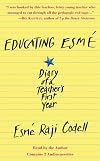
Esme should have been fired. As a first-year teacher, a white woman in a predominantly black school and a recent graduate surrounded by old-fashioned colleagues, she should have held her peace, listened carefully and introduced small, incremental changes that would rattle no one’s cage. But Esme was irrepressible. Bursting with enthusiasm and great ideas, she was determined to reach each and every kid in her fifth grade class.
Not surprisingly, she irritated the administration, a timid show more group of minders waiting for retirement and praying only to avoid a lawsuit that might threaten it. Most young teachers would never survive the fights she picked; they would have been thrown into the street. Yet she got results: her students not only passed the mighty standardized tests, that holy grail that has displaced real education in so many schools; her students advanced more than a year ahead.
This short book is a quick read. The language of the students, and the author, is natural and must have been shocking to older readers when the book first appeared. Today it seems merely honest. As a brief, lively overview of troubled schools and the courage and creativity of an exemplary teacher, it is highly recommended. show less
Not surprisingly, she irritated the administration, a timid show more group of minders waiting for retirement and praying only to avoid a lawsuit that might threaten it. Most young teachers would never survive the fights she picked; they would have been thrown into the street. Yet she got results: her students not only passed the mighty standardized tests, that holy grail that has displaced real education in so many schools; her students advanced more than a year ahead.
This short book is a quick read. The language of the students, and the author, is natural and must have been shocking to older readers when the book first appeared. Today it seems merely honest. As a brief, lively overview of troubled schools and the courage and creativity of an exemplary teacher, it is highly recommended. show less

This teacher is so cool! I would have loved to have had her. She has such a vivid imagination and she has the determination to make real her ideas. She also is frank about the times she loses her temper, and then apologizes to the kids; she holds herself to the same standard she expects from them. She initiated routines that give her students time to express their feelings: Conflict Resolution (run by the students weekly after initial guidance from her) and journaling. When she mentioned show more getting one of her routines from Sylvia Ashton-Warner, she had me hooked. Ashton-Warner' teaching style inspired me when I was in my 20's.
It's a shame that her principal wasn't as motivated as she to focus on the students' achievements. show less
It's a shame that her principal wasn't as motivated as she to focus on the students' achievements. show less
"I don't like bureaucrats," she told Darrell, "but I don't mind cynics."
"What's a bureaucrat?" Darrell asked suspiciously.
"A tattletale who likes to write things down," Miss Pointy explained.
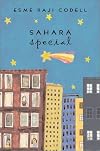
This story will be very familiar to anyone who has read Raji Codell's Educating Esme: Diary of a Teacher's First Year, as it is kind of a fictionalized version of it, told from a student's point of view. Sahara is a bright girl, completely traumatized by her father's abandonment. She writes secretly, and show more keeps her 'book' hidden in the public library. She also writes letters to her father, which are discovered at school and placed in her File. She can't seem to overcome her wounds, and is crippled in school by fear and anxiety. She doesn't do assignments, she never raises her hand, and tries her hardest to be invisible. This only lands her in special ed, receiving 'services' in the hall in full view of everyone, and in the company of an extremely volatile student named Darrell. In her second year of fifth grade, her new teacher is wildly unconventional, wanting to make up her own mind about students, and clearly communicating to each one of them that she has faith in them. She gradually draws Sahara out of herself, revealing a profoundly gifted writer. While not a perfect book, it is a moving book, and raises interesting issues about the status quo of urban education.
Codell, E. (2003). Sahara Special. New York: Hyperion Books For Children. show less
"What's a bureaucrat?" Darrell asked suspiciously.
"A tattletale who likes to write things down," Miss Pointy explained.
This story will be very familiar to anyone who has read Raji Codell's Educating Esme: Diary of a Teacher's First Year, as it is kind of a fictionalized version of it, told from a student's point of view. Sahara is a bright girl, completely traumatized by her father's abandonment. She writes secretly, and show more keeps her 'book' hidden in the public library. She also writes letters to her father, which are discovered at school and placed in her File. She can't seem to overcome her wounds, and is crippled in school by fear and anxiety. She doesn't do assignments, she never raises her hand, and tries her hardest to be invisible. This only lands her in special ed, receiving 'services' in the hall in full view of everyone, and in the company of an extremely volatile student named Darrell. In her second year of fifth grade, her new teacher is wildly unconventional, wanting to make up her own mind about students, and clearly communicating to each one of them that she has faith in them. She gradually draws Sahara out of herself, revealing a profoundly gifted writer. While not a perfect book, it is a moving book, and raises interesting issues about the status quo of urban education.
Codell, E. (2003). Sahara Special. New York: Hyperion Books For Children. show less
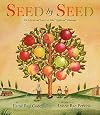
I have great respect for the award-winning author and educator Esmé Raji Codell (I especially loved her book Educating Esmé: Diary of a Teacher's First Year) so I had high expectations for Seed by Seed. Fortunately I was not disappointed!
Codell went to great lengths to find out and specify which parts of the Johnny Appleseed story are legend; fact; or “stories we’re not sure are true.”
What we do know, Codell writes, is "…that by doing the same small act of planting seeds every day, show more Johnny Appleseed changed the landscape of our nation. Seed by seed, deed by deed.”
She organizes his story around five precepts taken from the way Chapman lived:
Use what you have
Share what you have
Respect nature
Try to make peace when there is war
You can reach your destination by taking small steps
For each precept, she includes illustrative episodes from John Chapman’s life.
At the end of the book, Codell suggests that readers make a “Johnny Appleseed pledge":
"Similar to a New Year’s resolution, this is a promise to do one small deed every day that can change our country for the better.”
She also provides a recipe for apple pie, and the lyrics to “the Johnny Appleseed song,” based on a traditional hymn by Emanuel Swedenborg, the theologian who influenced Chapman:
"Oh, the Lord is good to me,
And so I thank the Lord
For giving me the things I need:
The sun and the rain and the apple seed.
The Lord is good to me! Amen!"
[Codell adds that “you can replace ‘Lord’ with ‘World’ or ‘Earth,’ to taste.]
Evaluation: Not only is the story consistently interesting, but the messages for kids are great. I love the way too that Codell is teaching kids to interrogate myths and to use care when interpreting stories. The excellent illustrations by Lynne Rae Perkins reflect her efforts to make the pictures as accurate as possible without sacrificing aesthetic appeal. Highly recommended for all ages! show less
Codell went to great lengths to find out and specify which parts of the Johnny Appleseed story are legend; fact; or “stories we’re not sure are true.”
What we do know, Codell writes, is "…that by doing the same small act of planting seeds every day, show more Johnny Appleseed changed the landscape of our nation. Seed by seed, deed by deed.”
She organizes his story around five precepts taken from the way Chapman lived:
Use what you have
Share what you have
Respect nature
Try to make peace when there is war
You can reach your destination by taking small steps
For each precept, she includes illustrative episodes from John Chapman’s life.
At the end of the book, Codell suggests that readers make a “Johnny Appleseed pledge":
"Similar to a New Year’s resolution, this is a promise to do one small deed every day that can change our country for the better.”
She also provides a recipe for apple pie, and the lyrics to “the Johnny Appleseed song,” based on a traditional hymn by Emanuel Swedenborg, the theologian who influenced Chapman:
"Oh, the Lord is good to me,
And so I thank the Lord
For giving me the things I need:
The sun and the rain and the apple seed.
The Lord is good to me! Amen!"
[Codell adds that “you can replace ‘Lord’ with ‘World’ or ‘Earth,’ to taste.]
Evaluation: Not only is the story consistently interesting, but the messages for kids are great. I love the way too that Codell is teaching kids to interrogate myths and to use care when interpreting stories. The excellent illustrations by Lynne Rae Perkins reflect her efforts to make the pictures as accurate as possible without sacrificing aesthetic appeal. Highly recommended for all ages! show less
Lists
Awards


You May Also Like


Associated Authors
Statistics
- Works
- 14
- Members
- 3,386
- Popularity
- #7,528
- Rating
- 3.9
- Reviews
- 122
- ISBNs
- 70
- Languages
- 2
- Favorited
- 6