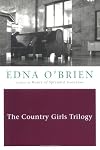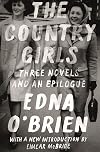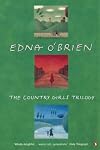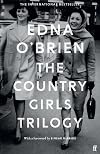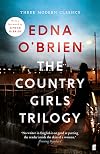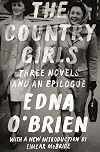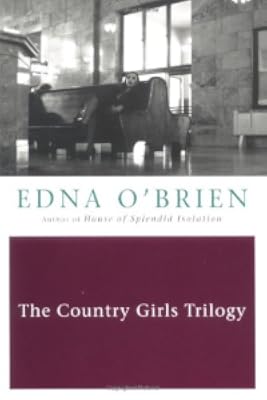
The Country Girls Trilogy and Epilogue
by Edna O'Brien
Country Girls trilogy (Collections and Selections — Omnibus 1-3)
On This Page
Description
A treasure of world literature back in print, featuring a new introduction by Eimear McBrideThis omnibus edition includes the novels The Country Girls, The Lonely Girl, and Girls in Their Married Bliss.
The country girls are Caithleen "Kate" Brady and Bridget "Baba" Brennan, and their story begins in the repressive atmosphere of a small village in the west of Ireland in the years following World War II. Kate is a romantic, looking for love; Baba is a survivor. Setting out to conquer the show more bright lights of Dublin, they are rewarded with comical miscommunications, furtive liaisons, bad faith, bad luck, bad sex, and compromise; marrying for the wrong reasons, betraying for the wrong reasons, fighting in their separate ways against the overwhelming wave of expectations forced upon "girls" of every era.
The Country Girls Trilogy and Epilogue charts unflinchingly the pattern of women's lives, from the high spirits of youth to the chill of middle age, from hope to despair, in remarkable prose swinging from blunt and brutal to whimsical and lyrical. It is a saga both painful and hilarious, and remains one of the major accomplishments of Edna O'Brien's extraordinary career.
. show less
Tags
Recommendations














Member Reviews
I could have categorized The Country Girls under "A Trilogy," and perhaps reading all three novels would have helped me appreciate this one more. Not being Irish, Catholic or a child of the '50s (much less female) prevented me from comprehending the groundbreaking nature of Edna O'Brien's story without the insights provided in the introduction (which I read after the novel and should be taken with a grain of feminist salt).
The Country Girls is the story of two young Irish girls, Caithleen and Bridget, who maintain a tenuous friendship through the death of Cait's mother and their "incarceration" in the convent they were sent to, ostensibly to be educated. During this time, fourteen-year-old Cait begins a highly romanticized affair with a show more much older married man referred to as Mr. Gentleman due to her difficulty pronouncing his surname. She is ultimately expelled from the school her family cannot afford without the scholarship she earns after succumbing to the malignant influence of her purported friend. Whereupon the girls take up joint residency of a room in a lower-class boardinghouse in Dublin and their "education" continues.
Another book on all versions of the 1,001 Books You Must Read Before You Die list, The Country Girls reads like a train wreck in the making, with the premonition of catastrophe awaiting in the subsequent volumes. show less
The Country Girls is the story of two young Irish girls, Caithleen and Bridget, who maintain a tenuous friendship through the death of Cait's mother and their "incarceration" in the convent they were sent to, ostensibly to be educated. During this time, fourteen-year-old Cait begins a highly romanticized affair with a show more much older married man referred to as Mr. Gentleman due to her difficulty pronouncing his surname. She is ultimately expelled from the school her family cannot afford without the scholarship she earns after succumbing to the malignant influence of her purported friend. Whereupon the girls take up joint residency of a room in a lower-class boardinghouse in Dublin and their "education" continues.
Another book on all versions of the 1,001 Books You Must Read Before You Die list, The Country Girls reads like a train wreck in the making, with the premonition of catastrophe awaiting in the subsequent volumes. show less
Freshness, innocence, and an engaging, unfussy style. O’Brien creates direct and likeable characters for her young girls coming of age in the hidebound, repressive, tight-lipped Ireland of the ‘50s. Hard to credit now, 60 plus years on, with today’s Ireland bedded in as the opportunity-rich society we see in Normal People, but the honesty, moral neutrality and probably the very playfulness of this treatment caused a storm of condemnations and controversy in its day. Hard to be sure quite how sanctimonious and repressed real people actually were back then; perhaps O’Brien’s work is some evidence of spirited lives being lived beyond official disapproval.
The Country Girls Trilogy and Epilogue is a compilation of three novels that span the lives of two girls, from childhood through middle age, who were both rivals and friends in rural Ireland. The first of the three novels, The Country Girls introduces us to Caithleen and Baba. Caithleen is practically raised by a single mother, her father often drunk and absent, leaving them with little or no money most days, while Baba's father is good provider who comes home every night, even if the family isn't exactly a happy one. Together they go off to a convent school, Caithleen on scholarship, Baba out of jealousy. The second book in the set, Lonely Girls (more commonly known by the name Girl With Green Eyes), picks up where the first leaves show more off, in Dublin, where the girls are set to start their lives. They live together as boarders, Baba to attend school, and Caithleen working in a grocery. What they are really looking for though is freedom and men, rich if Baba has anything to say about it. The final book of the series, Girls In Their Married Bliss opens with both of the girls marriages, both of them seemingly getting exactly what they wanted. Yet nothing is ever as it seems, and life still has many surprises in store for both of them.
Both the first and second book were told by Caithleen, later known as Kate, while the last of the trilogy and the epilogue are narrated by Baba. Kate was often ruled by her emotions, and though intelligent, she let her feelings blind her to common sense and reality. Baba is far more pragmatic; she is also brazen and bold, and in my opinion makes a far more interesting character, though Kate's story is richer. In the end, I quite enjoyed all of the books and I'm glad I read them together in one book, because I'm not sure that I would have made a point to continue soon after the first.
Both The Country Girls and Girl With Green Eyes can be found on the list of the 1001 Books You Must Read Before You Die, though I actually enjoyed the last book far more. The story told in Married Bliss, while much darker, was more interesting and far richer. Yet, without the first two preceding it, it couldn't have been told. These are quintessential coming-of-age stories, both realistic and tragic, telling a story that unfolds every day, in every town and city. show less
Both the first and second book were told by Caithleen, later known as Kate, while the last of the trilogy and the epilogue are narrated by Baba. Kate was often ruled by her emotions, and though intelligent, she let her feelings blind her to common sense and reality. Baba is far more pragmatic; she is also brazen and bold, and in my opinion makes a far more interesting character, though Kate's story is richer. In the end, I quite enjoyed all of the books and I'm glad I read them together in one book, because I'm not sure that I would have made a point to continue soon after the first.
Both The Country Girls and Girl With Green Eyes can be found on the list of the 1001 Books You Must Read Before You Die, though I actually enjoyed the last book far more. The story told in Married Bliss, while much darker, was more interesting and far richer. Yet, without the first two preceding it, it couldn't have been told. These are quintessential coming-of-age stories, both realistic and tragic, telling a story that unfolds every day, in every town and city. show less
I have an iron rule - I never read an introduction before I read the book. This time not reading the introduction caused a problem. I had interpreted my copy of The Country Girls as a collection of three unrelated short stories with the first one having the same title as the book. Fortunately I was wrong. These three are actually a continuing story, more like a serial. I wrote my first version of this review without knowing this and rated this only three stars which is appropriate for the first novella when you don’t know about the rest. After I realized my mistake I read the rest and changed my rating to five stars. Now I understand why this was banned. Here’s a revised review
The Country Girls
I struggled with the first third of show more the first novella. Maybe I’m not empathetic enough for this. I could not get into it. I see this as poverty porn with an Irish lilt. I want to believe we’re way past this and there’s little to learn from reliving it. This is a hundred years ago. Yes and even our ancestors were living like that. And even more unfortunate there are areas in the world where people live like this today. But let's look to those places rather than where this is placed. I realize this was written much closer in time to those events. I also realize it was important to recognize that that was happening. I just don’t want to spend my time…there. I persisted and read the rest of the novella. It got better.
This is the story of two girls, Cathleen “Kate” Brady and Bridget “Baba” Brennan told from the point of view of Kate. Kate’s family is dysfunctional. A mother incapable of dealing with her situation is lost in a small boat accident which appears to have happened while running away. Kate’s father is an alcoholic who beats both his wife and daughter. He drinks constantly and loses the home he inherited due to debts from drinking and gambling. Kate is taken in by the Brennan family where Baba takes every opportunity to belittle and take advantage of her. But Kate is the bright one earning a scholarship to a convent school. Both girls are sent to the convent school where they become much closer since it’s them against the nuns. Neither can tolerate the convent. After a few years Baba conceives of a plan to get them expelled and convinces Kate to sign with her a note which they know will get them out of the convent. Yet another instance where Baba uses Kate to get what she wants, usually in a socially acceptable way, but not this time. It works, they are expelled.
They are eighteen now and it’s off to Dublin. This is where my interest in this novella picked up. Together they want to experience this new world. It’s the big city and it looks nothing like their past. They take a room together and deal with people from other countries, not just other counties. They want to spread their wings. New clothes, jobs, plays, clubs, men, lingerie, food, smoking, flirting and loss of innocence. Baba is the wild one and keeps pulling Kate along in her wake. Eventually she develops tuberculosis and is sent to a sanatorium hopefully to recover. For Kate there’s another aspect of their new life, Mr. Gentleman, the name they use for the richest man from where they came from. He seems to be escaping from a marriage and is taken with Kate. Kate is first attracted to him and then falls totally in love with him. They plan a trip to Vienna to move their relationship to another level. And then the story ends.
This is what I dislike about both short stories and novellas. Just when I want to know more the author cuts us off. I’m now invested in the characters and I want to know what’s going to happen to them. This is why I rate this lower than most of what I read. Little did I know the story would be continued in the two other novellas and even an epilogue written by the author twenty years later.
There’s another piece of this which isn’t plot oriented, it permeates everything. The world described in these novellas is a man’s world. It is oriented to men. Women exist only to be part of a man’s world. They have fathers and brothers who beat them. Girls see themselves as marrying who they are told to marry and to be considered failures if they neither marry nor bare sons. They get jobs only if they have yet to marry. There is no consideration of having a career or a life of their own. They at best are there to serve others, not themselves. They live in a society that does not value them. They are constantly being disappointed by men who don’t fulfill their promises. It’s understandable that rebellion is lurking everywhere.
The Lonely Girl
The second novella continues two years later. While Kate knows her future is not with Mr Gentleman she maintains hope that maybe this could change. Baba has returned from the sanatorium and is ready to party. She is constantly dragging Kate along even though Kate never quite enjoys herself. Kate finds someone who reminds her of Mr Gentleman and slowly she captures the eye of this rich educated man. He shares little of his life with Kate but does enjoy educating Kate. She finds out that he is married and even has a child. He understands her shyness and reluctance for anything remotely sexual. He is patient and she falls for him even though he is married. Someone lets Kate’s family know and her drunken father and his friends descend on the rich man’s home to rescue his child. He tries to reason with them only to have them start beating him up until his servant arrives with a shotgun and they back off. He has his lawyer inform father of the legal situation. This is the point Kate and the man who is a Protestant, a foreigner, an educated director of documents get serious about their relationship. He gets a divorce, they marry, and start raising a child. But it turns out Kate is not really who he wants her to be. She represents the uneducated, religious, poor people he can barely stand. Eventually he’s had enough and wants to get a divorce and keep the child. In desperation Kate agrees to a separation as long as she can have visitation rights. She eventually has a fling with another man only to see this used against her as being an unfit mother, even though her ex has a new live-in girlfriend.
Girls in Their Married Bliss
Bliss here is sarcastic. Their marriages are anything but blissful. Baba has become pregnant by someone other than her husband. She tells her husband the child is not his but convinces him to treat the child as his daughter. BaBa has always had amazing power to convince others. Baba also becomes very open about her interest in sexual experimentation. Sound blissful to you? Kate has moved on but remains ever hopeful that her former husband will see the error of his way and will actually take her back. Sound blissful to you?
Epilogue
Twenty years after the release of the first novella the author addresses the question of what has happened to the country girls. We learn that Baba’s husband has died and that Kate is once again lost in loneliness. Kate eventually gives up all hope and commits suicide.
Once I read the last two novellas and the epilogue I could see how this trilogy has been banned. It openly discusses life styles that many regard as beyond the pale. It is also easy to see why the first novella has been turned into a movie but not the others. This is a classic and well worth your time to read. Just don’t expect to come away happy. show less
The Country Girls
I struggled with the first third of show more the first novella. Maybe I’m not empathetic enough for this. I could not get into it. I see this as poverty porn with an Irish lilt. I want to believe we’re way past this and there’s little to learn from reliving it. This is a hundred years ago. Yes and even our ancestors were living like that. And even more unfortunate there are areas in the world where people live like this today. But let's look to those places rather than where this is placed. I realize this was written much closer in time to those events. I also realize it was important to recognize that that was happening. I just don’t want to spend my time…there. I persisted and read the rest of the novella. It got better.
This is the story of two girls, Cathleen “Kate” Brady and Bridget “Baba” Brennan told from the point of view of Kate. Kate’s family is dysfunctional. A mother incapable of dealing with her situation is lost in a small boat accident which appears to have happened while running away. Kate’s father is an alcoholic who beats both his wife and daughter. He drinks constantly and loses the home he inherited due to debts from drinking and gambling. Kate is taken in by the Brennan family where Baba takes every opportunity to belittle and take advantage of her. But Kate is the bright one earning a scholarship to a convent school. Both girls are sent to the convent school where they become much closer since it’s them against the nuns. Neither can tolerate the convent. After a few years Baba conceives of a plan to get them expelled and convinces Kate to sign with her a note which they know will get them out of the convent. Yet another instance where Baba uses Kate to get what she wants, usually in a socially acceptable way, but not this time. It works, they are expelled.
They are eighteen now and it’s off to Dublin. This is where my interest in this novella picked up. Together they want to experience this new world. It’s the big city and it looks nothing like their past. They take a room together and deal with people from other countries, not just other counties. They want to spread their wings. New clothes, jobs, plays, clubs, men, lingerie, food, smoking, flirting and loss of innocence. Baba is the wild one and keeps pulling Kate along in her wake. Eventually she develops tuberculosis and is sent to a sanatorium hopefully to recover. For Kate there’s another aspect of their new life, Mr. Gentleman, the name they use for the richest man from where they came from. He seems to be escaping from a marriage and is taken with Kate. Kate is first attracted to him and then falls totally in love with him. They plan a trip to Vienna to move their relationship to another level. And then the story ends.
This is what I dislike about both short stories and novellas. Just when I want to know more the author cuts us off. I’m now invested in the characters and I want to know what’s going to happen to them. This is why I rate this lower than most of what I read. Little did I know the story would be continued in the two other novellas and even an epilogue written by the author twenty years later.
There’s another piece of this which isn’t plot oriented, it permeates everything. The world described in these novellas is a man’s world. It is oriented to men. Women exist only to be part of a man’s world. They have fathers and brothers who beat them. Girls see themselves as marrying who they are told to marry and to be considered failures if they neither marry nor bare sons. They get jobs only if they have yet to marry. There is no consideration of having a career or a life of their own. They at best are there to serve others, not themselves. They live in a society that does not value them. They are constantly being disappointed by men who don’t fulfill their promises. It’s understandable that rebellion is lurking everywhere.
The Lonely Girl
The second novella continues two years later. While Kate knows her future is not with Mr Gentleman she maintains hope that maybe this could change. Baba has returned from the sanatorium and is ready to party. She is constantly dragging Kate along even though Kate never quite enjoys herself. Kate finds someone who reminds her of Mr Gentleman and slowly she captures the eye of this rich educated man. He shares little of his life with Kate but does enjoy educating Kate. She finds out that he is married and even has a child. He understands her shyness and reluctance for anything remotely sexual. He is patient and she falls for him even though he is married. Someone lets Kate’s family know and her drunken father and his friends descend on the rich man’s home to rescue his child. He tries to reason with them only to have them start beating him up until his servant arrives with a shotgun and they back off. He has his lawyer inform father of the legal situation. This is the point Kate and the man who is a Protestant, a foreigner, an educated director of documents get serious about their relationship. He gets a divorce, they marry, and start raising a child. But it turns out Kate is not really who he wants her to be. She represents the uneducated, religious, poor people he can barely stand. Eventually he’s had enough and wants to get a divorce and keep the child. In desperation Kate agrees to a separation as long as she can have visitation rights. She eventually has a fling with another man only to see this used against her as being an unfit mother, even though her ex has a new live-in girlfriend.
Girls in Their Married Bliss
Bliss here is sarcastic. Their marriages are anything but blissful. Baba has become pregnant by someone other than her husband. She tells her husband the child is not his but convinces him to treat the child as his daughter. BaBa has always had amazing power to convince others. Baba also becomes very open about her interest in sexual experimentation. Sound blissful to you? Kate has moved on but remains ever hopeful that her former husband will see the error of his way and will actually take her back. Sound blissful to you?
Epilogue
Twenty years after the release of the first novella the author addresses the question of what has happened to the country girls. We learn that Baba’s husband has died and that Kate is once again lost in loneliness. Kate eventually gives up all hope and commits suicide.
Once I read the last two novellas and the epilogue I could see how this trilogy has been banned. It openly discusses life styles that many regard as beyond the pale. It is also easy to see why the first novella has been turned into a movie but not the others. This is a classic and well worth your time to read. Just don’t expect to come away happy. show less
Do not read the Introduction unless you want the entire plot laid out before you read it.
The first book of the trilogy opens with gentle suspense as the ordinary daily life of a girl, her mother, and their hired man
revolves around speculation and fears about the fate of the missing, violent drunken father.
The story flows seamlessly between conversations and evocative descriptions of Irish country landscapes.
Then it moves into endless details of the interactions of the two country girls,
Caithleen passive, Baba a mean bully, and their respective mothers, passive and mean.
Men are uniformly drunk, deplorable, predatory, violent, and otherwise questionable as fathers, husbands,
friends, and priests. The Gentleman is the sole exception and show more eventually he peters out.
Girls get themselves expelled from their convent school and move to Dublin where Baba becomes slightly subdued since she is no longer feared by her friend.
Plot drags with clothing obsessions and boredom.
The Lonely Girl picks up two years later with some powerful landscape descriptions brightening an otherwise repetitive crawl toward seduction.
Eugene Gaillard's pursuit of innocent Kate is a long and improbable stretch where she is deserted by yet another married man.
Story moves to pathos with: "It is the only possession I have which I regard as mine, that cork with the round silver top."
It continues reciting the boring lives of two ordinary young women beset by stupidity and not transformed by any passion for creating,
for caring for others, for compassion, or for love. Empty and repetitive.
Eventually, in Girls in Their Married Bliss, Kate's needy, jealous, and fearful insecurity drives her husband away.
Eugene, who surprisingly returned to claim her after his desertion, is the only character I liked.
Despite his obsessive tendencies, he was the only intelligent one with a real sense of humor, irony, and truth.
While this may be a realistic depiction of the lives of the girls, it becomes predictably unredeemable and depressing:
"If nothing else, she'd get drunk."
Though the tame sexual episodes were shocking in their time, it is the pervasive Catholic negativity which amazed me,
expected from the priests, but unquestioned by the girls' families and the various people of the town.
It was also unusual to see no mention of father/daughter incest and Catholic complicity. show less
The first book of the trilogy opens with gentle suspense as the ordinary daily life of a girl, her mother, and their hired man
revolves around speculation and fears about the fate of the missing, violent drunken father.
The story flows seamlessly between conversations and evocative descriptions of Irish country landscapes.
Then it moves into endless details of the interactions of the two country girls,
Caithleen passive, Baba a mean bully, and their respective mothers, passive and mean.
Men are uniformly drunk, deplorable, predatory, violent, and otherwise questionable as fathers, husbands,
friends, and priests. The Gentleman is the sole exception and show more eventually he peters out.
Girls get themselves expelled from their convent school and move to Dublin where Baba becomes slightly subdued since she is no longer feared by her friend.
Plot drags with clothing obsessions and boredom.
The Lonely Girl picks up two years later with some powerful landscape descriptions brightening an otherwise repetitive crawl toward seduction.
Eugene Gaillard's pursuit of innocent Kate is a long and improbable stretch where she is deserted by yet another married man.
Story moves to pathos with: "It is the only possession I have which I regard as mine, that cork with the round silver top."
It continues reciting the boring lives of two ordinary young women beset by stupidity and not transformed by any passion for creating,
for caring for others, for compassion, or for love. Empty and repetitive.
Eventually, in Girls in Their Married Bliss, Kate's needy, jealous, and fearful insecurity drives her husband away.
Eugene, who surprisingly returned to claim her after his desertion, is the only character I liked.
Despite his obsessive tendencies, he was the only intelligent one with a real sense of humor, irony, and truth.
While this may be a realistic depiction of the lives of the girls, it becomes predictably unredeemable and depressing:
"If nothing else, she'd get drunk."
Though the tame sexual episodes were shocking in their time, it is the pervasive Catholic negativity which amazed me,
expected from the priests, but unquestioned by the girls' families and the various people of the town.
It was also unusual to see no mention of father/daughter incest and Catholic complicity. show less
I enjoyed two out of the three books in Edna O'Brien's "The Country Girls Trilogy and Epilogue." Probably unsurprisingly, I enjoyed the first two books, (which are on the 1,001 Books to Read before you Die list and are much stronger installments) much more than the final book.
The story mainly follows Caithleen, who has the misfortune to grow up poor with a deceased mother and drunkard father in rural Ireland. Her relationship with her frenemy Baba is all pervasive in her life and changes its course. Over the course of the series, the girls grow up and get kicked out of school, move to Dublin where they date, dance and drink with a variety of men, and later move on to marry just the wrong guys.
I disliked the switch in narration in the show more third book to Baba's point of view -- it really didn't provide any enlightenment about her character -- it actually made her more one-dimensional to me. I liked the first two books enough that I found the series enjoyable overall though. show less
The story mainly follows Caithleen, who has the misfortune to grow up poor with a deceased mother and drunkard father in rural Ireland. Her relationship with her frenemy Baba is all pervasive in her life and changes its course. Over the course of the series, the girls grow up and get kicked out of school, move to Dublin where they date, dance and drink with a variety of men, and later move on to marry just the wrong guys.
I disliked the switch in narration in the show more third book to Baba's point of view -- it really didn't provide any enlightenment about her character -- it actually made her more one-dimensional to me. I liked the first two books enough that I found the series enjoyable overall though. show less
This set of novels is centered around two girls who grow into women. Kate and Baba are from the same small town in Ireland, but despite differences in their families, they become both friends and rivals. They go to the same covent school, but are expelled (largely due to Baba), and then go on to Dublin. They date, they argue, and they share confidences. Kate has a troubled relationship and Baba marries for all the wrong reasons. I really appreciated Baba's voice, when she finally narrates large portions of the third book and epilogue. An interesting read that captures the drama in friendship and ordinary women's lives.
Members
- Recently Added By
Author Information

91+ Works 10,482 Members
Writer Edna O'Brien was born in Clare County, Ireland, in 1930 and attended Pharmaceutical College in Dublin. O'Brien, winner of the Kingsley Amis Award, the Los Angeles Times Book Price and the European Literature Prize, has written short stories, novels, plays, television plays and screenplays. She has also written for such magazines as show more Cosmopolitan, Ladies Home Journal and The New Yorker. (Bowker Author Biography) Edna O'Brien's previous works of fiction include "Down by the River", "House of Splendid Isolation", "Time & Tide", & "Lantern Slides", which won the Los Angeles Times Book Prize for fiction. Her book about James Joyce was published in 1999 & excerpted in "The New Yorker". An honorary member of the American Academy of Arts & Letters, O'Brien grew up in Ireland & now lives in London. (Publisher Provided) show less
Some Editions
Awards and Honors
Distinctions
Notable Lists
Series

Work Relationships
Common Knowledge
- Canonical title
- The Country Girls Trilogy and Epilogue
- Original publication date
- 1987
- People/Characters
- Kate Brady (Caithleen); Baba Brennan; Billy Tuohey
- Important places
- Dublin, Ireland
- Dedication
- For Susan Lescher
- First words
- I wakened quickly and sat up up in bed abruptly.
Classifications
Statistics
- Members
- 898
- Popularity
- 29,865
- Reviews
- 18
- Rating
- (3.81)
- Languages
- 7 — Danish, Dutch, English, Italian, Lithuanian, Spanish, Swedish
- Media
- Paper, Ebook
- ISBNs
- 22
- UPCs
- 1
- ASINs
- 7