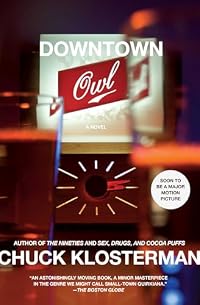
Downtown Owl: A Novel
by Chuck Klosterman
On This Page
Description
Somewhere in North Dakota, there is a town called Owl that isn't there. Disco is over, but punk never happened. They don't have cable. They don't really have pop culture, unless you count grain prices and alcoholism. People work hard and then they die. They hate the government and impregnate teenage girls. But that's not nearly as awful as it sounds; in fact, sometimes it's perfect. Mitch Hrlicka lives in Owl. He plays high school football and worries about his weirdness, or lack thereof. show more Julia Rabia just moved to Owl. She gets free booze and falls in love with a self-loathing bison farmer who listens to Goats Head Soup. Horace Jones has resided in Owl for seventy-three years. He consumes a lot of coffee, thinks about his dead wife, and understands the truth. They all know each other completely, except that they've never met. Like a colder, Reagan-era version of The Last Picture Show fused with Friday Night Lights, Chuck Klosterman's Downtown Owl is the unpretentious, darkly comedic story of how it feels to exist in a community where rural mythology and violent reality are pretty much the same thing. Loaded with detail and unified by a (very real) blizzard, it's technically about certain people in a certain place at a certain time...but it's really about a problem. And the problem is this: What does it mean to be a normal person? And there is no answer. But in Downtown Owl, what matters more is how you ask the question. show lessTags
Recommendations



Member Reviews
It's not usually a hard question: "What are you reading about?" Most books helpfully even give you clues on the back cover, with a quick summation you can offer up. "The history of the original Dream Team in 1992." "Jonathan Franzen didn't feel like enough people were paying attention to him so he wrote the same book three times."
When I got that this time, I hesitated. "It's about ... a small town in North Dakota, I guess?" Which is true, but it's not really about the town, it's about the people. And while that seems like the same thing, it's not. You're not reading the detailed history since its founding, you're getting a small snapshot of a few lives. The best description I could come up with was, "It's the story of a small North show more Dakota town in the 80s. The events that happen are fairly normal for a small town, or at least that would be, individually. Your average small town would have one or zero of these events happening. That four or five of them are happening is nonsense, but that's kind of immaterial."
I am not a great person to be asking for book recommendations.
The author, Chuck Klosterman, like him or love him, studies people. Profiling, describing and intuiting their reasons for existing, most of his authorial life revolved around trying to explain someone (or a group of someones).
So you can understand why, when he's trying to set a scene, it's a bit like listening to a German opera — intellectually, you understand that it's probably very beautiful, but in the moment it sounds like large bears mating. And, given that the novel takes place in the middle of nowhere, North Dakota, it's not even a very interesting German opera (or ursine copulation, depending on where you were in the metaphor).
The first third of the book is dull. A slog. I tell you this so you can prepare for it — gird yourself, lay in provisions, whatever you need to do to get through it. Because it's worth it. I've seen the other side, and it is sublime.
Because Klosterman eventually gets around to what he does best — explaining people. These characters are so vivid their mood swings started affecting how I was doing in the real world. Their actions and reactions and emotions are authentic, to themselves and to human nature. Even the most unbelievable, freakish characters are eventually explained and vindicated, even if that explanation is completely batshit crazy.
Explaining any of the plot seems simultaneously like cheating you and utterly pointless — without the connecting web, plucking at any individual strand leaves you wanting for the whole. It's raw, it's gritty, it's real, and it's definitely worth a read. show less
When I got that this time, I hesitated. "It's about ... a small town in North Dakota, I guess?" Which is true, but it's not really about the town, it's about the people. And while that seems like the same thing, it's not. You're not reading the detailed history since its founding, you're getting a small snapshot of a few lives. The best description I could come up with was, "It's the story of a small North show more Dakota town in the 80s. The events that happen are fairly normal for a small town, or at least that would be, individually. Your average small town would have one or zero of these events happening. That four or five of them are happening is nonsense, but that's kind of immaterial."
I am not a great person to be asking for book recommendations.
The author, Chuck Klosterman, like him or love him, studies people. Profiling, describing and intuiting their reasons for existing, most of his authorial life revolved around trying to explain someone (or a group of someones).
So you can understand why, when he's trying to set a scene, it's a bit like listening to a German opera — intellectually, you understand that it's probably very beautiful, but in the moment it sounds like large bears mating. And, given that the novel takes place in the middle of nowhere, North Dakota, it's not even a very interesting German opera (or ursine copulation, depending on where you were in the metaphor).
The first third of the book is dull. A slog. I tell you this so you can prepare for it — gird yourself, lay in provisions, whatever you need to do to get through it. Because it's worth it. I've seen the other side, and it is sublime.
Because Klosterman eventually gets around to what he does best — explaining people. These characters are so vivid their mood swings started affecting how I was doing in the real world. Their actions and reactions and emotions are authentic, to themselves and to human nature. Even the most unbelievable, freakish characters are eventually explained and vindicated, even if that explanation is completely batshit crazy.
Explaining any of the plot seems simultaneously like cheating you and utterly pointless — without the connecting web, plucking at any individual strand leaves you wanting for the whole. It's raw, it's gritty, it's real, and it's definitely worth a read. show less
It's not usually a hard question: "What are you reading about?" Most books helpfully even give you clues on the back cover, with a quick summation you can offer up. "The history of the original Dream Team in 1992." "Jonathan Franzen didn't feel like enough people were paying attention to him so he wrote the same book three times."
When I got that this time, I hesitated. "It's about ... a small town in North Dakota, I guess?" Which is true, but it's not really about the town, it's about the people. And while that seems like the same thing, it's not. You're not reading the detailed history since its founding, you're getting a small snapshot of a few lives. The best description I could come up with was, "It's the story of a small North show more Dakota town in the 80s. The events that happen are fairly normal for a small town, or at least that would be, individually. Your average small town would have one or zero of these events happening. That four or five of them are happening is nonsense, but that's kind of immaterial."
I am not a great person to be asking for book recommendations.
The author, Chuck Klosterman, like him or love him, studies people. Profiling, describing and intuiting their reasons for existing, most of his authorial life revolved around trying to explain someone (or a group of someones).
So you can understand why, when he's trying to set a scene, it's a bit like listening to a German opera — intellectually, you understand that it's probably very beautiful, but in the moment it sounds like large bears mating. And, given that the novel takes place in the middle of nowhere, North Dakota, it's not even a very interesting German opera (or ursine copulation, depending on where you were in the metaphor).
The first third of the book is dull. A slog. I tell you this so you can prepare for it — gird yourself, lay in provisions, whatever you need to do to get through it. Because it's worth it. I've seen the other side, and it is sublime.
Because Klosterman eventually gets around to what he does best — explaining people. These characters are so vivid their mood swings started affecting how I was doing in the real world. Their actions and reactions and emotions are authentic, to themselves and to human nature. Even the most unbelievable, freakish characters are eventually explained and vindicated, even if that explanation is completely batshit crazy.
Explaining any of the plot seems simultaneously like cheating you and utterly pointless — without the connecting web, plucking at any individual strand leaves you wanting for the whole. It's raw, it's gritty, it's real, and it's definitely worth a read. show less
When I got that this time, I hesitated. "It's about ... a small town in North Dakota, I guess?" Which is true, but it's not really about the town, it's about the people. And while that seems like the same thing, it's not. You're not reading the detailed history since its founding, you're getting a small snapshot of a few lives. The best description I could come up with was, "It's the story of a small North show more Dakota town in the 80s. The events that happen are fairly normal for a small town, or at least that would be, individually. Your average small town would have one or zero of these events happening. That four or five of them are happening is nonsense, but that's kind of immaterial."
I am not a great person to be asking for book recommendations.
The author, Chuck Klosterman, like him or love him, studies people. Profiling, describing and intuiting their reasons for existing, most of his authorial life revolved around trying to explain someone (or a group of someones).
So you can understand why, when he's trying to set a scene, it's a bit like listening to a German opera — intellectually, you understand that it's probably very beautiful, but in the moment it sounds like large bears mating. And, given that the novel takes place in the middle of nowhere, North Dakota, it's not even a very interesting German opera (or ursine copulation, depending on where you were in the metaphor).
The first third of the book is dull. A slog. I tell you this so you can prepare for it — gird yourself, lay in provisions, whatever you need to do to get through it. Because it's worth it. I've seen the other side, and it is sublime.
Because Klosterman eventually gets around to what he does best — explaining people. These characters are so vivid their mood swings started affecting how I was doing in the real world. Their actions and reactions and emotions are authentic, to themselves and to human nature. Even the most unbelievable, freakish characters are eventually explained and vindicated, even if that explanation is completely batshit crazy.
Explaining any of the plot seems simultaneously like cheating you and utterly pointless — without the connecting web, plucking at any individual strand leaves you wanting for the whole. It's raw, it's gritty, it's real, and it's definitely worth a read. show less
(Reprinted from the Chicago Center for Literature and Photography [cclapcenter.com]. I am the original author of this essay, as well as the owner of CCLaP; it is not being reprinted here illegally.)
Regular readers might be confused at first over why I found Downtown Owl, the debut novel by famed Generation X memoirist Chuck Klosterman, so incredibly terrible, given how many tropes it shares with CCLaP Publishing's first original book, Ben Tanzer's 2008 Repetition Patterns; after all, both are essentially collections of related stories, both of them oriented more towards character development than plot, both concerning the blue-collar citizens of a small industrial town in the rural US, both heavily informed by the events that happen to show more these characters in the Reagan-obsessed, pop-culture-happy early 1980s. But see, this gets into something I talk about on a regular basis here, that for every general problem in literature that I rail against over and over at CCLaP, there are always exceptions that I end up loving, and that the differences between the two can oftentimes be surprisingly subtle ones; in this case, for example, even while sharing many of the same surface-level details, the reason I ultimately liked and signed Tanzer's manuscript was that at least he comes to a resolution concerning the situations his characters find themselves in (even if in some stories it's a very quiet one), proof that his lovable losers have grown or at least changed by the end, and thus that there was a reason for us to read the story in the first place. Klosterman, however, provides no such thing for his own 270-page masturbation session, turning in instead essentially a series of hacky Keilloresque go-nowhere character sketches with no natural story arc at all, doubly damning here because of the characters not being very interesting in the first place (a group of old men who sit around a diner each day debating conservative politics; a 23-year-old elementary-school teacher who promptly becomes a miserable alcoholic the moment she arrives at this barely existing North Dakota village; and a dozen more characters who make us think by the end, "Why again am I supposed to care about the fates of any of these mouth-breathers?").
And if this wasn't enough, Klosterman then tacks on one of the most hackneyed, ridiculously arbitrary endings I've ever seen in contemporary literature, literally the meteorological equivalent of saying, "Then a space alien showed up and killed them all with a giant laser ray," the kind of immature mess you'd usually expect from some 15-year-old who's suddenly gotten to the end of their creative-writing homework and doesn't know how to end it. But even with all this, there's still yet another problem with this book even worse than the ones already mentioned, summed up succinctly in the following plea I have for Klosterman if he is to ever one day stumble across this review...ahem...F-CKING ENOUGH ALREADY WITH THE ENDLESS GODD-MN REFERENCES TO EMPTY SH-TTY '80S POP CULTURE, SERIOUSLY YOU F-CKING GEN-X HACK, STOP IT STOP IT ENOUGH F-CK YOU ENOUGH, F-CK YOU F-CK YOU STOP STOP STOP STOP STOP F-CK YOU STOP. The older I get, the more I come to understand just how ashamed of ourselves we all should be for letting postmodernism devolve to the nadir it became by the 1990s, where we as a society seemed to suddenly believe that giant lists of band names and television shows somehow were an adequate substitute for actual insight, for actual storytelling craft; and while I still believe in the power of occasional pop-culture references in literature, especially when it's done to make a bigger metaphorical point (for example, see the Repetition Patterns story "Pac-Man Fever," which turns out to not really be about Pac-Man at all), I absolutely can no longer condone the mere mentioning of post-Vietnam consumerist items just for the sake of mentioning them, for example in the unbelievable 64 mentions in just the first 50 pages of this particular book (and yes, I literally sat and counted, and yes, I did so because I knew you wouldn't believe me otherwise).
Klosterman can be forgiven for the four pop-culture-infused nonfiction memoirs he wrote before this first novel of his, because of them coming out during the years when we were all under this cultural spell (including myself -- I was as guilty of worshipping empty pop culture in the '90s as everyone else); but Downtown Owl just came out in 2008, long past the time that we've discovered late postmodernism to be the elaborate intellectual con-game it actually is. I refuse to have anything more to do with PoMo trainwrecks like these in the Sincerist/Obamian Age we now live in, and everyone involved with this book should be ashamed of themselves, for putting so much money and promotion behind such a badly-erring reflection of our current zeitgeist.
Out of 10: 2.8 show less
Regular readers might be confused at first over why I found Downtown Owl, the debut novel by famed Generation X memoirist Chuck Klosterman, so incredibly terrible, given how many tropes it shares with CCLaP Publishing's first original book, Ben Tanzer's 2008 Repetition Patterns; after all, both are essentially collections of related stories, both of them oriented more towards character development than plot, both concerning the blue-collar citizens of a small industrial town in the rural US, both heavily informed by the events that happen to show more these characters in the Reagan-obsessed, pop-culture-happy early 1980s. But see, this gets into something I talk about on a regular basis here, that for every general problem in literature that I rail against over and over at CCLaP, there are always exceptions that I end up loving, and that the differences between the two can oftentimes be surprisingly subtle ones; in this case, for example, even while sharing many of the same surface-level details, the reason I ultimately liked and signed Tanzer's manuscript was that at least he comes to a resolution concerning the situations his characters find themselves in (even if in some stories it's a very quiet one), proof that his lovable losers have grown or at least changed by the end, and thus that there was a reason for us to read the story in the first place. Klosterman, however, provides no such thing for his own 270-page masturbation session, turning in instead essentially a series of hacky Keilloresque go-nowhere character sketches with no natural story arc at all, doubly damning here because of the characters not being very interesting in the first place (a group of old men who sit around a diner each day debating conservative politics; a 23-year-old elementary-school teacher who promptly becomes a miserable alcoholic the moment she arrives at this barely existing North Dakota village; and a dozen more characters who make us think by the end, "Why again am I supposed to care about the fates of any of these mouth-breathers?").
And if this wasn't enough, Klosterman then tacks on one of the most hackneyed, ridiculously arbitrary endings I've ever seen in contemporary literature, literally the meteorological equivalent of saying, "Then a space alien showed up and killed them all with a giant laser ray," the kind of immature mess you'd usually expect from some 15-year-old who's suddenly gotten to the end of their creative-writing homework and doesn't know how to end it. But even with all this, there's still yet another problem with this book even worse than the ones already mentioned, summed up succinctly in the following plea I have for Klosterman if he is to ever one day stumble across this review...ahem...F-CKING ENOUGH ALREADY WITH THE ENDLESS GODD-MN REFERENCES TO EMPTY SH-TTY '80S POP CULTURE, SERIOUSLY YOU F-CKING GEN-X HACK, STOP IT STOP IT ENOUGH F-CK YOU ENOUGH, F-CK YOU F-CK YOU STOP STOP STOP STOP STOP F-CK YOU STOP. The older I get, the more I come to understand just how ashamed of ourselves we all should be for letting postmodernism devolve to the nadir it became by the 1990s, where we as a society seemed to suddenly believe that giant lists of band names and television shows somehow were an adequate substitute for actual insight, for actual storytelling craft; and while I still believe in the power of occasional pop-culture references in literature, especially when it's done to make a bigger metaphorical point (for example, see the Repetition Patterns story "Pac-Man Fever," which turns out to not really be about Pac-Man at all), I absolutely can no longer condone the mere mentioning of post-Vietnam consumerist items just for the sake of mentioning them, for example in the unbelievable 64 mentions in just the first 50 pages of this particular book (and yes, I literally sat and counted, and yes, I did so because I knew you wouldn't believe me otherwise).
Klosterman can be forgiven for the four pop-culture-infused nonfiction memoirs he wrote before this first novel of his, because of them coming out during the years when we were all under this cultural spell (including myself -- I was as guilty of worshipping empty pop culture in the '90s as everyone else); but Downtown Owl just came out in 2008, long past the time that we've discovered late postmodernism to be the elaborate intellectual con-game it actually is. I refuse to have anything more to do with PoMo trainwrecks like these in the Sincerist/Obamian Age we now live in, and everyone involved with this book should be ashamed of themselves, for putting so much money and promotion behind such a badly-erring reflection of our current zeitgeist.
Out of 10: 2.8 show less
I've never read anything by Klosterman before and before I found a few of his books at a used bookstore I think I'd only heard his name without having any sort of context for who he is or what he writes. Going off some of the reviews here, maybe that's for the best? I really liked his writing style. I liked jumping inside the minds of various characters and even that they sometimes sounded kind of the same. They are kind of the same. We all think our own thoughts and feelings are unique to us, that only our own personal experiences could lead to the insights we have about life-or maybe that's just me. The ending didn't seem out of place; the book opens with a newspaper clipping about an event then jumps back several months and show more introduces us to the people involved. Granted, I forgot that halfway through and only remembered once it started happening, but like most tragedies, its lack of sense made sense. Klosterman has a strong, inexplicably funny writing style that I really enjoyed and I'm happy I picked up several of his books on a whim if they're all gonna be like this. show less
I was flipping through Klosterman at Chapters when an employee came up behind me and started gushing about him. The bookseller compared Klosterman to Douglas Coupland—I was sold.
Downtown Owl is a story about three people in a small town in 1983/84 North Dakota. Mitch is a high-school student who grew up there. Horace is a widower who is living out the end of his life discussing espionage in the bars. Julia is a teacher who moved to Owl to get her first job. The narrative is framed by weather: how the unpredictable can break into even the most mundane and scripted lives.
This book is a masterpiece. Klosterman doesn't waste a single line—everything has meaning. I laid in bed for a few nights thinking about the various connections show more between the main characters and themes. It seemed like the deeper I went, the further the trail led.
Another great element of this book is the way he used different types of lists to convey information. My particular favourite was the list of what all 22 students in Mr. Laidlaw's English class were thinking at 8:45 in the morning. It's as funny (and realistic) as you could imagine.
There's a particular thrill in discovering an author you absolutely love. I've got four earlier books as well as one forthcoming to read before I've caught up with the Klosterman universe.
Long live "small-town quirkiana" (The Boston Globe review from the cover of the Scribner paperback). show less
Downtown Owl is a story about three people in a small town in 1983/84 North Dakota. Mitch is a high-school student who grew up there. Horace is a widower who is living out the end of his life discussing espionage in the bars. Julia is a teacher who moved to Owl to get her first job. The narrative is framed by weather: how the unpredictable can break into even the most mundane and scripted lives.
This book is a masterpiece. Klosterman doesn't waste a single line—everything has meaning. I laid in bed for a few nights thinking about the various connections show more between the main characters and themes. It seemed like the deeper I went, the further the trail led.
Another great element of this book is the way he used different types of lists to convey information. My particular favourite was the list of what all 22 students in Mr. Laidlaw's English class were thinking at 8:45 in the morning. It's as funny (and realistic) as you could imagine.
There's a particular thrill in discovering an author you absolutely love. I've got four earlier books as well as one forthcoming to read before I've caught up with the Klosterman universe.
Long live "small-town quirkiana" (The Boston Globe review from the cover of the Scribner paperback). show less
This is a wry look at what it’s like to live in a small community that exists in a cultural vacuum in 1983. The only thing going for it is the high school football team and even they rest on their laurels from years gone by. Into this moribund environment the reader is introduced to Mitch, the not-so-great quarterback, Horace, a retiree who spends his days in a coffee shop and harbors dark secrets, Julie, a young school teacher who stretches the limits of the town’s only entertainment (local bars) and several other characters that contribute to the story.
I enjoyed the writing style which was particularly adept at letting the reader stand to the side and watch events unfold. The narrative is told through the eyes of the three main show more characters as they go about living their lives. One gets the impression that they are not particularly happy and are waiting for something better to come along.
This is a successful satire of small town life, the quirky characters and societal insecurities of an isolated community with plenty of small town eccentricities. I liked the newspaper excerpts at the beginning and end of the book – it lent a nuance of seeing the story from a distance.
I could see this book assigned as reading to high school students. It might be a lesson in self-awareness, in a realization of how they may appear to outsiders, and they might enjoy the small irony of one of the characters being an English teacher who assigns novels to his class.
All in all I would recommend this novel as a fascinating look at small town life as represented through different generational points of view. show less
I enjoyed the writing style which was particularly adept at letting the reader stand to the side and watch events unfold. The narrative is told through the eyes of the three main show more characters as they go about living their lives. One gets the impression that they are not particularly happy and are waiting for something better to come along.
This is a successful satire of small town life, the quirky characters and societal insecurities of an isolated community with plenty of small town eccentricities. I liked the newspaper excerpts at the beginning and end of the book – it lent a nuance of seeing the story from a distance.
I could see this book assigned as reading to high school students. It might be a lesson in self-awareness, in a realization of how they may appear to outsiders, and they might enjoy the small irony of one of the characters being an English teacher who assigns novels to his class.
All in all I would recommend this novel as a fascinating look at small town life as represented through different generational points of view. show less
Downtown Owl is the debut novel of non-fiction writer and essayist Chuck Klosterman. As I read primarily fiction, I was unfamiliar with Klosterman's prior work--which may have been a blessing. I came to this novel with no preconceived notions. And you know what? It's the most delightful debut I've read all year. I loved it!
Downtown Owl is a character study, but rather than a close look at a single person, it's a study of a small town. Specifically, a study of Owl, North Dakota from August 1983 to February 1984. It's a close look at several citizens of Owl, such as Mitch, a high school student; Julia, a young teacher new to town; and Horace, an elderly widower and life-long resident. These characters and many others give slices of life show more that make up the whole of this insular community.
And, oh my God is it funny! I listened to this novel as an unabridged audiobook. As a rule, I am not a huge fan of audiobooks, but I give `em a whirl every now and again. This has to be the best produced audiobook I've ever listened to. It was narrated by six different readers--one of them the author himself--and their wonderful performances added immeasurably to my enjoyment of the book. The line readings were priceless. A line as simple as "I love to drink" is flat on the page, but in actress Lily Rabe's hands had me in hysterics. On the bus. It was embarrassing. I could not keep from eruptions of laughter as I listened to this novel. Don't think just because it takes place in a small town that this story is cute or quaint. No, it's just very, very human.
As others have noted, this is not a plot-driven novel, but that doesn't mean nothing happens. Small town life happens. The novel opens and closes with the same event, and yet I was still completely unprepared for the poignant ending. Klosterman has told this story with so much warmth and affection, I hope, I hope that he returns to Owl someday. show less
Downtown Owl is a character study, but rather than a close look at a single person, it's a study of a small town. Specifically, a study of Owl, North Dakota from August 1983 to February 1984. It's a close look at several citizens of Owl, such as Mitch, a high school student; Julia, a young teacher new to town; and Horace, an elderly widower and life-long resident. These characters and many others give slices of life show more that make up the whole of this insular community.
And, oh my God is it funny! I listened to this novel as an unabridged audiobook. As a rule, I am not a huge fan of audiobooks, but I give `em a whirl every now and again. This has to be the best produced audiobook I've ever listened to. It was narrated by six different readers--one of them the author himself--and their wonderful performances added immeasurably to my enjoyment of the book. The line readings were priceless. A line as simple as "I love to drink" is flat on the page, but in actress Lily Rabe's hands had me in hysterics. On the bus. It was embarrassing. I could not keep from eruptions of laughter as I listened to this novel. Don't think just because it takes place in a small town that this story is cute or quaint. No, it's just very, very human.
As others have noted, this is not a plot-driven novel, but that doesn't mean nothing happens. Small town life happens. The novel opens and closes with the same event, and yet I was still completely unprepared for the poignant ending. Klosterman has told this story with so much warmth and affection, I hope, I hope that he returns to Owl someday. show less
Members
- Recently Added By
Author Information

41+ Works 17,528 Members
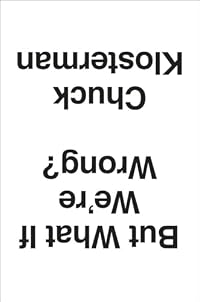
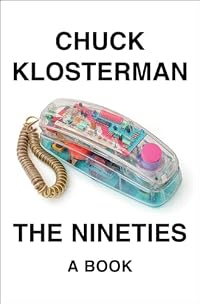
Chuck Klosterman, currently a music, film, & culture critic for Ohio's "Akron Beacon Journal", began his career with "The Forum" in Fargo, North Dakota. He lives in Akron, Ohio, where he once consumed nothing but McDonald's Chicken McNuggets for seven straight days. (Publisher Provided) Chuck Klosterman is the New York Times bestselling author of show more six books of nonfiction (including Sex, Drugs, and Cocoa Puffs, I Wear the Black Hat and But What If We're Wrong?) and two novels (Downtown Owl and The Visible Man). His debut book, Fargo Rock City, was a winner of the ASCAP-Deems Taylor Award. He currently covers sports and popular culture for ESPN and serves as "The Ethicist" for the New York Times Magazine. (Bowker Author Biography) show less
Some Editions
Common Knowledge
- Original publication date
- 2008
- People/Characters
- Mitch Hrlicka; Julia Rabia; Vance Druid; Horace Jones; Cubby Candy; Chris Sellers aka Grendel
- Important places
- Owl, North Dakota, USA; North Dakota, USA
- Important events
- Killer Blizzard (1984-2-4)
- Dedication
- For Melissa, and for North Dakota
- First words
- When Mitch Hrlicka heard that his high school football coach had gotten another teenage girl pregnant, he was forty bushels beyond bamboozled.
- Quotations
- The middle class does not exist. If you believe you are part of the middle class, it just mean you're rich and insecure or poor and misinformed.
- Last words
- (Click to show. Warning: May contain spoilers.)It was the greatest goddamn night of his life.
Classifications
Statistics
- Members
- 1,116
- Popularity
- 22,564
- Reviews
- 37
- Rating
- (3.50)
- Languages
- English, German
- Media
- Paper, Audiobook, Ebook
- ISBNs
- 12
- ASINs
- 5