
About the Author
Nathan Rabin is the head writer for The A.V. Club, the entertainment guide of The Onion. He is also the author of a memoir, The Big Rewind, and an essay collection based on one of his columns, My Year of Flops. He most recently collaborated with pop parodist Weird Al Yankovic on a coffee-table book show more called Weird Al: The Book. Rabin's writing has also appeared in The Wall Street Journal, Spin, The Huffington Post, The Boston Globe, Nerve, and Modern Humorist. He lives in Chicago with his wife and has learned to love both Faygo and extended guitar Solos. show less
Works by Nathan Rabin
My Year of Flops: The A.V. Club Presents One Man's Journey Deep into the Heart of Cinematic Failure (2010) — Author — 181 copies, 3 reviews
You Don't Know Me but You Don't Like Me: Phish, Insane Clown Posse, and My Misadventures with Two of Music's Most Maligned Tribes (2013) 84 copies, 2 reviews
The Weird Accordion to Al: Every "Weird Al" Yankovic Album Obsessively Analyzed by the Co-Author of Weird Al: The Book (Nathan Rabin with Al Yankovic) (2020) 21 copies
The Fractured Mirror: Nathan Rabin's Happy Place's Definitive Guide to American Movies About Filmmaking 6 copies, 1 review
The Joy of Trash : Nathan Rabin's Happy Place's Definitive Guide to the Very Worst of Everything (2021) 4 copies
The Joy of Trash 3 copies
Associated Works
Tagged
Common Knowledge
- Birthdate
- 1976-04-24
- Gender
- male
- Education
- University of Wisconsin, Madison
- Occupations
- film critic
- Organizations
- The Onion
- Nationality
- USA
- Places of residence
- Chicago, Illinois, USA
Marietta, Georgia, USA - Associated Place (for map)
- USA
Members
Reviews
(Reprinted from the Chicago Center for Literature and Photography [cclapcenter.com]. I am the original author of this essay, as well as the owner of CCLaP; it is not being reprinted illegally.)
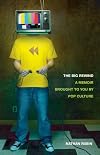
It's no secret that I'm a huge fan of The Onion's arts and culture publication, The AV Club (or at least I used to be, until mean-spirited "Hater" posts seemingly took over the majority of daily content there); and in particular I'm a slobbering devotee of their smart and funny head entertainment show more writer, Nathan Rabin, whose remarkable "My Year of Flops" essay series was the direct inspiration for my own "CCLaP 100" series on literary classics. So I was overjoyed to learn that Rabin had recently written a full-length book away from his AV Club duties -- a memoir, in fact, that purports to tell the story of why he finds pop culture so interesting to begin with, and how his love for cheesy movies and gangsta rap led him to the high-profile career he now has. But whoa, then I actually read it, and realized the fascinating truth about Rabin, that he comes from a background so dysfunctional as to make Augusten Burroughs look like one of the Von Trapp kids; and that when he glibly mentions that "pop culture saved my life," he means that as a literal statement of fact, with it frankly being a minor miracle that he's actually a functioning member of society at all, instead of some junkie living in a dumpster behind a Taco Bell, much less the respected journalist and cultural essayist that he is.
And in fact for the vast majority of its 350 pages, The Big Rewind is one unending, cringe-inducing nightmare, the tale of a spindly little Jewish nerd who's had the deck stacked against him nearly from birth -- the child of two '70s radicals who both eventually burned out but in vastly different ways, by puberty Rabin had already been institutionalized against his will, sent to and rejected by a foster family in the tony North Shore of the Chicago suburbs, and eventually consigned to a sort of halfway house for kids with behavioral problems in the dangerous Rogers Park neighborhood. And yes, as you can expect, Rabin uses these situations to relate a whole series of nightmarish anecdotes, a litany of horrors sure to be appreciated by any fan of Running With Scissors; but unlike Burroughs, Rabin uses these opportunities to deliver a lot of laugh-out-loud humor as well (typical line -- "I cannot stress this enough: do not take powerful hallucinogens before going to a Holocaust memorial"), and unbelievably enough mostly tries to stay light-hearted and optimistic when relaying all these past traumas. (Or, well, that's not the only difference between Burroughs and Rabin; unlike the former, for example, Rabin is actually a decent writer, and also doesn't feel the compulsion to just make up stupid sh-t whenever the narrative gets a little slow.)
Eventually, of course, Rabin ends up at the University of Wisconsin in Madison, where in typical fashion he falls in with a houseful of smelly hippies and hot undergraduate girlfriends who practice a lopsided form of polyamory (i.e. she gets to attend swinger conventions and be a "sacred prostitute," while he stays at home and smokes a lot of dope); and I say "of course" because Madison is where The Onion was originally founded, which for many years existed as not much more than a xeroxed zine handed out at record stores, and that didn't become the international cultural touchstone it now is until the rise of the Dot Com era in the 1990s. And I have to guiltily admit, there's something truly joyful about seeing someone with a dream job plainly confess that he considers it a dream job too; and I also have to admit, it's legitimately heartwarming to see Rabin confess near the end of the book that The Onion pretty much saved his life, and was what finally let him turn into the responsible, prolific adult he now is.
Now, let's also admit that the book has its problems, ones that were mostly minor for me but that will bother others a lot more; just for starters, his actual writing style can get awfully immature at a lot of points, and it's obvious as well that he still has some issues to work out regarding his sexual orientation, given the uncomfortable frequency in which he obsesses over people who mistake him for gay, a semi-homophobic aspect of this book that I found a real turn-off. (And dear Lord, if you're the kind of person who chafes at the sight of random quotes from old Simpsons episodes, you need to avoid this book like the freaking plague.) All in all, though, I found The Big Rewind to be a very pleasant surprise, given that Rabin could've so easily just put together a compilation of his best AV Club material instead, and made a ton more money without any of the dirty laundry. It's a gutsy book, a riveting one at points, and it comes recommended to anyone who enjoys a brisk, witty read.
Out of 10: 8.6 show less
It's no secret that I'm a huge fan of The Onion's arts and culture publication, The AV Club (or at least I used to be, until mean-spirited "Hater" posts seemingly took over the majority of daily content there); and in particular I'm a slobbering devotee of their smart and funny head entertainment show more writer, Nathan Rabin, whose remarkable "My Year of Flops" essay series was the direct inspiration for my own "CCLaP 100" series on literary classics. So I was overjoyed to learn that Rabin had recently written a full-length book away from his AV Club duties -- a memoir, in fact, that purports to tell the story of why he finds pop culture so interesting to begin with, and how his love for cheesy movies and gangsta rap led him to the high-profile career he now has. But whoa, then I actually read it, and realized the fascinating truth about Rabin, that he comes from a background so dysfunctional as to make Augusten Burroughs look like one of the Von Trapp kids; and that when he glibly mentions that "pop culture saved my life," he means that as a literal statement of fact, with it frankly being a minor miracle that he's actually a functioning member of society at all, instead of some junkie living in a dumpster behind a Taco Bell, much less the respected journalist and cultural essayist that he is.
And in fact for the vast majority of its 350 pages, The Big Rewind is one unending, cringe-inducing nightmare, the tale of a spindly little Jewish nerd who's had the deck stacked against him nearly from birth -- the child of two '70s radicals who both eventually burned out but in vastly different ways, by puberty Rabin had already been institutionalized against his will, sent to and rejected by a foster family in the tony North Shore of the Chicago suburbs, and eventually consigned to a sort of halfway house for kids with behavioral problems in the dangerous Rogers Park neighborhood. And yes, as you can expect, Rabin uses these situations to relate a whole series of nightmarish anecdotes, a litany of horrors sure to be appreciated by any fan of Running With Scissors; but unlike Burroughs, Rabin uses these opportunities to deliver a lot of laugh-out-loud humor as well (typical line -- "I cannot stress this enough: do not take powerful hallucinogens before going to a Holocaust memorial"), and unbelievably enough mostly tries to stay light-hearted and optimistic when relaying all these past traumas. (Or, well, that's not the only difference between Burroughs and Rabin; unlike the former, for example, Rabin is actually a decent writer, and also doesn't feel the compulsion to just make up stupid sh-t whenever the narrative gets a little slow.)
Eventually, of course, Rabin ends up at the University of Wisconsin in Madison, where in typical fashion he falls in with a houseful of smelly hippies and hot undergraduate girlfriends who practice a lopsided form of polyamory (i.e. she gets to attend swinger conventions and be a "sacred prostitute," while he stays at home and smokes a lot of dope); and I say "of course" because Madison is where The Onion was originally founded, which for many years existed as not much more than a xeroxed zine handed out at record stores, and that didn't become the international cultural touchstone it now is until the rise of the Dot Com era in the 1990s. And I have to guiltily admit, there's something truly joyful about seeing someone with a dream job plainly confess that he considers it a dream job too; and I also have to admit, it's legitimately heartwarming to see Rabin confess near the end of the book that The Onion pretty much saved his life, and was what finally let him turn into the responsible, prolific adult he now is.
Now, let's also admit that the book has its problems, ones that were mostly minor for me but that will bother others a lot more; just for starters, his actual writing style can get awfully immature at a lot of points, and it's obvious as well that he still has some issues to work out regarding his sexual orientation, given the uncomfortable frequency in which he obsesses over people who mistake him for gay, a semi-homophobic aspect of this book that I found a real turn-off. (And dear Lord, if you're the kind of person who chafes at the sight of random quotes from old Simpsons episodes, you need to avoid this book like the freaking plague.) All in all, though, I found The Big Rewind to be a very pleasant surprise, given that Rabin could've so easily just put together a compilation of his best AV Club material instead, and made a ton more money without any of the dirty laundry. It's a gutsy book, a riveting one at points, and it comes recommended to anyone who enjoys a brisk, witty read.
Out of 10: 8.6 show less
You don't know me but you don't like me : Phish, Insane Clown Posse, and my misadventures with two of music's most maligned tribes by Nathan Rabin
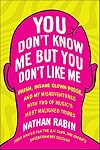
Rabin comes right out in the intro and says that if your looking for some kind of anthropological expose on Juggaloes and Phish followers that this is the wrong book. It's a music writer's memoir of his years of fascination and eventual becoming fans of both groups. While I appreciate him shedding light on the more inclusive aspects of both fandoms, some of the scenes of heavy drug use and especially the exhibitionist tendencies of Juggalettes satisfied a bit of my expose expectations, but show more overall it had a hard time living up to the title. show less
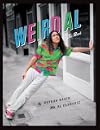
I've been a huge fan of Weird Al Yankovic since the early 1980s -- the first of his parody songs that I can remember hearing was "Another One Rides the Bus", followed by "Ricky". This book is a blast to read -- filled with anecdotes, rare photos from Al's life and career, song lyrics, Al's tweets, and recollections from Al's friends and bandmates. Told in purely chronological order,Weird Al: The Book, starts with Al's childhood, with the formative influences on his eventual career, such as show more Dr. Demento, and carries us through 2011 and his latest album release, Alpocalypse. Al's history is broken into five chapters -- "Portrait of the Parody Artist as a Young Man", "The Eat It Guy", "Kurt Cobain Saves Rock & Roll and Also Al's Career", "A New Look Al for a New Era", and "The Alpocalypse Approaches". Also included are a complete discography and videography. Plenty of space in these pages is dedicated to the creative process -- what exactly inspired and went into the making of many of Al's greatest songs and madcap music videos. The sense of humor prevalent througout Weird Al: The Book perfectly captures Al's sarcastic, poke-fun-in-a-loving-way tone. If you've ever enjoyed a Weird Al song/video, either his spot-on parodies like "Eat It", "Like a Surgeon", "Smells Like Nirvana", "Amish Paradise", "The Saga Begins", "White & Nerdy" or "Perform This Way", or you prefer his originals, like "Slime Creatures From Outer Space", "One More Minute", "Christmas at Ground Zero", "Bob", "Don't Download This Song", "Weasel Stomping Day" or "Polka Face", you'll enjoy this terrific but short biography. My only complaint is that the author(s) could have easily gone into far more detail about most of the stories told in this book -- it barely scratches the surface of Weird Al! [If you enjoy this, you may also wish to track down any of his albums (none of which are currently owned by the libraries) or search online for his many hilarious music videos. And, if you ever have the chance, make sure you see him in concert live!]
Originally reviewed for my local library's website: http://www.lincolnlibraries.org/depts/bookguide/srec/staffrec13-03.htm show less
Originally reviewed for my local library's website: http://www.lincolnlibraries.org/depts/bookguide/srec/staffrec13-03.htm show less
My Year of Flops: The A.V. Club Presents One Man's Journey Deep into the Heart of Cinematic Failure by Nathan Rabin
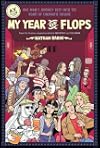
Obviously I am an avid reader of Nathan Rabin over at the avclub and thoroughly enjoyed his "My Year of Flops" series there so when I found the book at a remainders sale for $5.00, I ponied up the cash toot suite.
Of course, I had read most of the essays in the book at the avclub but even so I laughed approximately a couple of times per page (so approximately 576 laughs, give or take, based on the edition I read), and have introduced Rabin's neologistic phrase "Manic Pixie Dream Girl" into show more more than one conversation. I've even found a new appreciation for Marlon Brando's later films, and that in itself is a major achievement. show less
Of course, I had read most of the essays in the book at the avclub but even so I laughed approximately a couple of times per page (so approximately 576 laughs, give or take, based on the edition I read), and have introduced Rabin's neologistic phrase "Manic Pixie Dream Girl" into show more more than one conversation. I've even found a new appreciation for Marlon Brando's later films, and that in itself is a major achievement. show less
Lists
Awards

You May Also Like


Associated Authors
Statistics
- Works
- 12
- Also by
- 1
- Members
- 631
- Popularity
- #39,928
- Rating
- 3.4
- Reviews
- 19
- ISBNs
- 15