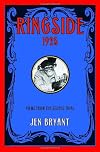
Ringside, 1925: Views from the Scopes Trial
by Jen Bryant
On This Page
Description
Visitors, spectators, and residents of Dayton, Tennessee, in 1925 describe, in a series of free-verse poems, the Scopes "monkey trial" and its effects on that small town and its citizens.Tags
Recommendations


Member Reviews
A most interesting read!! As the name implies this is a book about the Scopes trial but unlike other books that may cover this topic, here its told from the perspective of some of the towns people and reporters. I believe that this is actually a book for young adults but it is extremely good and very very well done and I think that it will appeal to all ages. I was a bit hesistant to request it because I am tired of all the religious bashing that seems to have become very popular in the last few years but that is not what happens here at all. Every side is presented respectfully and shown to be intelligent. In my opinion, the author does not take sides with either group but presents the best of both sides(with a few nutters of course). show more I was also happy that we get to see both groups,Christians and Agnostics/Atheists as intelligent and not foaming at the mouth radicals. It was refreshing to see many Christian presented as being open minded enough to embrace the bible and the concept of evolution at the same time. Though this book is only about 227 pages, it manages to create characters who have depth and are not two dimensional. The cast of characters were intriguing and very interesting. Some of the characters fall out over their different stances on the issue and many have their horizons broadened by the experience. To me the one relationship that dissolves that was sad to see was that between Clarence Darrow and Willam Jenning Bryan. The two men had apparently been very good friends but being forced to support their beliefs in such a public forum as the court destroyed their relationship irreparably. My favorite characters here were Willy Amos and Marybeth Dodd. Willy Amos is a young black boy who dreams big but never actually thinks that anything will come of it. When he meets Clarence Darrow he is inspired to believe, despite the odds, that maybe one day regardless of the color of his skin, he may have a share of the American dream. Marybeth Dodd on the other hand is a 17year old girl who wants more of her life than her small town or father may consider appropriate for a woman. I would recommend this book heartily. show less
Told in poems, Ringside, 1925 is the retelling of the Scopes Trial from the view of many of the townspeople. I enjoyed the poem format more than I was expecting to. It ended up working a lot like a novel in dialog- with the different people telling vignettes from their experiences. The prose was lively and often funny. I was impressed by the detail and respect in the characterization. What could have easily been caricatures were all well thought out and realized people on all sides of the issue. It is not often that a book makes me truly think about what I believe and why I believe it, but this one did so without any perceivable effort.
"Ringside, 1925" was quite an entertaining book. It's a historical fiction novel detailing the events of the John Scopes Monkey Trial in Dayton, Tennessee. A brief synopsis:
Tennessee passes the Butler Act, making it illegal to teach evolution in public schools. Some local bigwigs in Dayton come together and decide to try and have a cooperating teacher fight the act, likely as a marketing strategy to bring tourists (and their money) to the town. Scopes was chosen because he was young, well liked. single, new to the town, and willing to take the fall.
The trial brought not only the ACLU, but two famous lawyers to each side. For the prosecution it was William Jennings Bryant, former Presidential candidate, US Representative, and Secretary show more of State - also a Fundamentalist Christian. And for the defense, Clarence Darrow, a lawyer famous for defending the rights of all people, including two men recently found, clearly, guilty of murder, and accused African-Americans, which, unfortunately for the time, could actually be a comparison. Regardless, both men were considered fantastic orators and practitioners of the law.
However, a fundamentalist judge essentially crippled the defenses stance that the law was unjust. They were not allowed expert witnesses (who were scientists who found a way to reconcile their beliefs in God and evolution), nor was Clarence Darrow's examination of W.J. Bryant - showing his lack of worldly knowledge and the logical incongruities in a literal belief in the Christian Bible - was deemed inadmissible. In fact the jury only witnessed less than a few hours of the week long trial.
This, easily led to a guilty verdict and a fine of $100 dollars for Scopes.
Now, quite different from most historical fiction that I'm used to reading. And not just mildly different, radically different. Firstly, the book is written almost entirely in free verse poetry. This would be a bit different. But, there is also nine different narrators, each created by the author of the book, Jen Bryant. Each of them are close to the Scopes trial, whether it be personally, philosophically, or even just in proximity at some points. They all provide their own perspective of the trial and how it is affecting their lives. Though, it is crafted in a way that overwhelmingly supports the defense (Dang!). The book is separated into eight different parts, containing the first person accounts of the narrators.
I love this style, as Bryant is using multiple narrators as her characters, all with their distinctive style in regards to the poetry. For example, there's the narrator/character of Jimmy Lee Davis. His sections of poetry all use short lines, about 3-4 words long. He is also quite adept at relating things back to his love of fishing and baseball. Then there's Betty Barker, the fanatical Christian Fundamentalists, whose observations seemed to be frantic and sometimes a bit rambling. In stark contrast there is Ernest McManus, a tourist/slash minister with a more progressive view on Darwinism. His portions of narrations are both intelligent and thoughtful in regards to the situation. Bryant definitely skews her narrative in favor of Darrow and Scopes. But, being that is was published in 2008 I can hardly blame her. It's just about undeniable science.
Funny thing is, even though it is completely different from "The Scopes Trial: Defending the Right to Teach" with regards to narration, style, and genre, many of the main points of the trial still remain. Even though none of the narrators were actual people, they still provide essential details, and their responses. Like when the judge disallowed all of the defenses the narrator Constable Fraybel - a Christian - states "To me, the judge's decision seemed/ridiculous/Most of us here in Dayton wanted to hear more/about evolution..."(143). This is quite a plus for me, as, it is quite a compelling - if not sometimes a bit scattered - narrative, and the key points of the trial remain historically true.
As for its companion, "The Scopes Trial: Defending the Right to Teach," there are very few similarities outside of the factual events and mention of actual people - which is another point for "Ringside" as all of the characters outside of the narrators are actually based on the nonfictional players in the circus trial. They follow the same plot, and basically have the same structure - Set-up/Charges, Pre-Trial, Trial, and Post-Trial, Epilogue. However, "The Scopes Trial" is a more straightforward account, detailing key trial figures and their backgrounds. Though, it's a brief book that provides more of a brief overview of the events.
Though I do have one complaint. Every once in a while - I believe about 3-4 times throughout the novel - the narrative takes the form of Paul Lebrun's news articles. And while they take place during key moments of the trial, and I suppose was intended to lend an aura of legitimacy, but was really just jarring. Going from dozens of pages of poetic form to an immediate switch to prose for two pages was an odd choice that I didn't like. show less
Tennessee passes the Butler Act, making it illegal to teach evolution in public schools. Some local bigwigs in Dayton come together and decide to try and have a cooperating teacher fight the act, likely as a marketing strategy to bring tourists (and their money) to the town. Scopes was chosen because he was young, well liked. single, new to the town, and willing to take the fall.
The trial brought not only the ACLU, but two famous lawyers to each side. For the prosecution it was William Jennings Bryant, former Presidential candidate, US Representative, and Secretary show more of State - also a Fundamentalist Christian. And for the defense, Clarence Darrow, a lawyer famous for defending the rights of all people, including two men recently found, clearly, guilty of murder, and accused African-Americans, which, unfortunately for the time, could actually be a comparison. Regardless, both men were considered fantastic orators and practitioners of the law.
However, a fundamentalist judge essentially crippled the defenses stance that the law was unjust. They were not allowed expert witnesses (who were scientists who found a way to reconcile their beliefs in God and evolution), nor was Clarence Darrow's examination of W.J. Bryant - showing his lack of worldly knowledge and the logical incongruities in a literal belief in the Christian Bible - was deemed inadmissible. In fact the jury only witnessed less than a few hours of the week long trial.
This, easily led to a guilty verdict and a fine of $100 dollars for Scopes.
Now, quite different from most historical fiction that I'm used to reading. And not just mildly different, radically different. Firstly, the book is written almost entirely in free verse poetry. This would be a bit different. But, there is also nine different narrators, each created by the author of the book, Jen Bryant. Each of them are close to the Scopes trial, whether it be personally, philosophically, or even just in proximity at some points. They all provide their own perspective of the trial and how it is affecting their lives. Though, it is crafted in a way that overwhelmingly supports the defense (Dang!). The book is separated into eight different parts, containing the first person accounts of the narrators.
I love this style, as Bryant is using multiple narrators as her characters, all with their distinctive style in regards to the poetry. For example, there's the narrator/character of Jimmy Lee Davis. His sections of poetry all use short lines, about 3-4 words long. He is also quite adept at relating things back to his love of fishing and baseball. Then there's Betty Barker, the fanatical Christian Fundamentalists, whose observations seemed to be frantic and sometimes a bit rambling. In stark contrast there is Ernest McManus, a tourist/slash minister with a more progressive view on Darwinism. His portions of narrations are both intelligent and thoughtful in regards to the situation. Bryant definitely skews her narrative in favor of Darrow and Scopes. But, being that is was published in 2008 I can hardly blame her. It's just about undeniable science.
Funny thing is, even though it is completely different from "The Scopes Trial: Defending the Right to Teach" with regards to narration, style, and genre, many of the main points of the trial still remain. Even though none of the narrators were actual people, they still provide essential details, and their responses. Like when the judge disallowed all of the defenses the narrator Constable Fraybel - a Christian - states "To me, the judge's decision seemed/ridiculous/Most of us here in Dayton wanted to hear more/about evolution..."(143). This is quite a plus for me, as, it is quite a compelling - if not sometimes a bit scattered - narrative, and the key points of the trial remain historically true.
As for its companion, "The Scopes Trial: Defending the Right to Teach," there are very few similarities outside of the factual events and mention of actual people - which is another point for "Ringside" as all of the characters outside of the narrators are actually based on the nonfictional players in the circus trial. They follow the same plot, and basically have the same structure - Set-up/Charges, Pre-Trial, Trial, and Post-Trial, Epilogue. However, "The Scopes Trial" is a more straightforward account, detailing key trial figures and their backgrounds. Though, it's a brief book that provides more of a brief overview of the events.
Though I do have one complaint. Every once in a while - I believe about 3-4 times throughout the novel - the narrative takes the form of Paul Lebrun's news articles. And while they take place during key moments of the trial, and I suppose was intended to lend an aura of legitimacy, but was really just jarring. Going from dozens of pages of poetic form to an immediate switch to prose for two pages was an odd choice that I didn't like. show less
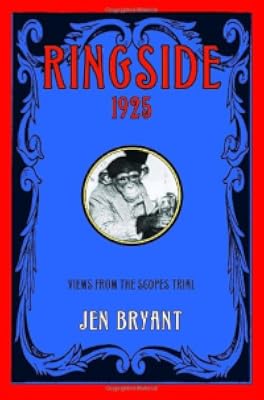
The novel “Ringside 1925” invites the viewer in with allusions to a circus and a cover photograph of a chimpanzee, Joe Mendi, borrowed (in real life) by the drugstore owner Fred Robinson as a means of advertising his Dayton, Tennessee, business during the Scopes Trial. The advertising ruse took from the trial’s nickname as “The Great Monkey Trial,” which itself was influenced by the misinterpretation that Darwin claimed we evolved from monkeys. It is amid this historical and highly publicized trial that the novel is set, narrated by 9 fictional characters who have diverse roles, backgrounds, and viewpoints.
Often offering fictional commentary about the actual events of 1925, each character narrates his or her part through show more poems. I did not enjoy this aspect of the book and do not understand why this format was chosen for the presentation of a story surrounding the subject matter of a trial about teaching evolution in schools. I thought it broke up the story and made it more difficult to read. I suspect this is highly subjective and I just didn’t “get it,” but another person could likely take delight in a historical novel of poems. The only prose in the book came when Paul Lebrun, a reporter to the “St. Louis Post-Dispatch,” wired his reports to his boss. We learn in the Author’s Note that his emotional and personal style is consistent with the actual reporting of the period that she studied in preparation for writing this book. Also in the Author’s Note, Bryant relates other ways she strives to recapture the feeling of the era. For example, she uses now-passé terms like “colored” and “Negro.” I strongly disliked her use of dialects, though. I found racism evident in the way Willy Amos, a black twelve-year-old boy, was the only character who was not presented using perfect English. On page 42, he says “I ain’t believin’ things can get much better.” But Jimmy Lee Davis, a high school student, says “That’s when we stopped arguing & started swinging & Mr. Robinson came running” (p. 86). So, white folks in rural Tennessee were highly articulate and only the black kid couldn’t pronounce a final “g” sound? I also found the book highly biased regarding views on evolution. This is perfectly acceptable in a fictional book, but I was still annoyed at how the characters completely in disbelief of evolution were presented. Betty Barker, member of the ladies’ Bible study group, is downright mean and vindictive. She became villainous instead of ignorant.
In addition to reading many primary sources, the author actually witnessed the annual reenactment of the Scopes trial at the Rhea County Courthouse in Dayton, Tennessee. I would love to see that, for the facts that I read in Arthur Blake’s non-fiction book “The Scopes Trial: Defending the Right to Teach” certainly support Bryant’s interpretation that this debate – controversial both then and now – was a circus-like spectacle. In fact, Part 5 begins with a quote from the prosecution lawyer and one from the defendant, John Thomas Scopes, from whom Bryant gleaned the title of her novel when he said “I sat speechless…a ringside observer at my own trial, until the end of the circus” (p. 107). In addition to the quotes from historical figures involved in the trial that open every new part and section of the book, I liked other ways Bryant was consistent with fact, based on my earlier study of the trial in the aforementioned book. On page 134, one character observes that “some of the smartest men in the country tried to decide what this trial is about.” It was true that often the focus of the trial seemed to be on whether or not evolution was a fact rather than whether or not Mr. Scopes had violated the Butler Act by teaching evolution in his classroom. In another scene, one character asks where to find a clothing store and is directed to Darwin’s. The novel acknowledges the coincidental name in the characters’ conversation on page 157: “I gave her the strangest look. ‘Really, sir, that’s the owner’s name.’” I learned from Blake’s book that this was true; there was a clothing store in tiny Dayton, Tennessee, called “J.P. Darwin’s Everything to Wear Store.”
While I very much enjoyed Blake’s non-fiction book about the Scopes trial, the juxtaposition with Bryant’s book did call my attention to an important absence: Blake’s book does not mention the students. I was embarrassed that this glaring absence was not noticed by me until well into Bryant’s book. Are students not, essentially, among the most important elements of such a trial? The trial was all about what they were being taught in school. I was annoyed with myself for not thinking about what the kids involved then might have had to say about the trial until I read about the feelings of the fictional characters in “Ringside 1925.”
Despite its problems, the novel ends nicely with an Epilogue that relates the real stories of what happened to the key figures after the trial. Then, following the Author’s Note, the book closes with a list of resources for further research about the Scopes trial and controversies about teaching evolution, Acknowledgments, and About the Author. Overall, it was a decent book from which I learned some things, gleaned some insights, and experienced amusement. show less
Often offering fictional commentary about the actual events of 1925, each character narrates his or her part through show more poems. I did not enjoy this aspect of the book and do not understand why this format was chosen for the presentation of a story surrounding the subject matter of a trial about teaching evolution in schools. I thought it broke up the story and made it more difficult to read. I suspect this is highly subjective and I just didn’t “get it,” but another person could likely take delight in a historical novel of poems. The only prose in the book came when Paul Lebrun, a reporter to the “St. Louis Post-Dispatch,” wired his reports to his boss. We learn in the Author’s Note that his emotional and personal style is consistent with the actual reporting of the period that she studied in preparation for writing this book. Also in the Author’s Note, Bryant relates other ways she strives to recapture the feeling of the era. For example, she uses now-passé terms like “colored” and “Negro.” I strongly disliked her use of dialects, though. I found racism evident in the way Willy Amos, a black twelve-year-old boy, was the only character who was not presented using perfect English. On page 42, he says “I ain’t believin’ things can get much better.” But Jimmy Lee Davis, a high school student, says “That’s when we stopped arguing & started swinging & Mr. Robinson came running” (p. 86). So, white folks in rural Tennessee were highly articulate and only the black kid couldn’t pronounce a final “g” sound? I also found the book highly biased regarding views on evolution. This is perfectly acceptable in a fictional book, but I was still annoyed at how the characters completely in disbelief of evolution were presented. Betty Barker, member of the ladies’ Bible study group, is downright mean and vindictive. She became villainous instead of ignorant.
In addition to reading many primary sources, the author actually witnessed the annual reenactment of the Scopes trial at the Rhea County Courthouse in Dayton, Tennessee. I would love to see that, for the facts that I read in Arthur Blake’s non-fiction book “The Scopes Trial: Defending the Right to Teach” certainly support Bryant’s interpretation that this debate – controversial both then and now – was a circus-like spectacle. In fact, Part 5 begins with a quote from the prosecution lawyer and one from the defendant, John Thomas Scopes, from whom Bryant gleaned the title of her novel when he said “I sat speechless…a ringside observer at my own trial, until the end of the circus” (p. 107). In addition to the quotes from historical figures involved in the trial that open every new part and section of the book, I liked other ways Bryant was consistent with fact, based on my earlier study of the trial in the aforementioned book. On page 134, one character observes that “some of the smartest men in the country tried to decide what this trial is about.” It was true that often the focus of the trial seemed to be on whether or not evolution was a fact rather than whether or not Mr. Scopes had violated the Butler Act by teaching evolution in his classroom. In another scene, one character asks where to find a clothing store and is directed to Darwin’s. The novel acknowledges the coincidental name in the characters’ conversation on page 157: “I gave her the strangest look. ‘Really, sir, that’s the owner’s name.’” I learned from Blake’s book that this was true; there was a clothing store in tiny Dayton, Tennessee, called “J.P. Darwin’s Everything to Wear Store.”
While I very much enjoyed Blake’s non-fiction book about the Scopes trial, the juxtaposition with Bryant’s book did call my attention to an important absence: Blake’s book does not mention the students. I was embarrassed that this glaring absence was not noticed by me until well into Bryant’s book. Are students not, essentially, among the most important elements of such a trial? The trial was all about what they were being taught in school. I was annoyed with myself for not thinking about what the kids involved then might have had to say about the trial until I read about the feelings of the fictional characters in “Ringside 1925.”
Despite its problems, the novel ends nicely with an Epilogue that relates the real stories of what happened to the key figures after the trial. Then, following the Author’s Note, the book closes with a list of resources for further research about the Scopes trial and controversies about teaching evolution, Acknowledgments, and About the Author. Overall, it was a decent book from which I learned some things, gleaned some insights, and experienced amusement. show less
The best sort of fiction: an interesting, well-written narrative(the free verse form adds to the pleasure); distinct characters who keep one's attention; side stories that add to the primary plot; and enough humor and drama to keep one reading long past bedtime. Readers who don't know much about this time or place, or the basis for the trial, will want to learn more; others may be amazed at the amount of information that's tucked into this brief, charming, and informative work. I found myself making notes to do a little follow-up reading & research so I could learn more about the case itself and the times that created it. Highly recommended!
In 1925, in the small, sleepy town of Dayton, TN, there was a trial. A local high school teacher was arrested for teaching the theory of evolution to some of his science students. And soon two of the greatest public speakers in the country were coming to battle it out. Did J. T. Scopes break the law by teaching evolution? Was the law constitutional in the first place?
Jen Bryant has written a novel in verse that shows the trial through the eyes of some of the people affected by it. The narrators include Marybeth Dodd, a high school student whose father thinks a woman's place is in the home; Willy Amos, an African-American boy who taught himself to read and write because he's not allowed to go to school; Jimmy Lee Davis, a high school show more student whose mother has taught him to follow the teachings of the Bible; and Peter Sykes, Jimmy's best friend... or he was until their differing opinions on the trial drove them apart. Each narrator has a distinct voice and takes something different away from the trial. Seeing the trial through so many different points of view really brings it to life.
The verses paint a picture of a small Southern town and the people who live and work in it. I thought the whole thing was gorgeous and I loved reading from every character's point of view. show less
Jen Bryant has written a novel in verse that shows the trial through the eyes of some of the people affected by it. The narrators include Marybeth Dodd, a high school student whose father thinks a woman's place is in the home; Willy Amos, an African-American boy who taught himself to read and write because he's not allowed to go to school; Jimmy Lee Davis, a high school show more student whose mother has taught him to follow the teachings of the Bible; and Peter Sykes, Jimmy's best friend... or he was until their differing opinions on the trial drove them apart. Each narrator has a distinct voice and takes something different away from the trial. Seeing the trial through so many different points of view really brings it to life.
The verses paint a picture of a small Southern town and the people who live and work in it. I thought the whole thing was gorgeous and I loved reading from every character's point of view. show less
This novel in verse is a quick read and does a good job portraying the circumstances of the Scopes Monkey trial in Dayton, Tennessee in 1925. The issue is particularly relevant today with some school districts once again receiving pressure to downplay evolution and insert some intelligent design into the curriculum. My daughter's somewhat rural Ohio middle school has been dealing with this issue recently. The book does a good job of portraying both sides, yet still explaining how someone can be a good Christian and still believe in evolution. My experience is that many teens in strong (verging on fanatic) Christian cultures do not understand this. They think the two views are mutually exclusive because this is how the issue has been show more posed to them. The treatment in this book is clear and would be easily understood by middle school students. A more mature book on the same issue for high school students is "Evolution, Me and Other Freaks of Nature." It, however, does not have the historical perspective of this book. show less
Members
- Recently Added By
Author Information

27+ Works 4,295 Members
Awards and Honors
Common Knowledge
- People/Characters
- William Jennings Bryan; Clarence Darrow; John Thomas Scopes
- Important places
- Dayton, Tennessee, USA; Tennessee, USA
- Important events
- Scopes Trial (1925-07)
Classifications
Statistics
- Members
- 127
- Popularity
- 258,463
- Reviews
- 11
- Rating
- (4.06)
- Languages
- English, French
- Media
- Paper, Ebook
- ISBNs
- 6
- ASINs
- 2