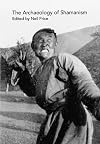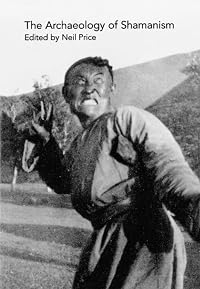
The Archaeology of Shamanism
by Neil Price
On This Page
Description
In this timely collection, Neil Price provides a general introduction to the archaeology of shamanism by bringing together recent archaeological thought on the subject. Blending theoretical discussion with detailed case studies, the issues addressed include shamanic material culture, responses to dying and the dead, shamanic soundscapes, the use of ritual architecture and shamanism in the context of other belief systems such as totemism. Following an intial orientation reviewing shamanism as show more an anthropological construct, the volume focuses on the Northern hemisphere with case studies from Greenland to Nepal, Siberia to Kazakhstan. The papers span a chronological range from Upper Palaeolithic to the present and explore such cross-cutting themes as gender and the body, identity, landscape, architecture, as well as shamanic interpretations of rock art and shamanism in the heritage and cultural identity of indigenous peoples. The volume also addresses the interpretation of shamanic beliefs in terms of cognitive neuroscience and the modern public perception of prehistoric shamanism. show lessTags
Recommendations































Member Reviews
I know of Neil Price through his earlier work The Viking Way: Religion and War in Iron Age Scandinavia, and suffice it to say that I am a huge fan. The A of S is an entirely different project, yet it demonstrates what seems to be a characteristic desire of Price’s to be inclusive and interdisciplinary, to bring many angles to bear on a given subject.
The book attempts to address the question “how far is it possible to talk of shamanism in the pre-historic past?” The answer, Price asserts, “can only be sought in studies of material culture and, thus, archaeology.” These papers, other than one about San rock paintings in southern Africa, focus on the circumpolar region. They present archaeological studies of portable objects show more (i.e. amulets and the like), of the landscape, of rock art, of British Neolithic monuments, and of Anglo-Saxon cremation graves, and describe what might be evidence of the existence of shamanism or related actions/beliefs in the originating culture of each.
Price cautions that, “the use of anthropological analogy to bridge sometimes immense gaps of time and location is a great temptation.” I’m sure that must be true, but as a layperson I appreciate the wealth of information here and have to admit that, a la Jimmy Carter, in my heart, I sometimes succumb to temptation!
Finally, as in his earlier work, Price acknowledges people besides academics who have an interest in some of these archaeological sites and ideas, namely, neo-pagans and indigenous peoples whose ancestors are/might be the subjects of the excavations and/or studies. Unfortunately, (as far as I can tell) the collection doesn’t have a statement from the latter point of view, but there is an article by a neo-pagan person that gives some insight into that perspective. show less
The book attempts to address the question “how far is it possible to talk of shamanism in the pre-historic past?” The answer, Price asserts, “can only be sought in studies of material culture and, thus, archaeology.” These papers, other than one about San rock paintings in southern Africa, focus on the circumpolar region. They present archaeological studies of portable objects show more (i.e. amulets and the like), of the landscape, of rock art, of British Neolithic monuments, and of Anglo-Saxon cremation graves, and describe what might be evidence of the existence of shamanism or related actions/beliefs in the originating culture of each.
Price cautions that, “the use of anthropological analogy to bridge sometimes immense gaps of time and location is a great temptation.” I’m sure that must be true, but as a layperson I appreciate the wealth of information here and have to admit that, a la Jimmy Carter, in my heart, I sometimes succumb to temptation!
Finally, as in his earlier work, Price acknowledges people besides academics who have an interest in some of these archaeological sites and ideas, namely, neo-pagans and indigenous peoples whose ancestors are/might be the subjects of the excavations and/or studies. Unfortunately, (as far as I can tell) the collection doesn’t have a statement from the latter point of view, but there is an article by a neo-pagan person that gives some insight into that perspective. show less
Illustrations are poor (and crucial to interpretations) but you can search for what you need on the internet. Archaeology has often been reluctant to see shamanist experiences in art and iconography. These papers are from archaeologists with knowledge of early religions. Neil Price places the book within an 'archaeology of the mind' that searches for cognitive experience, 'these elusive mentalities' from the archaeological record.
It's an open-minded book and includes a piece on the troubled relations between archaeologists, indigenous peoples and neo-pagans or neo-shamans.
I'll follow Neil Price into other work -- I think I liked his introduction the most.
Here's the contents:
Part One -- The archaeology of shamanism: Cognition, cosmology show more and world-view
1. An archaeology of altered states: Shamanism and material culture studies
Neil S. Price
2. Southern African shamanistic rock art in its social and cognitive contexts
J.D. Lewis-Williams
Part Two -- Siberia and Central Asia: The 'cradle of shamanism'
3. Rock art and the material culture of Siberian and Central Asian shamanism
Ekaterina Devlet
4. Shamans, heroes and ancestors in the bronze castings of western Siberia
Natalia Fedorova
5. Sun Gods or shamans? Interpreting the 'solar-headed' petroglyphs of Central Asia
Andrzej Rozwadowski
6. The materiality of shamanism as a 'world-view': Praxis, artefacts and landscape
Peter Jordan
7. The medium of the message: Shamanism as localised practice in the Nepal Himalayas
Damian Walter
Part Three -- North America and North Atlantic
8. The gendered peopling of North America: Addressing the antiquity of systems of multiple gender
Sandra E. Hollimon
9. Shamanism and the iconography of Palaeo-Eskimo art
Patricia D. Sutherland
10. Social bonding and shamanism among late Dorset groups in High Arctic Greenland
Hans Christian Gullov and Martin Appelt
Part Four -- Northern Europe
11. Special objects -- special creatures: Shamanistic imagery and the Aurignacian art of south-west Germany
Thomas A. Dowson and Martin Porr
12. The sounds of transformation: Accoustics, monuments and ritual in the British Neolithic
Aaron Watson
13. An ideology of transformation: Cremation rites and animal sacrifice in early Anglo-Saxon England
Howard Williams
14. Waking ancestor spirits: Neo-shamanic engagements with archaeology
Robert J. Wallis show less
It's an open-minded book and includes a piece on the troubled relations between archaeologists, indigenous peoples and neo-pagans or neo-shamans.
I'll follow Neil Price into other work -- I think I liked his introduction the most.
Here's the contents:
Part One -- The archaeology of shamanism: Cognition, cosmology show more and world-view
1. An archaeology of altered states: Shamanism and material culture studies
Neil S. Price
2. Southern African shamanistic rock art in its social and cognitive contexts
J.D. Lewis-Williams
Part Two -- Siberia and Central Asia: The 'cradle of shamanism'
3. Rock art and the material culture of Siberian and Central Asian shamanism
Ekaterina Devlet
4. Shamans, heroes and ancestors in the bronze castings of western Siberia
Natalia Fedorova
5. Sun Gods or shamans? Interpreting the 'solar-headed' petroglyphs of Central Asia
Andrzej Rozwadowski
6. The materiality of shamanism as a 'world-view': Praxis, artefacts and landscape
Peter Jordan
7. The medium of the message: Shamanism as localised practice in the Nepal Himalayas
Damian Walter
Part Three -- North America and North Atlantic
8. The gendered peopling of North America: Addressing the antiquity of systems of multiple gender
Sandra E. Hollimon
9. Shamanism and the iconography of Palaeo-Eskimo art
Patricia D. Sutherland
10. Social bonding and shamanism among late Dorset groups in High Arctic Greenland
Hans Christian Gullov and Martin Appelt
Part Four -- Northern Europe
11. Special objects -- special creatures: Shamanistic imagery and the Aurignacian art of south-west Germany
Thomas A. Dowson and Martin Porr
12. The sounds of transformation: Accoustics, monuments and ritual in the British Neolithic
Aaron Watson
13. An ideology of transformation: Cremation rites and animal sacrifice in early Anglo-Saxon England
Howard Williams
14. Waking ancestor spirits: Neo-shamanic engagements with archaeology
Robert J. Wallis show less
Ratings
Members
- Recently Added By
Lists

Nonordinary States of Consciousness
184 works; 7 members

Books in the Bibliography of The Mind in the Cave by David Lewis-Williams
257 works; 1 member
Author Information

6 Works 183 Members
All Editions
Common Knowledge
- First words
- When a dissident priest called Avvakum arrived in the lands of the nomadic, reindeer-herding Evenki in the early 1650s, having been exiled to central Siberia by the patriarch of the Russian Orthodox Church, no outsider had ev... (show all)er heard of a saman, let alone written the word down or explored the cosmological understandings that underpinned its meaning.
Classifications
- Genres
- Anthropology, Nonfiction, Religion & Spirituality, General Nonfiction
- DDC/MDS
- 306.6 — Society, government, & culture Social sciences, sociology & anthropology Social Behavior - Dating, Marriage, Divorce Religious institutions
- LCC
- GN475.8 .A73 — Geography, Anthropology and Recreation Anthropology Anthropology Ethnology. Social and cultural anthropology Cultural traits, customs, and institutions
- BISAC
Statistics
- Members
- 47
- Popularity
- 639,225
- Reviews
- 2
- Rating
- (4.00)
- Languages
- English
- Media
- Paper, Ebook
- ISBNs
- 3