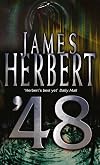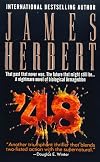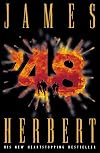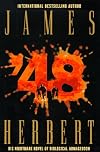
'48
by James Herbert
On This Page
Description
In 1945, Hitler unleashed the Blood Death on Britain as his final act of vengeance.Those who died at once were the lucky ones. The really unfortunate took years. The survivors - people like me, who had the blood group that kept us safe from the disease - were now targets for those who believed our blood could save them.I survived for three years. I lived alone, spending my days avoiding the fascist Blackshirts who wanted my blood for their dying leader. Then I met the others - and life got show more complicated all over again . . . show lessTags
Recommendations














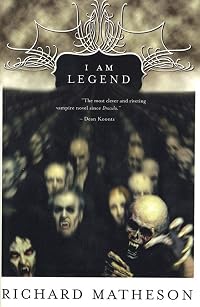

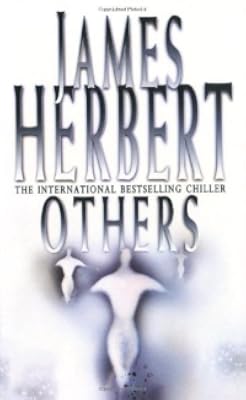
Member Recommendations

by iggsn
Member Reviews
Still gamely making my way through Herbert's bibiography. This one was...different, yet similar to his others.
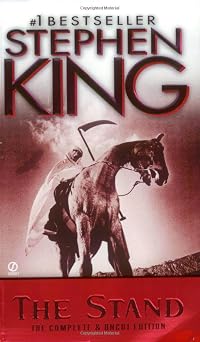
Wildly different in that Herbert does his own take on the post-apocalyptic genre. It seems like every big name horror author has to try their hand at an end-of-the-world scenario. Stephen King with The Stand, Robert R. McCammon with Swan Song, Graham Masterton with Plague, and now Herbert.
Of those four, I'd say this was the least successful, but it's actually, aside from a few sour notes, one of the more enjoyable Herbert novels recently.
It opens on an action scene that just goes on and on...maybe a bit too much, but it was fun, at least. Honestly, as others have said, this one rarely stops to catch its breath. So it's a plus, show more but it's also, at times, a minus.
Some of the other stuff is the standard boilerplate Herbert complaints:
- The virile male protagonist noticing the overly attractive female character at a most inappropriate moment
_ The virile male protagonist absolutely getting it on with said overly attractive female character, often because she pretty much throws herself at him.
- The third was non-standard but, while I get that Herbert was drumming up some conflict within the group with Nathaniel hating on the Nazi Wilhelm, the repetitious anger got to be a little over the top and uncomfortable.
Overall, the plot was a touch far-fetched (more than most of the post-apocalyptic novels I've experienced, anyway), and I had to really really lean into my suspension of disbelief at how the Blackshirts planned to save themselves.
But, overall, for all its issues, this was definitely one of the more fun, and more readable novels of his. show less
Wildly different in that Herbert does his own take on the post-apocalyptic genre. It seems like every big name horror author has to try their hand at an end-of-the-world scenario. Stephen King with The Stand, Robert R. McCammon with Swan Song, Graham Masterton with Plague, and now Herbert.
Of those four, I'd say this was the least successful, but it's actually, aside from a few sour notes, one of the more enjoyable Herbert novels recently.
It opens on an action scene that just goes on and on...maybe a bit too much, but it was fun, at least. Honestly, as others have said, this one rarely stops to catch its breath. So it's a plus, show more but it's also, at times, a minus.
Some of the other stuff is the standard boilerplate Herbert complaints:
- The virile male protagonist noticing the overly attractive female character at a most inappropriate moment
_ The virile male protagonist absolutely getting it on with said overly attractive female character, often because she pretty much throws herself at him.
- The third was non-standard but, while I get that Herbert was drumming up some conflict within the group with Nathaniel hating on the Nazi Wilhelm, the repetitious anger got to be a little over the top and uncomfortable.
Overall, the plot was a touch far-fetched (more than most of the post-apocalyptic novels I've experienced, anyway), and I had to really really lean into my suspension of disbelief at how the Blackshirts planned to save themselves.
But, overall, for all its issues, this was definitely one of the more fun, and more readable novels of his. show less
*audio-boek*
Een mooi verhaal, dat zich afspeelt in 1948 (vandaar de titel). Vlak voor het einde van de Tweede Wereldoorlog, laat Hitler raketten met een virus ('bloeddood'). Door dit virus verdikt het bloed van zijn slachtoffers, tot het uiteindelijk zo dik is dat de aders verstopt raken. Het resterende bloed zoekt een uitweg via allerlei lichaamsopeningen, en sommige slachtoffers sterven vrijwel direct, terwijl het voor anderen jaren duurden. Sommige mensen doen er langer over om te sterven, en zij leiden een naar leven. Dan zijn er ook nog mensen met AB-negatief, die immuun zijn voor deze ziekte.
Hoke, een piloot uit Amerika, is een van de mensen met deze bloedgroep, en hij probeert van alles om uit de handen te blijven van de Britse show more Nazis die het op zijn bloed hebben voorzien. Het boek begint in het midden van het conflict.
De hoofd- en secundaire personages komen in diverse moeilijkheden gedurende het verhaal. De personages zijn zeer geloofwaardig neergezet, en de interactie tussen hen voldoende om me in het verhaal te houden.
Er was genoeg geweld en 'horror' in het verhaal zodat een echtefan voldoende aan zijn of haar trekken kan komen. Zelfs ben ik geen liefhebber van het horror genre, maar in dit boek paste het. show less
Een mooi verhaal, dat zich afspeelt in 1948 (vandaar de titel). Vlak voor het einde van de Tweede Wereldoorlog, laat Hitler raketten met een virus ('bloeddood'). Door dit virus verdikt het bloed van zijn slachtoffers, tot het uiteindelijk zo dik is dat de aders verstopt raken. Het resterende bloed zoekt een uitweg via allerlei lichaamsopeningen, en sommige slachtoffers sterven vrijwel direct, terwijl het voor anderen jaren duurden. Sommige mensen doen er langer over om te sterven, en zij leiden een naar leven. Dan zijn er ook nog mensen met AB-negatief, die immuun zijn voor deze ziekte.
Hoke, een piloot uit Amerika, is een van de mensen met deze bloedgroep, en hij probeert van alles om uit de handen te blijven van de Britse show more Nazis die het op zijn bloed hebben voorzien. Het boek begint in het midden van het conflict.
De hoofd- en secundaire personages komen in diverse moeilijkheden gedurende het verhaal. De personages zijn zeer geloofwaardig neergezet, en de interactie tussen hen voldoende om me in het verhaal te houden.
Er was genoeg geweld en 'horror' in het verhaal zodat een echtefan voldoende aan zijn of haar trekken kan komen. Zelfs ben ik geen liefhebber van het horror genre, maar in dit boek paste het. show less
A Herbert novel of the old school style. The narrative is fast paced, and the story simple. The reasons for the protagonist staying in London is almost a Maguffin (See Hitchcock films for more on this narrative element) but to be honest, the story is so swift you are carried along just as the characters are. Recommended to any Herbert fans.
Black Shirts and Anarchy…
What if, in 1948 in the final phase of World War 2, a biological weapon was released? After all such `wonder weapons' were really in development buy both Britain and Germany. And what if, as a result, virtually all of the population of Britain were killed in one catastrophic day? Only a few, the partially immune, survive for a while and even fewer, the naturally immune, live on untouched (at least by disease). What would life then be like in 1948? Thus the novel's title.
As you can see, this is an alternate history, and so technically is science fiction. James Herbert usually writes horror, but this effort is definitely not second rate as a result. Herbert is "Britain's No.1 best-selling writer of chiller show more fiction, a position he has held since the publication of his first novel" ('48, p.1). Herbert's novels "have sold 54 million copies worldwide" (James Herbert: Wikipedia:__ accessed 13/09/2013. http://en.wikipedia.org/wiki/James_Herbert).
Hoke, the main character and first-person-narrator, is a US pilot who joined the British air force before his country joined the war. He is a hard-boiled character who is embittered by his experiences before and after the war. The novel itself is thus also hard boiled and the reader is propelled headlong through it accompanying Hoke in a series of chases and fights. Herbert reveals himself to be a master of tension with cliff-hanger chapter ending and surprise plot twists. There is one steamy sex scene, though it would only offend the most conservative of readers.
A novel could hardly be written about 1948 without Fascism being mentioned, and indeed it is furnished with a band of British Nazis to serve as foe. The novel is most trite on this issue, but then Hitler really did make those, now comic, speeches complete with huge rhetorical gestures and frenzied, shouted deliveries. Considerable depth is given to the contemplation of this topic by the inclusion of the character of Wilhelm Stern. Stern was involved in the war, but he at least seems to be a decent person. Hoke's reaction to Stern is driven by a wild kind of hatred. Hoke sees Stern through the eyes of propaganda. Childishly, he cannot even stand the German's pronunciation of v for w (as in Vilhelm).
Class is another theme covered by the novel. Hoke and Cissie, another British survivor, are both lower class, but Hoke admires the British upper class' "stiff upper lip". At one point the survivors wonder what happened to the Royal Family. But isn't this sort of thing as much a result of propaganda and stereotype as `evil Germans'? Herbert certainly digs deeper than this.
The theme of madness is also developed in some depth. Can anyone survive disaster virtually untouched mentally? Is post-traumatic stress disorder in fact a sane reaction? Doesn't paranoid caution have survival value? As we have seen from his reaction to Stern, Hoke is touched by a kind of madness.
Despite the trite appearance of the hard boiled style Herbert has constructed his characters with some depth. Hoke is very interesting. As we have hinted his judgements should not all necessarily be trusted. This ambiguity makes the reader think rather than the author doing all the thinking for him. Muriel, an upper class survivor, is the stereotyped weeping floosy, clinging to the neck of the capable hero, but we should remember that in the era virtually no women worked and at least some were a product of social pressure which told them that they were exactly that: weak and in need of a man. Cissie is much more a determined woman: feisty and willing to stand up to Hoke. Modern female readers will like this character.
This novel gets a rarer 5 stars from me because it is both exciting and thematically rich. The characterization is excellent and the style is intriguing and emotionally engaging. Herbert manages to be both `popular' and deep: no easy feat. There is something in here for many different types of people: even the history enthusiast. ‘48 was first published in 1996, and so in the publishing world is a little old, but this is not a case of ‘past and forgotten’. It is indeed a classic in the alternate-history/chiller genre. `48 is well worth the price. show less
What if, in 1948 in the final phase of World War 2, a biological weapon was released? After all such `wonder weapons' were really in development buy both Britain and Germany. And what if, as a result, virtually all of the population of Britain were killed in one catastrophic day? Only a few, the partially immune, survive for a while and even fewer, the naturally immune, live on untouched (at least by disease). What would life then be like in 1948? Thus the novel's title.
As you can see, this is an alternate history, and so technically is science fiction. James Herbert usually writes horror, but this effort is definitely not second rate as a result. Herbert is "Britain's No.1 best-selling writer of chiller show more fiction, a position he has held since the publication of his first novel" ('48, p.1). Herbert's novels "have sold 54 million copies worldwide" (James Herbert: Wikipedia:__ accessed 13/09/2013. http://en.wikipedia.org/wiki/James_Herbert).
Hoke, the main character and first-person-narrator, is a US pilot who joined the British air force before his country joined the war. He is a hard-boiled character who is embittered by his experiences before and after the war. The novel itself is thus also hard boiled and the reader is propelled headlong through it accompanying Hoke in a series of chases and fights. Herbert reveals himself to be a master of tension with cliff-hanger chapter ending and surprise plot twists. There is one steamy sex scene, though it would only offend the most conservative of readers.
A novel could hardly be written about 1948 without Fascism being mentioned, and indeed it is furnished with a band of British Nazis to serve as foe. The novel is most trite on this issue, but then Hitler really did make those, now comic, speeches complete with huge rhetorical gestures and frenzied, shouted deliveries. Considerable depth is given to the contemplation of this topic by the inclusion of the character of Wilhelm Stern. Stern was involved in the war, but he at least seems to be a decent person. Hoke's reaction to Stern is driven by a wild kind of hatred. Hoke sees Stern through the eyes of propaganda. Childishly, he cannot even stand the German's pronunciation of v for w (as in Vilhelm).
Class is another theme covered by the novel. Hoke and Cissie, another British survivor, are both lower class, but Hoke admires the British upper class' "stiff upper lip". At one point the survivors wonder what happened to the Royal Family. But isn't this sort of thing as much a result of propaganda and stereotype as `evil Germans'? Herbert certainly digs deeper than this.
The theme of madness is also developed in some depth. Can anyone survive disaster virtually untouched mentally? Is post-traumatic stress disorder in fact a sane reaction? Doesn't paranoid caution have survival value? As we have seen from his reaction to Stern, Hoke is touched by a kind of madness.
Despite the trite appearance of the hard boiled style Herbert has constructed his characters with some depth. Hoke is very interesting. As we have hinted his judgements should not all necessarily be trusted. This ambiguity makes the reader think rather than the author doing all the thinking for him. Muriel, an upper class survivor, is the stereotyped weeping floosy, clinging to the neck of the capable hero, but we should remember that in the era virtually no women worked and at least some were a product of social pressure which told them that they were exactly that: weak and in need of a man. Cissie is much more a determined woman: feisty and willing to stand up to Hoke. Modern female readers will like this character.
This novel gets a rarer 5 stars from me because it is both exciting and thematically rich. The characterization is excellent and the style is intriguing and emotionally engaging. Herbert manages to be both `popular' and deep: no easy feat. There is something in here for many different types of people: even the history enthusiast. ‘48 was first published in 1996, and so in the publishing world is a little old, but this is not a case of ‘past and forgotten’. It is indeed a classic in the alternate-history/chiller genre. `48 is well worth the price. show less
Review by Jeremy Taylor
In 1954, Richard Matheson wrote I Am Legend, an end-of-the-world thriller about the last man alive after a biological attack. In Matheson’s vision, the bioweapons did not kill their victims but infected them with a horrible virus that essentially turned them into vampires. Matheson’s hero had to fight off the attacking blood-thirsty night-dwellers while trying to find a cure.
In 1978, Stephen King wrote The Stand, a lengthy tome about the fate of the world after an accidental biological weapons release. With 99 percent of the world’s population dead in a matter of days, the few survivors must band together to face their terrifying new world. King envisioned an apocalyptic faceoff between the survivors show more committed to rebuilding society and those bent on continuing the destruction.
In 2004, a movie called 28 Days Later portrayed, almost in real time, an adrenaline-laced chase through an all-but-destroyed London where a killer virus had turned everyone but a few lucky people into zombies.
The “last-man-on-earth” theme is a popular one in movies and literature, and it seems that authors and filmmakers are engaged in a continuous quest to outdo each other in creativity and gore in their ongoing flirtations with this story. Compare 2004’s Dawn of the Dead or Resident Evil, to 1978’s The Omega Man (a film adaptation of Matheson’s aforementioned book) for a rather graphic representation of this progression.
James Herbert’s ’48 is another good example. Set in post-World-War-II London, this book is the story of a small band of survivors struggling to flee the evil, destructive “black-shirts” in a world decimated by Hitler’s last-ditch, desparate, horrific attack. The “B2” bombs, warheads filled with a devastating virus called the “blood death,” have wiped out nearly all of the world’s population. The only survivors are those with the extremely rare AB-negative blood type and a handful of other, less fortunate souls who survived the initial attack but are slowly dying from the blood disease nonetheless.
The story starts with an immediate pulse-pounding chase scene as the protagonist, Hoch, is pursued through the London’s empty streets by a gang of murderous thugs loyal to Hitler’s ideals and infected with the blood death. Their only hope for long-term survival is to capture Hoch and drain him of his healthy blood, then attempt a transfusion.
We follow Hoch down into the tunnels of London’s Underground, into lavish hotel halls, and eventually to the top of the Tower Bridge, where he engineers a final standoff with the black-shirts who want his blood. Along the way, Hoch encounters a few other healthy individuals. One of them, Muriel, becomes a love interest in two drawn-out and unfortunately quite graphic sex scenes. Another, a German named Wilhelm Sterne, becomes the focus of Hoch’s hatred in a series of character-development scenes that add surprising depth to the otherwise action-based plot.
The body count in ’48 is unknowable. Beyond the initial deaths of billions of people worldwide due to the blood death, Hoch singlehandedly kills hundreds of black-shirts during the course of the story. In one brief but nonetheless disturbing scene shown in a flashback, Hoch runs over an insane man in the street for no reason other than the fact that the man is in his way. Hoch’s female companions continually entreat him to spare the lives of his enemies (“Hasn’t there been enough killing?” is a common refrain from these characters); but Herbert’s protagonist is unaffected by their pleas.
This is a dark story that ends without imparting much hope for the future. It is without question entertaining—the rapidity of the plot and the well-written scenes of nonstop action see to that—and the characters are multilayered and for the most part believable. The book accomplishes exactly what it sets out to accomplish. However, due to the unoriginality of the story, the graphic sexuality, and the overwhelming scenes of violence, it is not one that I feel can be recommended.
(http://www.cerebralexchange.com/books/reviews.asp?book=155&host=1) show less
In 1954, Richard Matheson wrote I Am Legend, an end-of-the-world thriller about the last man alive after a biological attack. In Matheson’s vision, the bioweapons did not kill their victims but infected them with a horrible virus that essentially turned them into vampires. Matheson’s hero had to fight off the attacking blood-thirsty night-dwellers while trying to find a cure.
In 1978, Stephen King wrote The Stand, a lengthy tome about the fate of the world after an accidental biological weapons release. With 99 percent of the world’s population dead in a matter of days, the few survivors must band together to face their terrifying new world. King envisioned an apocalyptic faceoff between the survivors show more committed to rebuilding society and those bent on continuing the destruction.
In 2004, a movie called 28 Days Later portrayed, almost in real time, an adrenaline-laced chase through an all-but-destroyed London where a killer virus had turned everyone but a few lucky people into zombies.
The “last-man-on-earth” theme is a popular one in movies and literature, and it seems that authors and filmmakers are engaged in a continuous quest to outdo each other in creativity and gore in their ongoing flirtations with this story. Compare 2004’s Dawn of the Dead or Resident Evil, to 1978’s The Omega Man (a film adaptation of Matheson’s aforementioned book) for a rather graphic representation of this progression.
James Herbert’s ’48 is another good example. Set in post-World-War-II London, this book is the story of a small band of survivors struggling to flee the evil, destructive “black-shirts” in a world decimated by Hitler’s last-ditch, desparate, horrific attack. The “B2” bombs, warheads filled with a devastating virus called the “blood death,” have wiped out nearly all of the world’s population. The only survivors are those with the extremely rare AB-negative blood type and a handful of other, less fortunate souls who survived the initial attack but are slowly dying from the blood disease nonetheless.
The story starts with an immediate pulse-pounding chase scene as the protagonist, Hoch, is pursued through the London’s empty streets by a gang of murderous thugs loyal to Hitler’s ideals and infected with the blood death. Their only hope for long-term survival is to capture Hoch and drain him of his healthy blood, then attempt a transfusion.
We follow Hoch down into the tunnels of London’s Underground, into lavish hotel halls, and eventually to the top of the Tower Bridge, where he engineers a final standoff with the black-shirts who want his blood. Along the way, Hoch encounters a few other healthy individuals. One of them, Muriel, becomes a love interest in two drawn-out and unfortunately quite graphic sex scenes. Another, a German named Wilhelm Sterne, becomes the focus of Hoch’s hatred in a series of character-development scenes that add surprising depth to the otherwise action-based plot.
The body count in ’48 is unknowable. Beyond the initial deaths of billions of people worldwide due to the blood death, Hoch singlehandedly kills hundreds of black-shirts during the course of the story. In one brief but nonetheless disturbing scene shown in a flashback, Hoch runs over an insane man in the street for no reason other than the fact that the man is in his way. Hoch’s female companions continually entreat him to spare the lives of his enemies (“Hasn’t there been enough killing?” is a common refrain from these characters); but Herbert’s protagonist is unaffected by their pleas.
This is a dark story that ends without imparting much hope for the future. It is without question entertaining—the rapidity of the plot and the well-written scenes of nonstop action see to that—and the characters are multilayered and for the most part believable. The book accomplishes exactly what it sets out to accomplish. However, due to the unoriginality of the story, the graphic sexuality, and the overwhelming scenes of violence, it is not one that I feel can be recommended.
(http://www.cerebralexchange.com/books/reviews.asp?book=155&host=1) show less
Hoke is running, running from real enemies and running from his past. This book basically is one long chase scene interspersed with some dialogue, I enjoyed the alternative history side of the book, not the best JH I have read however, The Fog is funnier and The Rats is scarier, but he kept the pace and interest up well enough for four stars
Well, to start with the plot certainly is quite poor: what if the Hitler's V2 rockets that felt upon London were equipped with a biological device? All the population would have died that is, all apart from whose having a blood-type predisposing them against certain death. Hoke, an American pilot, is lucky enough to have such blood-type; less so for being thus the target of the Blackshirts, those leader doesn't and therefore is after him for an hopeful transfusion. Poor and naïve, yes! However, it's an entertaining fast-paced and full packed action novel, which will not only please whose in love with London (starting in a deserted Buckingham Palace and ending at full speed in Tower Hill then Tower Bridge, after a long errand in the show more labyrinths of the capital's underground) but also ravish whose enjoying graphic descriptions of gore scenes (load of corpses, the brutal death of the infected people). Just a lot of Hollywood-style action and gore, then -if you fancy it! show less
Members
- Recently Added By
Published Reviews
'Break-neck pace! a story for those who like their plots exploding with excitement and fear, set against an apocalyptic backdrop. A perfect adrenalin-packed alternative to Booker Prize pretension.'
added by cmwilson101
Mad Max meets dystopian London bloodsuckers three years after the Allies lose WW II, in a what-if tale by the author of (among 18 others) the much richer, or at least completely different, Portent (1996). Hitler hits London with his V1 rockets but still finds himself losing the war. So he fires off V2 rockets, which hold a deadly virus that freezes human blood and causes fast death, although show more some rare victims die more slowly. Only that three percent of the population with AB negative blood survive the virus--so that gangs of slowly dying Blackshirts roam the city looking for AB-negs whose blood they hope to exchange for their own. One of those fighting the Blackshirts as they pursue him is Hoke, an American once with the RAF who now holes up in a vacated luxury hotel, the Savoy. Hoke has been cleaning the streets around the Savoy of dead bodies and hauling them to a stadium where he expects someday to have a mass cremation, his little gift to mankind. Meantime, he races about on his Matchless 350 motorcycle, locked into anger against the Germans because the virus killed his wife and child, while the Blackshirts are Nazi sympathizers sprung from England's worst prewar racists. So when an AB-neg German pilot and two women save Hoke from an attack by Blackshirts at the National Gallery, Hoke leads them to safety through Tube lines filled with dried corpses and houses them in his well-stocked digs at the Savoy. Eventually, the Blackshirts are led to the group by one of the women, an upper-class Nazi sympathizer, and once more the chase is on. All praise to Herbert for his haunting vision of Ghost City, the hotels and subways and buses filled with the long-dead and dried-out. But the plot goes forward like a tiresome movie crunchfest, action scene upon action scene, boom upon boom. show less
added by cmwilson101
Lists

Best Post-Apocalyptic Stories
143 works; 88 members
Author Information

41+ Works 15,093 Members
Horror writer James Herbert was born in London, England on April 8, 1943. Before becoming a full-time writer, he worked as a singer and an art director for an advertising agency. His novels have sold more than forty-two million copies worldwide and have been translated into thirty-three languages, including Russian and Chinese. His stories are show more simple, yet compelling and usually have a young, jaded man as the hero. Besides writing his novels, he also designs the book covers and handles the publicity. He currently lives in London, England with his wife and children. (Bowker Author Biography) show less
Some Editions
Work Relationships
Is contained in
Common Knowledge
- Canonical title
- '48
- Original publication date
- 1996
- People/Characters
- Hoke
- Important places
- London, England, UK
- Dedication
- For Kitty, who knew more than one Tyne Street. Love and appreciation from us all...
- First words
- What the hell was that?
- Last words
- (Click to show. Warning: May contain spoilers.)Although I had no idea what I was hoping for.
Classifications
Statistics
- Members
- 630
- Popularity
- 46,147
- Reviews
- 21
- Rating
- (3.42)
- Languages
- 6 — Dutch, English, French, German, Polish, Spanish
- Media
- Paper, Audiobook, Ebook
- ISBNs
- 25
- ASINs
- 9