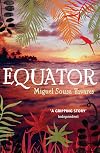
Equador
by Miguel Sousa Tavares
On This Page
Description
It is 1905 and Luis Bernardo Valenca, a thirty-seven-year-old bachelor and owner of a small shipping company, is revelling in Lisbon's luxurious high society. But his life is turned upside down when King Dom Carlos invites him to become governor of Portugal's smallest colony, the island of São Tomé e Principe. Luis Bernardo is ill-prepared for the challenges of plantation life - used to a softer urban existence, he is shocked by the conditions under which the workers labour. But with the show more English closing in on São Tomé's cocoa plantations, the island's main means of survival, Luis Bernardo must endeavour to protect the island and its community. show lessTags
Recommendations









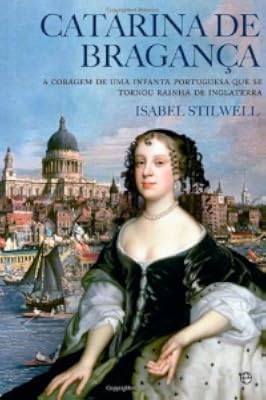
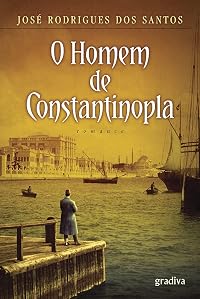


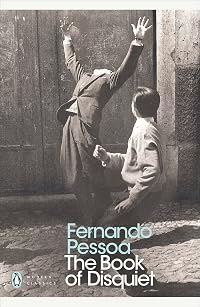

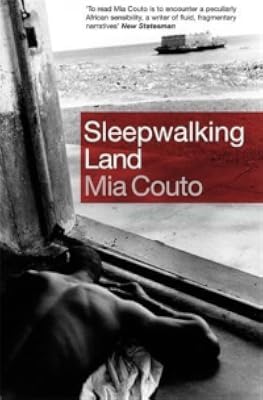






Member Recommendations

Member Reviews
Uma das melhores coisas que já li em português. A estória te prende tanto no macro (imigração forçada, política local, estertores da monarquia em Portugal, etc) quanto no micro (o bon vivant lisboeta removido à África, as paixões, as traições). Só o pósfácio bocó da Lilia Schwarcz é que não está à altura do resto do livro. Ainda assim, daria 6 estrelas se pudesse.
In 1905, the King appoints a young small business owner to be governor of Sao Tome and Principe based solely on some articles he’s written against colonial slavery. Although a lover of comfort and ease, Luis agrees to take on the white plantation owners who claim their black labor force are free to return to Angola, a lie given they now live on an island without means to go back. Against all odds, Luis tries his best so the world will know that Portugal has truly eliminated slavery. This book tells about his two-year assignment and how he fares. It is magnificently written and beautifully translated. There are a few explicit sex scenes, but I didn’t feel the circumstances were unbelievable or the writing overly dramatic. Living cut show more off from the world as Luis was, I am surprised it didn’t consume more of the book! Strong recommendation to seek out this beauty. show less
Equator began promisingly, introducing Luis Bernardo Valenca, the owner of a small Portuguese shipping company who in 1905 is himself unwillingly shipped off to the other side of the globe to be governor of the tiny cocoa-producing colony of Sao Tome e Principe. Luis has been tasked by the king of Portugal with persuading the Portuguese colonists on the island to forego slave labour, while at the same time persuading the visiting English consul that slavery has never existed there. Tavares' initial description of early twentieth century Portugal and its political situation are intriguing, but much of the rest of the novel is disappointing and at points frankly racist.
Tavares has written yet another novel about slavery and colonialism show more in Africa which mostly elides African people and their experiences in favour of focusing on white men. It's a racism which isn't overt, but which cannot seem to conceive of a world in which the most important things that happen don't involve white men. Much of the central portion of the novel, when I was anticipating that Tavares would really get to grips with what was happening on Sao Tome, shifted to a lengthy (an Orientalising) description of India in order to give the back story of another white male character. There was really no need to give this back story at such detailed length, and it seemed to have been included only so that we could see how colonial service had done another white man wrong—and he's one of the good guys, really! He speaks Hindi and Urdu so he can't be racist, and when he feels up members of a rajah's harem he only ever does so over their clothes and never puts his penis in their vaginas so it's totally not the same as cheating, you guys! Ugh.
Non-white characters have only a handful of lines in Equator, despite a slave rebellion being one of the climactic events of the novel; character development for the handful of women in the book mostly comes in the form of descriptions of their breasts and in how willing they are to jump into bed with Luis. An example of how white people should not approach writing historical fiction. show less
Tavares has written yet another novel about slavery and colonialism show more in Africa which mostly elides African people and their experiences in favour of focusing on white men. It's a racism which isn't overt, but which cannot seem to conceive of a world in which the most important things that happen don't involve white men. Much of the central portion of the novel, when I was anticipating that Tavares would really get to grips with what was happening on Sao Tome, shifted to a lengthy (an Orientalising) description of India in order to give the back story of another white male character. There was really no need to give this back story at such detailed length, and it seemed to have been included only so that we could see how colonial service had done another white man wrong—and he's one of the good guys, really! He speaks Hindi and Urdu so he can't be racist, and when he feels up members of a rajah's harem he only ever does so over their clothes and never puts his penis in their vaginas so it's totally not the same as cheating, you guys! Ugh.
Non-white characters have only a handful of lines in Equator, despite a slave rebellion being one of the climactic events of the novel; character development for the handful of women in the book mostly comes in the form of descriptions of their breasts and in how willing they are to jump into bed with Luis. An example of how white people should not approach writing historical fiction. show less
I read the Dutch translation of this Portuguese block buster historical novel on a vain Lisbon playboy columnist, made governor of São Tome and Principe, who seeks to change the old ways of the cacao planters on the island by fighting slavery.
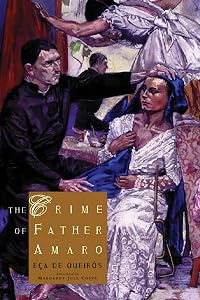
Tavares has an acute sense of historical events that allows for a perfect plot at the end of his tragedy. Luis Bernardo is a typical turn of the century member of the lazy, highly cultured, urban elite in Lisbon. He runs an import-export firm moving goods between Cape Verde and Portugal, an enterprise which he inherited and requires him to run three company ships from a small office in Lisbon. This gives him ample time to visit theatres, debating clubs, night clubs and beaches in aristocratic show more circles in Lisbon. He even manages to seduce a married beauty, whom he knew from childhood. After writing a column in a local newspaper presenting high flying ideas on Portugal’s civilizing mission in its overseas provinces (necessitating the abolishment of slavery), he receives an invitation to visit the King, Dom Carlos, at his palace in Vila Viçosa. The King charges him with a complicated mission as governor of São Tome – convince the newly appointed English consul that slavery does no longer exist among the cacao planters of those islands, despite ample evidence to the contrary. Luis Bernardo vacillates, but then a friend offers him an excellent buy-out price for his fledgling company, his illicit affair comes to fruition (as does his guilty conscience), and his boredom, progressive ideas and sense of patriotic duty gets the better of him (a theme often plied by that giant of Portuguese literature – Eça de Queiros).
Tavares paints his hero as a typical over-sentimental, slightly arrogant, up and coming intellectual who is driven by rational, modern ideas; behaves like a gentleman who is highly sensitive in the romantic realm; but who at the same time feels he has the stamina and organizational talent to make a difference in the world. Off he goes to the torpor, heat and boredom of São Tome and Principe.
Luis Bernardo settles in, visits all roças (plantations), investigates the labour relations and after only two months he basically knows he cannot fulfil his royal assignment: the planters do apply the legally imposed contract conditions, but the Angolan labour force is (kept) illiterate and unaware of their right to claim 60% of their withheld wages to demand repatriation to Angola after five years of contract work. It is not within the governor’s remit to change this because the responsible official, the procurator, is in cahoots with the planters.
Enter the English Consul David and his beautiful wife Ann. David has been disgraced in a gambling scandal when he was Governor of Assam in British India. His punishment is to report on suspected slavery in São Tome and thus help cacao producers in the British Gold Coast by imposing a boycott on Portuguese cacao. David, Luis B and Ann hit it off: they may be enemies in diplomatic terms, but their world view, life style and ideas about slavery are exactly the same. The settler community despises their governor for his views on slavery, his decisive interference in a court case against two labourers who had fled the biggest plantation, and his friendly relations with the British consul (and his developing passionate relationship with Ann, which becomes a public secret). Things come to a head during a visit of the Crown Prince and the Minister to the Portuguese Overseas Provinces. Just before these arrive, a rebellion breaks out at Principe island. Luis Bernardo prevents further escalation and manages to free the tortured labour leader, Gabriel: David offering to provide shelter and a job in his household. After a successful royal visit and the expiry of the first 5 year labour contract, the litmus test occurs: will planters allow their labourers and families to return to Angola or will Cadbury and the British impose a boycott? What will the governor do in response? Will he elope with Ann?
As usual with novels set in colonial settings, this story provides the view of the rich and powerful, not the black and suppressed. That’s a missed opportunity. Certainly Gabriel, the leader of the rebellion, could have added a voice (and not just his pecker) to the story. However I cannot blame Tavares – to develop a POV of an Angolan slave in São Tome would have required him to study and understand a slave’s perspective – something the Portuguese and British administrators could not achieve in their time and probably readers of bestsellers (who are overwhelmingly white and middle-class) are not really interested in. Tavares manages to provide a credible story on a young Portuguese administrator trying to civilize his compatriots in a backward tropical setting. The story compares well with similar stories developed at the turn of the 19th century by Eça de Queiros. Rich, urban, spoiled playboys with high flying ideals taught at the legal faculty in Coimbra meeting simple, hard working folks in a rural setting. show less
Tavares has an acute sense of historical events that allows for a perfect plot at the end of his tragedy. Luis Bernardo is a typical turn of the century member of the lazy, highly cultured, urban elite in Lisbon. He runs an import-export firm moving goods between Cape Verde and Portugal, an enterprise which he inherited and requires him to run three company ships from a small office in Lisbon. This gives him ample time to visit theatres, debating clubs, night clubs and beaches in aristocratic show more circles in Lisbon. He even manages to seduce a married beauty, whom he knew from childhood. After writing a column in a local newspaper presenting high flying ideas on Portugal’s civilizing mission in its overseas provinces (necessitating the abolishment of slavery), he receives an invitation to visit the King, Dom Carlos, at his palace in Vila Viçosa. The King charges him with a complicated mission as governor of São Tome – convince the newly appointed English consul that slavery does no longer exist among the cacao planters of those islands, despite ample evidence to the contrary. Luis Bernardo vacillates, but then a friend offers him an excellent buy-out price for his fledgling company, his illicit affair comes to fruition (as does his guilty conscience), and his boredom, progressive ideas and sense of patriotic duty gets the better of him (a theme often plied by that giant of Portuguese literature – Eça de Queiros).
Tavares paints his hero as a typical over-sentimental, slightly arrogant, up and coming intellectual who is driven by rational, modern ideas; behaves like a gentleman who is highly sensitive in the romantic realm; but who at the same time feels he has the stamina and organizational talent to make a difference in the world. Off he goes to the torpor, heat and boredom of São Tome and Principe.
Luis Bernardo settles in, visits all roças (plantations), investigates the labour relations and after only two months he basically knows he cannot fulfil his royal assignment: the planters do apply the legally imposed contract conditions, but the Angolan labour force is (kept) illiterate and unaware of their right to claim 60% of their withheld wages to demand repatriation to Angola after five years of contract work. It is not within the governor’s remit to change this because the responsible official, the procurator, is in cahoots with the planters.
Enter the English Consul David and his beautiful wife Ann. David has been disgraced in a gambling scandal when he was Governor of Assam in British India. His punishment is to report on suspected slavery in São Tome and thus help cacao producers in the British Gold Coast by imposing a boycott on Portuguese cacao. David, Luis B and Ann hit it off: they may be enemies in diplomatic terms, but their world view, life style and ideas about slavery are exactly the same. The settler community despises their governor for his views on slavery, his decisive interference in a court case against two labourers who had fled the biggest plantation, and his friendly relations with the British consul (and his developing passionate relationship with Ann, which becomes a public secret). Things come to a head during a visit of the Crown Prince and the Minister to the Portuguese Overseas Provinces. Just before these arrive, a rebellion breaks out at Principe island. Luis Bernardo prevents further escalation and manages to free the tortured labour leader, Gabriel: David offering to provide shelter and a job in his household. After a successful royal visit and the expiry of the first 5 year labour contract, the litmus test occurs: will planters allow their labourers and families to return to Angola or will Cadbury and the British impose a boycott? What will the governor do in response? Will he elope with Ann?
As usual with novels set in colonial settings, this story provides the view of the rich and powerful, not the black and suppressed. That’s a missed opportunity. Certainly Gabriel, the leader of the rebellion, could have added a voice (and not just his pecker) to the story. However I cannot blame Tavares – to develop a POV of an Angolan slave in São Tome would have required him to study and understand a slave’s perspective – something the Portuguese and British administrators could not achieve in their time and probably readers of bestsellers (who are overwhelmingly white and middle-class) are not really interested in. Tavares manages to provide a credible story on a young Portuguese administrator trying to civilize his compatriots in a backward tropical setting. The story compares well with similar stories developed at the turn of the 19th century by Eça de Queiros. Rich, urban, spoiled playboys with high flying ideals taught at the legal faculty in Coimbra meeting simple, hard working folks in a rural setting. show less
This was a bestselling book in Portugal mainly because it was the first novel by an opinionated lawyer / journalist / political commentator that you were used to watch on the 8 o'clock news. So many people (who previously barely touched a book in their lives) did in fact read and comment on this, that I was soon too tempted and just had to read it, though my expectations were very low. I must say it was a good surprise. Though it is far from a masterpiece, you can sense an underlying research and the author's sufficient cultural breadth to tackle a difficult subject such as the colonial past in Africa / the last days of the monarchy. It is also at times very entertaining, ironic and critical of the colonial establishment. The fact that show more it mostly takes place in one of the tiniest and least-known possessions of the former Portuguese Empire (the lovely São Tomé islands, straddling the equator - hence the title) makes it all the more unique and interesting. The love story though is more prosaic (the TV-series pictures it better than the book). show less
'They will never...accept that the surreptitious slavery they practise...isn't a gift from Providence.', October 21, 2014
This review is from: Equator (Hardcover)
Started this unsure exactly where Sao Tome is - feel I've learned an awful lot and been greatly entertained on the way.
Well-written narrative, opening in 1905, when Luis Bernardo is asked to go leave his luxurious life to sort out problems in this godforsaken spot - the plantation owners here determinedly run their businesses using slaves from nearby Angola. Meanwhile the British, led by William Cadbury, are threatening to boycott their chocolate if things don't change fast. Luis Bernardo has the impossible task of persuading the islanders to sacrifice their plentiful labor show more force for more humane conditions. And meanwhile the new British consul, and his wife, have arrived to make their own report on conditions...
The one failing of this novel is the romance and the graphic sex scenes which are extremely poorly written, and seem out of place with the writing style elsewhere. It's like slipping into Mills and Boone every so often!
I'd probably give it 3.5 show less
This review is from: Equator (Hardcover)
Started this unsure exactly where Sao Tome is - feel I've learned an awful lot and been greatly entertained on the way.
Well-written narrative, opening in 1905, when Luis Bernardo is asked to go leave his luxurious life to sort out problems in this godforsaken spot - the plantation owners here determinedly run their businesses using slaves from nearby Angola. Meanwhile the British, led by William Cadbury, are threatening to boycott their chocolate if things don't change fast. Luis Bernardo has the impossible task of persuading the islanders to sacrifice their plentiful labor show more force for more humane conditions. And meanwhile the new British consul, and his wife, have arrived to make their own report on conditions...
The one failing of this novel is the romance and the graphic sex scenes which are extremely poorly written, and seem out of place with the writing style elsewhere. It's like slipping into Mills and Boone every so often!
I'd probably give it 3.5 show less
Para mi es un 4.5. Me ha gustado mucho. Lo he leido en portugues, y sin problema. Creo que es una obra que esta muy, muy bien escrita. Es ademas muy ilustrativa y me ha picado mucho la curiosidad para aprender un poco mas sobre ese periodo historico y las colonias de los distintos imperios. Hace poco escuche una entrevista a Luz Gabas y ciertamente le dare un tiento a Palmeras en la nieve en el futuro. En este caso la trama se situa en Guinea Ecuatorial, una colonia espanola.
La trama me parece muy interestante y creo que esta muy bien contada, con los claroscuros de todos los personajes. Quizas le quito esa media estrella porque...
No me gusta mucho como esta contado el personaje de Ann. Creo que es demasiado plano. Parece una show more depredadora sexual y desde el primer momento pensaba que su unica intencion era quedarse embarazada, con el acuerdo (tacito o explicito) de David. Al final hay demasiado drama y creia que esa era la intencion de su comportamiento.
En cualquier caso, lectura altamente recomendable. Estoy disfrutando mucho de todo lo que he leido hasta ahora en 2024. show less
La trama me parece muy interestante y creo que esta muy bien contada, con los claroscuros de todos los personajes. Quizas le quito esa media estrella porque...
En cualquier caso, lectura altamente recomendable. Estoy disfrutando mucho de todo lo que he leido hasta ahora en 2024. show less
Members
- Recently Added By
Author Information

17 Works 935 Members
Some Editions
Common Knowledge
- Canonical title*
- Evenaar
- Original title
- Equador
- Original publication date
- 2003
- People/Characters
- Luís Bernardo Valenca; David Jameson; Ann Jameson
- Important places
- S. Tomé
- Epigraph
- Evenaar: lijn die de aarde verdeelt in een noordelijk en zuidelijk halfrond. Symbolische grens tussen twee werelden. Het Portugese woord equador is mogelijk een samentrekking van de uitdrukking é com a dor (é-cum-... (show all)a-dor in oud Portugees), "het is met pijn en verdriet".
Equator: the line dividing the earth into northern and southern hemispheres. A line symbolically marking the frontier between two worlds. Possibly a contraction of the expression in old Portugese, e-cum-a-dor, that is, 'it br... (show all)ings pain.' - Dedication
- Voor Cristina
For Cristina - First words
- Zodra dingen eenmaal gebeurd zijn, is het bijna onweerstaanbaar je af te vragen wat er van je leven zou zijn geworden als je het anders had gedaan.
Looking back on your life, you inevitably wonder how it might have turned out if you'd done things differently. - Last words
- (Click to show. Warning: May contain spoilers.)On 14 March 1909, the British companies Cadbury's Bros of Bournville, JS Fry & Co of York and Rowntree & Co of Bristol, in the name of all British importers of cocoa, officially announced their boycott of imports from the Portugese colony of Sao Tome and Principe.
- Blurbers*
- Arthur Japin
- Original language
- Portugese
*Some information comes from Common Knowledge in other languages. Click "Edit" for more information.
Classifications
- Genres
- Fiction and Literature, Romance, General Fiction, Historical Fiction
- DDC/MDS
- 869.35 — Literature & rhetoric Spanish Literature Literatures of Portuguese and Galician languages Portuguese fiction 21st Century
- LCC
- PQ9320 — Language and Literature French, Italian, Spanish and Portuguese literatures Portuguese literature Individual authors, 2001-
- BISAC
Statistics
- Members
- 446
- Popularity
- 68,470
- Reviews
- 18
- Rating
- (3.77)
- Languages
- 9 — Catalan, Dutch, English, French, German, Italian, Portuguese, Russian, Spanish
- Media
- Paper, Ebook
- ISBNs
- 23
- ASINs
- 5