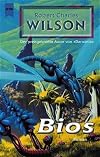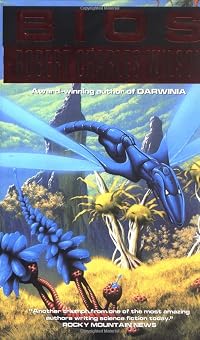
Bios
by Robert Charles Wilson
On This Page
Description
In the 22nd century, humankind has colonized the solar system. Starflight is possible but hugely expensive, so humakind's efforts are focussed on Isis, the one nearby Earthlike world. Isis is verdant, Edenic, rich with complex DNA-based plant and animal life. And every molecule of Isian life is spectacularly toxic to human beings. The entire planet is a permanent Level Four Hot Zone. Despite that, Isis is the most interesting discovery of the millennium: a parallel biology with lessons to show more teach us about our own nature. It's also the hardest of hardship posts, the loneliest place in the universe. Zoe Fisher was born to explore Isis. Literally. Cloned and genetically engineered by a faction within the hothouse politics of Earth, Zoe is optimized to face Isis's terrors. Now at last Zoe has arrived on Isis. But there are secrets implanted within her that not even she suspects--and the planet itself has secrets that will change our understanding of life in the universe.Bursting with ideas, replete with human insight, "Bios "is science fiction in the grand tradition: a novel of bravery, exploration, and discovery in a universe charged with awe. At the publisher's request, this title is being sold without Digital Rights Management software (DRM) applied. show lessTags
Recommendations








Member Reviews
Another re-read, just felt like revisiting this. Scientists on an alien world, believable tech, unstoppable alien pathogen. It's like the Andromeda Strain with a home-team advantage. As is usual for Wilson, there's more ideas packed in here than even the initial big premises indicate. I'd forgotten about the casually sexist/infantilizing way the female lead character is treated—and since it's coming from the narrator, not just other characters, it's extra-creepy.
My reaction to reading this novel in 2002. Spoilers follow.
The idea of the Bios in this novel, a universe-wide mind created by cells retaining a link with each other even after they divide (the analog from quantum mechanics, Bell's Theorem, is referred to), that cells form a matrix for intelligence and sentience much like individual brain cells enable a mind or ink on a printed page (another metaphor from the book) encodes a text, reminded me of the works of Olaf Stapledon -- though, like almost everyone who reminds you of Stapledon, the timescale and style are not comparable at all.
This novel is compressed, with the exception of flashbacks to Zoe Fisher's youth and the ending, which is about 150 years later (but, seemingly, still show more before the sequel story "The Dryad's Wedding".) It was also an idea that reminded me a bit of Poul Anderson's Genesis with its planetary nodes of intelligence.
The story moves along surprisingly quick and takes a surprisingly grim turn with all the characters dying, killed by a Bios that can't control the largely autonomic functions of its immune system when confronted with the Terran descendants of some sort of damaged life that seeded Earth.
The novel is quite literary, being built around Elam's notion of "life meets life". Zoe Fisher, in effect a tool (designed by the Devices and Personnel section of Earth's totalitarian Trusts -- uncomfortably like medieval China in its attitudes including orchidectomy (castrations) -- of an unpleasant Earth. It's an authoritarian regime justified to end environmental degradation and war, its aristocracy descended from Nordic stock. She meets the odd life of the Kuiper belts, which rebelled from their Earth governors. Fear of plagues requires a long, and not frequently done, killing off of body fauna, for travelers moving between Earth and the Kuiper settlements. Kuipers are an odd, tribal lot that are partly libertine, partly puritanical and largely eschew the thymostats which regulate the moods of the rulers and their tools, like Zoe, of Earth.
But the difference in culture and body fauna between those from Earth and those in the Kuiper Belt is nothing compared to the utter, implacable, rapid, evolving hostility of Isis' life to all Earth forms. Yet, Tam and Zoe and the other people involved in Isis' exploration feel Isis calling to them. Zoe, unknowingly stripped (in an act of spontaneous, covert rebellion by a doctor who turns out to have revolutionary descendants) of her thymostat feels not only the up and down of moods and fears but sexual attraction, eventually consummated, with Tam. The Bios, as Zoe lays dying, her life prolonged by her artificial immune system, tries to communicate with her.
The image of life interpenetrating is also seen in various prion and viral incursions on the shelters of the colonists. I liked how the relatively simple, understated prose managed to convey the terror of Zoe and Tam being trapped in the underground digger complexes.
The only thing not adequately explained is how the exploration party that, 150 years after the deaths of the original Isis' outpost, goes to Isis at novel's end. How is perhaps justified by a continuation of the work that created Zoe. Why the augmentation is chosen is not entirely clear. I did like Isis communicating with the second wave of explorers though it seems that, in this universe, it will take the events of "The Dryad's Wedding" to make that communication literal and detailed. Even then it will only be to one person, briefly, and the knowledge of the Bios will be lost (and a dark hint made that humanity is moving into regions of very alien minds).
Another theme is orphandom. Humanity and the consciousness of its members is described as being orphaned from the Bios, and Zoe is an orphan. show less
The idea of the Bios in this novel, a universe-wide mind created by cells retaining a link with each other even after they divide (the analog from quantum mechanics, Bell's Theorem, is referred to), that cells form a matrix for intelligence and sentience much like individual brain cells enable a mind or ink on a printed page (another metaphor from the book) encodes a text, reminded me of the works of Olaf Stapledon -- though, like almost everyone who reminds you of Stapledon, the timescale and style are not comparable at all.
This novel is compressed, with the exception of flashbacks to Zoe Fisher's youth and the ending, which is about 150 years later (but, seemingly, still show more before the sequel story "The Dryad's Wedding".) It was also an idea that reminded me a bit of Poul Anderson's Genesis with its planetary nodes of intelligence.
The story moves along surprisingly quick and takes a surprisingly grim turn with all the characters dying, killed by a Bios that can't control the largely autonomic functions of its immune system when confronted with the Terran descendants of some sort of damaged life that seeded Earth.
The novel is quite literary, being built around Elam's notion of "life meets life". Zoe Fisher, in effect a tool (designed by the Devices and Personnel section of Earth's totalitarian Trusts -- uncomfortably like medieval China in its attitudes including orchidectomy (castrations) -- of an unpleasant Earth. It's an authoritarian regime justified to end environmental degradation and war, its aristocracy descended from Nordic stock. She meets the odd life of the Kuiper belts, which rebelled from their Earth governors. Fear of plagues requires a long, and not frequently done, killing off of body fauna, for travelers moving between Earth and the Kuiper settlements. Kuipers are an odd, tribal lot that are partly libertine, partly puritanical and largely eschew the thymostats which regulate the moods of the rulers and their tools, like Zoe, of Earth.
But the difference in culture and body fauna between those from Earth and those in the Kuiper Belt is nothing compared to the utter, implacable, rapid, evolving hostility of Isis' life to all Earth forms. Yet, Tam and Zoe and the other people involved in Isis' exploration feel Isis calling to them. Zoe, unknowingly stripped (in an act of spontaneous, covert rebellion by a doctor who turns out to have revolutionary descendants) of her thymostat feels not only the up and down of moods and fears but sexual attraction, eventually consummated, with Tam. The Bios, as Zoe lays dying, her life prolonged by her artificial immune system, tries to communicate with her.
The image of life interpenetrating is also seen in various prion and viral incursions on the shelters of the colonists. I liked how the relatively simple, understated prose managed to convey the terror of Zoe and Tam being trapped in the underground digger complexes.
The only thing not adequately explained is how the exploration party that, 150 years after the deaths of the original Isis' outpost, goes to Isis at novel's end. How is perhaps justified by a continuation of the work that created Zoe. Why the augmentation is chosen is not entirely clear. I did like Isis communicating with the second wave of explorers though it seems that, in this universe, it will take the events of "The Dryad's Wedding" to make that communication literal and detailed. Even then it will only be to one person, briefly, and the knowledge of the Bios will be lost (and a dark hint made that humanity is moving into regions of very alien minds).
Another theme is orphandom. Humanity and the consciousness of its members is described as being orphaned from the Bios, and Zoe is an orphan. show less
Wilson is consistently creative, consistently imaginative and usually somewhat dark. Bios is typical in those qualities but what struck me most about this surprising book was that the heart of the book concerns human attempts to recognize and come to grips with a world-wide intelligence composed of all the life forms on the planet. I read Isaac Asimov's Nemesis at almost the same time and was struck by the different ways these two writers developed the premise and used it in their stories.
Interesting early novel from RCW about first contact provides a sobering and fascinating explanation for the apparent dearth of intelligent life in the universe. Particularly grim, especially towards the end, this is like an SF version of 'Being Dead' by Jim Crace. Also a good antidote to the gung ho Avatar.
I stumbled across this book in a used bookstore. I picked it up because I had heard of Robert Charles Wilson from his various awards and nominations. It was a nice book. Nothing spectacular, though. A very traditional hard-SF novel (e.g. the heroes are scientists). The only real variant from convention was the fact that it was focused on biology rather than astronomy and/or physics. It was well-crafted, too. I wasn't dazzled but it wasn't a waste of time either, and I'm curious enough that I will probably try out another one of Wilson's books at some point in the future.
This was my first encounter with the pen of Robert Charles Wilson, and not even in its original form. His famed Spin trilogy is on my TBR-pile, also in a French (omnibus-)version: [b:La trilogie Spin|35263391|La trilogie Spin (Spin, Axis, Vortex)|Robert Charles Wilson|https://i.gr-assets.com/images/S/compressed.photo.goodreads.com/books/1496088531i/35263391._SY75_.jpg|45315468].
Bios takes place in the far future, somewhere not too far from (or inside, I didn't quite get that) the Kuiper belt (Wikipedia-page, NASA-page) and is about the colonisation of a distant planet called Isis. Isis has its own fauna (miners, more animal than human) and flora. The planet is a hostile place to anything non-native. Humans have been trying to colonise show more it for many years, mainly because both Earth and Isis are very much related on an evolutionary level. However, life has developed differently on Isis.
There are at least two hubs/stations for Research and Development: Marburg and Yambuku. Scientists and engineers going outside must undergo a thorough cleaning before re-entering a station. The suits they wear contain protective material and sensors. Other accessories complete the package. However, one cannot stay outside for too long, because the batteries and alike don't last for days on end. This doesn't mean that there is no supervision; there is: self-driving robots on the ground, telecommunication, scanners, ... There's always someone in the central control room to provide help/assistance when needed.
The local stations are supervised by a floating spaceship, which provides for itself: it has its own gardens, its recycling system (I forgot: the space suits also have a sort of recycling system for sweat and other fluids), and so on. Turing machines make sure there are enough resources coming from the moon.
Rescue shuttles (Higgs spheres) are very few in number and can carry only a handful of people. No one thought more would be necessary, even if there are several tens/hundreds of people (scientists, directors, the lot) involved in the project.
The project is set up and financed by two parties: the ancient Families (rich people, entrepreneurs) and a sort of company/corporation called Trusts. Mainly the latter's department Mécanismes & Personnel is responsible for the development and integration of specific tools to suppress emotions. Test objects are girls who live in an orphanage. Each of them has the same kind of "protection", though in a different form. One of them, Zoé Fisher, will be the sole survivor and sent out to investigate the environment of Isis, to prepare the way for human colonisation. Or, at least, that is the official explanation.
Zoé embarks on this mission, full of confidence and aware that she has an implant that will help her overcome any feelings of fear, stress, or emotional outbursts.Were it not that prior to that, the doctor responsible for those implants, Anna Chopra, removed that device. Why? Most likely because she disagreed with this procedure and wanted Zoé to experience real emotions, live a proper live as a human being. She isn't aware of this, and does experience proper feelings of love, sadness, exuberance, fear, ... Especially after her meeting with the three main scientists to assist her on her mission. Tam Hayes, one of the remaining scientists, has a large impact on her and feelings of love are exchanged between them.
Note: one of Anna's relatives will, more than a century later, visit the spaceship and planet Isis, after the demise of the project.
Next to that, she was genetically modified to withstand attacks from harmful bacteria, in case her suit would not provide enough protection.
All is not well on a dangerous planet like Isis. Anything alien to the local environment, will be destroyed within a short period of time. Anything, not just humans, but also infrastructure, no matter the material from which it is made. Once the specific bacteria (or similar) gets inside, there's no way of stopping the invasion. When touched, it takes only a few hours before Death comes around to collect the bodies. At some point, that's what happens: Isis' ecosystem refused to allow mankind to stay any longer. So, the inevitable happened, despite the measures that were taken.
All's well that ends well? Eh, not exactly. For Isis, all's well, as nature took back what was taken or occupied by humans. No one survived, not even Avrion Theophilus (responsible for the existence of Zoé) or Zoé herself, who was kidnapped by the miners and saw no way out the creatures' mountains. Tam Hayes, one of the three scientists that assisted her on her mission, decided to go out and rescue her, despite counter-advice from his colleague (Dieter Franklin). Tam is so angry with Theo's way of dealing with Zoé, that he persists even more in his rescue mission, knowing full well the implications and consequences.
Isis is not just a planet, its ecosystem also has its own voice, its own mind, its own memory. It communicates through telepathy with Zoé (by which Isis takes on the form of someone dear to its interlocutor), as she is trapped underground and thinks about her feelings, about her time aboard one of the stations, about Tam Hayes (one of the scientists with whom she got along very well). Isis conveys a message about life, about nature, about evolution. A philosophical message, in other words.
To properly describe the world, not in the least because of the context, you get a lot of scientific wording and descriptions about the planet, the plants, the bacteria, molecules, ... Hard SF, as they call it, but not so that the wording gets in the way of the reading pleasure. Not at all; on the contrary, they're a valuable addition, I find.
The characters all have a different background (religious or otherwise) and come from different places, not necessarily the US, but also Asia, for example. The orphanage where Zoé stayed, was in Teheran, Iran, for example.
----------
Bios is a story whose message is still relevant today, even after 20 years. Ecology, the environmental issues are very hot today (as is the weather; what climate change?), as they are in Wilson's story. Mankind has still a lot to learn about its proper planet, yet decides to "destroy" it for the love of money. Colonising other planets is out of the question, because even of those, not sufficient knowledge has been collected. Nature will find a way to respond to man's interventions, as the various viruses, floods, draughts and so on prove, time and again. And still mankind does not learn or refuses to.
Bios is recommended reading, without question. Is it RCW's best novel? Probably not (isn't Spin wearing that crown?). It is, on the other hand, an entertaining story, one with an important message (not just about nature, but also about appreciating and respecting life), and very accessible at that.
----------
The story reminded me a bit of [b:Lum'en|33178743|Lum'en|Laurent Genefort|https://i.gr-assets.com/images/S/compressed.photo.goodreads.com/books/1488205643i/33178743._SY75_.jpg|45575544] by [a:Laurent Genefort|857413|Laurent Genefort|https://s.gr-assets.com/assets/nophoto/user/m_50x66-82093808bca726cb3249a493fbd3bd0f.png], which I read a year ago. See here.
----------
I was sent this book by Éditions ActuSF for review. Many thanks to them for the trust. show less
Bios takes place in the far future, somewhere not too far from (or inside, I didn't quite get that) the Kuiper belt (Wikipedia-page, NASA-page) and is about the colonisation of a distant planet called Isis. Isis has its own fauna (miners, more animal than human) and flora. The planet is a hostile place to anything non-native. Humans have been trying to colonise show more it for many years, mainly because both Earth and Isis are very much related on an evolutionary level. However, life has developed differently on Isis.
There are at least two hubs/stations for Research and Development: Marburg and Yambuku. Scientists and engineers going outside must undergo a thorough cleaning before re-entering a station. The suits they wear contain protective material and sensors. Other accessories complete the package. However, one cannot stay outside for too long, because the batteries and alike don't last for days on end. This doesn't mean that there is no supervision; there is: self-driving robots on the ground, telecommunication, scanners, ... There's always someone in the central control room to provide help/assistance when needed.
The local stations are supervised by a floating spaceship, which provides for itself: it has its own gardens, its recycling system (I forgot: the space suits also have a sort of recycling system for sweat and other fluids), and so on. Turing machines make sure there are enough resources coming from the moon.
Rescue shuttles (Higgs spheres) are very few in number and can carry only a handful of people. No one thought more would be necessary, even if there are several tens/hundreds of people (scientists, directors, the lot) involved in the project.
The project is set up and financed by two parties: the ancient Families (rich people, entrepreneurs) and a sort of company/corporation called Trusts. Mainly the latter's department Mécanismes & Personnel is responsible for the development and integration of specific tools to suppress emotions. Test objects are girls who live in an orphanage. Each of them has the same kind of "protection", though in a different form. One of them, Zoé Fisher, will be the sole survivor and sent out to investigate the environment of Isis, to prepare the way for human colonisation. Or, at least, that is the official explanation.
Zoé embarks on this mission, full of confidence and aware that she has an implant that will help her overcome any feelings of fear, stress, or emotional outbursts.
Note: one of Anna's relatives will, more than a century later, visit the spaceship and planet Isis, after the demise of the project.
Next to that, she was genetically modified to withstand attacks from harmful bacteria, in case her suit would not provide enough protection.
All is not well on a dangerous planet like Isis. Anything alien to the local environment, will be destroyed within a short period of time. Anything, not just humans, but also infrastructure, no matter the material from which it is made. Once the specific bacteria (or similar) gets inside, there's no way of stopping the invasion. When touched, it takes only a few hours before Death comes around to collect the bodies. At some point, that's what happens: Isis' ecosystem refused to allow mankind to stay any longer. So, the inevitable happened, despite the measures that were taken.
Isis is not just a planet, its ecosystem also has its own voice, its own mind, its own memory. It communicates through telepathy with Zoé (by which Isis takes on the form of someone dear to its interlocutor), as she is trapped underground and thinks about her feelings, about her time aboard one of the stations, about Tam Hayes (one of the scientists with whom she got along very well). Isis conveys a message about life, about nature, about evolution. A philosophical message, in other words.
To properly describe the world, not in the least because of the context, you get a lot of scientific wording and descriptions about the planet, the plants, the bacteria, molecules, ... Hard SF, as they call it, but not so that the wording gets in the way of the reading pleasure. Not at all; on the contrary, they're a valuable addition, I find.
The characters all have a different background (religious or otherwise) and come from different places, not necessarily the US, but also Asia, for example. The orphanage where Zoé stayed, was in Teheran, Iran, for example.
----------
Bios is a story whose message is still relevant today, even after 20 years. Ecology, the environmental issues are very hot today (as is the weather; what climate change?), as they are in Wilson's story. Mankind has still a lot to learn about its proper planet, yet decides to "destroy" it for the love of money. Colonising other planets is out of the question, because even of those, not sufficient knowledge has been collected. Nature will find a way to respond to man's interventions, as the various viruses, floods, draughts and so on prove, time and again. And still mankind does not learn or refuses to.
Bios is recommended reading, without question. Is it RCW's best novel? Probably not (isn't Spin wearing that crown?). It is, on the other hand, an entertaining story, one with an important message (not just about nature, but also about appreciating and respecting life), and very accessible at that.
----------
The story reminded me a bit of [b:Lum'en|33178743|Lum'en|Laurent Genefort|https://i.gr-assets.com/images/S/compressed.photo.goodreads.com/books/1488205643i/33178743._SY75_.jpg|45575544] by [a:Laurent Genefort|857413|Laurent Genefort|https://s.gr-assets.com/assets/nophoto/user/m_50x66-82093808bca726cb3249a493fbd3bd0f.png], which I read a year ago. See here.
----------
I was sent this book by Éditions ActuSF for review. Many thanks to them for the trust. show less
I really liked this. Humanity on its first world beyond Earth, battling against a hostile environment. It has echos of Cherryth's 40 thousand in Gehenna in its vivid depiction of an alien biosphere, alongside the complexity realised in Aldiss' Hothouse.A short book, but well constructed with a refreshing conclusion - well worth a couple of evenings.
Members
- Recently Added By
Lists

Truly alien aliens (SF)
42 works; 3 members
Author Information

47+ Works 14,413 Members
Some Editions
Awards and Honors
Awards
Series
Belongs to Publisher Series
Common Knowledge
- Canonical title
- Bios
- Original title
- Bios
- Original publication date
- 1999
- People/Characters
- Zoe Fisher
- Important places
- Isis (planet)
- Dedication
- This one is for Sharry, who saw me through.
- First words
- The regulator lay deep in the flesh of the girl's upper arm, a pale egg in a capillary nest.
- Last words*
- (Click to show. Warning: May contain spoilers.)Il nous reste beaucoup à apprendre.
- Publisher's editor
- Nielsen Hayden, Patrick
- Original language*
- Anglais canadien
*Some information comes from Common Knowledge in other languages. Click "Edit" for more information.
Classifications
Statistics
- Members
- 531
- Popularity
- 56,264
- Reviews
- 13
- Rating
- (3.36)
- Languages
- 6 — English, French, German, Hungarian, Italian, Lithuanian
- Media
- Paper, Audiobook, Ebook
- ISBNs
- 10
- ASINs
- 5