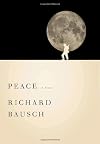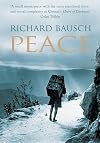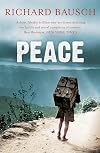
Peace
by Richard Bausch
On This Page
Description
Italy, near Cassino. The terrible winter of 1944. A dismal icy rain, continuing unabated for days. Guided by a seventy-year-old Italian man in rope-soled shoes, three American soldiers are sent on a reconnaissance mission up the side of a steep hill that they discover, before very long, to be a mountain. And the old man's indeterminate loyalties only add to the terror and confusion that engulf them on that mountain, where they are confronted with the horror of their own time--and then set show more upon by a sniper.--From publisher description. show lessTags
Recommendations














Member Reviews
Peace is a terrific novella, one of those books that plunges you into - not just its location, but its totality. Bausch has written one of the best "war novels" I've read in a long time, sidestepping many of the cliches of the genre, whilst making its truths feel fresh, and that they matter, and worth reading again.
Corporal Robert Marson has been asked to perform reconnaissance on a hill covering the German retreat in Italy. He and his companions, the acerbic Private Joyner and tortured Private Asch, are disturbed by the murder of a hapless civilian earlier in the day, and bitterly cold. Led by an old man of dubious loyalties, soaked by icy rain, injured, and terrified of the German troops that may be hiding behind each slope, by time show more morning arrives, the hill will become a mountain.
The immediacy of Peace is one of its most impressive aspects. The mountainous Italian countryside, the rich loamy mud, the needle-like rain; it's so tactile you can practically smell it. These quotidian concerns are expertly juxtaposed by the fears, hopes, and relationships between the soldiers. The long night is interleaved by Marson's flashbacks to his landing at Palermo and what's he's left behind. These memories contrast sharply with their immediate concerns, which scarcely extend beyond putting one foot in front of the other.
Marson himself is an entirely believable and rounded character. Uncomfortable with what he's doing, homesick, struggling to make sense of the banality of war (both as a totality and its specificity on the hill), and trying to rein in his bickering privates. The strength of Bausch's characterisation is vital to Peace because of its intimacy and short time frame, and he handles it magnificently. Marson's doubts and certainties are shared with the reader and you can feel his emotions as viscerally as the driving rain.
There is a lyricism to Peace, but it's not rhapsodic or florid. Rather, it comes through the banality, and the dignity these characters have through their - and our - common humanity. Their thoughts are only as unique as all our thoughts are; Baush's skill in showing the greatness of that wellspring in just 165 pages is formidable, and the result is a singular, touching work. Great stuff. show less
Corporal Robert Marson has been asked to perform reconnaissance on a hill covering the German retreat in Italy. He and his companions, the acerbic Private Joyner and tortured Private Asch, are disturbed by the murder of a hapless civilian earlier in the day, and bitterly cold. Led by an old man of dubious loyalties, soaked by icy rain, injured, and terrified of the German troops that may be hiding behind each slope, by time show more morning arrives, the hill will become a mountain.
The immediacy of Peace is one of its most impressive aspects. The mountainous Italian countryside, the rich loamy mud, the needle-like rain; it's so tactile you can practically smell it. These quotidian concerns are expertly juxtaposed by the fears, hopes, and relationships between the soldiers. The long night is interleaved by Marson's flashbacks to his landing at Palermo and what's he's left behind. These memories contrast sharply with their immediate concerns, which scarcely extend beyond putting one foot in front of the other.
Marson himself is an entirely believable and rounded character. Uncomfortable with what he's doing, homesick, struggling to make sense of the banality of war (both as a totality and its specificity on the hill), and trying to rein in his bickering privates. The strength of Bausch's characterisation is vital to Peace because of its intimacy and short time frame, and he handles it magnificently. Marson's doubts and certainties are shared with the reader and you can feel his emotions as viscerally as the driving rain.
There is a lyricism to Peace, but it's not rhapsodic or florid. Rather, it comes through the banality, and the dignity these characters have through their - and our - common humanity. Their thoughts are only as unique as all our thoughts are; Baush's skill in showing the greatness of that wellspring in just 165 pages is formidable, and the result is a singular, touching work. Great stuff. show less
This was a wonderful yet disturbing, spare little novel (maybe technically a novella) set in the waning days of WWII as three soldiers trudge up a Northern Italian mountain, in the rain and snow, to get information about any fleeting German forces. As with the ways of war, there is confusion and nothing is quite what it seems to be. Before they set off on the mission, the soldiers witness what may be the murder of an Italian or German civilian (prostitute) by their Sergeant. Like with life, it happened so fast, all they each have is fleeting images and what might be. So on their journey, they struggle with what they witnessed, whether to report it and how it fits in with their mission. The soldiers really don't care for each other and show more are suffering in their own ways, yet they must do this mission together. This is a beautifully written book, despite (or because of?) the war's last futile days. I have read many, many books about WWII and from an intimate, soldier-story level, this is one of the best. It is one of those that sticks with you. Recommended. I also want to seek out some of Bausch's other works as he is a great writer. show less
Richard Bausch's PEACE (2008) is a novel of WWII, narrowly focused on three American soldiers, recent witnesses to the cold blooded murder of a woman, perpetrated by their sergeant. The three - Corporal Robert Marson and two Privates, Joyner and Asch - are sent on a scouting mission up the icy slopes near Monte Casino, guided by an old Italian named Angelo, who, in his dark, cowled clothing, might easily be seen as the Angel of Death.
While struggling up the mountain, the three argue about whether to report their sergeant, an issue which becomes less important, perhaps even moot, as they encounter signs of the retreating German Army, and come under sniper fire. Bits and pieces of the men's post-war lives emerge gradually, adding depth show more and meaning to their dark and dangerous trek, a kind of long day's journey into night.
I was totally absorbed, caught up, in this narrative of one infinitesimal sliver of the much larger horror of the war. I was reminded of so many other novels of war - books like William Wharton's A MIDNIGHT CLEAR, or, more recently, Nick Arvin's ARTICLES OF WAR, both set during WWII; and an early novel of Vietnam, David Halberstam's ONE VERY HOT DAY.
The three main characters here argue and fight; they discuss death and faith. Asch, a Jew, says that all religions are simply -
"... trying to explain the one thing. Why we have to die ... Every single religion. I think they all exist not necessarily because there's a God, but because there's death. They're all trying to explain that away somehow."
A slight book at under 170 pages, PEACE is nevertheless a deeply important one, in its dramatic, thoughtful treatment of the important issues of faith, mortality and fundamental human decency. My highest recommendation.
- Tim Bazzett, author of the Cold War memoir, SOLDIER BOY: AT PLAY IN THE ASA show less
While struggling up the mountain, the three argue about whether to report their sergeant, an issue which becomes less important, perhaps even moot, as they encounter signs of the retreating German Army, and come under sniper fire. Bits and pieces of the men's post-war lives emerge gradually, adding depth show more and meaning to their dark and dangerous trek, a kind of long day's journey into night.
I was totally absorbed, caught up, in this narrative of one infinitesimal sliver of the much larger horror of the war. I was reminded of so many other novels of war - books like William Wharton's A MIDNIGHT CLEAR, or, more recently, Nick Arvin's ARTICLES OF WAR, both set during WWII; and an early novel of Vietnam, David Halberstam's ONE VERY HOT DAY.
The three main characters here argue and fight; they discuss death and faith. Asch, a Jew, says that all religions are simply -
"... trying to explain the one thing. Why we have to die ... Every single religion. I think they all exist not necessarily because there's a God, but because there's death. They're all trying to explain that away somehow."
A slight book at under 170 pages, PEACE is nevertheless a deeply important one, in its dramatic, thoughtful treatment of the important issues of faith, mortality and fundamental human decency. My highest recommendation.
- Tim Bazzett, author of the Cold War memoir, SOLDIER BOY: AT PLAY IN THE ASA show less
The intense existential doubt precipitated by moments of life and death struggle, catastrophic moral choice, and, yes, the peace that passeth understanding meld in this frighteningly clear and poignant tale. It is 1944, the Italian campaign, and three men are tasked, along with an elderly Italian guide, to scout up a low mountain in order to ascertain what forces of retreating Germans lie ahead. Go up a mountain and come back down. If that isn’t the basis of an archetypical narrative arc, I don’t know what is. Simple. But that stripped down symbolism and its corollaries reverberates throughout this haunting story.
Of course the three GIs are carrying far more than their packs. Bausch masterfully flashes back to their time before the show more landing, and in the case of one, Corporal Robert Marson, to his life in a suburb of Washington D.C. It is more than fear for their lives though that burdens them. An incident has occurred shortly before they are ordered out on this reconnaissance. That incident and their deliberation as to how to respond to it sets the moral choice before them. As if that weren’t enough, they find themselves encountering, from a distance, the slaughter of Jews by the retreating German forces, and on their return journey, the very real threat of death dealt by an unseen sniper.
Bausch’s writing here is so taut, so fully under control, so pitch perfect, that you will find your pace through the story to be almost breathless. This is fine writing indeed. And though it is a short novel, it feels replete. Highly recommended. show less
Of course the three GIs are carrying far more than their packs. Bausch masterfully flashes back to their time before the show more landing, and in the case of one, Corporal Robert Marson, to his life in a suburb of Washington D.C. It is more than fear for their lives though that burdens them. An incident has occurred shortly before they are ordered out on this reconnaissance. That incident and their deliberation as to how to respond to it sets the moral choice before them. As if that weren’t enough, they find themselves encountering, from a distance, the slaughter of Jews by the retreating German forces, and on their return journey, the very real threat of death dealt by an unseen sniper.
Bausch’s writing here is so taut, so fully under control, so pitch perfect, that you will find your pace through the story to be almost breathless. This is fine writing indeed. And though it is a short novel, it feels replete. Highly recommended. show less
This is one of the best anti-war novels I’ve ever read. It paints an accurate picture of the senseless insanity of war, all war, any war, anywhere and at any time.
Though I keep saying I'm done with the European theater of World War II—and I do a fair job keeping my distance—I am clearly not entirely done. A favorite author writes a phenomenal book about the subject. A story about something unrelated suddenly “goes there.” It's unavoidable. Mix my desire to revisit the work of Richard Bausch and the promise of a quick read and, well, here we go again.
Peace is one of those books with a small cast of characters and an even smaller plot. Undoubtedly, some readers will dislike this story for the simple fact that “not much happens.” At 171 7”x5” pages, Peace is barely a novel, so expectations for “a lot to happen” should be relatively small.
Set in Italy in the winter of 1944, the show more story is largely about a group of American soldiers hiking a mountain. What makes this story spectacular is the psychology at play and the nuances of the writing. Bausch wonderfully casts a believable set of characters and right away gives each a personal demon or a quirk that plays well off of everyone else. The result is a tale where simply walking around a mountain becomes tense. Toss in the subtle haunt of the shadows across the white landscape, the dance of snowflakes in the air, the frozen remains of an abandoned soldier, and you have an intensely powerful little novel.
Despite long careers with considerable works behind them, brothers Bausch (twins Richard and Robert) remain virtually unknown to the general public. I've heard them described as “writer's writers,” and I do feel there is some truth to that. I doubt I ever would've heard of either had it not been for the recommendation of a professor and fellow writer while enrolled in an MFA program. If you're a writer and haven't yet been introduced to the Bauschs, may I introduce you. Neither is likely to become your favorite author, but you are probably going to learn a thing or two about the craft. If you're not a writer, might I suggest a Bausch short story? I think you may like the style, but starting with a relationship that requires little commitment guarantees a more amicable split if that time comes. I think you'll hit it off, though. Might I also suggest you give Peace a chance? It's short, beautiful, and haunting, and it seems to me to be a truer account of the war than most of the WWII fiction published these days. show less
Peace is one of those books with a small cast of characters and an even smaller plot. Undoubtedly, some readers will dislike this story for the simple fact that “not much happens.” At 171 7”x5” pages, Peace is barely a novel, so expectations for “a lot to happen” should be relatively small.
Set in Italy in the winter of 1944, the show more story is largely about a group of American soldiers hiking a mountain. What makes this story spectacular is the psychology at play and the nuances of the writing. Bausch wonderfully casts a believable set of characters and right away gives each a personal demon or a quirk that plays well off of everyone else. The result is a tale where simply walking around a mountain becomes tense. Toss in the subtle haunt of the shadows across the white landscape, the dance of snowflakes in the air, the frozen remains of an abandoned soldier, and you have an intensely powerful little novel.
Despite long careers with considerable works behind them, brothers Bausch (twins Richard and Robert) remain virtually unknown to the general public. I've heard them described as “writer's writers,” and I do feel there is some truth to that. I doubt I ever would've heard of either had it not been for the recommendation of a professor and fellow writer while enrolled in an MFA program. If you're a writer and haven't yet been introduced to the Bauschs, may I introduce you. Neither is likely to become your favorite author, but you are probably going to learn a thing or two about the craft. If you're not a writer, might I suggest a Bausch short story? I think you may like the style, but starting with a relationship that requires little commitment guarantees a more amicable split if that time comes. I think you'll hit it off, though. Might I also suggest you give Peace a chance? It's short, beautiful, and haunting, and it seems to me to be a truer account of the war than most of the WWII fiction published these days. show less
Richard Bausch's taut novel tells us what happens when civilian soldiers go to war. It's a powerfully atmospheric story about three American soldiers sent up a mountain in Italy near Cassino during the brutal winter of 1944. Their mission: see what the Germans are doing on the other side. Their mental state: conflicted by the shooting of a German woman they witnessed just before they left. Was it murder? An act of war? Should they report it when they return or simply fold it into their psyches? They struggle with the moral dilemma while they slog their way up the cold, miserable mountain.
Bausch's ability to bring the reader fully into his story is well-demonstrated in this book. The tension builds page by page until the wholly show more satisfying climax, the niggling arguments among the men are just repetitive and just disconcerting enough to make the reader angry, and the perfectly-mounted descriptions of the cold, hard rain, the wet, view-obliterating snow make you wish (just like the soldiers) that you were somewhere else.
Ambiguity is a beautiful thing in Bausch's hands. The squad's guide, Angelo, could be a simple peasant or a German spy--or something else entirely. The protagonist, Corporal Marson, could be a baseball-playing All-American hero or a morally-bereft corporal looking for the easy way out. How these and the other sources of tension in the book are resolved propels the reader through to the end. show less
Bausch's ability to bring the reader fully into his story is well-demonstrated in this book. The tension builds page by page until the wholly show more satisfying climax, the niggling arguments among the men are just repetitive and just disconcerting enough to make the reader angry, and the perfectly-mounted descriptions of the cold, hard rain, the wet, view-obliterating snow make you wish (just like the soldiers) that you were somewhere else.
Ambiguity is a beautiful thing in Bausch's hands. The squad's guide, Angelo, could be a simple peasant or a German spy--or something else entirely. The protagonist, Corporal Marson, could be a baseball-playing All-American hero or a morally-bereft corporal looking for the easy way out. How these and the other sources of tension in the book are resolved propels the reader through to the end. show less
Members
- Recently Added By
Lists

Women in War
148 works; 30 members

A High School Trip to Italy
55 works; 7 members

Books Read in 2020
4,379 works; 124 members

2008-2012 Notable Books for Adults
127 works; 10 members
Author Information

37+ Works 1,767 Members
Richard Bausch was born in Fort Benning, Georgia, in 1945. After serving in the U.S. Air Force as a survival instructor, he entered George Mason University, from which he received a B.A. in 1974. He then earned an M.F.A. degree from the University of Iowa and worked as a singer and comedian while writing fiction. He became a professor of English show more at George Mason University in 1980. His work includes the novels Real Presence, I Don't Care If I Never Get Back, The Last Good Time, Mr. Field's Daughter, and Violence. He has also published two collections of short stories, Spirits and Other Stories and The Fireman's Wife and Other Stories. He was shortlisted for the 2015 Bad S-x in Fiction Award. for his title Before, During, After. (Bowker Author Biography) show less
Awards and Honors
Awards
Distinctions
Series
Belongs to Publisher Series
Common Knowledge
- Canonical title
- Peace
- Original publication date
- 2008
- People/Characters
- Robert Marson; Joyner; Asch; Angelo
- Important places
- Italy; Monte Cassino, Italy
- Important events
- World War II
- Epigraph
- Lo, the moon ascending,
up from the east the silvery round moon,
Beautiful...
And my heart, O my soldiers, my veterans,
My heart gives you love.
-Walt Whitman,
"Dirge for Two Veterans," Drum T... (show all)aps - Dedication
- With deepest gratitude, love, and admiration to George Garrett,
who for almost twenty years kept after me to write this story. - First words*
- They went on anyway, putting one foot in front of the other, holding their carbines barrel down to keep the water out, trying, in their misery and confusion-and their exhaustion-to remain watchful.
- Blurbers
- Russo, Richard; Toibin, Colm
*Some information comes from Common Knowledge in other languages. Click "Edit" for more information.
Classifications
Statistics
- Members
- 338
- Popularity
- 93,085
- Reviews
- 25
- Rating
- (4.03)
- Languages
- English, French, Spanish
- Media
- Paper, Audiobook, Ebook
- ISBNs
- 17
- ASINs
- 5