On This Page
Description
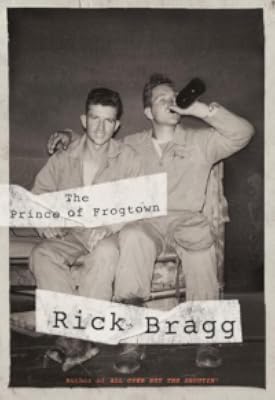
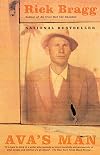
The author details his quest to uncover the truth about the father he had never known and his unseen influence on the author's life and the choices he has made, inspired by his own relationship with his ten-year-old stepson.Tags
Recommendations




Member Recommendations
Member Reviews
This third installment in Rick Bragg’s family saga wobbles a bit at first, but quickly gets its legs under it as Bragg searches for a new understanding of the father he remembered only as a disruptive force who came and went with the violence of a hurricane.
What he found, through the eyes and voices and memories of relatives and childhood friends was a child born to a family of hard-working, hard-drinking, hard-fisted men, a child who grew into a boy of stubbornness and pride and a refusal to give an inch, and a boy who became a man touched early and often by the liquor and violence that had nurtured him.
Bragg intersperses these interviews with brief vignettes about becoming a father unexpectedly in his forties, when he married a show more woman with three boys, the youngest only five when Bragg began courting their mother. Somehow, the contrast between this child, growing up without his father present, and Bragg himself making the same journey but in very different shoes, drove him to want to learn more about the angry ghost who had for so long haunted his life.
What he finds does not lead to a Hallmark Movie Moment of forgiveness and redemption, but it does allow him to discover a man whose memory he can live with and whose struggles he acknowledges. Along the way, Bragg produces his powerful and lyric prose, dragged up from his soul and hammered into a thing of beauty on the page.
Bragg understands innately that time and place create the man. His descriptions of the brutal, man-eating cotton mills of the mid-20th century South equal anything Upton Sinclair ever wrote about the killing floors of Chicago’s meat-packing houses, threaded through with a dark and terrible poetry thrown in at no extra charge. He writes of times and places that no longer exist, acknowledging both their beauty and their cruelty, with the understanding that both of those forces created the man who fathered, loved, disappointed, and abandoned him.
Taken together, All Over But the Shoutin, Ava’s Man, and The Prince of Frogtown are monumental as portraits of a vanished way of life, and a heartbreakingly real story of an American family. show less
What he found, through the eyes and voices and memories of relatives and childhood friends was a child born to a family of hard-working, hard-drinking, hard-fisted men, a child who grew into a boy of stubbornness and pride and a refusal to give an inch, and a boy who became a man touched early and often by the liquor and violence that had nurtured him.
Bragg intersperses these interviews with brief vignettes about becoming a father unexpectedly in his forties, when he married a show more woman with three boys, the youngest only five when Bragg began courting their mother. Somehow, the contrast between this child, growing up without his father present, and Bragg himself making the same journey but in very different shoes, drove him to want to learn more about the angry ghost who had for so long haunted his life.
What he finds does not lead to a Hallmark Movie Moment of forgiveness and redemption, but it does allow him to discover a man whose memory he can live with and whose struggles he acknowledges. Along the way, Bragg produces his powerful and lyric prose, dragged up from his soul and hammered into a thing of beauty on the page.
Bragg understands innately that time and place create the man. His descriptions of the brutal, man-eating cotton mills of the mid-20th century South equal anything Upton Sinclair ever wrote about the killing floors of Chicago’s meat-packing houses, threaded through with a dark and terrible poetry thrown in at no extra charge. He writes of times and places that no longer exist, acknowledging both their beauty and their cruelty, with the understanding that both of those forces created the man who fathered, loved, disappointed, and abandoned him.
Taken together, All Over But the Shoutin, Ava’s Man, and The Prince of Frogtown are monumental as portraits of a vanished way of life, and a heartbreakingly real story of an American family. show less
Few can write like this Pulitzer Prize winner! He is the example to use for anyone who teaches English or Writing. He can break your heart in one sentence and cause an out loud chuckle in the next.
He can tear your heart out and then make you smile at the sheer power of his marvelous mastery of words, eliciting feelings that at the hands of a lessor writer could not convey the subtle awe inspiring depth of emotion.
How I wish I could write like him. His style seems as natural as Rembrandt crafting a chiaroscuro masterpiece, never using a white canvas, always gray or brown in backdrop, never just bright, never only dark, and the result is a portrait rich in depth and beauty.
As Bragg takes pen to paper there is a ray of hope amid the show more chaotic backdrop of an abusive, weak, self destructive, alcoholic father contrasted to a strong, able, loving steady mother.
Like Rembrandt's painting Christ in the Storm on the Sea of Galilee, amidst the pounding waves, there is life threatening turmoil and also calming force on board the ship, tempest torn praying for a safe passage.
In his first novels, All Over But the Shoutin' and Ava's Man Bragg took us on the rough journey of his childhood with an alcoholic father who harmed. Forgiveness of a man who caused so very much pain is difficult and it is only in the cathartic courage of Bragg to write about the angst that the reader understands the struggle of father and son.
In The Prince of Frogtown, Bragg is now a step father to a ten year old son. He inherits a small boy so unlike him and the childhood hardships he endured. This is a pampered younger child who never knew the flash of a father's anger fueled by white lightening bootlegged whiskey.
As Bragg struggles with the definition of fatherhood, he like many people from dysfunctional families know only what NOT to do and wrestle with what to do. When a parent of poverty has influence on a child of middle class softness, does the parent make the child buckle up and be a man, or does he accept the distinct dichotomy?
Bragg's raw emotion is written with boxing gloves lined with soft rabbit fur.
This is writing at its best, and like Harper Lee's To Kill a Mockingbird it is southern gothic in the powerful form of a work loaded in distinctive phrases and individual components that complete a unifying canvas of incredible power.
FIVE STARS. show less
He can tear your heart out and then make you smile at the sheer power of his marvelous mastery of words, eliciting feelings that at the hands of a lessor writer could not convey the subtle awe inspiring depth of emotion.
How I wish I could write like him. His style seems as natural as Rembrandt crafting a chiaroscuro masterpiece, never using a white canvas, always gray or brown in backdrop, never just bright, never only dark, and the result is a portrait rich in depth and beauty.
As Bragg takes pen to paper there is a ray of hope amid the show more chaotic backdrop of an abusive, weak, self destructive, alcoholic father contrasted to a strong, able, loving steady mother.
Like Rembrandt's painting Christ in the Storm on the Sea of Galilee, amidst the pounding waves, there is life threatening turmoil and also calming force on board the ship, tempest torn praying for a safe passage.
In his first novels, All Over But the Shoutin' and Ava's Man Bragg took us on the rough journey of his childhood with an alcoholic father who harmed. Forgiveness of a man who caused so very much pain is difficult and it is only in the cathartic courage of Bragg to write about the angst that the reader understands the struggle of father and son.
In The Prince of Frogtown, Bragg is now a step father to a ten year old son. He inherits a small boy so unlike him and the childhood hardships he endured. This is a pampered younger child who never knew the flash of a father's anger fueled by white lightening bootlegged whiskey.
As Bragg struggles with the definition of fatherhood, he like many people from dysfunctional families know only what NOT to do and wrestle with what to do. When a parent of poverty has influence on a child of middle class softness, does the parent make the child buckle up and be a man, or does he accept the distinct dichotomy?
Bragg's raw emotion is written with boxing gloves lined with soft rabbit fur.
This is writing at its best, and like Harper Lee's To Kill a Mockingbird it is southern gothic in the powerful form of a work loaded in distinctive phrases and individual components that complete a unifying canvas of incredible power.
FIVE STARS. show less
The Prince of Frogtown. Rick Bragg. 2008. Oh my Gosh, I loved this book! Bragg is a great writer anyway but the development of the relationship between him and his stepson was one of the moving stories I’ve ever read. Of course I have a special place in my heart for stories of “steps.” As Bragg struggled to become a stepfather, he was haunted by nightmare memories of his own father, and he finally realized that what Willie Morris told him was true: “My boy, there is no place you can go he will not be.” So in order to understand his new son, he delved into the hard life of his own father and his family. In alternating chapters, Bragg relates his father’s sad saga and the “one step forward, two steps backward” story of show more becoming a father show less
What a terrific book! Heartbreaking, hilarious and hopeful all in one. I could listen to Rick Bragg talk all day and all night. He's a wonderful storyteller and great narrator. I backed up and re-listened to parts, just because I didn't want it to end. I'm looking forward to reading more of this fabulous Southern author. He tells of a world I've never experienced, and makes it so real. A great education that feels like a lark!
In The Prince of Frogtown, Rick Bragg sets out to discover the father that he never really knew. I have read these books all out of order, but apparently in All Over But the Shoutin', Bragg painted his father, Charlie, as a no-account mean drunk. After its publication, people who knew his father came to him and said, "I wish you'd talked to me before you wrote all that." So he talked to them and this is the result. His father is still a no-account mean drunk, but Rick and the reader come away with a better understanding of the man.
Having now read one of Bragg's books and listened to another, I am torn about the best medium. I'm left thinking that the best thing for everyone would be if his publishers just gave us one of those readalong show more books I remember from when I was little. "You'll know it's time to turn the page when you hear the chime ring like this: Dlililing!" Man, I loved those things. I could listen to Rick Bragg all day. His slow speech, his accent, his word choice--it's all the language of my family and the stories we tell. We might not be up on a stage telling stories, but we sure can take the smallest event from our days and spin it out into a good long tale. But as I was listening, I found myself just absolutely dying to mark quotes in a physical copy. Whether Bragg was cracking a joke about understanding a woman's thinking (A passage that included mapping the stars on a bubble gum wrapper with chalk and only got better from there), telling a hilarious story about his father scaring his grandmother half to death when he was little, or making a keen observation about fathers and sons or even mothers and sons, there were real jewels in here. And I couldn't mark them or flag them. Readalong books. Are you paying attention, publishers? That's the way to go.
Anyway, I loved this just as much as I loved Ava's Man. It's a darker book because his father had a lot of darkness inside him. But I enjoyed the stories of Charlie as a child and teenager, before he went to war and came back haunted. His life even then was not an easy one and I think we all are left wondering whether he would have turned out pretty much the same way even if he hadn't ever gone to Korea. He had good moments sometimes too, and even though I knew how things had to turn out, I was left hoping that this time he would change his life. He never did and I was left thankful for my own steadfast father.
The book goes back and forth between stories of Charlie and stories about Rick and his stepson. I really liked that setup. It felt like Rick gained a better understanding of his father as he realized how hard fatherhood is if you're trying to do it right. His long-suffering wife deserves an award, I swear. He makes mistakes along the way, but it sounds like he gets it right in the end. The love he feels for his stepson just comes through so clearly as he reads about him, even when he's talking about what a mama's boy the kid is.
I have discovered that I love Rick Bragg's writing, so I'll be searching out all his books. I highly recommend him. show less
Having now read one of Bragg's books and listened to another, I am torn about the best medium. I'm left thinking that the best thing for everyone would be if his publishers just gave us one of those readalong show more books I remember from when I was little. "You'll know it's time to turn the page when you hear the chime ring like this: Dlililing!" Man, I loved those things. I could listen to Rick Bragg all day. His slow speech, his accent, his word choice--it's all the language of my family and the stories we tell. We might not be up on a stage telling stories, but we sure can take the smallest event from our days and spin it out into a good long tale. But as I was listening, I found myself just absolutely dying to mark quotes in a physical copy. Whether Bragg was cracking a joke about understanding a woman's thinking (A passage that included mapping the stars on a bubble gum wrapper with chalk and only got better from there), telling a hilarious story about his father scaring his grandmother half to death when he was little, or making a keen observation about fathers and sons or even mothers and sons, there were real jewels in here. And I couldn't mark them or flag them. Readalong books. Are you paying attention, publishers? That's the way to go.
Anyway, I loved this just as much as I loved Ava's Man. It's a darker book because his father had a lot of darkness inside him. But I enjoyed the stories of Charlie as a child and teenager, before he went to war and came back haunted. His life even then was not an easy one and I think we all are left wondering whether he would have turned out pretty much the same way even if he hadn't ever gone to Korea. He had good moments sometimes too, and even though I knew how things had to turn out, I was left hoping that this time he would change his life. He never did and I was left thankful for my own steadfast father.
The book goes back and forth between stories of Charlie and stories about Rick and his stepson. I really liked that setup. It felt like Rick gained a better understanding of his father as he realized how hard fatherhood is if you're trying to do it right. His long-suffering wife deserves an award, I swear. He makes mistakes along the way, but it sounds like he gets it right in the end. The love he feels for his stepson just comes through so clearly as he reads about him, even when he's talking about what a mama's boy the kid is.
I have discovered that I love Rick Bragg's writing, so I'll be searching out all his books. I highly recommend him. show less
This is the third book in a trilogy by Rick Bragg about his life growing up in the South, specifically Alabama. I’ve read all three, and having done that, I feel like I know Bragg about as well as I’ve known any writer I’ve read. His story is honest and often painfully sad. It’s sometimes hard to believe that Rick Bragg came from the same family he’s talking about in these books. Bragg is a great writer, and like his fellow Scribe of the South, Pat Conroy, he often mixes knee slapping humor with pathos sad enough to bring a tear to the most cynical reader. I highly recommend anything Rick Bragg writes, including “ The Prince of Frogtown.”
Once again Rick Bragg proves himself to be a raconteur of the highest caliber. His biography of his father, whom he long ago dismissed as not worthy of inclusion in his work, gets his due in this heart breaking and inspiring story. Every other chapter chronicles Bragg's relationship with his young stepson and his own self doubt in how good of a father he can be. This two stories in one approach is refreshing and reveals Bragg at his most vulnerable.
Members
- Recently Added By
Lists

Books Read in 2015
3,299 works; 129 members

Non-Fiction Worth Reading
1,016 works; 262 members
Author Information

16+ Works 6,105 Members
Rick Bragg was awarded the Pulitzer Prize for feature writing in 1996. A national correspondent for the "New York Times", he lives in Miami, Florida. (Bowker Author Biography)
Awards and Honors
Awards
Series

Common Knowledge
- Original publication date
- 2008
- People/Characters
- Rick Bragg
- Important places
- Alabama, USA
Classifications
Statistics
- Members
- 509
- Popularity
- 59,048
- Reviews
- 16
- Rating
- (4.03)
- Languages
- English
- Media
- Paper, Audiobook, Ebook
- ISBNs
- 10
- ASINs
- 6