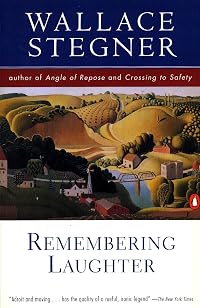
Remembering Laughter
by Wallace Stegner
On This Page
Description
Margaret Stuart, the proud wife of a prosperous Iowa farmer, sets high standards for herself and others. Happy in her marriage, she tries to look the other way when her genial husband, Alec, takes to the bottle. When Elspeth, Margaret's sister, comes to live with them, the young woman is immediately captivated by the beauty and vitality of the farm and by the affection she receives from those around her. But as summer turns into fall and the friendship between Alec and Elspeth deepens, show more Margaret finds her spirit tested by a series of events that seem as cruel and inevitable as the endless prairie winters. Remembering Laughter marked Wallace Stegner's brilliant literary debut. show lessTags
Recommendations














Member Recommendations

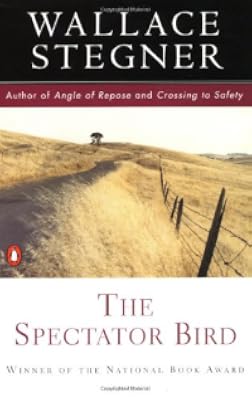
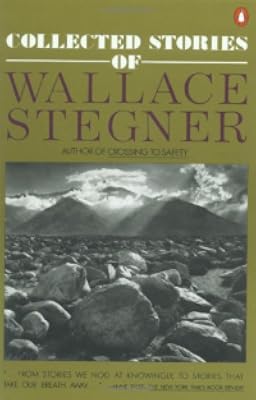
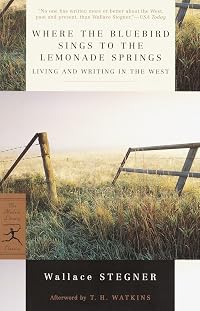
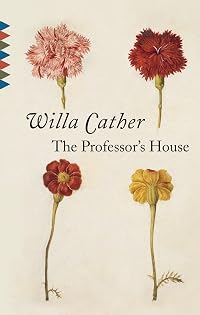
BookshelfMonstrosity In Remembering Laughter a woman confronts her husband's escalating use of alcohol; in Ethan Frome the title character's wife is difficult and demanding. Both novels elegantly depict a husband obsessed with his wife's sister, resulting in a love triangle with tragic consequences.
Member Reviews
Summary: An early Wallace Stegner novella. What happens when Margaret Stuart’s sister comes to live with her and her husband.
In 1936, Wallace Stegner was an English instructor at the University of Utah. An announcement of a novelette prize offered by Little, Brown, and Company caught his eye. But what to write? In the afterword, Mary Stegner shares her role in relating the story of two gaunt aunts living on a farm with a young man who was the son of one of them, though which was unclear. From that family vignette, Stegner wrote Remembering Laughter. To their surprise, they learned he was the prizewinner. He won $2500, very handy when one had an eight month pregnant wife at home.
Turning to the story, Margaret and Alec Stuart owned a show more prospering farm in west Iowa. Margaret was religious and ran her household with a quiet rectitude. Meanwhile, her husband worked hard but also enjoyed a good laugh, made up stories, and a shared drink with his fellows. Margaret disapproved of the latter and endured the rest.
When Elspeth MacLeod, Margaret’s younger sister by seven years emigrates from Scotland to live on the farm (and hopefully marry a promising young man from the area), everything changes. At first, all is well with welcomes from everyone, including the insipid bachelor minister who Margaret wants to match with Elspeth. And Elspeth embraces her new life joyfully, throwing herself into household chores while describing her surroundings in language reminiscent of Willa Cather. It’s also clear she has too much spirit to for the minister.
Then everything changes with the surprise party Margaret meticulously plans for Elspeth. To get her out of the house, she asks Alec to take her for a long walk by the stream. Bad idea, as the interest each had in the other turns into something more. The rest of the novel plays this out. Key to it all are the choices made (or not made) by each character under the control of Margaret who keeps up the appearances (even with a child who doesn’t know who his parents are) at the cost of laughter in the home. The years pass until we come to the scene of two gaunt women preparing for a funeral that opens the novella.
This book was out of print for many years until re-published in 1996. None of my friends who like Stegner knew of it and I only found it by chance. I thought it so adept at exploring fraught relationships, actions, silences, and their consequences. It previews all the great writing to come from the pen of Wallace Stegner. show less
In 1936, Wallace Stegner was an English instructor at the University of Utah. An announcement of a novelette prize offered by Little, Brown, and Company caught his eye. But what to write? In the afterword, Mary Stegner shares her role in relating the story of two gaunt aunts living on a farm with a young man who was the son of one of them, though which was unclear. From that family vignette, Stegner wrote Remembering Laughter. To their surprise, they learned he was the prizewinner. He won $2500, very handy when one had an eight month pregnant wife at home.
Turning to the story, Margaret and Alec Stuart owned a show more prospering farm in west Iowa. Margaret was religious and ran her household with a quiet rectitude. Meanwhile, her husband worked hard but also enjoyed a good laugh, made up stories, and a shared drink with his fellows. Margaret disapproved of the latter and endured the rest.
When Elspeth MacLeod, Margaret’s younger sister by seven years emigrates from Scotland to live on the farm (and hopefully marry a promising young man from the area), everything changes. At first, all is well with welcomes from everyone, including the insipid bachelor minister who Margaret wants to match with Elspeth. And Elspeth embraces her new life joyfully, throwing herself into household chores while describing her surroundings in language reminiscent of Willa Cather. It’s also clear she has too much spirit to for the minister.
Then everything changes with the surprise party Margaret meticulously plans for Elspeth. To get her out of the house, she asks Alec to take her for a long walk by the stream. Bad idea, as the interest each had in the other turns into something more. The rest of the novel plays this out. Key to it all are the choices made (or not made) by each character under the control of Margaret who keeps up the appearances (even with a child who doesn’t know who his parents are) at the cost of laughter in the home. The years pass until we come to the scene of two gaunt women preparing for a funeral that opens the novella.
This book was out of print for many years until re-published in 1996. None of my friends who like Stegner knew of it and I only found it by chance. I thought it so adept at exploring fraught relationships, actions, silences, and their consequences. It previews all the great writing to come from the pen of Wallace Stegner. show less
Wallace Stegner’s debut novella, Remembering Laughter is a study in the misery people can bring upon themselves. It is a story of betrayal, misplaced passion, and a refusal of forgiveness. That any one of those traits can ruin a life is obvious, couple all three of them together and the damage is consuming.
The story is based on a story Wallace Stegner’s wife, Mary, had told him regarding two of her aunts. What gave it additional impact for me was that I was familiar with a very similar situation, that had a much different outcome than Stegner had imagined, but just as destructive.
As I suspected, Stegner burst upon the writing world fully formed. No one would suspect this is a debut. It has his signature style already–a style that show more is so perfectly unobtrusive that it is hardly sensed at all, but one that is as skillful as any you will ever find. show less
The story is based on a story Wallace Stegner’s wife, Mary, had told him regarding two of her aunts. What gave it additional impact for me was that I was familiar with a very similar situation, that had a much different outcome than Stegner had imagined, but just as destructive.
As I suspected, Stegner burst upon the writing world fully formed. No one would suspect this is a debut. It has his signature style already–a style that show more is so perfectly unobtrusive that it is hardly sensed at all, but one that is as skillful as any you will ever find. show less
2011, Blackstone Audiobooks, Read by Cassandra Campbell
“A few hours earlier, they had all been grand people, she thought unhappily, grand people happy in each other’s company – none of them with any ill will or intention of wrong. Now, they had succeeded in so tangling the threads of their lives, that only misery could come of it.” (Ch 3)
Proud and proper Margaret Stuart is married to Alec, a wealthy and genial Iowa farmer. Happy in her marriage, and believing her contentment to be mutual, Margaret does her best to look the other way when Alec takes to the bottle with greater frequency. Shortly, her younger sister, Elspeth, comes from Scotland to live with them. Full of laughter and vitality, she is immediately taken with the show more farm and with the warm affection extended by Margaret, Alec, and their neighbours. But as summer turns to fall, and the friendship between Alec and Elspeth deepens, cruelty is on the horizon. And the world they all love is about to be replaced with a stony, stagnant silence, a calculated tact, and a mere pretense of unity. But never forgiveness – never that.
Remembering Laughter (1937) was Wallace Stegner's literary debut. I’ve read and loved Angle of Repose and Big Rock Candy Mountain, and my experience here was no different. Stegner has a way of writing characters that makes me want the best for them, even when their behaviour is cruel or foolish, or otherwise intolerable – I felt this way about Bo in Big Rock Candy Mountain, and Alec plays that role here. Written in the beautiful prose I’ve come to expect from Stegner, Remembering Laughter is novella length, about a three-hour listen. Narrator Cassandra Campbell is exceptional! Highly recommended! show less
“A few hours earlier, they had all been grand people, she thought unhappily, grand people happy in each other’s company – none of them with any ill will or intention of wrong. Now, they had succeeded in so tangling the threads of their lives, that only misery could come of it.” (Ch 3)
Proud and proper Margaret Stuart is married to Alec, a wealthy and genial Iowa farmer. Happy in her marriage, and believing her contentment to be mutual, Margaret does her best to look the other way when Alec takes to the bottle with greater frequency. Shortly, her younger sister, Elspeth, comes from Scotland to live with them. Full of laughter and vitality, she is immediately taken with the show more farm and with the warm affection extended by Margaret, Alec, and their neighbours. But as summer turns to fall, and the friendship between Alec and Elspeth deepens, cruelty is on the horizon. And the world they all love is about to be replaced with a stony, stagnant silence, a calculated tact, and a mere pretense of unity. But never forgiveness – never that.
Remembering Laughter (1937) was Wallace Stegner's literary debut. I’ve read and loved Angle of Repose and Big Rock Candy Mountain, and my experience here was no different. Stegner has a way of writing characters that makes me want the best for them, even when their behaviour is cruel or foolish, or otherwise intolerable – I felt this way about Bo in Big Rock Candy Mountain, and Alec plays that role here. Written in the beautiful prose I’ve come to expect from Stegner, Remembering Laughter is novella length, about a three-hour listen. Narrator Cassandra Campbell is exceptional! Highly recommended! show less
Stegner's first novel, albeit a very short one, is quite perfect. It was written as an entry in a fiction contest sponsored by Little, Brown & Company, and it won the substantial (for 1936) prize of $2,500.00. Although there is no surprise at the end (it's pretty clear from the opening scene where the story is going, and even how it's probably going to get there), this novella reminded me of an O'Henry short story. A prosperous farmer with a propensity for drink, his perfectionist wife, and a lively younger sister form an inevitable triangle, and the consequences are nothing to laugh about. Highly recommended.
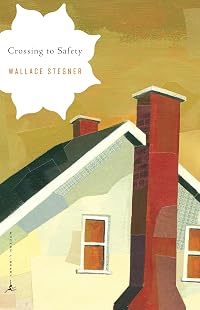
Since I've read several other Stegner books and his Crossing to Safety is a favorite novel of mine, I thought I'd try Remembering Laughter, his very first novel, or 'novelette,' as it was first called. The subject - marital infidelity - is dealt with most delicately, which gives the book something of a quaint, dated feeling. The writing itself, however, is assured and eloquent and gives a good, if limited, sense of Iowa farm life at the turn of the 20th century. My gut response to this short read, with all its details of repressed feelings and pent-up sexuality as well as untimely tragic death and dark family secrets, was that it evokes a kind of Ethan-Frome-in-Iowa feeling. I would recommend the book to any student of Wallace Stegner's show more work. show less
What is interesting is that the book description above seems to give the impression that the story is Margaret's story and told from Margaret's point of view. In fact, the story digs deep into the inner thoughts, feelings and emotions of both Margaret and Elspeth, and to a somewhat lesser extend, Alec. It must be tricky to write about the inner conflict that the opposite gender from the author may experience under certain situations. I think Stegner pulls this off rather well. Repression is a key theme running through this story, as is the fleeting glimpses of joy and exhilaration that uninhibited laughter can bring. For a first novel - novella, really - I was rather intrigued by how this story brought memories of Ethan Frome to my mind show more as I was listening to it. Nothing specific to connect the two stories, it was more a similarity in the tone/starkness of the words, the secluded environment and fleeting glimpses into an emotional reaction of a character than in anything specific.
Overall, I am pleasantly surprised by how much I found myself being drawn into the story. Some of the thoughts/actions of the characters were questionable in my mind, but then again, I have to remember that this story was originally published back in the 1930's, in very different times from what we live in today. show less
Overall, I am pleasantly surprised by how much I found myself being drawn into the story. Some of the thoughts/actions of the characters were questionable in my mind, but then again, I have to remember that this story was originally published back in the 1930's, in very different times from what we live in today. show less
You can see the makings of Angle of Repose in this first novel by Wallace Stegner. There is adultery, unexpressed passion (and expressed passion) and characters that imprison themselves in negative familial environments full of repressed emotion. These things were all dealt with in Angle of Repose more deftly and that well-written story was more interesting because of it.
Remembering Laughter is not up to that mark in terms of writing style but I still found myself enjoying the book. I had no hesitation or reluctance to pick it up in the evening and I quickly finished this novel of less than 200 pages.
The book was absolutely worth reading and it is interesting to compare it with Angle of Repose. I am looking forward to exploring more of show more Stegner's fiction and non-fiction. show less
Remembering Laughter is not up to that mark in terms of writing style but I still found myself enjoying the book. I had no hesitation or reluctance to pick it up in the evening and I quickly finished this novel of less than 200 pages.
The book was absolutely worth reading and it is interesting to compare it with Angle of Repose. I am looking forward to exploring more of show more Stegner's fiction and non-fiction. show less
Members
- Recently Added By
Author Information

94+ Works 20,901 Members
In 1972, Wallace Earle Stegner won a Pulitzer Prize for Angle of Repose (1971), a novel about a wheelchair-bound man's recreation of his New England grandmother's experience in a late nineteenth-century frontier town. Stegner was born on February 18, 1909 in Lake Mills, Iowa. He was an American novelist, short story writer, environmentalist, and show more historian; he has been called "The Dean of Western Writers". He also won the US National Book Award in 1977 for The Spectator Bird. Stegner grew up in Great Falls, Montana; Salt Lake City, Utah; and in the village of Eastend, Saskatchewan, which he wrote about in his autobiography Wolf Willow. Stegner taught at the University of Wisconsin and Harvard University. Eventually he settled at Stanford University, where he initiated the creative writing program. His students included Wendell Berry, and Sandra Day O'Connor. The Stegner Fellowship program at Stanford University is a two-year creative writing fellowship. The house Stegner lived in from age 7 to 12 in Eastend, Saskatchewan, Canada, was restored by the Eastend Arts Council in 1990 and established as a Residence for Artists; the Wallace Stegner Grant For The Arts offers a grant of $500 and free residency at the house for the month of October for published Canadian writers. Stegner died in Santa Fe, New Mexico, on April 13, 1993, from a car accident on March 28, 1993. (Bowker Author Biography) show less
Some Editions
Awards and Honors
Notable Lists
Series
Belongs to Publisher Series
Dell 10-Cent Books (17)
Harlequin (149)
Common Knowledge
- Canonical title
- Remembering Laughter
- Original publication date
- 1937
- Dedication
- to MARY STUART PAGE
- First words
- Throughout the latter part of the morning buggies kept turning in from the highway and wheeling up the quarter-mile of elm-arched drive to the farm—surreys and democrat wagons, an occasional brougham, an even more occasiona... (show all)l automobile whose brass caught the sunlight between the elms.
- Last words
- (Click to show. Warning: May contain spoilers.)"We'd best go and straighten up Malcolm's room," she said.
Classifications
Statistics
- Members
- 285
- Popularity
- 113,512
- Reviews
- 13
- Rating
- (3.74)
- Languages
- English, French
- Media
- Paper, Audiobook, Ebook
- ISBNs
- 14
- ASINs
- 6