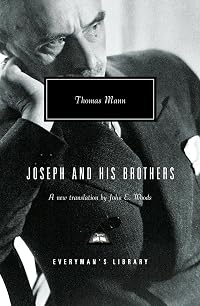
Joseph and His Brothers: The Stories of Jacob, Young Joseph, Joseph in Egypt, Joseph the Provider
by Thomas Mann 
Joseph and his Brothers (Collections and Selections — 1-4)
On This Page
Description
A wonderfully detailed narrative about Joseph and his brothers. Mann conjures for us the world of patriarchs and pharaohs, the civilizations of Egypt, Mesopotamia, and Palestine and the universal force of human love, in all its beauty, desperation, and absurdity.Tags
Recommendations

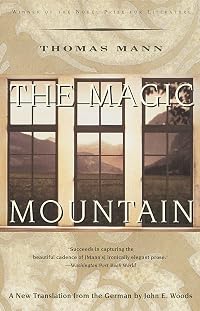
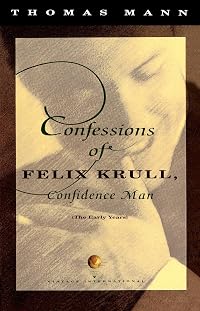
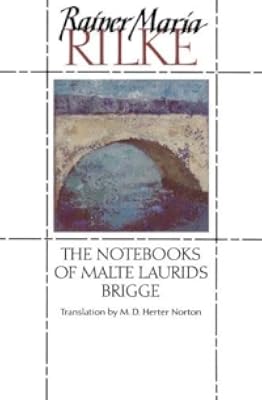
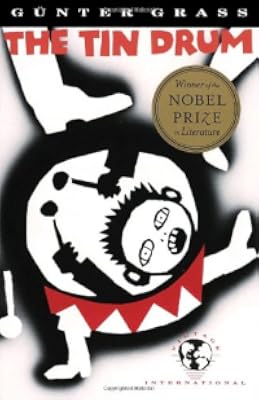
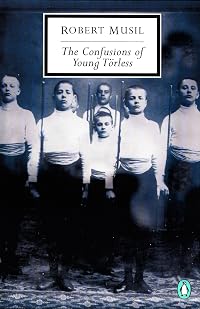
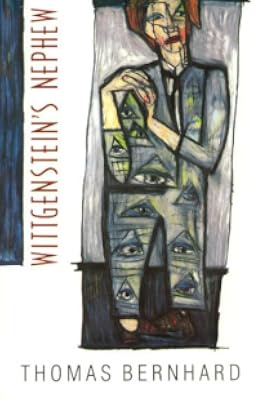


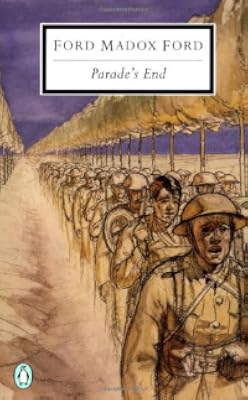

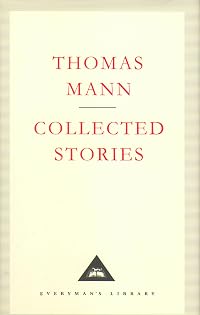

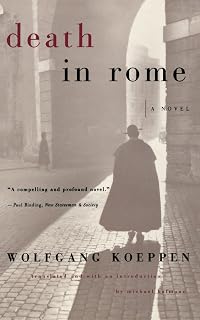
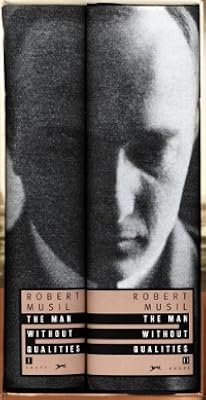
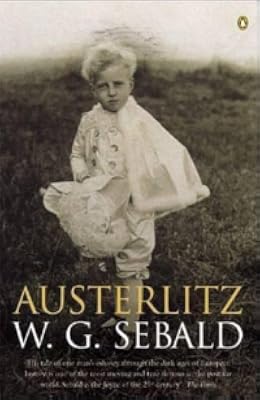
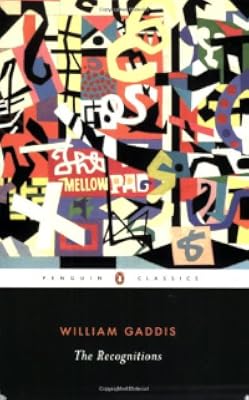





Member Recommendations

by anonymous user
Member Reviews
"Very deep is the well of the past. Should we not call it bottomless?"
With this beginning, Thomas Mann creates a monumental novel based on the story of Joseph in Genesis. By the time you have read more than two hundred pages and Joseph is yet to be born, you begin to realize just how monumental this novel will be. The good news is that it is worth the time and effort.
Mann sets the story in the 14th century BC and makes Akhenaten the pharaoh who anoints Joseph as his vice-regent. A dominant topic of the novel is Mann's exploration of the status of mythology and his presentation of mythical truths and the emergence of monotheism. Events of the story of Genesis are frequently associated and identified with other mythic topics.
From the show more opening page of the novel, the notion of the underworld and the mythical descent to the underworld is a central theme. Jacob's sojourn in Mesopotamia (hiding from the wrath of Esau) is paralleled with Joseph's life in Egypt (exiled by the jealousy of his brothers) and, on a smaller scale, his captivity in the well. Abraham is repeatedly presented as the man who "discovered God." Jacob, as Abraham's heir, is charged with further elaborating this discovery. Joseph is surprised to find Akhenaten on the same path (although Akhenaten is not the "right person" for the path), and Joseph's success with the pharaoh is largely due to the latter's sympathy for "Abrahamic" theology. Mann's approach reminds one of Sigmund Freud's Moses and Monotheism, which had appeared in 1939, just before Mann began work on the tetralogy's fourth part. As Joseph is saved from the well and sold to Egypt, he adopts a new name, Osarseph, replacing the "Yo-" element with a reference to Osiris to indicate that he is now in the underworld. This change of name is made to account for changing circumstances and encourages Amenhotep to change his own name to Akhenaten.
The breadth of the story can be seen in a survey of the four major sections of the novel. The first, The Tales of Jacob, recounts the story of the birthright struggle with Esau and Dinah's trials. When it finally introduces us to the relationship between Jacob and his favored son, Joseph, first-born of his favored wife Rachel, you see one whose flaws of overconfidence and presumption are obvious from the beginning. The familiar stories here include how Jacob’s mother, Rebeccca, managed to obtain Isaac’s blessing for Jacob rather than first-born Esau (the “clod”) and the parallel deception by Jacob’s host Laban in which Jacob was given Leah’s hand in marriage rather than Rachel’s. The second part, Young Joseph, tells the familiar story of Joseph’s catastrophic descent in which his brothers, utterly fed up with his arrogance, throw him into the pit from which he is rescued three days later by an itinerant group of merchants. Having sold him to the merchants, his brothers then deceive their father by showing him the many-colored coat, stained with the blood of a lamb, and leaving it to him to draw the conclusion that his son was killed by a lion.
The two remaining sections take Joseph to Egypt and the court of the Pharaoh through to his reunion with his father and brothers. Mann's recounting of the story of Potiphar and his wife is exceptional among the many stories that are related about Joseph's life in Egypt. You also see Joseph growing in wisdom, although he is not always aware of his own abilities. "Toward him alone and urgently went Joseph's thoughts and the speech of his tongue, unaware that it was guided not by chance or choice but by inheritance and tradition." (p 459)
Mann is a fascinating, extraordinarily well-read writer with a powerful understanding of the human condition. His character studies (and Joseph is nothing if not a very extended character study) are deep and multi-faceted. He does a remarkable job of bringing to life a pre-monotheistic way of thinking. His thoughtfulness and imagination combine to create an immense classic that wins you over time and again. The depth of this remarkable classic knows no bounds. show less
With this beginning, Thomas Mann creates a monumental novel based on the story of Joseph in Genesis. By the time you have read more than two hundred pages and Joseph is yet to be born, you begin to realize just how monumental this novel will be. The good news is that it is worth the time and effort.
Mann sets the story in the 14th century BC and makes Akhenaten the pharaoh who anoints Joseph as his vice-regent. A dominant topic of the novel is Mann's exploration of the status of mythology and his presentation of mythical truths and the emergence of monotheism. Events of the story of Genesis are frequently associated and identified with other mythic topics.
From the show more opening page of the novel, the notion of the underworld and the mythical descent to the underworld is a central theme. Jacob's sojourn in Mesopotamia (hiding from the wrath of Esau) is paralleled with Joseph's life in Egypt (exiled by the jealousy of his brothers) and, on a smaller scale, his captivity in the well. Abraham is repeatedly presented as the man who "discovered God." Jacob, as Abraham's heir, is charged with further elaborating this discovery. Joseph is surprised to find Akhenaten on the same path (although Akhenaten is not the "right person" for the path), and Joseph's success with the pharaoh is largely due to the latter's sympathy for "Abrahamic" theology. Mann's approach reminds one of Sigmund Freud's Moses and Monotheism, which had appeared in 1939, just before Mann began work on the tetralogy's fourth part. As Joseph is saved from the well and sold to Egypt, he adopts a new name, Osarseph, replacing the "Yo-" element with a reference to Osiris to indicate that he is now in the underworld. This change of name is made to account for changing circumstances and encourages Amenhotep to change his own name to Akhenaten.
The breadth of the story can be seen in a survey of the four major sections of the novel. The first, The Tales of Jacob, recounts the story of the birthright struggle with Esau and Dinah's trials. When it finally introduces us to the relationship between Jacob and his favored son, Joseph, first-born of his favored wife Rachel, you see one whose flaws of overconfidence and presumption are obvious from the beginning. The familiar stories here include how Jacob’s mother, Rebeccca, managed to obtain Isaac’s blessing for Jacob rather than first-born Esau (the “clod”) and the parallel deception by Jacob’s host Laban in which Jacob was given Leah’s hand in marriage rather than Rachel’s. The second part, Young Joseph, tells the familiar story of Joseph’s catastrophic descent in which his brothers, utterly fed up with his arrogance, throw him into the pit from which he is rescued three days later by an itinerant group of merchants. Having sold him to the merchants, his brothers then deceive their father by showing him the many-colored coat, stained with the blood of a lamb, and leaving it to him to draw the conclusion that his son was killed by a lion.
The two remaining sections take Joseph to Egypt and the court of the Pharaoh through to his reunion with his father and brothers. Mann's recounting of the story of Potiphar and his wife is exceptional among the many stories that are related about Joseph's life in Egypt. You also see Joseph growing in wisdom, although he is not always aware of his own abilities. "Toward him alone and urgently went Joseph's thoughts and the speech of his tongue, unaware that it was guided not by chance or choice but by inheritance and tradition." (p 459)
Mann is a fascinating, extraordinarily well-read writer with a powerful understanding of the human condition. His character studies (and Joseph is nothing if not a very extended character study) are deep and multi-faceted. He does a remarkable job of bringing to life a pre-monotheistic way of thinking. His thoughtfulness and imagination combine to create an immense classic that wins you over time and again. The depth of this remarkable classic knows no bounds. show less
Spent this afternoon reading. Finished the section on Dinah. A disturbing narrative.
I admit. Slow progress, but I haven't given up on the book. Just read about Jacob stealing Esau's heritage. And Jacob is the good guy, right? This old really is quite remarkable. Interesting to see the contours filled in by Mann.
I admit. Slow progress, but I haven't given up on the book. Just read about Jacob stealing Esau's heritage. And Jacob is the good guy, right? This old really is quite remarkable. Interesting to see the contours filled in by Mann.
I was on an amazing journey with this book for 3 or 4 months, and I hardly know what to say about it. Yes, it is very long but (in the new John Woods translation at least), it is very readable. It took me so long because I have little reading time at home and it's too big to carry on the subway, but it was also good to have time to mull it over as I was reading.
Taking the biblical stories of Jacob and Joseph as the center of the book, Mann creates wonderful characters, believable psychology, and vividly depicted natural settings and human activities and pageantry, interweaving this with investigations of the nature of history, the nature of of time, mythology and the mythological origins of modern western religions, cultural show more anthropology, the repetition of events and motifs, and the interconnectedness of human stories. And I'm sure I missed a lot in this summary! But although there are places where he directly explores these ideas, in most cases they emerge from the stories themselves.
It is a remarkable book, completely worth all the time I put into it, and I would say one of the greatest books I've read (although I have a long list of those). show less
Taking the biblical stories of Jacob and Joseph as the center of the book, Mann creates wonderful characters, believable psychology, and vividly depicted natural settings and human activities and pageantry, interweaving this with investigations of the nature of history, the nature of of time, mythology and the mythological origins of modern western religions, cultural show more anthropology, the repetition of events and motifs, and the interconnectedness of human stories. And I'm sure I missed a lot in this summary! But although there are places where he directly explores these ideas, in most cases they emerge from the stories themselves.
It is a remarkable book, completely worth all the time I put into it, and I would say one of the greatest books I've read (although I have a long list of those). show less
It's long, don't expect to read it fast. It's written with beautiful language and the story, well, is of biblical proportions. I suggest reading the Intro first and following the suggestions made on the order with which to approach this masterpiece. I then suggest reading a short part every day, while perhaps reading something lighter on the side. Probably his best work.
Perfectly... fine, in parts. Did we really need quite so much of it? No. Could I have done without most of the overt symbolism and so on? Yes. Does the structuralist-like analysis of the myths do anything for the book? No. Does it help me to understand the Joseph story in new and fascinating ways; does it have moments of true glory; can you skim huge chunks without missing anything of any importance whatsoever? Yes.
One of my favorite works. This is the Joseph found in Genesis, but he comes alive under Mann's skill. Ancient Egypt comes alive. The idiosyncrasies, strewn throughout (the farming of dates, for example) brings authenticity to the story. An epic worth re-reading. I've recommended this book throughout the high school I work at. Terrific.
Okay, so it's really long - in fact it's a tome of gigantic proportions - almost 1,500 pages! Granted nothing much happens in the first 200 pages, but at around 300 the story gets to moving along pretty well. Mann likes to get his plotline ducks all in order before he actually moves the story along and this can tend to be tedious at times. Familiar with the story, you must be willing to allow Mann to innundate you with all the background in all its glory. The John E. Woods translation is amazing though I'm not familiar with the earlier one.
Members
- Recently Added By
Lists

1001 Books You Must Read Before You Die
1,448 works; 1,134 members

Favorite Long Books
330 works; 42 members

German Literature
518 works; 56 members

Best Historical Fiction
620 works; 261 members

20th Century Literature
1,161 works; 55 members

Historical Fiction
889 works; 91 members

Best historical fiction set in the ancient world
126 works; 40 members
1940s
221 works; 25 members

50 Tough Books for Extreme Readers
71 works; 39 members

Nobel Price Winners
222 works; 20 members

In or About the 1930s
198 works; 27 members

Books Set in Germany
74 works; 12 members

Amanda's Guaranteed Books
110 works; 5 members

Books Read in 2020
4,379 works; 124 members

Harold Bloom - The Western Canon: D. The Chaotic Age
833 works; 24 members

Genesis in literature
47 works; 7 members

End of Your Life Book Club
134 works; 4 members

How to Read a Book's Recommended Reading List
309 works; 10 members
Author Information

Thomas Mann was born into a well-to-do upper class family in Lubeck, Germany. His mother was a talented musician and his father a successful merchant. From this background, Mann derived one of his dominant themes, the clash of views between the artist and the merchant. Mann's novel, Buddenbrooks (1901), traces the declining fortunes of a merchant show more family much like his own as it gradually loses interest in business but gains an increasing artistic awareness. Mann was only 26 years old when this novel made him one of Germany's leading writers. Mann went on to write The Magic Mountain (1924), in which he studies the isolated world of the tuberculosis sanitarium. The novel was based on his wife's confinement in such an institution. Doctor Faustus (1947), his masterpiece, describes the life of a composer who sells his soul to the devil as a price for musical genius. Mann is also well known for Death in Venice (1912) and Mario the Magician (1930), both of which portray the tensions and disturbances in the lives of artists. His last unfinished work is The Confessions of Felix Krull, Confidence Man (1954), a brilliantly ironic story about a nineteenth-century swindler. An avowed anti-Nazi, Mann left Germany and lived in the United States during World War II. He returned to Switzerland after the war and became a celebrated literary figure in both East and West Germany. In 1929 he was awarded the Nobel Prize for literature. (Bowker Author Biography) show less
Thomas Mann has a Legacy Library. Legacy libraries are the personal libraries of famous readers, entered by LibraryThing members from the Legacy Libraries group.
Some Editions
Awards and Honors
Notable Lists
Series

Belongs to Publisher Series
Work Relationships
Contains
Is abridged in
Has as a student's study guide
Common Knowledge
- Canonical title*
- Jozef en zijn broers
- Original title
- Joseph und seine Brüder
- Original publication date
- 1933 (The Tales of Jacob) (The Tales of Jacob); 1934 (The Young Joseph) (The Young Joseph); 1936 (Joseph in Egypt) (Joseph in Egypt); 1943 (Joseph the Provider) (Joseph the Provider)
- People/Characters
- Akhenaten; Asenath; Benjamin, son of Jacob and Rachel; Esau, son of Isaac and Rebecca; Isaac, son of Abraham and Sarah; Jacob (show all 15); Joseph, son of Jacob and Rache; Judah, son of Jacob and Leah; Laban; Leah; Potiphar; Rachel; Rebekah; Reuben, son of Jacob and Leah; Tiya, mother of Akhenaton
- Important places
- Palestine; Egypt
- Original language
- German
*Some information comes from Common Knowledge in other languages. Click "Edit" for more information.
Classifications
- Genres
- General Fiction, Fiction and Literature, Historical Fiction
- DDC/MDS
- 823.912 — Literature & rhetoric English & Old English literatures English fiction 1900- 1901-1999 1901-1945
- LCC
- PT2625 .A44 .J7813 — Language and Literature German, Dutch and Scandinavian literatures German literature Individual authors or works 1860/70-1960
- BISAC
Statistics
- Members
- 1,264
- Popularity
- 19,418
- Reviews
- 20
- Rating
- (4.10)
- Languages
- 12 — Danish, Dutch, English, Finnish, French, German, Hebrew, Hungarian, Italian, Portuguese, Russian, Spanish
- Media
- Paper, Audiobook, Ebook
- ISBNs
- 34
- UPCs
- 1
- ASINs
- 31