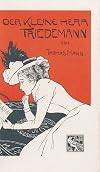
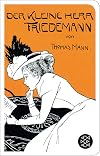
Little Herr Friedemann
by Thomas Mann 
On This Page
Tags
Recommendations

























Member Reviews
Magically beautiful and profoundly sad. I'm stunned, even though I don't know what I else I could have expected from Mann. He always has that knack of playing on my emotions so skillfully, that he can bring up completely contrasting images and moods in the space of a few pages.
I'd have loved for this to be a longer story, I feel the desire to learn a lot more about the characters, and yet Mann's prose is so potent, that enough is said in the novella as it is.
The first Mann I dared read completely in German, I was confident to do it because it was short, and the language was as understandable as expected. His work is even more powerful when read in the original language.
The subtle nuances that he uses when describing his characters are, show more as always captivating, and seem larger than life - creations of the realm of art as puffy as clouds, but at the same time as substantial as the powerful emotions they are absorbed in. Every sentence a character utters, every motion is an artistic miniature, a tiny vignette, pretty and complete, something to put in a frame and display in a wealthy salon, and this is precisely why I love Mann. I doubt I would have been able to tell this was one of his earliest published works.
I look forward to reading as much as I can of his further work in German.
Thus endeth my first Goodreads review. show less
I'd have loved for this to be a longer story, I feel the desire to learn a lot more about the characters, and yet Mann's prose is so potent, that enough is said in the novella as it is.
The first Mann I dared read completely in German, I was confident to do it because it was short, and the language was as understandable as expected. His work is even more powerful when read in the original language.
The subtle nuances that he uses when describing his characters are, show more as always captivating, and seem larger than life - creations of the realm of art as puffy as clouds, but at the same time as substantial as the powerful emotions they are absorbed in. Every sentence a character utters, every motion is an artistic miniature, a tiny vignette, pretty and complete, something to put in a frame and display in a wealthy salon, and this is precisely why I love Mann. I doubt I would have been able to tell this was one of his earliest published works.
I look forward to reading as much as I can of his further work in German.
Thus endeth my first Goodreads review. show less
Ratings
Members
- Recently Added By
Author Information

946+ Works 51,369 Members
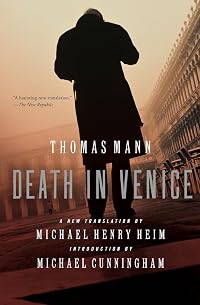
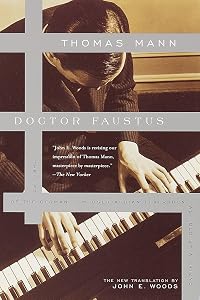
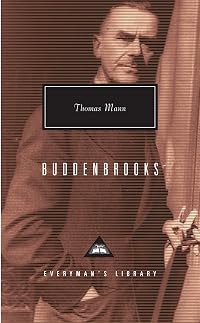
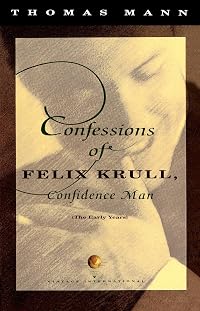
Thomas Mann was born into a well-to-do upper class family in Lubeck, Germany. His mother was a talented musician and his father a successful merchant. From this background, Mann derived one of his dominant themes, the clash of views between the artist and the merchant. Mann's novel, Buddenbrooks (1901), traces the declining fortunes of a merchant show more family much like his own as it gradually loses interest in business but gains an increasing artistic awareness. Mann was only 26 years old when this novel made him one of Germany's leading writers. Mann went on to write The Magic Mountain (1924), in which he studies the isolated world of the tuberculosis sanitarium. The novel was based on his wife's confinement in such an institution. Doctor Faustus (1947), his masterpiece, describes the life of a composer who sells his soul to the devil as a price for musical genius. Mann is also well known for Death in Venice (1912) and Mario the Magician (1930), both of which portray the tensions and disturbances in the lives of artists. His last unfinished work is The Confessions of Felix Krull, Confidence Man (1954), a brilliantly ironic story about a nineteenth-century swindler. An avowed anti-Nazi, Mann left Germany and lived in the United States during World War II. He returned to Switzerland after the war and became a celebrated literary figure in both East and West Germany. In 1929 he was awarded the Nobel Prize for literature. (Bowker Author Biography) show less
Thomas Mann has a Legacy Library. Legacy libraries are the personal libraries of famous readers, entered by LibraryThing members from the Legacy Libraries group.
Work Relationships
Is contained in
Has as a teacher's guide
Common Knowledge
- Canonical title
- Little Herr Friedemann
- Original publication date
- 1897
Classifications
Statistics
- Members
- 34
- Popularity
- 837,113
- Reviews
- 1
- Rating
- (4.17)
- Languages
- Czech, English, German
- Media
- Paper, Audiobook, Ebook
- ISBNs
- 7
- ASINs
- 2