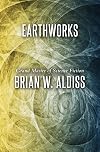
Earthworks
by Brian W. Aldiss
On This Page
Description
Chinese medicine is a culturally dependent art of healing deeply rooted in the culture and philosophy of the country it originated from: China. This book has three independent but progressive parts, each bearing the title of one of the three courses taught by the author as a visiting professor at the Faculty of Philosophy, Vienna University, in the 2010-2011 winter semester, namely: Overview of Chinese Culture through Chinese Characters, Fundamental Concepts of Classical Chinese Philosophy show more and The Importance of Metaphors in Chinese Medicine, which are in the fields of philosophy of language, philosophy of science, and intercultural philosophy, aiming to reveal the essence of philosophy of Chinese language, classical Chinese philosophy and Chinese medicine within the context of a global, multicultural background. This book sums up the author's research outcome of the last few years in an area of study on culture, philosophy and Chinese medicine which has been too often misunderstood or insufficiently emphasized. show lessTags
Recommendations










Member Reviews
Look at yourselves, Earth's peoples, Earthworks!
Look, look hard, and take a knife,
Carve yourself a conscience!
A short book, but one that packs quiet a punch and leaves the reader chewing over its ideas and implications long after its done. Brian Aldiss loves to dig and probe around the edges of one's most basic assumptions. The setting of this slim volume is a future where overpopulation, pollution and soil and resource exhaustion have devastated most of the planet, so that Europe, Asia and the Americas are sunk in poverty, illness and hunger, living out their lives in teeming cities. In this world, it is the African nations which still retain vitality and resources and which are the superpowers of the globe. Much like Europe in the show more 19th and early 20th centuries, the African powers are hostile and jockey for power, but with the formation of an African Union, under the aegis of a great leader, whose leadership is ushering in an era of peace.
But, the question which is posed to the book's protagonist, Knowle Noland, is whether peace is such a great thing after all? Wouldn't a war, which would cull the world's population in nuclear fires, free millions of their misery and allow humanity to start again, leaving the survivors better off? Knowle gets caught up in an assassination plot put together by a group of cultists. Aldiss is in good form with this one, his writing is top notch, with some truly memorable and haunting sequences. The story is presented in the form of a narrative written years after the events chronicled by Knowle. Not only do we have an unreliable narrator, but one who is conscious of, and often discusses the limits and purposes of what he is writing in a world where few people know how to read. On top of this, Knowle is schizophrenic, and his accounts of some of his hallucinatory episodes are fascinating and tantalizing in that either they provide special insights into the world around him, or maybe that wisdom too is an illusion. Its fun trying to unpack the layers Aldiss throws in here.
Some of the ideas and extrapolations now may seem a little outdated, or not as startling as they were at the time this was written, but this is still a work well worth reading. show less
Look, look hard, and take a knife,
Carve yourself a conscience!
A short book, but one that packs quiet a punch and leaves the reader chewing over its ideas and implications long after its done. Brian Aldiss loves to dig and probe around the edges of one's most basic assumptions. The setting of this slim volume is a future where overpopulation, pollution and soil and resource exhaustion have devastated most of the planet, so that Europe, Asia and the Americas are sunk in poverty, illness and hunger, living out their lives in teeming cities. In this world, it is the African nations which still retain vitality and resources and which are the superpowers of the globe. Much like Europe in the show more 19th and early 20th centuries, the African powers are hostile and jockey for power, but with the formation of an African Union, under the aegis of a great leader, whose leadership is ushering in an era of peace.
But, the question which is posed to the book's protagonist, Knowle Noland, is whether peace is such a great thing after all? Wouldn't a war, which would cull the world's population in nuclear fires, free millions of their misery and allow humanity to start again, leaving the survivors better off? Knowle gets caught up in an assassination plot put together by a group of cultists. Aldiss is in good form with this one, his writing is top notch, with some truly memorable and haunting sequences. The story is presented in the form of a narrative written years after the events chronicled by Knowle. Not only do we have an unreliable narrator, but one who is conscious of, and often discusses the limits and purposes of what he is writing in a world where few people know how to read. On top of this, Knowle is schizophrenic, and his accounts of some of his hallucinatory episodes are fascinating and tantalizing in that either they provide special insights into the world around him, or maybe that wisdom too is an illusion. Its fun trying to unpack the layers Aldiss throws in here.
Some of the ideas and extrapolations now may seem a little outdated, or not as startling as they were at the time this was written, but this is still a work well worth reading. show less
Knowle Noland is a cargo ship captain with a problem. His problem is schizophrenic hallucinations. On one of his more vivid benders, he takes his cargo ship and runs it aground on the coast of Africa. There, he meets the woman of his dreams and the man of of his nightmares. That nightmare man, also has a problem - the earth is overpopulated and underresourced. Africa and its states are dominant - Europe, Asia and North America are husks of their former selves. Cities are build on elevated platforms away from the poisoned ground. Forced labor camps provide the food - such as it is. All but the exceptionally rich are starving and malnourished. But what can a man haunted by the demons of his subconscious do to right this ship?
I was not show more terribly thrilled with the book, as evidenced by my two star rating. The hallucinations were especially difficult to work through. Our Knowle is not a particularly compelling hero, and, in fact, he never becomes in any way heroic. He thinks himself educated, but he's not. He desires the woman but can't have her. Perhaps that's why he makes the decision he does at the end - he realizes that he has no chance with her.
Certainly Aldiss' style is starkly different from the last book I read - a short novel by Arthur C. Clarke. Aldiss world is one where the advanced technology takes a back seat to the catastrophes that technology has wrought upon the world. None of the futuristic technologies of Aldiss' future are presented with wonder and awe the way Clarke does. It's a very depressing and repressing world that he creates for us. A world I'm more than happy to leave behind. show less
I was not show more terribly thrilled with the book, as evidenced by my two star rating. The hallucinations were especially difficult to work through. Our Knowle is not a particularly compelling hero, and, in fact, he never becomes in any way heroic. He thinks himself educated, but he's not. He desires the woman but can't have her. Perhaps that's why he makes the decision he does at the end - he realizes that he has no chance with her.
Certainly Aldiss' style is starkly different from the last book I read - a short novel by Arthur C. Clarke. Aldiss world is one where the advanced technology takes a back seat to the catastrophes that technology has wrought upon the world. None of the futuristic technologies of Aldiss' future are presented with wonder and awe the way Clarke does. It's a very depressing and repressing world that he creates for us. A world I'm more than happy to leave behind. show less
Het drama van Aarde-werk speelt zich van begin tot eind op de Aarde af. Het is een beklemde wereld in de niet te verre toekomst. Het lot van miljarden wordt bepaald door nu al actuele zaken als voedselschaarste en milieuvervuiling.
Een gruwelijk waarschijnlijk drama: geen vreemde monsters dus uit het heelal. Geen ongeloofwaardige superman om de mensheid te redden. Een drama met gewone mensen, die uit elk lapje grond een handvol voedsel wringen. Gewone mensen, belaagd door hun eigen kunstmest en landbouwgiffen... en door een teveel aan gewone mensen.
Toch is dit niet weer zo'n geijkte vertelling over de overbevolking van het jaar 2000. Het aangrijpend relaas geeft te denken: misschien komt er een oplossing - al is die oplossing dan niet show more het fondanten heilsideaal waar we van dromen. show less
Een gruwelijk waarschijnlijk drama: geen vreemde monsters dus uit het heelal. Geen ongeloofwaardige superman om de mensheid te redden. Een drama met gewone mensen, die uit elk lapje grond een handvol voedsel wringen. Gewone mensen, belaagd door hun eigen kunstmest en landbouwgiffen... en door een teveel aan gewone mensen.
Toch is dit niet weer zo'n geijkte vertelling over de overbevolking van het jaar 2000. Het aangrijpend relaas geeft te denken: misschien komt er een oplossing - al is die oplossing dan niet show more het fondanten heilsideaal waar we van dromen. show less
Mar 31, 2025Dutch
Ratings
Members
- Recently Added By
Lists

Best Post-Apocalyptic Stories
143 works; 88 members
Author Information

565+ Works 27,508 Members
Brian W. Aldiss was born in Dereham, United Kingdom on August 18, 1925. In 1943, he joined the Royal Signals regiment, and saw action in Burma. After World War II, he worked as a bookseller at Oxford University. His first book, The Brightfount Diaries, was published in 1955. His first science fiction novel, Non-Stop (Starship in the United show more States), was published in 1958. He wrote more than 80 books including Hothouse, Greybeard, The Helliconia Trilogy, The Squire Quartet, Frankenstein Unbound, The Malacia Tapestry, Walcot, and Mortal Morning. His short story Super-Toys Last All Summer Long was the basis for the film A.I. Artificial Intelligence. He has received numerous awards for his work including two Hugo Awards, the Nebula Award, the John W. Campbell Memorial Award, and an OBE for services to literature. He was also an anthologist and an artist. He was the editor of 40 anthologies including Introducing SF, The Penguin Science Fiction Omnibus, Space Opera, Space Odysseys, Galactic Empires, Evil Earths, and Perilous Planets. He was an abstract artist and his first solo exhibition, The Other Hemisphere, was held in Oxford in August-September 2010. He died on August 19, 2017 at the age of 92. (Bowker Author Biography) show less
Some Editions
Series
Belongs to Publisher Series
Work Relationships
Is contained in
Common Knowledge
- Canonical title*
- Tod im Staub
- Original title
- Earthworks
- Original publication date
- 1965
- People/Characters*
- Knowle Noland; Dr. Thunderpeck; March Jordill; Abdul Demone; Di Skumpsky; Jess (show all 11); Nan; Israt; Justine Smith; Peter Mercator; Hammer
- Important places*
- Walvis Bay
- Epigraph
- While life reached evilly through empty faces
While life flowed slowly o'er idle bodies
And stars flowed evilly upon vast men
No passion smiled . . .
RCA 301 COMPUTER - First words
- The dead man drifted along in the breeze.
- Last words
- (Click to show. Warning: May contain spoilers.)Ignoring the rumbling of my empty stomach, I cradled the rifle under one arm and crawled towards the nearest window slit.
- Publisher's editor*
- Jeschke, Wolfgang
- Original language*
- Englisch
*Some information comes from Common Knowledge in other languages. Click "Edit" for more information.
Classifications
Statistics
- Members
- 468
- Popularity
- 65,354
- Reviews
- 3
- Rating
- (2.87)
- Languages
- 5 — Dutch, English, French, German, Japanese
- Media
- Paper, Audiobook, Ebook
- ISBNs
- 18
- ASINs
- 27