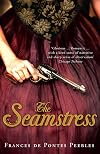
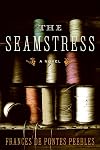
The Seamstress
by Frances de Pontes Peebles
On This Page
Description
In 1930's Brazil, a vigilante gang invades the home of two seamstresses, kidnapping one of them.Tags
Recommendations





















Member Reviews
The Seamstress tells the story of two sisters, Luzia and Emília, brought up by their aunt in Brazil's lawless northern backcountry during the early decades of the 20th century. Luzia is very tall, short-tempered, devout and has been cruelly given the nickname "Victrola" because an injury fused her elbow joint so that her arm is permanently in a bent position. Emília is pretty, even-tempered and forms her ideas of the world away from their small town through fashion magazines and romance novels. Both girls have been taught by their aunt to be seamstresses; their reputations as such are unrivaled. Both girls long to escape their situation. It is no spoiler to say that the girls' paths soon diverge when Luzia is taken by a gang of outlaw show more cangaceiros headed by the infamous "Hawk," and somewhat later, Emília unexpectedly marries very well and moves to live among nuevo rich in high society Recife. The story of each is riveting, for who can resist a story of a girl surviving among outlaws, or an unsophisticated girl surviving the throes of high society?
It has been my experience that historical fiction seems to often fall in three categories. There is the kind of story which is totally character-driven with the historical setting a mere backdrop. There is the kind where the historical setting is so credible and prominent it almost figures as another character in the story. And then, there is the kind like [The Seamstress] which combines the very best of both. It is richly, detailed and offers the reader total immersion into 1920s & 30s Brazil - both the dry, lawless backcountry, and the rich, mannered high society of the city. And yet, it tells a similarly rich and detailed story of the sisters themselves and their relationships with the people around them. Like the two sisters, both parts of the story are inextricably linked.
The Seamstress is a magnificent, mesmerizing historical fiction and debut novel. The reader very soon finds himself captive within its 650 or so pages, and is not released until the very end. But, unlike the cangaceiros, the story is merciful. . . show less
It has been my experience that historical fiction seems to often fall in three categories. There is the kind of story which is totally character-driven with the historical setting a mere backdrop. There is the kind where the historical setting is so credible and prominent it almost figures as another character in the story. And then, there is the kind like [The Seamstress] which combines the very best of both. It is richly, detailed and offers the reader total immersion into 1920s & 30s Brazil - both the dry, lawless backcountry, and the rich, mannered high society of the city. And yet, it tells a similarly rich and detailed story of the sisters themselves and their relationships with the people around them. Like the two sisters, both parts of the story are inextricably linked.
The Seamstress is a magnificent, mesmerizing historical fiction and debut novel. The reader very soon finds himself captive within its 650 or so pages, and is not released until the very end. But, unlike the cangaceiros, the story is merciful. . . show less
2
Summary: Emilia and Luzia dos Santos, sisters of humble origins, find their own ways to escape the drudgery of poor village life. Emilia marries well and moves to Recife to enjoy high society, Luzia is abducted by a gang of country bandits. Both sisters discover their capabilities and limitations in surroundings far from their shared past.
I enjoyed this enormously - the setting is very thoroughly evoked and does well to distract you from the rainy, grey London setting. It passed the "would rather be sleep-deprived than put this down" test with a score of about 200 pages! (before I finally had to turn the light out...)
The author does well to keep the perspectives of two sisters so separate; Luzia is set up as a villain but then is show more sympathetic, Emilia was a snob but her desire for fine cloth is tempered when she is disappointed in marriage. The connection between them is never really broken, they find ways to communicate through the newspapers, and they each come to appreciate the other's gifts in later life.
The Brazilian hinterlands are beautifully described - having a troupe of country bandits enables the author to compose odes to the untouched nature:
"After the rains, the caatinga bloomed. Orange flowers, their petals as thin and dry as paper, emerged from the quipa's prinkly rounds. The malva bushes grew as tall as men. Bromeliads released red blooms. Bees swarmed the scrub. When Luzia closed her eyes, their buzzine reminded her of rushing water."
She peppers the novel with untranslated Portuguese/Brazilian, explaining some and not some other, and on the whole, she gets it right. I had a few moments of "I wonder what that means", but mostly I just carried on - and the heavy flavouring just reinforces the exotic setting.
Both sisters are disappointed in their choice of life, but they both make the best of it and are well-respected in their chosen societies. The glamour and social rituals of Emilia's life in the city were beautiful to read; the idea of Old and New families who don't converse; areas of town once Old, now infiltrated by the New; and Emilia's involvement in the suffragette movement and in bringing new fashion to Recife.
Well worth the very heavy 646 pages! show less
I enjoyed this enormously - the setting is very thoroughly evoked and does well to distract you from the rainy, grey London setting. It passed the "would rather be sleep-deprived than put this down" test with a score of about 200 pages! (before I finally had to turn the light out...)
The author does well to keep the perspectives of two sisters so separate; Luzia is set up as a villain but then is show more sympathetic, Emilia was a snob but her desire for fine cloth is tempered when she is disappointed in marriage. The connection between them is never really broken, they find ways to communicate through the newspapers, and they each come to appreciate the other's gifts in later life.
The Brazilian hinterlands are beautifully described - having a troupe of country bandits enables the author to compose odes to the untouched nature:
"After the rains, the caatinga bloomed. Orange flowers, their petals as thin and dry as paper, emerged from the quipa's prinkly rounds. The malva bushes grew as tall as men. Bromeliads released red blooms. Bees swarmed the scrub. When Luzia closed her eyes, their buzzine reminded her of rushing water."
She peppers the novel with untranslated Portuguese/Brazilian, explaining some and not some other, and on the whole, she gets it right. I had a few moments of "I wonder what that means", but mostly I just carried on - and the heavy flavouring just reinforces the exotic setting.
Both sisters are disappointed in their choice of life, but they both make the best of it and are well-respected in their chosen societies. The glamour and social rituals of Emilia's life in the city were beautiful to read; the idea of Old and New families who don't converse; areas of town once Old, now infiltrated by the New; and Emilia's involvement in the suffragette movement and in bringing new fashion to Recife.
Well worth the very heavy 646 pages! show less
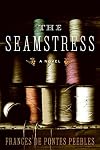
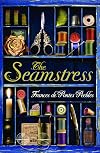
This book was a surprise to me. It's a large book with a pretty, but generic cover. I knew it was worthy and historical and set somewhere in South America; all of which were fine things, but not things that called me to read it. So the amount of enjoyment I got from this book, the sheer fun I had reading it, was unexpected. I didn't know beforehand that Frances de Pontes Peebles had written a rip-roaring adventure story that ran the gamut from hardscrabble survival in the Brazilian hinterlands to coastal high society to political turmoil to life in an outlaw gang, evading the law and enacting vengeance, all set during the last few years of the 1920s to the first few years of the 1930s.
The Seamstress follows two very different sisters, show more being raised by their aunt, who teaches them a trade and manners. Emilia longs for a more elegant life, the one depicted in the magazines handed down to her by her employer. She refuses to look at the stolid farmer's sons who would court her, setting her sights on the refined sewing teacher from the capitol. Luiza, tall and with an arm crippled in a fall from a mango tree, has no use for the things Emilia loves. She likes her life in her aunt's house, although she is prickly and rebellious. Circumstances sent one sister to live in luxury in Recife, the provincial capital, while the other joins a band of bandits, led by The Hawk, a feared but canny outlaw. Brazil is changing rapidly, and those changes challenge each woman. Both Luiza and Emilia are complex, interesting and believable characters. They are both strong women, although their strengths fall in different areas.
The book begins slowly, but it wasn't long before I was hauling it around with me to read a few more pages whenever I could. Generally, I only travel with an ereader or a light paperback, but I was willing to lug The Seamstress around with me until, all too quickly, it came to an end. show less
The Seamstress follows two very different sisters, show more being raised by their aunt, who teaches them a trade and manners. Emilia longs for a more elegant life, the one depicted in the magazines handed down to her by her employer. She refuses to look at the stolid farmer's sons who would court her, setting her sights on the refined sewing teacher from the capitol. Luiza, tall and with an arm crippled in a fall from a mango tree, has no use for the things Emilia loves. She likes her life in her aunt's house, although she is prickly and rebellious. Circumstances sent one sister to live in luxury in Recife, the provincial capital, while the other joins a band of bandits, led by The Hawk, a feared but canny outlaw. Brazil is changing rapidly, and those changes challenge each woman. Both Luiza and Emilia are complex, interesting and believable characters. They are both strong women, although their strengths fall in different areas.
The book begins slowly, but it wasn't long before I was hauling it around with me to read a few more pages whenever I could. Generally, I only travel with an ereader or a light paperback, but I was willing to lug The Seamstress around with me until, all too quickly, it came to an end. show less
1920's Brazil - remote mountainous region: Two sisters, Emília and Luzia dos Santos, parent-less, have just moved in to live with their seamstress aunt. The aunt teaches them the ways of the trade. Emilia and Luzia are as different as day and night. Beautiful Emília dreams of leaving the small provincial town, reads the fashion/beauty magazine, and designs her own clothing (often to the ridicule of the town's residents. Tall, independent Luzia, with a damaged arm from a childhood accident, has never let it stop her from becoming a confident seamstress. She too has dreams even though she knows her damaged arm prevents her from becoming a viable marriageable interest.
The two sister's paths separate though when a group of cangaceiros show more (bandits), led by the infamous Hawk, converge on the town and take Luzia with them. Emília finds her escape through a hasty marriage to a wealthy doctor's son and moves to the city of Recife. Luzia becomes a well-known cangaceiro nicknamed The Seamstress and Emília becomes a wealthy socialite. However, girlhood dreams are never the same in reality. Emília has to hid her past and association with Luzia and must deal with high society prejudices and a distant husband with a secret. Luzia finds that every day life as a cangaceiro is not as thrilling as one might think. Communication between the sisters is non-existent and the two rely on clipping newspaper stories to keep in touch.
The novel alternates between each sister's viewpoint. At the beginning I loved Luzia's voice and was always impatient to get through Emília's side to get back to Luzia. I just related more to Luzia over Emília's fashionable frippery. But as the story progressed, I fell for Emília's plight and just loved how she evolved. I have to say it did remind me of Isabel Allende but Frances de Pontes Peebles has a voice all her own. It is just vivid and beautiful. Be aware that while the Hawk's group of cangaceiro's often seem like Brazil's Robin Hood or Zorro...there are gruesome atrocities committed as well.
I LOVED this book. I couldn't put it down. I loved Luzia. I love the scenes between Luzia and the Hawk. And Emília evolution from a selfish materialistic girl into the woman in Recife is just beautiful and often heart wrenching to read. Frances de Pontes Peebles depicted the Brazilian landscape and scenes so well that I almost felt like I was watching it. I can still picture in my mind the newspaper clipping and photo depicting the elusive Hawk and Seamstress' band of cangaceiros. The history of the Brazilian land and people is fascinating and I loved finding a book that depicted this unfamiliar time period.
I also stumbled across Frances de Pontes Peebles blog The Art of Waiting and I am addicted. You should check it out. There's an section at the end of the paperback copy that I have which has an interview with Frances regarding her research and travels while writing The Seamstress. She actually went into the remote regions and talked with people in the very places she was writing about. No wonder the imagery is so vivid! And Frances' own ancestral history also takes a part in this story. I want her to write a whole other book/memoir depicting her adventures in writing and researching this book. show less
The two sister's paths separate though when a group of cangaceiros show more (bandits), led by the infamous Hawk, converge on the town and take Luzia with them. Emília finds her escape through a hasty marriage to a wealthy doctor's son and moves to the city of Recife. Luzia becomes a well-known cangaceiro nicknamed The Seamstress and Emília becomes a wealthy socialite. However, girlhood dreams are never the same in reality. Emília has to hid her past and association with Luzia and must deal with high society prejudices and a distant husband with a secret. Luzia finds that every day life as a cangaceiro is not as thrilling as one might think. Communication between the sisters is non-existent and the two rely on clipping newspaper stories to keep in touch.
The novel alternates between each sister's viewpoint. At the beginning I loved Luzia's voice and was always impatient to get through Emília's side to get back to Luzia. I just related more to Luzia over Emília's fashionable frippery. But as the story progressed, I fell for Emília's plight and just loved how she evolved. I have to say it did remind me of Isabel Allende but Frances de Pontes Peebles has a voice all her own. It is just vivid and beautiful. Be aware that while the Hawk's group of cangaceiro's often seem like Brazil's Robin Hood or Zorro...there are gruesome atrocities committed as well.
I LOVED this book. I couldn't put it down. I loved Luzia. I love the scenes between Luzia and the Hawk. And Emília evolution from a selfish materialistic girl into the woman in Recife is just beautiful and often heart wrenching to read. Frances de Pontes Peebles depicted the Brazilian landscape and scenes so well that I almost felt like I was watching it. I can still picture in my mind the newspaper clipping and photo depicting the elusive Hawk and Seamstress' band of cangaceiros. The history of the Brazilian land and people is fascinating and I loved finding a book that depicted this unfamiliar time period.
I also stumbled across Frances de Pontes Peebles blog The Art of Waiting and I am addicted. You should check it out. There's an section at the end of the paperback copy that I have which has an interview with Frances regarding her research and travels while writing The Seamstress. She actually went into the remote regions and talked with people in the very places she was writing about. No wonder the imagery is so vivid! And Frances' own ancestral history also takes a part in this story. I want her to write a whole other book/memoir depicting her adventures in writing and researching this book. show less
In the late 1920s and 1930s, Brazil was in the midst of upheaval. There were "Colonels" who as land barons ruled their own territories because there was no true central government. There were cangaceiros who were like bandits living in the hardships of the outlands.
The Seamstress is the story of two sisters, Emilia and Luzia who have been taught how to sew by their aunt who took them in when their parents died. Luzia has a deformed arm from a childhood accident and is not liked in the town. Emilia wants to go to a big city, marry well,and be fashionable. When a band of cangacerios comes to the town, Luzia, attracted to the leader of the group, decides to leave with them. Emilia soon chooses to marry and moves to the city of Recife.
The show more book alternates between the two sisters and the story of their lives told from each different point of view. I found I had a lot of sympathy for each of them and they were real enough that I was upset that each didn't know what the other was going through and thinking. There was also a lot of information on the politics going on in Brazil at the time. For a long book (600+ pages), it kept my interest and I wished real life didn't interfere so I could read it faster.
I think on some level, I expect all books to end well. The killer gets caught, the boy gets the girl, ... You know what I mean. Even though I expected that Luzia would die, I thought she would at least see Emilia and her son before she did. That she should die without either of them know the misunderstandings of things that they interpreted wrong through the years was very sad for me.
The fact that it bothered me that much shows me how well this book was written. Probably one of the best books I've read this year.
ETA: I realized after that maybe I shouldn't have said that the fact it bothered me showed it was well written. Because that's not always true. What I meant was the writing had me invested in what happened. show less
The Seamstress is the story of two sisters, Emilia and Luzia who have been taught how to sew by their aunt who took them in when their parents died. Luzia has a deformed arm from a childhood accident and is not liked in the town. Emilia wants to go to a big city, marry well,and be fashionable. When a band of cangacerios comes to the town, Luzia, attracted to the leader of the group, decides to leave with them. Emilia soon chooses to marry and moves to the city of Recife.
The show more book alternates between the two sisters and the story of their lives told from each different point of view. I found I had a lot of sympathy for each of them and they were real enough that I was upset that each didn't know what the other was going through and thinking. There was also a lot of information on the politics going on in Brazil at the time. For a long book (600+ pages), it kept my interest and I wished real life didn't interfere so I could read it faster.
The fact that it bothered me that much shows me how well this book was written. Probably one of the best books I've read this year.
ETA: I realized after that maybe I shouldn't have said that the fact it bothered me showed it was well written. Because that's not always true. What I meant was the writing had me invested in what happened. show less
So I read an ARC, and I have to tell you, August may be too long to wait. This book was really, really wonderful. It's one of the ones I just can't get enough of, where there are two narratives, two different perspectives. In my opinion, sloppiness is often directly proportional to the length of the book, but even though this book is very much on the long side, nothing is lost or even diluted. I do love a well-crafted novel, and I highly recommend this one.
Beautifully written story of two orphaned sisters who were raised by their aunt in a poor village in Brazil. After the aunt who raised them dies, one of the sisters makes a choice that she thinks is her only way out of the situation she would find herself in if her sister marries, which is very likely. From there on this could be two books instead of one but is bound together beautifully by the very talented author. They go on with their diverse lives not knowing what happened to the other one. Then Emilia, the elder of the two who has married and moved to a metropolitan area, sees something in a newspaper that she sneaks to read when she can. She is a daughter-in-law in an upper class home where women are not to be involved in anything show more but keeping the house and providing male heirs. Luzia, the younger sister, is described in the paper but not identified by name. She is connected with a band of rebels and Emilia isn't sure if she is a captive or is there of her own accord. Their two stories are so artfully handled in this dramatic book I couldn't wait to jump from one chapter to the next. Their stories are separate but magically interwoven and intriguing. This book is based in fact and, although it is fiction, gives us a good look at what happens to all levels of citizens in a country where changes are inevitable but choices are hard. show less
Members
- Recently Added By
Lists

Top Five Books of 2014
1,064 works; 398 members
Author Information
6+ Works 928 Members
Awards and Honors
Distinctions
Common Knowledge
- Canonical title
- The Seamstress
- Original title
- The Seamstress
- Original publication date
- 2008
- People/Characters
- Emília dos Santos; Luzia dos Santos; Antonio "the Hawk"; Degas Coelho; Dona Coelho; Dr. Coelho
- Important places
- Recife, Brazil; Brazil
- Epigraph
- ...rising toward a saint
still honored in these parts,
the paper chambers flush and fill with light
that comes and goes, like hearts...
receding, dwindling, solemnly
and steadily forsak... (show all)ing us,
or, in the downdraft from a peak,
suddenly turning dangerous...
- Elizabeth Bishop, "The Armadillo" - Dedication
- to the women - living and dead - of my family, all of them ladies and guerreiras
And to James, who always believed - First words
- Emíla awoke alone.
- Last words
- (Click to show. Warning: May contain spoilers.)And some were sucked into the ocean and would be kept in its blue depths for hundreds of years, only to land on another shore.
Classifications
Statistics
- Members
- 532
- Popularity
- 56,168
- Reviews
- 35
- Rating
- (4.01)
- Languages
- 6 — Danish, Dutch, English, French, German, Spanish
- Media
- Paper, Audiobook, Ebook
- ISBNs
- 21
- ASINs
- 5