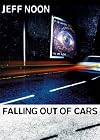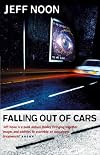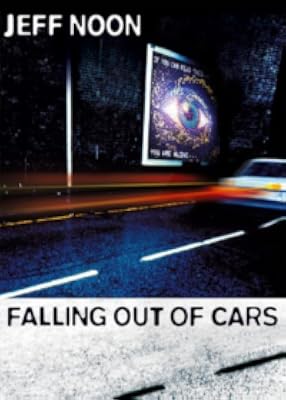
Falling Out of Cars
by Jeff Noon
On This Page
Description
Marlene Moore wasn't even sure why she accepted the job, except that it gave her the chance to just get in her car and drive. To escape, to keep moving, to maybe find a destination for herself. Now she's journeying around England, a land that turns stranger and more dreamlike, the further she travels. Slowly, day by day, Marlene is falling prey to a sickness, a disease that seems to change the world around her. And the job itself turns out to be far weirder, and more dangerous, than she ever show more imagined. psyche, falling off the edge of reality. -In a world overflowing with images, how can you tell who you really are?Marlene Moore wasn't even sure why she accepted the job, except that it gave her the chance to just get in her car and drive. To escape, to keep moving, to maybe find a destination for herself. Now she's journeying around England, a land that becomes stranger and more dreamlike, the further she travels. Slowly, day by day, Marlene is falling prey to a sickness - a disease that seems to change the world around her. And the job itself turns out to be far weirder, and more dangerous, than she ever imagined. show lessTags
Recommendations











Member Recommendations
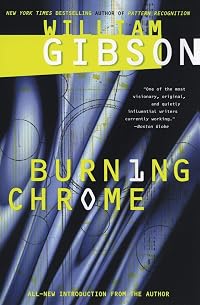
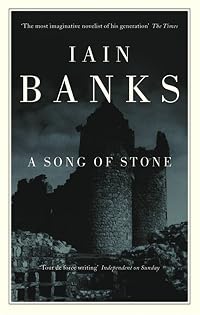
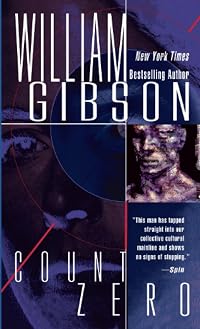
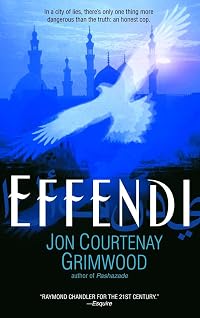
dtw42 Desperate road trip in a neurologically degenerating society.
Member Reviews
No-one can explain why the noise affects some things, some activities, more than others, just like some people suffer more than others. But the game of chess had been one of the first to lose all sense of its rules. Clocks, mirrors, chess . . .
The world has been swept by an epidemic of a strange disease, affecting almost everyone. It seems to act by disrupting the receipt of visual and auditory information, leaving the sufferer overwhelmed by 'noise', overloaded by a surfeit of incomprehensible visual data, unable to read signs, recognise faces or tell the time. Only their daily doses of Lucy (the drug Lucidity) enable most people to function at all in this strange new world where it can be fatal to look at your face in a mirror while show more suffering an attack.
The effects of the disease sound rather like a more extreme and long-lasting version of the visual disturbances of a migraine aura. In my case I find it hard to look at things, since everything I look at has rippled edges as if I was looking through flawed glass or water, while someone I know basically goes blind, with the whole of her field of view taken over by flashing turquoise zig-zags. But back to the book . . .
Fleeing from her everyday life after the death of her daughter, Maggie has taken a job for a man called Kingsley, driving round England and collecting the broken pieces of a mysterious mirror. The book is her diary of the road trip, trying to hold herself together as the disease affects her increasingly badly, while stealing the pieces of mirror from their crazed owners with the help of the travelling companions she has picked up en route. The pieces of the mirror are dangerous artifacts, and have a very bad effect on the people who look into them, but it never becomes clear exactly what the mirror's power is or how it is linked to the disease, if at all.
Overall I would rate this book as confusing but interesting - I could have done with more loose ends being tied up, but it's another find from the library book sale that was well worth the 30p I paid for it. show less
The world has been swept by an epidemic of a strange disease, affecting almost everyone. It seems to act by disrupting the receipt of visual and auditory information, leaving the sufferer overwhelmed by 'noise', overloaded by a surfeit of incomprehensible visual data, unable to read signs, recognise faces or tell the time. Only their daily doses of Lucy (the drug Lucidity) enable most people to function at all in this strange new world where it can be fatal to look at your face in a mirror while show more suffering an attack.
The effects of the disease sound rather like a more extreme and long-lasting version of the visual disturbances of a migraine aura. In my case I find it hard to look at things, since everything I look at has rippled edges as if I was looking through flawed glass or water, while someone I know basically goes blind, with the whole of her field of view taken over by flashing turquoise zig-zags. But back to the book . . .
Fleeing from her everyday life after the death of her daughter, Maggie has taken a job for a man called Kingsley, driving round England and collecting the broken pieces of a mysterious mirror. The book is her diary of the road trip, trying to hold herself together as the disease affects her increasingly badly, while stealing the pieces of mirror from their crazed owners with the help of the travelling companions she has picked up en route. The pieces of the mirror are dangerous artifacts, and have a very bad effect on the people who look into them, but it never becomes clear exactly what the mirror's power is or how it is linked to the disease, if at all.
Overall I would rate this book as confusing but interesting - I could have done with more loose ends being tied up, but it's another find from the library book sale that was well worth the 30p I paid for it. show less
Powerfully written; this contains almost hallucinogenic passages in the depiction of the protagonist Marlene's gradual succumbing to the ravages of "the sickness" - a disease that pollutes and corrupts people's ability to perceive and process information from their senses (particularly sight).
And yet, and yet ... as the other characters fall by the wayside, the plot trundles towards what we know can only be – what inevitably has to be – a vague open-ended conclusion. No resolution, no deus ex machina sudden cure: I know if we had been given one it would feel forced, like a cheat after the journey we've been on with Marlene, but still I always feel slightly less than gruntled when I get to the end of books that finish with a repeat show more and fade diminuendo rather than a grand crescendo. Maybe it's just me. show less
And yet, and yet ... as the other characters fall by the wayside, the plot trundles towards what we know can only be – what inevitably has to be – a vague open-ended conclusion. No resolution, no deus ex machina sudden cure: I know if we had been given one it would feel forced, like a cheat after the journey we've been on with Marlene, but still I always feel slightly less than gruntled when I get to the end of books that finish with a repeat show more and fade diminuendo rather than a grand crescendo. Maybe it's just me. show less
Noon continues his fascination with the mirror world in this poetic, disjointed vision of a near-future Britain shattered by an epidemic that damages perception. Closer to James Joyce than William Gibson, Noon's vision is filtered through the damaged Marlene, mourning her dead daughter and trying to maintain focus with a quest to recover the shards of the mirror whose breaking has broken the world. It rapidly becomes impossible to tell what is real and what is illusion; or even whether Marlene is real, a ghost, or a figment of the mirror world. Lyrical in places, but with scenes that are so darkly suggestive I found them hard to read (the suicide; Henry), this makes even less sense on completion than at the start. With so much noise show more obscuring the signal, I can't say I enjoyed this at all, although I admire the achievement. show less
Very enjoyable read, Noon at his weird engaging best, a road novel about loss, longing, memory, it moved along at a gently even pace, through the lives of a small group of people, on a alt day Britain where people suffer from a sickness, that's affecting most people, even those taking the drug to try and stay normal.
Brilliant, brilliant stuff.
Following up on "there's something wrong with the world-- it's something we almost recognise but it's also a bit like you've been inadvertantly dosed with controlled substances", Jeff Noon's delivered us something very special.
I beleive it's out of print and hard to find-- if you like it, or Lauren Beukes, or Neil Gaiman, and you want something a little more out there, a little more literary, a little more experimental, get this book.
I do hope that the good Mr. Noon comes back to us-- I was enjoying 217babel and his experiments in the Web as a platform for literary form... but he seems to be gone. If you read this, please keep writing.
Following up on "there's something wrong with the world-- it's something we almost recognise but it's also a bit like you've been inadvertantly dosed with controlled substances", Jeff Noon's delivered us something very special.
I beleive it's out of print and hard to find-- if you like it, or Lauren Beukes, or Neil Gaiman, and you want something a little more out there, a little more literary, a little more experimental, get this book.
I do hope that the good Mr. Noon comes back to us-- I was enjoying 217babel and his experiments in the Web as a platform for literary form... but he seems to be gone. If you read this, please keep writing.
I picked this up at the library because I am a big Jeff Noon fan, but 200 pages into the book and it still has its back to me. Essential information is being kept from the reader-- I don't know who the characters are or why they are doing what they are doing. All the wonderful world-building is missing. It is as if, in true immitative form, we can't see inside this book, just as the characters can't see themselves. A frustrating reading experience and somewhat depressing. I couldn't keep going.
I'm not sure what to make of it . . . In some ways I quite liked it, but overall it left me with an unsatisfied feeling. Yes, the style was highly disjointed, but I don't quite think that was a problem. There was some excellent imagery and moments of pure revulsion (one section I had to skip because it made me quite queasy!) and I think this is one where every reader will have a different interpretation.
All up, though, I wouldn't say it's the best book I've read.
All up, though, I wouldn't say it's the best book I've read.
Members
- Recently Added By
Author Information

23+ Works 6,522 Members
Some Editions
Common Knowledge
- Original publication date
- 2002-12
Classifications
Statistics
- Members
- 216
- Popularity
- 151,801
- Reviews
- 8
- Rating
- (3.52)
- Languages
- English, French
- Media
- Paper, Ebook
- ISBNs
- 4
- ASINs
- 1