On This Page
Description
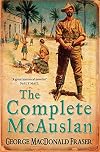
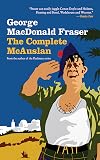
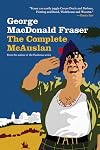
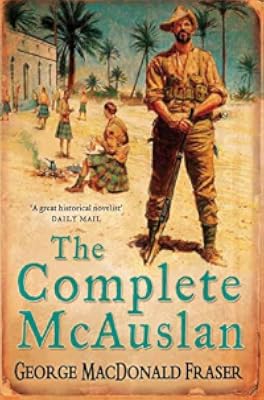
George MacDonald Fraser's hilarious stories of the most disastrous soldier in the British Army are collected together for the first time in one volume. Private McAuslan, J., the Dirtiest Soldier in the World (alias the Tartan Caliban, or the Highland Division's answer to the Pekin Man) first demonstrated his unfitness for service in The General Danced at Dawn. He continued his disorderly advance, losing, soiling or destroying his equipment, through the pages of McAuslan in the Rough. The show more final volume, The Sheikh and the Dustbin, pursues the career of the great incompetent as he shambles across North African and Scotland, swinging his right arm in time with his right leg and tripping over his untied laces. His admirers know him as court-martial defendant, ghost-catcher, star-crossed lover and golf caddie extraordinary. Whether map-reading his erratic way through the Sahara by night or confronting Arab rioters, McAuslan's talent for catastrophe is guaranteed. Now, the inimitable McAuslan stories are collected together in one glorious volume. show lessTags
Recommendations













Member Reviews
A stunningly flawless collection of short stories from the author of Flashman. Written with humour, intelligence and a maverick eye for character, the stories are a fictionalized reminiscence of the author's time serving as a junior officer in a regiment of Scottish Highlanders soon after the end of the Second World War. The Complete McAuslan brings together three previously published collections: 1970's The General Danced at Dawn, 1974's McAuslan in the Rough and 1988's The Sheikh and the Dustbin.
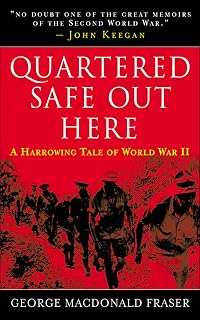
Told with an unsentimental wistfulness that borders on paradox, The Complete McAuslan is tonally similar to Fraser's peerless war memoir Quartered Safe Out Here. The members of Fraser's battalion are vividly brought to life, and I found I show more particularly enjoyed those stories which served as character studies of individual people (for example, 'Wee Wullie', 'Captain Errol' and 'The Sheikh and the Dustbin'). That said, there's huge variety in the stories – you'd never think service in a peacetime garrison could be so eventful – and even the sports stories (covering, amongst others, football in 'Play Up, Play Up, and Get Tore In' and golf in 'McAuslan in the Rough') are gripping. One of the most seemingly unassuming stories, 'General Knowledge, Private Information', sees the battalion competing in a general knowledge quiz, and even that's surprisingly tense.
The titular character, McAuslan, isn't the protagonist: I suppose they're called the McAuslan stories just because that's as good a name as any. Rather it is 'Dand MacNeill' who is the author in all but name. McAuslan is a recurring character, often referred to as 'the dirtiest soldier in the world'. Whilst a lot of the stories revolve around him, he's not the main focus and you don't have to be worried about a bunch of crude slapstick stories about some unkempt buffoon. That's not what these are. The McAuslan stories are a collection of gems, full of fully-realised characters, unsentimental pathos, strong storytelling and intelligent humour. Like Wee Wullie in the desert, I just wish they could have gone on for ever. show less
Told with an unsentimental wistfulness that borders on paradox, The Complete McAuslan is tonally similar to Fraser's peerless war memoir Quartered Safe Out Here. The members of Fraser's battalion are vividly brought to life, and I found I show more particularly enjoyed those stories which served as character studies of individual people (for example, 'Wee Wullie', 'Captain Errol' and 'The Sheikh and the Dustbin'). That said, there's huge variety in the stories – you'd never think service in a peacetime garrison could be so eventful – and even the sports stories (covering, amongst others, football in 'Play Up, Play Up, and Get Tore In' and golf in 'McAuslan in the Rough') are gripping. One of the most seemingly unassuming stories, 'General Knowledge, Private Information', sees the battalion competing in a general knowledge quiz, and even that's surprisingly tense.
The titular character, McAuslan, isn't the protagonist: I suppose they're called the McAuslan stories just because that's as good a name as any. Rather it is 'Dand MacNeill' who is the author in all but name. McAuslan is a recurring character, often referred to as 'the dirtiest soldier in the world'. Whilst a lot of the stories revolve around him, he's not the main focus and you don't have to be worried about a bunch of crude slapstick stories about some unkempt buffoon. That's not what these are. The McAuslan stories are a collection of gems, full of fully-realised characters, unsentimental pathos, strong storytelling and intelligent humour. Like Wee Wullie in the desert, I just wish they could have gone on for ever. show less
The author of this work is one of my favorites, having read most of his Flashman novels of historical fiction. I read his non-fiction work on the English/Scottish border wars, The Steel Bonnets, and found it virtually unreadable. While these works of fiction are a vast improvement over The Steel Bonnets, they suffer from some of the same drawbacks.
The books in the Flashman series are uproariously funny, in addition to being historically accurate (in most cases not involving the title character) and highly educational. Adding to the experience is the historically accurate language, references and customs. This accuracy, a strength in the case of Flashman, actually detracts from the reader’s enjoyment in this collection of stories. For show more you see, while I am perfectly capable of deciphering the King’s English and have some understanding of English culture, the same cannot be said for heavy Scottish dialect and unfamiliar Scottish terms and/or customs. Added to this is the military milieu in which these stories are set. Frequent, arcane military references are made which quite simply mean nothing to me.
Now, it is possible to simply skim over some of the language and military jargon and still enjoy the underlying humor of the stories, because like Flashman, there is real humor here, but only taking in 80% of the writing necessarily detracts from the experience. I would think that if you were a Scottish member of the military, you would find this collection absolutely first rate.
This is a collection of three previously published works, each having as its narrator a young Subaltern (First Lieutenant?) named McNeil, who has a filthy, bumbling idiot named McAuslan in his regiment. Each work is broken into several amusing short stories, in which McAuslan plays a minor, peripheral role. Moderately amusing, but in light of the drawbacks noted above, not up to Flashman standards. show less
The books in the Flashman series are uproariously funny, in addition to being historically accurate (in most cases not involving the title character) and highly educational. Adding to the experience is the historically accurate language, references and customs. This accuracy, a strength in the case of Flashman, actually detracts from the reader’s enjoyment in this collection of stories. For show more you see, while I am perfectly capable of deciphering the King’s English and have some understanding of English culture, the same cannot be said for heavy Scottish dialect and unfamiliar Scottish terms and/or customs. Added to this is the military milieu in which these stories are set. Frequent, arcane military references are made which quite simply mean nothing to me.
Now, it is possible to simply skim over some of the language and military jargon and still enjoy the underlying humor of the stories, because like Flashman, there is real humor here, but only taking in 80% of the writing necessarily detracts from the experience. I would think that if you were a Scottish member of the military, you would find this collection absolutely first rate.
This is a collection of three previously published works, each having as its narrator a young Subaltern (First Lieutenant?) named McNeil, who has a filthy, bumbling idiot named McAuslan in his regiment. Each work is broken into several amusing short stories, in which McAuslan plays a minor, peripheral role. Moderately amusing, but in light of the drawbacks noted above, not up to Flashman standards. show less
Quite by accident while searching for George Frazier McDonald books, I came across The Complete McAuslan. This is a collection of three complete novels packaged in a single book.
I downloaded it and started reading it immediately. I found it amusing, entertaining and punctuated with laugh-out-loud scenes. The title character, Private McAuslan, is the dirtiest soldier in the Scottish Highland regiment and in the entire army. Whenever the regiment has an important inspection by the higher command, McAulsan is given liberty so he won't be around for it. Unfortunately, McAuslan always shows up, out of uniform (i.e.without his kilt), drunk and escorted by several MP's.
Each novel consists of a series of short stories, all told by a young show more subaltern, MacNeill, who joins the regiment in North Africa at the conclusion of World War II. MacNeill is in charge of McAuslan's platoon. The stories are spread around North Africa and many are set in Scotland after the regiment is returned to its home turf.
I give this one the maximum number of stars allowed. I think it is one of McDonald's best and I've read most of his Flashman books. show less
I downloaded it and started reading it immediately. I found it amusing, entertaining and punctuated with laugh-out-loud scenes. The title character, Private McAuslan, is the dirtiest soldier in the Scottish Highland regiment and in the entire army. Whenever the regiment has an important inspection by the higher command, McAulsan is given liberty so he won't be around for it. Unfortunately, McAuslan always shows up, out of uniform (i.e.without his kilt), drunk and escorted by several MP's.
Each novel consists of a series of short stories, all told by a young show more subaltern, MacNeill, who joins the regiment in North Africa at the conclusion of World War II. MacNeill is in charge of McAuslan's platoon. The stories are spread around North Africa and many are set in Scotland after the regiment is returned to its home turf.
I give this one the maximum number of stars allowed. I think it is one of McDonald's best and I've read most of his Flashman books. show less
It is time that you hear "the sub-muckin', the whole cheese, the hail clanjamfry, the lot' about the Scottish Highland Regiment that served in Africa after World War II.
George MacDonald Fraser has written the stories of this regiment and its most infamous soldier, Private McAuslan, in three collections: "The General Danced at Dawn", "McAuslan in the Rough", and "The Sheikh and the Dustbin".
Through the narration by platoon commander Dand McNeil, McAuslan comes alive as the dirtiest soldier in the world, "wan o' nature's blunders; he cannae help bein' horrible. It's a gift."
Yet McAuslan is one of the most loveable creatures in all of literature. He may be grungy, filthy, clumsy, and disreputable, but he tries to do his best. Through his show more many misadventures, McAuslan marches into the heart of the reader, right leg and right arm swinging in unison, of course.
McAuslan, outcast that he is, experiences some infamous moments in his career: court martial defendant, ghost-catcher, star-crossed lover, golf caddie, expert map reader, and champion of the regimental quiz game (!). His tales, and the tales of his comrades-in-arms, are poignant at times, hilarious at others. These tales are so memorable because they are based on true stories.
The reader basks in all things Scottish in the stories. The language of the soldiers is written in Scottish brogue, although Fraser says in his introduction, "Incidentally, most of this volume is, I hope, written in English." Don't fret - a glossary is provided. (Reading the glossary alone causes some serious belly laughs.
If you read only one book this year, read this one. It's a volume that the reader will not soon forget. show less
George MacDonald Fraser has written the stories of this regiment and its most infamous soldier, Private McAuslan, in three collections: "The General Danced at Dawn", "McAuslan in the Rough", and "The Sheikh and the Dustbin".
Through the narration by platoon commander Dand McNeil, McAuslan comes alive as the dirtiest soldier in the world, "wan o' nature's blunders; he cannae help bein' horrible. It's a gift."
Yet McAuslan is one of the most loveable creatures in all of literature. He may be grungy, filthy, clumsy, and disreputable, but he tries to do his best. Through his show more many misadventures, McAuslan marches into the heart of the reader, right leg and right arm swinging in unison, of course.
McAuslan, outcast that he is, experiences some infamous moments in his career: court martial defendant, ghost-catcher, star-crossed lover, golf caddie, expert map reader, and champion of the regimental quiz game (!). His tales, and the tales of his comrades-in-arms, are poignant at times, hilarious at others. These tales are so memorable because they are based on true stories.
The reader basks in all things Scottish in the stories. The language of the soldiers is written in Scottish brogue, although Fraser says in his introduction, "Incidentally, most of this volume is, I hope, written in English." Don't fret - a glossary is provided. (Reading the glossary alone causes some serious belly laughs.
If you read only one book this year, read this one. It's a volume that the reader will not soon forget. show less
Having worked alongside quite a few different Scottish regiments, I can vouch for the honesty of this book.
What I cannot convey is the humour. It is one of the very few “laugh out loud” book that I have ever read.
What I cannot convey is the humour. It is one of the very few “laugh out loud” book that I have ever read.
Many tales of humorous and touching incidents in a Highland regiment
Ratings
Members
- Recently Added By
Lists

Allie's Favourite 150 Books
145 works; 3 members

SWORDS GUNS BATTLES
30 works; 3 members

My favourite books
96 works; 3 members
Author Information

50+ Works 19,770 Members
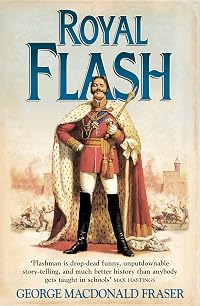
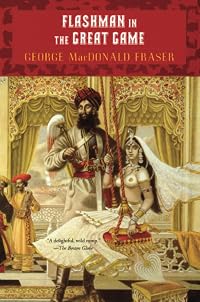
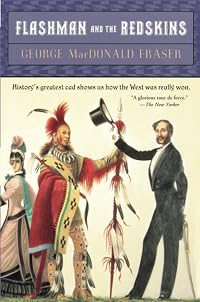
Author George MacDonald Fraser was born April 2, 1925 in Carlisle. He was refused entrance to the medical faculty of Glasgow University, so he joined the army in 1943. He served as an infantryman with the 17th Indian Division of the XIVth Army in Burma, a lance corporal and was commissioned in the Gordon Highlanders. After the war, he became a show more sports reporter with the Carlisle Journal; and during this time, he met and married Kathleen Hetherington, a reporter from another paper. He worked as a reporter and sub-editor on the Cumberland News and then moved to Glasgow, in 1953, where he worked at the Glasgow Herald as a features editor and deputy editor. Fraser's first novel was "Flashman" (1969), which was followed by nine sequels, so far, that deal with different venues of the 19th century ranging from Russia, Borneo and China to the Great Plains of the America West. Some of the other titles in the Flashman Papers are "Royal Flash" (1970), "Flashman in the Great Game" (1975), "Flashman and the Redskins" (1982), and "Flashman and the Angel of the Lord" (1994). Some of his non-fiction work includes "The Steel Bonnets" (1971), which is a factual study of the Anglo-Scottish border thieves in the seventeenth century, and "Quartered Safe Out Here" (1992). Fraser has also written a number of screenplays that include "The Three Musketeers" (1973), "Royal Flash" (1975), "Octopussy" (1983), and "Return of the Musketeers" (1989). He has also written a series of short stories about Private McAuslan whose titles include "The General Danced at Dawn" (1970), "McAuslan in the Rough" (1974), and "The Sheik and the Dustbin and other McAuslan Stories" (1988). He died of cancer on January 2, 2008. (Bowker Author Biography) show less
Series

Work Relationships
Common Knowledge
- Original publication date
- 2000
Classifications
Statistics
- Members
- 232
- Popularity
- 140,940
- Reviews
- 6
- Rating
- (4.29)
- Languages
- English
- Media
- Paper, Ebook
- ISBNs
- 6
- UPCs
- 1
- ASINs
- 4