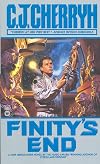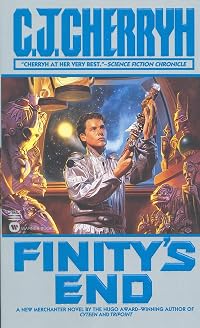
Finity's End
by C. J. Cherryh
Merchanter novels (3), The Company Wars (07), The Company Wars: Publishing order (7), Alliance-Union Universe (07 (Company Wars 07)), Alliance-Union Universe: Publication (31)
On This Page
Description
The Neiharts must deal with a resentful hostage who bears their name but knows nothing of their lives. Cherryh returns to the award-winning universe of her classic Cyteen and Downbelow Station, in this exploration of loyalty, family and transition.Tags
Recommendations


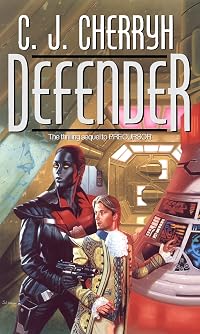




Member Recommendations
Aquila Aetherbound feels more like Cherryh's Alliance-Union books than anything else I've read, even while being very much its own universe and heading for different emotional payoffs.
Member Reviews
In Finity's End, Cherryh re-uses her formula of the main character trying to fit in on a Merchanter starship. Here, though, the narrative really succeeds in a way that Tripoint or Rimrunners did not, largely on the strength of some brilliantly-written characters. The main character, Fletcher, is a 17-year-old orphan who has had a rough life and the accompanying cynicism, but while he is certainly a bit rough around the edges, he is honestly trying to make something out of his life, and exhibits a surprising amount of maturity about his life situations. It was also a lot of fun to get in the head of JR, a young ship's officer who's given the task of trying to acclimate Fletcher--despite a lot of resistance from both Fletcher and the show more other crew members, he treats everyone with an earnestness and professionalism that you see so rarely in authority figures. As always, Cherryh blends the larger political picture with the smaller narrative of the story, and the balance is hit perfectly in this book. I really enjoyed this one; it may be my favorite of Cherryh's works that I've read so far. show less
Another fantastic outing from Cherryh, the current concluding volume to the Company Wars / Merchenter Alliance / Union series. Set some 50 years after Downbelow Station, some of the key personal from then are reaching the end of theit lives, and the young people who've grown up since then, can't quite comprehend a time of peace, or even what peace might mean. Merchenter captain James Robert Neilhert of Finity's End in some ways founder ofthe Alliance wants to start a process that will lead to peace, but while at Pell he has the leverae to collect one Fletcher Neilhert foster station child after his mother (originally from Finity) suicided. Fletcher doesn't want to jion Finity, after years of running riot he has finally managed to carve show more out a place for himself Downbelow with the peaceful Downers. However he has no choice and joins the ship, physically youngest onboard but having lived those years rather than spent them in jump he is far more mature than many of his 'elders' and a problem all around.
The story is told almost exclusively from Fletchers POV in Cherryh's customary strict third person, then only other character who gets a lookin is the junior captain JR just about actually older than Fletcher.
And (Ms Rowling take note) if you wnat to write about the angst of growing up, hormones, and a generally "Emo Teen" without irrating your audience the whole book long, THIS is how you do it. No-one understands Fletcher he feels all alone, trying to fit in, he is unprepared for the intensity of Spacer lives.
A stunning read, grappling the very hardest themes superbly. show less
The story is told almost exclusively from Fletchers POV in Cherryh's customary strict third person, then only other character who gets a lookin is the junior captain JR just about actually older than Fletcher.
And (Ms Rowling take note) if you wnat to write about the angst of growing up, hormones, and a generally "Emo Teen" without irrating your audience the whole book long, THIS is how you do it. No-one understands Fletcher he feels all alone, trying to fit in, he is unprepared for the intensity of Spacer lives.
A stunning read, grappling the very hardest themes superbly. show less
Five stars is a lot - but I award those when I have that need to keep reading the book no matter what is going on around me - and crave it when I am away from it...... and have that awful let down feeling when I'm done..... There was nothing so different about this Merchanter novel - it features an alienated and hurt young person having to find a way to be in a different world he didn't ask for..... but there was balance here between detail and action, more emotion and less violence than in some. Shipboard life, as seen through the eyes of Fletcher who has never been on a ship, despite belonging to one of the most illustrious merchant families, is brought completely to life in a way that feels all too human and all too possible (if one show more can just iron out that little detail of FTL). Fletcher comes on board at a critical time when this ship might just be able to forge ties around the Alliance merchants and the stations that will help consolidate the fragile peace. The legacy of a dying captain. I don't have anything earth-shattering to say beyond the fact that there was something gentler and very focussed about it. A sweetness in the character that was very welcome. ***** show less
The end of the Company Wars series negotiates its way, slowly, towards the end. The plot is focused on Fletcher, a young man left behind on Pell by the crew of Finity's End. Fletcher's experience of Downbelow and Pell Station makes him an outcast everywhere. It takes most of the book for Fletcher to come to terms with his experiences and tragedies and find his home, while the crew of Finity's End try to negotiate a way to peace. A little slow in places, illuminating in others.
Another real winner in the Alliance-Union series, and sadly the last.
This story is about the child of a famous Merchanter ship, Finity's End. Due to his mother's illness during pregnancy and the war, he (Fletcher), and his mother were left on Pell during the war. His mother, unable to adjust to station life, overdoses on jump drugs when he is 5. Once that happens he becomes the ward of an indifferent station administration who move him from foster home to foster home. He also becomes a social and behavioral problem as he grows. With no parents, home, love or guidance, he tries to fit in with rowdy youth gangs.
The story opens with him at 17, having changed his ways, found his niche and trying to build a life for himself. His only show more constant parental figures were the Downers in the tunnels of Pell when he was growing up. Forbidden by law from contact with them as all humans are, he had to sneak into the tunnels to be with them. 2 in particular parented him. This led him to want to work with the Downers, and straighten up and get into a rigorous academic program. He was on the planet when Finity's End again comes to Pell, and institutes another law suit to recover their lost child (now 17). They were fighting with Pell about financial responsibility for him, and whether it was safe for a child to be on a ship that was active in the war. Political deals are made for lofty goals, Finity's End has changed its status regarding the war, and with no consultation with Fletcher he is shipped off to Finity's End. A year short of being legally an adult, he has no legal say about how his life is being decided.
Of course he is not happy to have no say in his life yet again, and being forced to board a ship with total strangers. Several important people on the ship want him returned for their own reasons, but many others don't. He is after all by birth and upbringing not a spacer, and is ignorant of the ways of a ship.
The story focuses on how he must try to find a way to live, when he is yet again manipulated by outsiders. How he must learn the ways of the ship to survive and not endanger others. It is a searing look at the choices a youngster must make when he has no parents, no home, and nothing good to pattern his actions on. He has to decide who he will be - stationer or spacer, and loner or family member. In doing so he must learn to trust and let go of his past hurts, anger and bitterness.
Wonderful writing, excellent story, and great, believable characters. As always with these stories, Cherryh has layers and layers of story and meaning. From the personal story of Fletcher fitting in, and JR his Junior Caption on ship, who must integrate him into a less than thrilled crew of Juniors, to the political interests of the various entities in their search for peace, economic prosperity, and self-determination, the story looks at what the few must give up for the benefit of the many, and how choices are made and the reverberations to others.
The story also explores the impact of the past on present choices, and how those is power from personal (relatives) to political (stationmaster) often will try to live their idea of the perfect life through others. How it is hard to give up your pain and anger and make positive changes when you have been victimized from childhood on.
This book also brings the Downers back into the mix.
I really liked this book, but having re-read the whole series straight through, it seems to be a central theme of Cherryh's. How a young person out of sync with the world around him/her must make choices when presented with an opportunity, to grow past their pains and hurts, and anger. It also seems that finally the people who force the choices, always seem to be in the right, and the best and true option for the young person. Just once, I want to see one of these young characters, learn and grow, and then say, thanks but no thanks and leave to live their own lives. But that is a minor quibble. show less
This story is about the child of a famous Merchanter ship, Finity's End. Due to his mother's illness during pregnancy and the war, he (Fletcher), and his mother were left on Pell during the war. His mother, unable to adjust to station life, overdoses on jump drugs when he is 5. Once that happens he becomes the ward of an indifferent station administration who move him from foster home to foster home. He also becomes a social and behavioral problem as he grows. With no parents, home, love or guidance, he tries to fit in with rowdy youth gangs.
The story opens with him at 17, having changed his ways, found his niche and trying to build a life for himself. His only show more constant parental figures were the Downers in the tunnels of Pell when he was growing up. Forbidden by law from contact with them as all humans are, he had to sneak into the tunnels to be with them. 2 in particular parented him. This led him to want to work with the Downers, and straighten up and get into a rigorous academic program. He was on the planet when Finity's End again comes to Pell, and institutes another law suit to recover their lost child (now 17). They were fighting with Pell about financial responsibility for him, and whether it was safe for a child to be on a ship that was active in the war. Political deals are made for lofty goals, Finity's End has changed its status regarding the war, and with no consultation with Fletcher he is shipped off to Finity's End. A year short of being legally an adult, he has no legal say about how his life is being decided.
Of course he is not happy to have no say in his life yet again, and being forced to board a ship with total strangers. Several important people on the ship want him returned for their own reasons, but many others don't. He is after all by birth and upbringing not a spacer, and is ignorant of the ways of a ship.
The story focuses on how he must try to find a way to live, when he is yet again manipulated by outsiders. How he must learn the ways of the ship to survive and not endanger others. It is a searing look at the choices a youngster must make when he has no parents, no home, and nothing good to pattern his actions on. He has to decide who he will be - stationer or spacer, and loner or family member. In doing so he must learn to trust and let go of his past hurts, anger and bitterness.
Wonderful writing, excellent story, and great, believable characters. As always with these stories, Cherryh has layers and layers of story and meaning. From the personal story of Fletcher fitting in, and JR his Junior Caption on ship, who must integrate him into a less than thrilled crew of Juniors, to the political interests of the various entities in their search for peace, economic prosperity, and self-determination, the story looks at what the few must give up for the benefit of the many, and how choices are made and the reverberations to others.
The story also explores the impact of the past on present choices, and how those is power from personal (relatives) to political (stationmaster) often will try to live their idea of the perfect life through others. How it is hard to give up your pain and anger and make positive changes when you have been victimized from childhood on.
This book also brings the Downers back into the mix.
I really liked this book, but having re-read the whole series straight through, it seems to be a central theme of Cherryh's. How a young person out of sync with the world around him/her must make choices when presented with an opportunity, to grow past their pains and hurts, and anger. It also seems that finally the people who force the choices, always seem to be in the right, and the best and true option for the young person. Just once, I want to see one of these young characters, learn and grow, and then say, thanks but no thanks and leave to live their own lives. But that is a minor quibble. show less
As usual with Cherryh she takes on difficult themes without seemingly any effort - war, peace, alienation in a generation not knowing anything else than war and the fierce shield of honour war-ridden people raise around themselves.
It's also a story about growing up, about getting to grips with identity, and about trust.
At the same time it's a story about international politics, and about honour and legacy on a whole other level - trust Cherryh to write multi-layered tales...
Well crafted and believable characters and environments, the psychology utterly believable, at least to a layman.
Highly recommended. Advisable to read 'Downbelow station' first, though.
In a way what's so compelling about these Union-Alliance stories are that, yes, show more it's very possible we end up that way, somewhere along the line. There's very little glorification in what humankind is or can do; everyone can be both bad and good, good intentions wreaking havoc in their ignorance. show less
It's also a story about growing up, about getting to grips with identity, and about trust.
At the same time it's a story about international politics, and about honour and legacy on a whole other level - trust Cherryh to write multi-layered tales...
Well crafted and believable characters and environments, the psychology utterly believable, at least to a layman.
Highly recommended. Advisable to read 'Downbelow station' first, though.
In a way what's so compelling about these Union-Alliance stories are that, yes, show more it's very possible we end up that way, somewhere along the line. There's very little glorification in what humankind is or can do; everyone can be both bad and good, good intentions wreaking havoc in their ignorance. show less
An excellent story that succeeds both as an up-close coming of age story (Fletcher, Jeremy, and JR) as well as a a larger science fiction tale in the Union-Alliance universe. It ties in beautifully with Downbelow Station. Engaging, real characters and a plot complicated enough to make me slow down and read more carefully.
Members
- Recently Added By
Lists

Best Science Fiction Novels
816 works; 430 members

Favorite Science Fiction by Women Authors
741 works; 203 members

Books Read in 2016
4,666 works; 199 members

Books Read in 2023
5,638 works; 147 members
Author Information

262+ Works 75,093 Members
A multiple award-winning author of more than thirty novels, C. J. Cherryh received her B.A. in Latin from the University of Oklahoma, and then went on to earn a M.A. in Classics from Johns Hopkins University. Cherryh's novels, including Tripoint, Cyteen, and The Pride of Chanur, are famous for their knife-edge suspense and complex, realistic show more characters. Cherryh won the John W. Campbell Award for Best New Writer in 1977. She was also awarded the Hugo Award for her short story Cassandra in 1979, and the novels Downbelow Station in 1982 and Cyteen in 1989. (Bowker Author Biography) show less
Some Editions
Awards and Honors
Awards
Series


Work Relationships
Is contained in
Common Knowledge
- Original publication date
- 1997-08
- People/Characters
- Fletcher Neihart; Melody; Patch; Satin; Captain James Robert Neihart; Madison Neihart (show all 10); Elene Quen; JR Neihart; Jeremy Neihart; Chad Neihart
- Important places
- Pell; Pell Station; Mariner Station; Esperance Station; Finity
- First words
- A system traffic monitor showed a blip where none had existed in this solar system.
- Last words
- (Click to show. Warning: May contain spoilers.)"I'll hold you to that," Fletcher said.
Classifications
Statistics
- Members
- 982
- Popularity
- 26,964
- Reviews
- 17
- Rating
- (4.02)
- Languages
- English, French, German
- Media
- Paper
- ISBNs
- 7
- ASINs
- 6