On This Page
Description
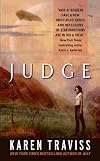
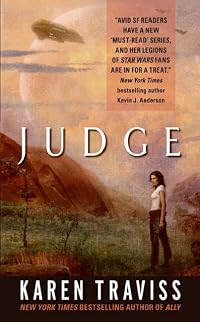
Carrying a parasite in her blood that makes her virtually immortal, former police officer Shan Franland, along with her two lifemates, joins the Eqbas as they arrive on Earth to punish the humans who nearly caused the destruction of their race.Tags
Recommendations




Member Reviews
As the release date to this came closer and closer I alternated between kidlike excitement and all out dread. This series is the best sci-fi series I have ever read - and I read a lot. Even after getting the book I carried it with me for a few days before starting it - trying to prolong the final installment as long as possible.
So, I've read it and it was almost everything I had hoped it would be. As Shan Frankland and the aliens (although I've never thought of them as such) land on Earth to meet out justice for Earth's attack on another planet along with their disregard for the enviornment I couldn't help wanting more details of the process and political fall out of this program. The book wasn't so much about Earth and I shouldn't have show more been surprised. Earth has never been at the center of this series.
As I switched gears back into what Traviss has wrought - I fell back into the comfortable and enjoyable interaction of different species. There was growth and maturity and even regret in the key characters as the book progressed. The enduring relationships of Shan Frankland.
Aras' decision at the end depressed the hell out of me, but in reviewing the series as a whole I shouldn't have been surprised in the least.
Thinking that it would momentous to travel to another solar system - I'm left with the feeling that I too would find it unbearable to be separated from Earth and the culture I know (the devil I know?) for the rest of my lifetime.
This series has made me think of my own enviornment, of looking more objectively at Earth and my neighbors. But mostly, it's been a great ride and I still hold out hope for Karen Traviss to continue Shan Frankland (and Ade's) story show less
So, I've read it and it was almost everything I had hoped it would be. As Shan Frankland and the aliens (although I've never thought of them as such) land on Earth to meet out justice for Earth's attack on another planet along with their disregard for the enviornment I couldn't help wanting more details of the process and political fall out of this program. The book wasn't so much about Earth and I shouldn't have show more been surprised. Earth has never been at the center of this series.
As I switched gears back into what Traviss has wrought - I fell back into the comfortable and enjoyable interaction of different species. There was growth and maturity and even regret in the key characters as the book progressed. The enduring relationships of Shan Frankland.
Aras' decision at the end depressed the hell out of me, but in reviewing the series as a whole I shouldn't have been surprised in the least.
Thinking that it would momentous to travel to another solar system - I'm left with the feeling that I too would find it unbearable to be separated from Earth and the culture I know (the devil I know?) for the rest of my lifetime.
This series has made me think of my own enviornment, of looking more objectively at Earth and my neighbors. But mostly, it's been a great ride and I still hold out hope for Karen Traviss to continue Shan Frankland (and Ade's) story show less
If you’ve been following my reading habits, you’ll know that I adore Karen Traviss. I ran into the second book of this series through an Early Reader program and have been hooked ever since, even to the point of contacting her to say how thrilled I was about a new series in sociological science fiction, my first ever time contacting an author who I didn’t already know.
Because of the above, I am a little saddened by Judge. While I do not need to read series in order like some, obviously from the above, one of the things I try to look for is whether the book can be used as an entry point into the author or the series. Crossing the Line left me charged up and racing out to get a copy of City of Pearl, the first in the Wess’har show more tales. The same cannot be said about this latest novel. The story in Judge is a winding down of the series. It ties up loose ends that I didn’t even remember as loose and left me with the sense that, whether Karen plans to write in this universe again or not, she’s largely done with this set of characters.
I’ll miss them. Shan and her unlikely family of Aras and Ade, the Wess’har who have grown up under their watchful eyes, Eddie the human reporter with a conscience, and even Rayat and Lindsay, the villains of the bunch, were fully fleshed characters who linger in the mind long after the most recent book is set back on the shelf. I’m not much of a re-reader– I have so many books to read there just isn’t time–but my youngest teen is also enamored by the series, and is going into his second or third read through at this point.
I’m clearly having difficulty divorcing Judge from the rest of the series, and this is why I say it cannot be read first or in isolation. In some ways, the story came across as snippets of closure more than a full and complete tale of its own. While quite a hefty text, I sometimes felt the story skimmed a bit as it jumped around, not enough to make me regret the read, but enough to wonder why this hadn’t been addressed more fully as two or even three complete novels. But then, better to offer closure than just drop off the map, as happens sometimes when a publisher decides a series has reached its logical conclusion. Or maybe Karen’s just ready to try her hand at something brand new. Whatever it is, I’ll be right there in line to read it. I’ve read almost all of her Star Wars books as well, a universe that held little interest for me and her books signal my only incursions.
So, my conclusions are:
1) Karen Traviss is a talented author capable of creating characters that continue to exist outside of the page and worlds that combine fascinating cultures with philosophical exploration in a way that aids the story and never stands out as the author preaching. Though I have a good guess as to where she stands on these issues, that guess is based on how adamant the characters were and who she let win in the story, so could be completely wrong.
2) Karen can maintain a complex epic spanning multiple cultures and even worlds without losing coherency or passion.
3) If you haven’t checked her out, you really should. If complex sociological SF isn’t your thing, go see what she did with those Star Wars folks. There’s even inside jokes that carry from one novel to the next. show less
Because of the above, I am a little saddened by Judge. While I do not need to read series in order like some, obviously from the above, one of the things I try to look for is whether the book can be used as an entry point into the author or the series. Crossing the Line left me charged up and racing out to get a copy of City of Pearl, the first in the Wess’har show more tales. The same cannot be said about this latest novel. The story in Judge is a winding down of the series. It ties up loose ends that I didn’t even remember as loose and left me with the sense that, whether Karen plans to write in this universe again or not, she’s largely done with this set of characters.
I’ll miss them. Shan and her unlikely family of Aras and Ade, the Wess’har who have grown up under their watchful eyes, Eddie the human reporter with a conscience, and even Rayat and Lindsay, the villains of the bunch, were fully fleshed characters who linger in the mind long after the most recent book is set back on the shelf. I’m not much of a re-reader– I have so many books to read there just isn’t time–but my youngest teen is also enamored by the series, and is going into his second or third read through at this point.
I’m clearly having difficulty divorcing Judge from the rest of the series, and this is why I say it cannot be read first or in isolation. In some ways, the story came across as snippets of closure more than a full and complete tale of its own. While quite a hefty text, I sometimes felt the story skimmed a bit as it jumped around, not enough to make me regret the read, but enough to wonder why this hadn’t been addressed more fully as two or even three complete novels. But then, better to offer closure than just drop off the map, as happens sometimes when a publisher decides a series has reached its logical conclusion. Or maybe Karen’s just ready to try her hand at something brand new. Whatever it is, I’ll be right there in line to read it. I’ve read almost all of her Star Wars books as well, a universe that held little interest for me and her books signal my only incursions.
So, my conclusions are:
1) Karen Traviss is a talented author capable of creating characters that continue to exist outside of the page and worlds that combine fascinating cultures with philosophical exploration in a way that aids the story and never stands out as the author preaching. Though I have a good guess as to where she stands on these issues, that guess is based on how adamant the characters were and who she let win in the story, so could be completely wrong.
2) Karen can maintain a complex epic spanning multiple cultures and even worlds without losing coherency or passion.
3) If you haven’t checked her out, you really should. If complex sociological SF isn’t your thing, go see what she did with those Star Wars folks. There’s even inside jokes that carry from one novel to the next. show less
A fitting end to a very meaty science fiction series. If you like science fiction that deals with ideas--and truly alien aliens--I highly recommend this series. Very real characters grapple with some truly difficult ethical questions.
This is the conclusion of Traviss' Wess'har series. Unfortunately, the series probably should have ended with The World Before, or at the latest, with Matriarch. The last three books in this series (Matriarch, Ally, Judge) felt as though they'd been written to outline, or to fulfill a book contract, rather than to tell the stories of the fascinating main characters and the endlessly inventive worlds explored in the first three books. The plots wandered; the same three or four situations/plotlines (alien parasite, ecological revisionism, and romance) drag through these three books without resolution. Each of the major plot points (deftly explored in the first three novels, with plenty of action) just sort of . . . petered out. The show more denoument is out of character and not particularly believable. show less
This is not a stand alone book, you have to have read the previous books for this one to make sense.
And the previous ones have been excellent, full of high drama and real moral quandries. I loved the character Shan Frankland, a copper who used to kick down doors and is now making hard decisions for entire alien populations.
The other books all seemed to be building to a climax on earth, where Shan will have to test her integrity to see if she can be as relentlessly fair and implacable with her home planet as she was with distant alien ones.
STOP READING NOW IF YOU DON'T WANT SOME SPOILERS..
A FEW PLOT POINTS REVEALED.
However we never really seem to get to earth. They arrive very quickly, but their interactions with citizens of earth show more and the reactions of the planet are minimal, more alluded to than explored. I wanted more interaction and results with the FEU (the Federal European Union, who had played a heavy hand and were cast as the enemy) and more reactions of humans as they learn that the popluation has to decrease to 10% - ie 90% of the planet must either agree to stop reproducing (the more gentle long term solution) or simply die (which the Eqbas, the aliens, had the technology and nerve to do)
But this rich potential story was not told, except in side paragraphs. Instead Shan Frankland has a few adventures and then is unexpectedly hustled back to the Wess'har and then it's just more of the same. I just felt it missed the point, I wanted more time on earth. It didn't feel like a conclusion, it felt like a filler book, with another book (the climax b/n the Wess'har and the Eqbas, the two related aliens) to come.
But I don't know if I'll read that book... I'm really disappointed.
However, the first 5 books were so excellent and engaging, that I would still recommend reading them. They had great ideas, descriptions and quandries and were genuinely thoughtful. show less
And the previous ones have been excellent, full of high drama and real moral quandries. I loved the character Shan Frankland, a copper who used to kick down doors and is now making hard decisions for entire alien populations.
The other books all seemed to be building to a climax on earth, where Shan will have to test her integrity to see if she can be as relentlessly fair and implacable with her home planet as she was with distant alien ones.
STOP READING NOW IF YOU DON'T WANT SOME SPOILERS..
A FEW PLOT POINTS REVEALED.
However we never really seem to get to earth. They arrive very quickly, but their interactions with citizens of earth show more and the reactions of the planet are minimal, more alluded to than explored. I wanted more interaction and results with the FEU (the Federal European Union, who had played a heavy hand and were cast as the enemy) and more reactions of humans as they learn that the popluation has to decrease to 10% - ie 90% of the planet must either agree to stop reproducing (the more gentle long term solution) or simply die (which the Eqbas, the aliens, had the technology and nerve to do)
But this rich potential story was not told, except in side paragraphs. Instead Shan Frankland has a few adventures and then is unexpectedly hustled back to the Wess'har and then it's just more of the same. I just felt it missed the point, I wanted more time on earth. It didn't feel like a conclusion, it felt like a filler book, with another book (the climax b/n the Wess'har and the Eqbas, the two related aliens) to come.
But I don't know if I'll read that book... I'm really disappointed.
However, the first 5 books were so excellent and engaging, that I would still recommend reading them. They had great ideas, descriptions and quandries and were genuinely thoughtful. show less
A fitting end to a very meaty science fiction series. If you like science fiction that deals with ideas--and truly alien aliens--I highly recommend this series. Very real characters grapple with some truly difficult ethical questions.
I understand the mixed reviews for this last book. A couple of the books in the series were indeed reflective of the subtitle, Wess'har Wars, because they were filled with action-packed moments. This last novel invests in the emotions of the characters rather than the plot.
Members
- Recently Added By
Author Information

67+ Works 12,061 Members
Karen Traviss is a science fiction author and full-time novelist from Wiltshire, England. Traviss worked as both a journalist and defence correspondent before becoming a writer of fiction. She also served in both the Territorial Army and the Royal Naval Auxiliary Service. Traviss is a graduate of the Clarion Science Fiction and Fantasy workshop. show more Her science fiction novels have focused on a Star Wars series and also a Gears of War series of books. Her title Halo: Glasslands made Publisher's Weekly Best Seller List for 2011. (Bowker Author Biography) show less
Some Editions
Awards and Honors
Awards
Series

Common Knowledge
- Original publication date
- 2008-04
- Dedication
- For my father
- First words
- "Shitty death, PM," said the driver.
- Last words
- (Click to show. Warning: May contain spoilers.)No, the name really didn't matter at all.
- Publisher's editor
- Gill, Diana
Classifications
Statistics
- Members
- 211
- Popularity
- 154,022
- Reviews
- 10
- Rating
- (3.53)
- Languages
- English
- Media
- Paper, Ebook
- ISBNs
- 6
- ASINs
- 2