On This Page
Description
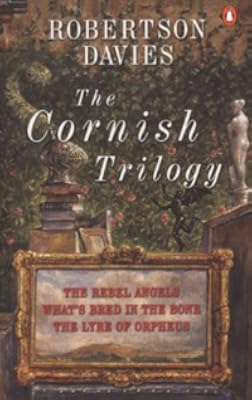
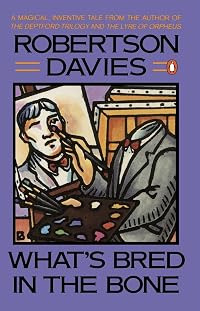
Available in one volume, all three books of the darkly witty Cornish Trilogy: The Rebel Angels, What's Bred in the Bone, and The Lyre of Orpheus. The fate of the Cornish family unfolds in this trio of novels by acclaimed Canadian writer Robertson Davies... The Rebel Angels. Set in motion by the death of eccentric art patron and collector Francis Cornish, a goodhearted priest and scholar, a professor with a passion for the darker side of medieval psychology, a defrocked monk, and a rich young show more businessman who inherits some troublesome paintings are all helplessly beguiled by the same coed. What's Bred in the Bone. This worthy follow-up goes back to Cornish's humble beginnings in a spellbinding tale of artistic triumph and heroic deceit. It is a tale told in stylish, elegant prose, endowed with lavish portions of Davies' wit and wisdom. The Lyre of Orpheus. The Cornish Foundation is thriving under the directorship of Arthur Cornish when Arthur and his beguiling wife decide to undertake a project worthy of Francis Cornish. Hulda Schnakenburg is commissioned to complete E.T.A. Hoffmann's unfinished opera Arthur of Britain, or The Magnanimous Cuckold; and the scholarly priest Simon Darcourt finds himself charged with writing the libretto. "Invention has always been Robertson Davies's strength. He tells terrific stories that twist around and double back on themselves in surprising ways and, characteristically, combines them with intriguing, arcane information."- The New York Times "Davies' fiction is animated by his scorn for the ironclad systems that claim to explain the whole of life. Messy, magical, high-spirited life bubbles up between the cracks."- South Florida Sun-Sentinel show lessTags
Recommendations













Member Reviews
It's been years since I've read anything by Robertson Davies, and the quality of his writing just drew me into a story I might otherwise not have cared much about. The Cornish Trilogy contains three novels about academics who study the arts -- philosophy, mythology etc. They are brought together when a colleague/friend, Francis Cornish, makes them co-executors of his will, under the general supervision of his banker nephew. What follows is an examination of loyalty, integrity, mysticism and the bonds of family and friendship. Excellent stuff.
The Cornish Trilogy follows the life and legacy of noted art connoisseur (and former artist) Francis Cornish. It touches on academia, art, war, music, the history of Canada, and the gap between what we think we know about people and what we actually know.
In the first volume, Francis is dead, and his executors are attempting to sort through his massive collection of paintings, sculpture and manuscripts. Two of his executors are also professors at a University of Toronto college, so the book follows their academic life as well, including brilliant Rabelaisian scholar Maria and dissolute monk Parlabane. In the second volume, we backtrack and follow Francis's life from start to finish, with guidance and commentary from a daimon and a show more guardian angel who have been watching Francis's life unfold (and shaping it, too, in the case of the daimon). We are also privy to many interesting aspects of Francis's life that will remain hidden a little longer from the characters we met in the first book. In the third volume, one of Francis's executors is writing a biography of Francis and inching closer to the truths we discovered in the second volume. The charitable foundation established with Francis's estate is also putting on an opera about King Arthur with some odd real-life parallels.
This was an excellent trilogy to spend a large chunk of time with. I liked the observations on university life in the first book, the paralleling of Francis's life with the history of Canada in the 20th century in the second book, and the behind-the-scenes view of the opera in the third book. Davies experiments with different styles and narrative figures over the course of the trilogy, allowing each installment to distinguish itself but still fit in to the larger narrative. The books are also studded with excellent turns of phrase, and the different topics covered in each book may have you running to do some more reading on them (e.g. the Monuments Men's work, based on the second book, or Arthurian legends, from the third book).
If I have any quibbles, one would be that at first I had difficulty with the voice of Maria in the first book, because Maria is a young woman and Davies is neither of those things, and the voice didn't sound quite right. I also found that the culminating incident in the first book was described in rather too much detail for my liking. "Sordid" would be a good word for it. Fortunately, the other two books don't contain such incidents.
This trilogy makes a good project for people who like Canadian literature and want to dust off an older author to read. It would also appeal to opera fans, perpetual students and art buffs. show less
In the first volume, Francis is dead, and his executors are attempting to sort through his massive collection of paintings, sculpture and manuscripts. Two of his executors are also professors at a University of Toronto college, so the book follows their academic life as well, including brilliant Rabelaisian scholar Maria and dissolute monk Parlabane. In the second volume, we backtrack and follow Francis's life from start to finish, with guidance and commentary from a daimon and a show more guardian angel who have been watching Francis's life unfold (and shaping it, too, in the case of the daimon). We are also privy to many interesting aspects of Francis's life that will remain hidden a little longer from the characters we met in the first book. In the third volume, one of Francis's executors is writing a biography of Francis and inching closer to the truths we discovered in the second volume. The charitable foundation established with Francis's estate is also putting on an opera about King Arthur with some odd real-life parallels.
This was an excellent trilogy to spend a large chunk of time with. I liked the observations on university life in the first book, the paralleling of Francis's life with the history of Canada in the 20th century in the second book, and the behind-the-scenes view of the opera in the third book. Davies experiments with different styles and narrative figures over the course of the trilogy, allowing each installment to distinguish itself but still fit in to the larger narrative. The books are also studded with excellent turns of phrase, and the different topics covered in each book may have you running to do some more reading on them (e.g. the Monuments Men's work, based on the second book, or Arthurian legends, from the third book).
If I have any quibbles, one would be that at first I had difficulty with the voice of Maria in the first book, because Maria is a young woman and Davies is neither of those things, and the voice didn't sound quite right. I also found that the culminating incident in the first book was described in rather too much detail for my liking. "Sordid" would be a good word for it. Fortunately, the other two books don't contain such incidents.
This trilogy makes a good project for people who like Canadian literature and want to dust off an older author to read. It would also appeal to opera fans, perpetual students and art buffs. show less
Has nobody reviewed this yet or is it just so good that no words suffice? This is one of the very few books I've read that I would unhesitatingly recommend to other readers. It is so very funny in places and has an almost Inkheart ability to draw you into some scenes. I know the old boy can go off on one occasionally, Paracelsus for instance, but he has the marvellous ability of a know it all writer to go from one bit of showoffiness to another in a most charming and literate way.
It is such a shame that Davies is not up there with the more popular writers and it would be great to learn if his reputation is greater in Canada than it appears to be in the UK.
It is such a shame that Davies is not up there with the more popular writers and it would be great to learn if his reputation is greater in Canada than it appears to be in the UK.
The Rebel Angels
Robertson Davies’ The Rebel Angels is an engaging and energetic novel with a vigorous sense of humor. The novel reads quickly and never feels weighed down by ideas or seriousness. This is deceptive.
Davies gives us a novel populated by Medieval and Renaissance scholars. Their intellectual landscape is thus not unnaturally populated by Paracelsus and Rabelais, two constant figures in the dialectic of the novel. Of the two, Rabelais seems the most significant. He is a figure frequently claimed by both sides of the numerous arguments in the novel. He provides a lens through which we see into the characters a bit more deeply than they might hope. Parlabane and McVarish make him a model of vulgarity and misogyny, or perhaps show more more accurately, misanthropy. To Hollier, he represents an object for his own academic ambition. For Maria and Darcourt—and Davies—he is a model of the best sort of scholar, as we hear from Maria:
It may be wrong to include Darcourt here—as a priest scholar, his greater reference is St. Augustine:
In Maria’s translation:
This erudite amusement is a hallmark of everything I have yet read by Davies, and it is tempting to think that the best part of what Davies gives us in this novel is Davies, himself. Davies is more wise than a mere intellectual, and more alive than a modernist. He brings with him the Middle Ages and the Renaissance, and with these life fuller than which we are accustomed today.
What we get from Davies is not a hair shirted historicism, but a sense of wholeness for a consciousness which is fermented in the broadness of human experience. Maria says of Hollier that he studies the Middle Ages because they are truly middle—a vantage from which he can look backward to antiquity, and forward to our post-Renaissance present. This dynamic of looking backward and forward, contrasting each with the other, is at the very heart of The Rebel Angels, a book which makes attractive Paracelsus’ “second paradise.”
What's Bred In The Bone
to follow...
The Lyre Of Orpheus
to follow... show less
Robertson Davies’ The Rebel Angels is an engaging and energetic novel with a vigorous sense of humor. The novel reads quickly and never feels weighed down by ideas or seriousness. This is deceptive.
Davies gives us a novel populated by Medieval and Renaissance scholars. Their intellectual landscape is thus not unnaturally populated by Paracelsus and Rabelais, two constant figures in the dialectic of the novel. Of the two, Rabelais seems the most significant. He is a figure frequently claimed by both sides of the numerous arguments in the novel. He provides a lens through which we see into the characters a bit more deeply than they might hope. Parlabane and McVarish make him a model of vulgarity and misogyny, or perhaps show more more accurately, misanthropy. To Hollier, he represents an object for his own academic ambition. For Maria and Darcourt—and Davies—he is a model of the best sort of scholar, as we hear from Maria:
Rabelais was gloriously learned because learning amused him, and so far as I am concerned that is learning’s best justification. Not the only one, but the best.
It may be wrong to include Darcourt here—as a priest scholar, his greater reference is St. Augustine:
Conloqui et conridere et vicissim benevole obsequi, simul leger libros dulciloquos, simul nugari et simul honestari.
In Maria’s translation:
Conversations and jokes together, mutual rendering of good services, the reading together of sweetly phrased books, the sharing of nonsense and mutual attentions.
This erudite amusement is a hallmark of everything I have yet read by Davies, and it is tempting to think that the best part of what Davies gives us in this novel is Davies, himself. Davies is more wise than a mere intellectual, and more alive than a modernist. He brings with him the Middle Ages and the Renaissance, and with these life fuller than which we are accustomed today.
What we get from Davies is not a hair shirted historicism, but a sense of wholeness for a consciousness which is fermented in the broadness of human experience. Maria says of Hollier that he studies the Middle Ages because they are truly middle—a vantage from which he can look backward to antiquity, and forward to our post-Renaissance present. This dynamic of looking backward and forward, contrasting each with the other, is at the very heart of The Rebel Angels, a book which makes attractive Paracelsus’ “second paradise.”
The striving for wisdom is the second paradise of the world.
What's Bred In The Bone
to follow...
The Lyre Of Orpheus
to follow... show less
Above all, Robertson Davies is a story teller. Even at his most scholarly (and he can be scholarly), his vividly drawn characters and wizardly plotting propel his narrative forward and delight the reader. While his subjects can be serious, he writes with verve and a wonderful sense of humor.
The three books in this trilogy are linked by the characters, particularly by Francis Cornish (who is dead for the entire first and third novels), as well as thematically. They focus on art in many of its forms (literature, painting and drawing, and music and theater), explore myth and the mystical, delve into psychology, theology, and history, educate the reader about subjects as diverse as gypsy techniques for restoring violins and art restorers' show more techniques for matching older paints, play with ideas about what is real and what is fake, treat readers to the conversations and thoughts of daimons and souls in limbo, and poke fun at the conventional and the respectable. Davies achieves the admirable goal of making the reader think and laugh at the same time, and become fond of the characters -- the major ones and the dozens of minor ones -- and their foibles.
I am going to briefly describe each of the novels, with the caveat that each could be discussed at infinite depth.
The Rebel Angels
The first novel introduces most of the major characters of the trilogy soon after Francis Cornish, an eccentric and rich art collector and connoisseur, has died. He had appointed three of the characters, all affiliated with the College of St. John and the Holy Ghost, affectionately known as Spook, to essentially act as his artistic executors. That narrative of one of them, Simon Darcourt, an Episcopal priest who has become a college professor, alternates with the narrative of Maria Theotoky, a brilliant and beautiful graduate student, the daughter of a gypsy mother, who is pining away for the professor she works for (another of the executors) while pursuing her studies of Rabelais. The plot thickens with a missing and valuable manuscript and the reappearance of a disgraced former professor.
The world of academia and the world of the gypsy mother and her tarot cards provide a fertile field for Davies as he explores, in various guises, the alchemical process of creating gold from base materials (some very literal base materials, in fact). As always with Davies, the story, which veers towards the melodramatic at the end of this novel, exists on several levels -- the literal, the psychological, and the mythical -- and gives him ample opportunity to skewer academic pretension and the implacable ignorance of those who think everything must serve a practical purpose.
What's Bred in the Bone
In the second novel of the trilogy, Davies steps back to explore (with the aid of the daimon Maimas and the Lesser Zadakiel, the Angel of Biography), the life of Francis Cornish from his beginnings in a remote and backwards logging town to his time in Europe before, during, and after the Second World War, and his subsequent return to Canada. It is a story of a child learning to understand his world and its secrets, largely on his own, and largely through drawing; of a young man who is introduced to secrets of other kinds, artistic and otherwise, while suffering from discovering some of the secrets of love. Again, we the see the transformation of material objects, from paintings that are mediocre to ones that are better, to an exchange for something still better, and we see Francis's transformation into an artist and a lover, both, however, briefly. And, again, we see Davies' wit and humor, and his penetrating psychological and mystical insight
The Lyre of Orpheus
In the final novel of the trilogy, Maria from the first novel has married Arthur Cornish, Francis Cornish's nephew and heir, and they have established a foundation to carry out Francis's legacy. Their first project is supporting an unformed but brilliant young musician who is attempting to fulfill the requirements for her doctorate by completing an unfinished opera about King Arthur by E. T. A. Hoffman. At the same time, Simon Darcourt, again from the first novel, is struggling with his biography of Francis, also commissioned by the foundation, because he doesn't know, what readers of the second novel know, about Francis's wartime years in Europe.
The creation of the opera gives Davies free rein to depict the artistic and theatrical processes, explore connections between the contemporary characters and those of the Arthurian legend, introduce some wonderful new characters to the mix, and allow some familiar characters the opportunity to grow and discover themselves. Towards the very end, Davies quotes Keats: "A Man's life of any worth is a continual allegory -- and very few can see the Mystery of his life." Davies' genius is that he lets us see the mystery and the allegorical aspects of his characters while keeping their feet firmly on the ground of this world. show less
The three books in this trilogy are linked by the characters, particularly by Francis Cornish (who is dead for the entire first and third novels), as well as thematically. They focus on art in many of its forms (literature, painting and drawing, and music and theater), explore myth and the mystical, delve into psychology, theology, and history, educate the reader about subjects as diverse as gypsy techniques for restoring violins and art restorers' show more techniques for matching older paints, play with ideas about what is real and what is fake, treat readers to the conversations and thoughts of daimons and souls in limbo, and poke fun at the conventional and the respectable. Davies achieves the admirable goal of making the reader think and laugh at the same time, and become fond of the characters -- the major ones and the dozens of minor ones -- and their foibles.
I am going to briefly describe each of the novels, with the caveat that each could be discussed at infinite depth.
The Rebel Angels
The first novel introduces most of the major characters of the trilogy soon after Francis Cornish, an eccentric and rich art collector and connoisseur, has died. He had appointed three of the characters, all affiliated with the College of St. John and the Holy Ghost, affectionately known as Spook, to essentially act as his artistic executors. That narrative of one of them, Simon Darcourt, an Episcopal priest who has become a college professor, alternates with the narrative of Maria Theotoky, a brilliant and beautiful graduate student, the daughter of a gypsy mother, who is pining away for the professor she works for (another of the executors) while pursuing her studies of Rabelais. The plot thickens with a missing and valuable manuscript and the reappearance of a disgraced former professor.
The world of academia and the world of the gypsy mother and her tarot cards provide a fertile field for Davies as he explores, in various guises, the alchemical process of creating gold from base materials (some very literal base materials, in fact). As always with Davies, the story, which veers towards the melodramatic at the end of this novel, exists on several levels -- the literal, the psychological, and the mythical -- and gives him ample opportunity to skewer academic pretension and the implacable ignorance of those who think everything must serve a practical purpose.
What's Bred in the Bone
In the second novel of the trilogy, Davies steps back to explore (with the aid of the daimon Maimas and the Lesser Zadakiel, the Angel of Biography), the life of Francis Cornish from his beginnings in a remote and backwards logging town to his time in Europe before, during, and after the Second World War, and his subsequent return to Canada. It is a story of a child learning to understand his world and its secrets, largely on his own, and largely through drawing; of a young man who is introduced to secrets of other kinds, artistic and otherwise, while suffering from discovering some of the secrets of love. Again, we the see the transformation of material objects, from paintings that are mediocre to ones that are better, to an exchange for something still better, and we see Francis's transformation into an artist and a lover, both, however, briefly. And, again, we see Davies' wit and humor, and his penetrating psychological and mystical insight
The Lyre of Orpheus
In the final novel of the trilogy, Maria from the first novel has married Arthur Cornish, Francis Cornish's nephew and heir, and they have established a foundation to carry out Francis's legacy. Their first project is supporting an unformed but brilliant young musician who is attempting to fulfill the requirements for her doctorate by completing an unfinished opera about King Arthur by E. T. A. Hoffman. At the same time, Simon Darcourt, again from the first novel, is struggling with his biography of Francis, also commissioned by the foundation, because he doesn't know, what readers of the second novel know, about Francis's wartime years in Europe.
The creation of the opera gives Davies free rein to depict the artistic and theatrical processes, explore connections between the contemporary characters and those of the Arthurian legend, introduce some wonderful new characters to the mix, and allow some familiar characters the opportunity to grow and discover themselves. Towards the very end, Davies quotes Keats: "A Man's life of any worth is a continual allegory -- and very few can see the Mystery of his life." Davies' genius is that he lets us see the mystery and the allegorical aspects of his characters while keeping their feet firmly on the ground of this world. show less
The Cornish trilogy consists of three novels: the first is mainly about academics and how they are affected in the immediate aftermath of the very wealthy Francis Cornish; the second looks at Cornish's life, while the third looks at the completion and staging of an opera which was made possible by money left by Cornish and during which some of the secrets of Cornish's life come out.
There are some parts which have not aged well since the 1980s but Davies's prose still pulls the reader along in a story of characters coming to terms with different ways of thinking and feeling and the construction of their own personal legends based on the Tarot, alchemy and other symbolism. If that makes the books sound very heavy they are also very funny show more in places. show less
There are some parts which have not aged well since the 1980s but Davies's prose still pulls the reader along in a story of characters coming to terms with different ways of thinking and feeling and the construction of their own personal legends based on the Tarot, alchemy and other symbolism. If that makes the books sound very heavy they are also very funny show more in places. show less
A friend has been nagging me to read this for ages, so I eventually borrowed it. A revelation! This book (or I should say this trilogy) interweaves art, music, religion, humanity, humour, philosophy, divination and numerous other themes into a rich and intelligent narrative that left me wanting more. All the characters are highly individual and quirky, and their conversations are what drive the story forward. I am in love with this book that has so many funny moments, deep themes and memorable quotes, and I am on the hunt for my own copy and copies of Davies' other work. Highly recommendable!
Members
- Recently Added By
Lists

The Best of Canadian Literature
235 works; 32 members

Best Campus Novels
99 works; 18 members
Talk Discussions
Past Discussions
Davies - The Cornish Trilogy - discussion in Literary Centennials (December 2012)
Author Information

89+ Works 24,707 Members
William Robertson Davies was born in Thamesville, Ontario in 1913. He taught English at the University of Toronto and was an actor, journalist, and newspaper editor before winning acclaim as a novelist with Tempest-Tost, the first of his Salterton trilogy. His most famous trilogy, The Deptford Trilogy--Fifth Business, The Manticore, and World of show more Wonders--develops the earlier Salterton novels. The locale is a fictitious Ontario city that prizes its English tradition, including the Anglican Church and the genealogy of the old families. Robertson's novels have been translated into approximately 20 languages. His masterful story-telling encompasses such issues as evil, love, fear, tradition, and magic as he brings his characters to life with wisdom and humor. Robertson Davies died in 1995. (Bowker Author Biography) Robertson Davies (1913-1995) had three successive careers during the time he became an internationally acclaimed author: first as an actor with the Old Vic Company in England; then as publisher of "The Peterborough Ontario Examiner"; & finally as professor & first master of Massey College at the University of Toronto. With twelve novels & several volumes of essays & plays to his credit, Davies was the first Canadian to be inducted to the American Academy & Institute of Arts & Letters. His last novel, "The Cunning Man" (Viking 1995), was a national bestseller. (Publisher Provided) show less
Some Editions
Series

Work Relationships
Common Knowledge
- Canonical title*
- La trilogía de Cornish
- Original title
- The Rebel Angels; What's Bred in the Bone; The Lyre of Orpheus
- Original publication date
- 1992
- People/Characters
- Francis Cornish; Maria Magdalena Theotoky; Arthur Cornish
- First words
- "Parlabane is back."
- Last words
- (Click to show. Warning: May contain spoilers.)"But I do", said Maria.
*Some information comes from Common Knowledge in other languages. Click "Edit" for more information.
Classifications
Statistics
- Members
- 1,083
- Popularity
- 23,531
- Reviews
- 18
- Rating
- (4.37)
- Languages
- English, French, Spanish
- Media
- Paper, Ebook
- ISBNs
- 7
- ASINs
- 5