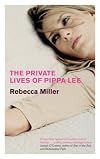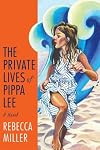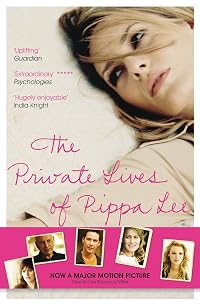
The Private Lives of Pippa Lee
by Rebecca Miller
On This Page
Description
Rebecca Miller's novel The Private Lives of Pippa Lee is the study of a brave, curious, multilayered woman--an acutely intelligent portrait of the many lives behind a single name. Now a major motion film.What part of our selves do we hide away in order to have a stable, prosperous life?Pippa Lee has just such a life in place at age fifty, when her older husband, a retired publisher, decides that they should move to a retirement community outside New York City. Pippa is suddenly deprived of show more the stimulation and distraction that had held everything in place. She begins losing track of her own mind; her foundations start to shudder, and gradually we learn the truth of the young life that led her finally to settle down in marriage--years of neglect and rebellion, wild transgressions and powerful defiance. show lessTags
Recommendations





Member Reviews
I hadn't heard of Rebecca Miller. Bogged down in all the pessicitudes of life (yeah, new word I just coined now in utter pessimism), I had stopped reading books. Not completely but well, it seemed no book captured my attention long enough and intensely enough. I wouldn't still say that the Private Lives of Pippa Lee by Rebecca Miller captivated me. But it did one good thing - it made me read the book straight in two days, and I didn't find my mind wandering around in 4000 different corners of the earth while I was doing so.
Surprise, after I finished, I found that Private Lives has been turned into a movie. I am not sure I would be seeing the movie, but Private Lives interested me simply because Pippa was such a believable character. She show more seemed to resonate my own mind, and her journey from being a drug-infused rebel in her youth to compliant housewife for Herb Lee, mega publisher, and socializer, and then her slow unraveling of herself was fascinating. The novel moves through two parts - Pippa's youth told in the first person, and then Pippa at 50 - locked in a marriage to a person 30 years her senior, two kids, Ben, who seems too perfect to be true, and Grace, in who Pippa sees most of herself - a photographer on assignment in Afganistan. There was a small section of the book that explored Grace's character - her struggles with Pippa, and her consultations with a psychotherapist but it was too short, too brief, and almost as if the writer forgot she had to develop Grace more.
Private Lives is no classic but it is a light read, enjoyable, and for those who can identify with Pippa, it offers a little more insight.
My favorite quote from Private Lives : "Marriage is an act of will" says Pippa while talking to her best friend. I later found that it is just an echo of Pope John Paul II's own quote. show less
Surprise, after I finished, I found that Private Lives has been turned into a movie. I am not sure I would be seeing the movie, but Private Lives interested me simply because Pippa was such a believable character. She show more seemed to resonate my own mind, and her journey from being a drug-infused rebel in her youth to compliant housewife for Herb Lee, mega publisher, and socializer, and then her slow unraveling of herself was fascinating. The novel moves through two parts - Pippa's youth told in the first person, and then Pippa at 50 - locked in a marriage to a person 30 years her senior, two kids, Ben, who seems too perfect to be true, and Grace, in who Pippa sees most of herself - a photographer on assignment in Afganistan. There was a small section of the book that explored Grace's character - her struggles with Pippa, and her consultations with a psychotherapist but it was too short, too brief, and almost as if the writer forgot she had to develop Grace more.
Private Lives is no classic but it is a light read, enjoyable, and for those who can identify with Pippa, it offers a little more insight.
My favorite quote from Private Lives : "Marriage is an act of will" says Pippa while talking to her best friend. I later found that it is just an echo of Pope John Paul II's own quote. show less
My first comment upon finishing this one is I find the choice of title a bit…. Odd. If by “private lives” the author means the growing inner turmoil Pippa experiences, then I still struggle with the “private lives” bit. Maybe it is in reference to the fact that Pippa’s life with Herb, her husband, is a polished veneer and very different from her intense and psychologically damaging childhood years where her Dexedrine-addicted mother’s manic behaviour is a catalyst for Pippa’s own wild and unhinged youth. Either way, the title is a strange one, but maybe fitting for what is a rather odd story. The story dissects Pippa’s life into sections in a manner that one reviewer refers to as being “like opening a series of show more Russian Dolls, each intricately wrought, self-contained and self-revealing”. Sadly, I have to agree with the reviewer when they go on to say that each section is just as empty as the last. There is a lot of show, but not a whole lot of substance in this one. The supporting characters seem to come across as slightly exaggerated personalities but even then, there is still an overall flatness of tone to the story. Miller may have done this on purpose to enhance the rather dreamy, sedate aspect of Pippa’s personality (making me think of a Stepford Wife on suppressants), and if so, I am not sure that it works in the way Miller intended. Even when there are what are probably supposed to be shocking scenes - thinking of when the younger Pippa is a participant in an amateur S&M movie - the whole reading experience is a bit surreal.
Overall, a different kind of story of self-examination and discovery but one that didn’t really work for me. Maybe it works better as a movie... I don't know. The fact that it was immediately made into a movie shortly after being published tells me that someone somewhere thought it had potential. show less
Overall, a different kind of story of self-examination and discovery but one that didn’t really work for me. Maybe it works better as a movie... I don't know. The fact that it was immediately made into a movie shortly after being published tells me that someone somewhere thought it had potential. show less
Pippa Lee is in her fifties when she moves into an old folks' community because her much older husband is worried about growing old. Pippa has always been the perfect wife, so she doesn't complain, and does a beautiful job of selling up and starting afresh. However, not all is calm under the surface, and Pippa starts to examine her life to see what brought her to this place, and also her role as a mother to her two grown-up children.
I thought it was simply fascinating, and was so good to read a book with a fully detailed, contradictory, complex woman at the heart of it. I was particularly impressed with how I liked her at the beginning, even when she was being a Stepford Wife.
I thought it was simply fascinating, and was so good to read a book with a fully detailed, contradictory, complex woman at the heart of it. I was particularly impressed with how I liked her at the beginning, even when she was being a Stepford Wife.
The Private Lives of Pippa Lee was a slow-starter for me - it took me a couple of weeks to make it through part 1, not because the writing is especially dense or difficult, but because the first fifty-ish pages barely captured my interest. However, other reviews suggested that the novel was worth persevering with, and I am very glad indeed that I did.
The novel opens with Pippa moving into a retirement community with her much-older husband, Herb. Decades younger than all the other residents, Pippa is alternately smugly aware of her relative youth and dismayed to be a middle-aged woman so accelerated into old-age. Pippa seems to have been the model housewife, catering to Herb's every need and providing him with bright, successful show more children. As Pippa's grasp on the present wavers, she begins to tell the story of her life from its inception.
This, for me, is where the novel really picked up. Pippa's journey from pampered child to perfect housewife - embracing a wayward adolescence - is fascinating. Pippa herself seems something of a cipher, buffeted from one experience to another but somewhat powerless as an actor in her own life. She is repeatedly clothed by other characters, moulded into a particular role according to their desire until the time comes to move on, to assume another identity. The novel documents the emergence of Pippa from these influences, the transition from moving through others' stories into living one of her own.
Miller's writing is detached, even in the middle sections which use first-person narration, and this does make it difficult at times to care about the characters. Not everyone will find Pippa a compelling character due to this, and the way in which her presence within the text is often difficult to grasp. However, despite my early misgivings, I found this a well-written and ultimately rewarding novel. show less
The novel opens with Pippa moving into a retirement community with her much-older husband, Herb. Decades younger than all the other residents, Pippa is alternately smugly aware of her relative youth and dismayed to be a middle-aged woman so accelerated into old-age. Pippa seems to have been the model housewife, catering to Herb's every need and providing him with bright, successful show more children. As Pippa's grasp on the present wavers, she begins to tell the story of her life from its inception.
This, for me, is where the novel really picked up. Pippa's journey from pampered child to perfect housewife - embracing a wayward adolescence - is fascinating. Pippa herself seems something of a cipher, buffeted from one experience to another but somewhat powerless as an actor in her own life. She is repeatedly clothed by other characters, moulded into a particular role according to their desire until the time comes to move on, to assume another identity. The novel documents the emergence of Pippa from these influences, the transition from moving through others' stories into living one of her own.
Miller's writing is detached, even in the middle sections which use first-person narration, and this does make it difficult at times to care about the characters. Not everyone will find Pippa a compelling character due to this, and the way in which her presence within the text is often difficult to grasp. However, despite my early misgivings, I found this a well-written and ultimately rewarding novel. show less
 This review was written for LibraryThing Early Reviewers.
In the beginning, I liked the book a lot more than at the end. Life in Marigold Village (a retirement community) was more appealing to me than the sex and drug hoopla of Pippa's youth. Am I aging? "Once a philanderer, always a philanderer" answers the "what I learned" prompt from Goodreads. Pippa was well developed as a character but I never really got a bead on the other characters, particularly Chris. The writing was good (as befits Arthur Miller's daughter). But this book won't go on my end-of-the-year top titles.
As this book opens, Pippa Lee has just moved - with her husband Herb - to a retirement village (she is in her early 50s, he some 30 years older). At the housewarming party, Pippa is eulogised by one of her husband's friends: "a mystery, a cipher ... a person not controlled by ambition or greed or a crass need for attention, but by a desire to experience life completely and to make life a little easier for the people around her ... the icon of the Artist's Wife: placid, giving, intelligent, beautiful. Great cook."
We know immediately that there must be more to her than this. And, indeed, as the book continues we are shown Pippa's hidden past (not, as I was expecting, through a series of hints and flashbacks, but through a linear narrative show more that starts with her birth and continues up to and beyond her marriage). A wild youth ended when she met and married Herb, and - through an act of will - created herself the life of a perfect wife, housekeeper and mother. (Surrounded by artists, Pippa frequently describes herself as not creative, but the book argues that building up our selves - our personas - is the greatest act of creation there could be).
I found this book very unengaging. For me, its biggest weakness was an over-reliance on the quality of the prose. Sometimes, this has a lot of impact ("I was leaking tears through the whole visit, but no one seemed to notice, and I rubbed them away like itches in the corner of my eyes"). But sometimes the metaphors feel over-worked ("the two swollen halves of her upper lip drooped suggestively, like a set of red velvet curtains tied at the corners of her mouth"). And worse, sometimes the style is just not appropriate. The story is not so far-fetched that I could never have believed it, but it needs a bit of authorial effort to make it credible - and this isn't there. Would a teenage high-school dropout who hated studying really fantasise about "an unimpeachable gentleman" with a "pristine heart", or describe a scene in a fetish club as: "Kat had her boot on the prone, shackled man's sooty head ... conquering, immobile, like a Victorian hunter posing for a daguerreotype"?
The other problem with over-reliance on prose is that we are told too much and shown too little. So, for example, before they are married, a friend of Herb's describes Pippa as "winsome but naughty - you're an ingenue femme fatale - oddly calm, almost remote". But we've never seen any behaviour that backs this up. All the significant conversations come to us as reported speech - which misses a real opportunity to make the story more credible (and makes me wonder whether Miller is able to write in any voices other than her own). show less
We know immediately that there must be more to her than this. And, indeed, as the book continues we are shown Pippa's hidden past (not, as I was expecting, through a series of hints and flashbacks, but through a linear narrative show more that starts with her birth and continues up to and beyond her marriage). A wild youth ended when she met and married Herb, and - through an act of will - created herself the life of a perfect wife, housekeeper and mother. (Surrounded by artists, Pippa frequently describes herself as not creative, but the book argues that building up our selves - our personas - is the greatest act of creation there could be).
I found this book very unengaging. For me, its biggest weakness was an over-reliance on the quality of the prose. Sometimes, this has a lot of impact ("I was leaking tears through the whole visit, but no one seemed to notice, and I rubbed them away like itches in the corner of my eyes"). But sometimes the metaphors feel over-worked ("the two swollen halves of her upper lip drooped suggestively, like a set of red velvet curtains tied at the corners of her mouth"). And worse, sometimes the style is just not appropriate. The story is not so far-fetched that I could never have believed it, but it needs a bit of authorial effort to make it credible - and this isn't there. Would a teenage high-school dropout who hated studying really fantasise about "an unimpeachable gentleman" with a "pristine heart", or describe a scene in a fetish club as: "Kat had her boot on the prone, shackled man's sooty head ... conquering, immobile, like a Victorian hunter posing for a daguerreotype"?
The other problem with over-reliance on prose is that we are told too much and shown too little. So, for example, before they are married, a friend of Herb's describes Pippa as "winsome but naughty - you're an ingenue femme fatale - oddly calm, almost remote". But we've never seen any behaviour that backs this up. All the significant conversations come to us as reported speech - which misses a real opportunity to make the story more credible (and makes me wonder whether Miller is able to write in any voices other than her own). show less
This review was written for LibraryThing Early Reviewers.This is one of the best "straight fiction," non-series books I've read in a long time. It was a little slow to get started, but then the second section goes and turns everything you think you know on its head. If this were a movie, I would watch it. I'll think about this one for a long time.
Members
- Recently Added By
Lists

A Novel Cure
742 works; 23 members
Author Information

13+ Works 1,067 Members
Some Editions
Series
Belongs to Publisher Series
L'eclèctica (162)
Work Relationships
Has the adaptation
Common Knowledge
- Original title
- The Private Lives of Pippa Lee
- Original publication date
- 2008
- Related movies
- The Private Lives of Pippa Lee (2009 | IMDb)
- First words
- Pippa had to admit, she liked the house.
- Last words
- (Click to show. Warning: May contain spoilers.)I am filled with fear and happiness.
Classifications
Statistics
- Members
- 529
- Popularity
- 56,630
- Reviews
- 38
- Rating
- (3.23)
- Languages
- 13 — Chinese, Danish, Dutch, English, Finnish, French, German, Hungarian, Italian, Lithuanian, Norwegian (Bokmål), Portuguese, Spanish
- Media
- Paper, Audiobook, Ebook
- ISBNs
- 50
- UPCs
- 2
- ASINs
- 6