Elements of Jazz: From Cakewalks to Fusion
by Bill Messenger
The Great Courses: Fine Arts and Music (728), The Great Courses (728)
On This Page
Description
Jazz is a uniquely American art form, one of America's great contributions to not only musical culture, but world culture, with each generation of musicians applying new levels of creativity that take the music in unexpected directions that defy definition, category, and stagnation. Now you can learn the basics and history of this intoxicating genre in an eight-lecture series that is as free-flowing and original as the art form itself. You'll follow the evolution of jazz from its beginnings show more in the music and dancing of the antebellum plantations to its morphing into many shapes as its greatest innovators gave us ragtime, the blues, the swing music of the big band era, boogie-woogie, and big band blues. You'll follow the rise of modern jazz in all of its many forms, including bebop, cool, modal, free, and fusion jazz. And you'll learn how the course of jazz was changed by key technological innovations, such as the invention of the microphone, which allowed smaller-voiced singers like Bing Crosby or Mel Torme to share a limelight once reserved for the bigger voices of stars like Bessie Smith or Al Jolson. Beginning the story on those antebellum plantations, Professor Messenger reveals how the "cakewalks" of slave culture gave birth to a dance craze at the end of the 19th century that was ignorant of its own humble roots. And he explores the irony of the minstrel shows, which derived from Southern beliefs of black cultural inferiority yet eventually spawned a musical industry that African-American musicians would dominate for decades to come. As a bonus, the lectures are also very entertaining, with Professor Messenger frequently turning to his piano to illustrate his musical points, often with the help of guest artists.. show less
Tags
Recommendations















Member Recommendations
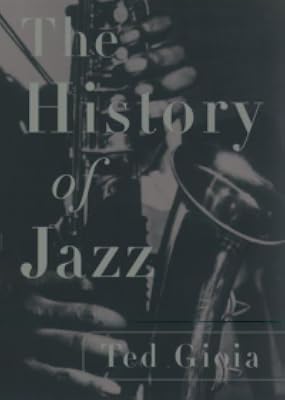
szarka Messenger's audiobook, with its illustrations of different styles at the piano, is a perfect complement to Gioia's more comprehensive treatment.
Member Reviews
Not a comprehensive treatment of jazz in theory or history—for that see Ted Gioia and Gunther Schuller—but a gentle introduction that's valuable in its own right. Messenger illustrates each point with examples at the piano, making his presentation a perfect complement to more academic treatments of the subject, and making it especially accessible to those who can't read music. Since Messenger proceeds in historical order, I'd recommend listening to this audiobook alongside Gioia's _History of Jazz_.
Messenger's thoroughly enjoyable format here passed by so easily that I couldn't believe it finished so soon. The 8 discs each focus on a stage of jazz, starting with ragtime and blues, then swing, then more modern formats. His stories and anecdotes make the history stick. This is a topic especially well suited to an audio format. He plays short examples of the various observations throughout the whole work.
This is a great introduction to the history of jazz music in its different forms throughout the decades. The instructor is very knowledgeable and has some fascinating insight into how certain sub-genres reflect and inspired the times in which they were popular. All the examples you can listen to in the audiobook version are a big bonus. The only con I can think of is I wish it were longer.
Great intro to jazz. I appreciated the structure of these lessons, taking one type of jazz at a time and discussing it (and how they built on each other). What was explained in this audible has always eluded me in the past. Not being knowledgeable about music (I love it but don't know the terminology, etc.), this was mostly still understandable...but I can't swear I've got it permanently. It'd be a good one to listen to again in the future after more music listening.
I think that Bill Messenger is more of a musician than a historian, or even maybe than a music theorist. I feel like I learned a lot but there were also a few things that seemed lacking or that were confusing to me in this course; I think it was a great starting point, however, and I'm excited to learn more.
This is one of the Great Courses CD sets covering the history of Jazz. It is a good history starting from Cakewalks, an early black form of music combining some African and some European elements. This grew to Ragtime, and ultimately to a variety of forms of Jazz.
One CD is devoted to each style. The discussion covers how it evolved, what elements are unique and what characterizes the style, and how it came to be replaced. There are many music samples and the speaker includes comments on music theory.
The series is full of information and very enjoyable. And it goes fast.
One CD is devoted to each style. The discussion covers how it evolved, what elements are unique and what characterizes the style, and how it came to be replaced. There are many music samples and the speaker includes comments on music theory.
The series is full of information and very enjoyable. And it goes fast.
The Great Courses does a great job. It was nice to have this in audio book. That way you can hear the music and the variations as described.
Members
- Recently Added By
Author Information

5+ Works 142 Members
Series


Common Knowledge
Classifications
Statistics
- Members
- 87
- Popularity
- 368,491
- Reviews
- 10
- Rating
- (4.13)
- Languages
- English
- Media
- Paper, Audiobook
- ISBNs
- 5
- ASINs
- 5