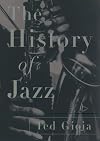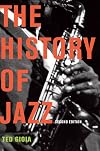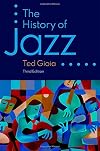
The History of Jazz
by Ted Gioia
On This Page
Description
"The History of Jazz, 3rd edition, is a comprehensive survey of jazz music from its origins until the current day. The book is designed for general readers and students, as well as those with more specialized interest in jazz and music history. It provides detailed biographical information and an overview of the musical contributions of the key innovators in development of jazz, including Louis Armstrong, Duke Ellington, Billie Holiday, Coleman Hawkins, Charlie Parker, Dizzy Gillespie, show more Thelonious Monk, Ella Fitzgerald, Miles Davis, John Coltrane, Ornette Coleman and others. The book also traces the evolution of jazz styles and includes in-depth accounts of ragtime, blues, New Orleans jazz, Chicago jazz, swing and big band music, bebop, hard bop, cool jazz, avant-garde, jazz-rock fusion and other subgenres and developments. The History of Jazz also provides a cultural and socioeconomic contextualization of the music, dealing with the broader political and social environment that gave birth to the music and shaped its development-both in the United States and a global setting"-- show lessTags
Recommendations
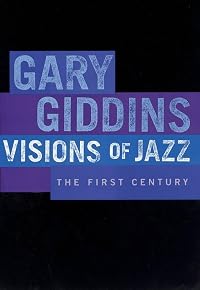
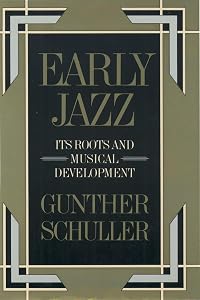
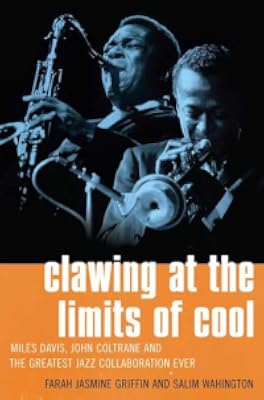
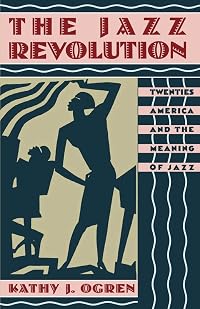



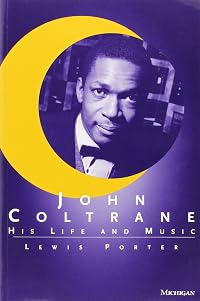
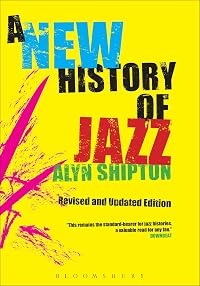
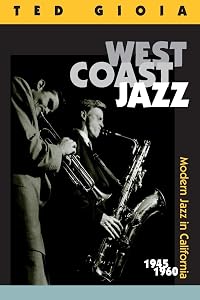





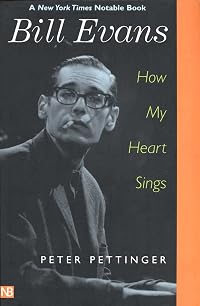
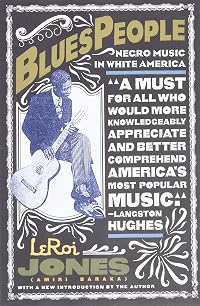
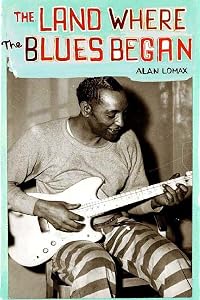

Member Recommendations

szarka Messenger's audiobook, with its illustrations of different styles at the piano, is a perfect complement to Gioia's more comprehensive treatment.
Jazz by Gary Giddins
by cwc790411
Member Reviews
I reviewed music for quite a few years. In my time, I covered many genres but as much as I loved jazz, I always felt inadequate reviewing it. The deep history intimidated me and my ability to understand (let alone explain) the theory, techniques, and stylistic approaches was completely inadequate. And I think that limited personal history with writing about jazz is what helps me appreciate Ted Gioia's ability to write about jazz in such an engaging and thorough way. I loved "How to Listen to Jazz" and how it explained to the layman what to listen for and why it mattered. In "The History of Jazz," Gioia does the same thing for the historical side of things. For a music that is so rich and varied, he does an admirable job of covering show more every era and style with respect. It's so nice to see free jazz get such a serious treatment right alongside hard bop, cool jazz, and Dixieland. About the only critique I can make is that I hope in the fourth edition, he fleshes out the "jazz around the world" section. Japanese and Polish jazz alone each deserve a deep dive but sadly only get a paragraph or two here.
I took over a year-and-a-half to finish this book, but certainly not because it was boring or dry. Indeed, Gioia brings life to the history of jazz and draws connections that only the truest of students can. No matter how much you think you know about jazz, you'll still learn quite a bit here. show less
I took over a year-and-a-half to finish this book, but certainly not because it was boring or dry. Indeed, Gioia brings life to the history of jazz and draws connections that only the truest of students can. No matter how much you think you know about jazz, you'll still learn quite a bit here. show less
Quite simply - the best history of jazz written thus far! Essential reading for even casual jazz listeners. Thorough, scholarly, objective and inclusive, but easy to read with a minimum of esoteric discourse. Even readers without any knowledge of music theory and composition should find it easy enough to skim over the bits about specific chord structures and still grasp the full meaning and import of those passages.
Really, my only complaint about this book is the author's overuse of the phrase "piano attack" when describing the styles of individual keyboard performers. It's apt, and a standard turn of phrase in jazz criticism - but it gets really old and rather meaningless after too many repetitions.
If that's my only complaint - then show more this is as close to a perfect work as anyone could expect!
Also - I've made it a goal over the next several years to create a playlist with every one of the suggested listening tracks he lists at the back of the book! show less
Really, my only complaint about this book is the author's overuse of the phrase "piano attack" when describing the styles of individual keyboard performers. It's apt, and a standard turn of phrase in jazz criticism - but it gets really old and rather meaningless after too many repetitions.
If that's my only complaint - then show more this is as close to a perfect work as anyone could expect!
Also - I've made it a goal over the next several years to create a playlist with every one of the suggested listening tracks he lists at the back of the book! show less
As chronicled in this work, jazz is currently experiencing a resurgence as artists all over the world are using its elements to launch new musical sounds. Gioia captures this momentum by updating his celebrated second edition by Oxford University Press into a new third edition. In so doing, he continues to push forward scholarship about jazz while providing a tour de force of its history to interested readers.
In nearly 600 packed pages, Gioia analyzes the music of every important jazz artist and her/his place in jazz history. While at times this approach can get repetitive, most times, I left the book to download some music by an artist newly found to me. Gioia could have provided a bit more of an overarching narrative about jazz show more history in general. Instead, it reads as a list of disconnected artists and movements, but perhaps this is the author’s view of jazz itself.
I have not read prior editions (which were celebrated on their own), but by page count alone, this edition seems longer and more comprehensive than the others. As such, interested readers and fans of the jazz idiom will be grateful for more of a good thing. Everyone is covered – from Buddy Bolden and Scott Joplin to Diana Krall and Norah Jones. As musical instruments, technologies, and cultures have risen and evolved, so has jazz been present for every step of the way, as this book clearly communicates.
This work (written by an American writer, published by a British press about a global phenomenon) stands to reach many audiences. Musicians of high taste are able to cherry-pick elements that might help their musical evolution. Fans are able to extend their musical tastes into new areas with new sounds. Cultural observers are able to reach into the details of musical history. Even a global audience are able to see how jazz continues to impact Europe, Asia, Latin America, and even Africa.
I’m only a fan of both music and history; I’m no musical scholar or musician. Nonetheless, this book bettered my musical tastes. It contains some technical terms about music that I had either to glance over or to look up. It brings to life the music of this genre and the people behind it. Reading a meticulously researched history allows me to place the variegated sounds of jazz into the appropriate cultural context. My music library has grown dramatically as Gioia’s words inspired me to examine certain artists firsthand. Reading this book has been an enriching experience. show less
In nearly 600 packed pages, Gioia analyzes the music of every important jazz artist and her/his place in jazz history. While at times this approach can get repetitive, most times, I left the book to download some music by an artist newly found to me. Gioia could have provided a bit more of an overarching narrative about jazz show more history in general. Instead, it reads as a list of disconnected artists and movements, but perhaps this is the author’s view of jazz itself.
I have not read prior editions (which were celebrated on their own), but by page count alone, this edition seems longer and more comprehensive than the others. As such, interested readers and fans of the jazz idiom will be grateful for more of a good thing. Everyone is covered – from Buddy Bolden and Scott Joplin to Diana Krall and Norah Jones. As musical instruments, technologies, and cultures have risen and evolved, so has jazz been present for every step of the way, as this book clearly communicates.
This work (written by an American writer, published by a British press about a global phenomenon) stands to reach many audiences. Musicians of high taste are able to cherry-pick elements that might help their musical evolution. Fans are able to extend their musical tastes into new areas with new sounds. Cultural observers are able to reach into the details of musical history. Even a global audience are able to see how jazz continues to impact Europe, Asia, Latin America, and even Africa.
I’m only a fan of both music and history; I’m no musical scholar or musician. Nonetheless, this book bettered my musical tastes. It contains some technical terms about music that I had either to glance over or to look up. It brings to life the music of this genre and the people behind it. Reading a meticulously researched history allows me to place the variegated sounds of jazz into the appropriate cultural context. My music library has grown dramatically as Gioia’s words inspired me to examine certain artists firsthand. Reading this book has been an enriching experience. show less
An excellent overview. Better-written, more-scholarly, more-comprehensive, and (of course) more up-to-date than Marshall Stearns' The Story of Jazz. Less technical than Gunther Schuller's two-volume history, but never in a way that talks down to the non-musician. Gioia takes a catholic view of what counts as jazz, and seldom seems to grind an ideological axe. The audiobook version is also well-read. [2021-11-22]
This book is excellent in surveying and tracking key contributors and developments to jazz across decades. It's ideal for the many casual listeners familiar with particular jazz styles yet inexperienced with so many others. Best read while sampling some of the many performers via streamed music.
The back cover of this Oxford paperback claims that the book is suitable as an introduction to jazz or as an authoritative reference. I must admit that I am neither a jazz officianado nor a complete novice to the world of swing, bebop and fusion, making me incapable of confirming the cover's claims. However, for me, this book filled in the gaps quite nicely.
Most of my knowledge of jazz has come from the radio. The big names keep popping up but lesser known lights get little air time and I am at the whim of the dj's tastes. "The History of Jazz" covers them all, starting at the very beginning - drum circle dances in pre-abolition New Orleans. It then discusses the roots of early dixie land jazz (ragtime, Joplin, and the blues) and then show more describes the movement of jazz from New Orleans to Chicago and New York. It intersperses lively anecdotes about the fathers of jazz -Jelly Roll Morton was a procurer (pimp?) early on- with music theory and analysis. Buddy Bolden, Louis Armstrong and Morton all have a section devoted to them. A chapter on the jazz age pays special attention to Armstrong's Hot Five and subsequent career. Bix Beiderbecke's biography is given in detail along with notes on many other famous players of his day. A chapter is devoted to Harlem, stride piano, Waller, Ellington and the advent of the big bands, ending with a description of society and music at the Cotton Club. The Swing era gets a chapter to itself with even more in-depth treatment of big bands and those who led them (Goodman, the Dorsey's etc.). Kansas City style jazz, and european jazz traditions (Django Reinhardt) are also covered. The details of Billie Holiday's life, although well known, make for a sad story.
The second half of the book, which covers modern jazz, the fragmentation of jazz styles and recent jazz developments, is much less coherent than the first. The section on bebop with its lengthy discussion of the life and influence of Bird and Gillespie continues to be readable and thorough. However, as the author approaches the present day, the writing, like the jazz, seems to fragment. This is not to say that it isn't enjoyable reading, just that the sheer number of names and styles begins to pull the book in too many directions. California jazz, trad jazz, cool jazz, hard bop, post-bop and soul, free jazz, post-modern jazz and the various fusion forms leave the reader gasping for air. It seems clear to me that I will need to go out and listen to a lot of things to round out my education. Fortunately the book is well supplied with notes, further readings and, best of all a recommended listening list.
While I might not have understood everything the author had to say about the subtleties of the music, this book has made me a much keener fan of jazz. It has created in me the desire to seek out new and different forms of the music and to listen more carefully to the old stuff. For this, I gladly give it five stars. show less
Most of my knowledge of jazz has come from the radio. The big names keep popping up but lesser known lights get little air time and I am at the whim of the dj's tastes. "The History of Jazz" covers them all, starting at the very beginning - drum circle dances in pre-abolition New Orleans. It then discusses the roots of early dixie land jazz (ragtime, Joplin, and the blues) and then show more describes the movement of jazz from New Orleans to Chicago and New York. It intersperses lively anecdotes about the fathers of jazz -Jelly Roll Morton was a procurer (pimp?) early on- with music theory and analysis. Buddy Bolden, Louis Armstrong and Morton all have a section devoted to them. A chapter on the jazz age pays special attention to Armstrong's Hot Five and subsequent career. Bix Beiderbecke's biography is given in detail along with notes on many other famous players of his day. A chapter is devoted to Harlem, stride piano, Waller, Ellington and the advent of the big bands, ending with a description of society and music at the Cotton Club. The Swing era gets a chapter to itself with even more in-depth treatment of big bands and those who led them (Goodman, the Dorsey's etc.). Kansas City style jazz, and european jazz traditions (Django Reinhardt) are also covered. The details of Billie Holiday's life, although well known, make for a sad story.
The second half of the book, which covers modern jazz, the fragmentation of jazz styles and recent jazz developments, is much less coherent than the first. The section on bebop with its lengthy discussion of the life and influence of Bird and Gillespie continues to be readable and thorough. However, as the author approaches the present day, the writing, like the jazz, seems to fragment. This is not to say that it isn't enjoyable reading, just that the sheer number of names and styles begins to pull the book in too many directions. California jazz, trad jazz, cool jazz, hard bop, post-bop and soul, free jazz, post-modern jazz and the various fusion forms leave the reader gasping for air. It seems clear to me that I will need to go out and listen to a lot of things to round out my education. Fortunately the book is well supplied with notes, further readings and, best of all a recommended listening list.
While I might not have understood everything the author had to say about the subtleties of the music, this book has made me a much keener fan of jazz. It has created in me the desire to seek out new and different forms of the music and to listen more carefully to the old stuff. For this, I gladly give it five stars. show less
I picked up this book to learn about jazz, in a more compact and manageable way than buying albums or downloading decades' worth of mp3s, but it seems music is best learned by listening after all. It's a comprehensive and enjoyable read, but probably much better with a jazz fan background.
Members
- Recently Added By
Lists

JAZZZZ
87 works; 1 member
Author Information

16+ Works 2,290 Members
Ted Gioia is a music historian and the author of eleven books, including How to Listen to Jazz. His three previous books on the social history of music- Work Songs, Healing Songs, and Love Songs-have each been honored with the ASCAP Deems Taylor Award. Gioia's wide-ranging activities as a critic, scholar, performer, and educator have established show more him as a leading global guide to music past, present, and future. show less
Awards and Honors
Awards
Common Knowledge
- Canonical title
- The History of Jazz
- Alternate titles
- The History of Jazz, Second Edition
- Original publication date
- 1997
Classifications
Statistics
- Members
- 967
- Popularity
- 27,387
- Reviews
- 11
- Rating
- (3.95)
- Languages
- English, Italian, Spanish
- Media
- Paper, Audiobook, Ebook
- ISBNs
- 20
- ASINs
- 6