On This Page
Description
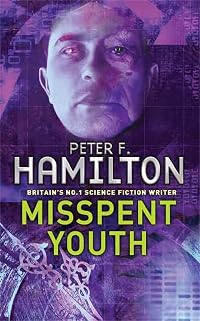
2040: After decades of research, scientists of the European Union believe that they have at last conquered humankind's most pernicious foe: old age. For the first time, technology holds out the promise of not merely slowing the aging process but actually reversing it. The first subject for treatment is seventy-eight-year-old philanthropist Jeff Baker. After eighteen months in a rejuvenation tank, Jeff emerges looking like a twenty-year-old. And the change is more than skin deep. From his show more hair cells down to his DNA, Jeff is twenty-with a breadth of life experience. But while possessing the wisdom of a septuagenarian at age twenty is one thing, raging testosterone is another, as Jeff soon discovers. Suddenly his oldest friends seem, well, old. Jeff's trophy wife looks better than she ever did. His teenage son, Tim, is more like a younger brother. And Tim's nubile girlfriend is a conquest too tempting to resist. Jeff's rejuvenated libido wreaks havoc on the lives of his friends and family, straining his relationship with Tim to the breaking point. It's as if youth is a drug and Jeff is wasted on it. But if so, it's an addiction he has no interest in kicking. show lessTags
Recommendations








Member Recommendations
Member Reviews
It might be best going into this novel not expecting anything. I've only read a couple of Hamilton's novels and this time period or the ones following it directly is relatively unknown to me.
Fortunately, that doesn't mean a dime to my enjoyment.
As a matter of fact, this is pretty much a kind of family soap opera in a slightly more futuristic time than ours. It's soft-SF rather than hard-SF. And by that I mean we have two techs put on a pedestal here. The first is a global networking platform that has turned pretty much the whole world into the same architecture used by torrents today. Swarming data fields where tons of individual users make up a whole of some kind of information platform funneling at the end user.
The man who made it show more possible gave the tech away instead of getting filthy rich. And so he became a massive celebrity... who is eventually made the recipient of the first real fountain of life treatment, turning his old body into that of a man in his early 20's.
So far, so good. The premise of many a great and not so great trope, right here.
Now, where Hamilton makes it good is his characters and the interpersonal stuff. The focus is nowhere else.
In the end, it's a treatise on young man's follies (when he's actually an old man) in love and family. He's almost the same age as his son. His sex drive is driving him crazy. His wife, all his friends, everything is a mismatch.
The conflicts are great and the soap opera really unfolds in delicious and tragic ways, tempting us with a redemption arc ... or perhaps not. :)
Again, it's soft-SF. And where it shines is the characters.
For some reason, this novel kinda hit me harder than the previous two I had read, even though the official ratings on the other two were quite high. It may just be a case of right tale, right time, or perhaps I'm just getting used to the author's style.
Or perhaps he just meant this to be a bit more than a light tale and more a tale of growth and family. For that, I just happen to be in the right place to appreciate it. :) show less
Fortunately, that doesn't mean a dime to my enjoyment.
As a matter of fact, this is pretty much a kind of family soap opera in a slightly more futuristic time than ours. It's soft-SF rather than hard-SF. And by that I mean we have two techs put on a pedestal here. The first is a global networking platform that has turned pretty much the whole world into the same architecture used by torrents today. Swarming data fields where tons of individual users make up a whole of some kind of information platform funneling at the end user.
The man who made it show more possible gave the tech away instead of getting filthy rich. And so he became a massive celebrity... who is eventually made the recipient of the first real fountain of life treatment, turning his old body into that of a man in his early 20's.
So far, so good. The premise of many a great and not so great trope, right here.
Now, where Hamilton makes it good is his characters and the interpersonal stuff. The focus is nowhere else.
In the end, it's a treatise on young man's follies (when he's actually an old man) in love and family. He's almost the same age as his son. His sex drive is driving him crazy. His wife, all his friends, everything is a mismatch.
The conflicts are great and the soap opera really unfolds in delicious and tragic ways, tempting us with a redemption arc ... or perhaps not. :)
Again, it's soft-SF. And where it shines is the characters.
For some reason, this novel kinda hit me harder than the previous two I had read, even though the official ratings on the other two were quite high. It may just be a case of right tale, right time, or perhaps I'm just getting used to the author's style.
Or perhaps he just meant this to be a bit more than a light tale and more a tale of growth and family. For that, I just happen to be in the right place to appreciate it. :) show less
This is one of those novels that need to be read without any expectations. Knowing that this is the start of the Commonwealth novels, it is hard not to expect another masterpiece - or at least something that connects. The connection that exist is here of course but it is really closer to a prologue than to a full novel; there are glimpses of the technologies to come but it is too early, too undefined. In some cases you can see them only because you know how it all evolved, what comes next in the saga.
It is not a space opera novel as the rest of the saga; without the coming saga it is only marginally science fiction - yes, there are SF elements but at the heart of it is the story of a family. Tolstoy once said: "Happy families are all show more alike; every unhappy family is unhappy in its own way". And this novel is yer another proof of that old line - because the Bakers were not really interesting until they got unhappy. The irony of course is that what made them so miserable is what was supposed to make them happy.
Jeff Baker becomes the first man to be rejuvenated - and returns to his house to live his life again. The process is very involved and expensive and the only reason he is the first to get the treatment is because of decisions made by him in the past - releasing his crystals with no patents to the world allowing information to be saved in enormous amounts and allows the data society to begin.
But once Jeff is back, things go all wrong. Both Jeff and his son have issues connecting, love triangles start getting built (and Hamilton does not shy away from writing a lot of sex scenes) and old secrets start getting revealed. Just when you think you know what had happened, something shifts and we learn yet another old secret that changes everything.
The misspent youth of the title stands for all the youths that are lost here - the two that Jeff gets to have and the one of his son. They all make their decisions (even the old man that is supposed to know better) which they need to live with. Or not.
The end of the story is heartbreaking and puts all the choices in perspective, showing the lives led in vain.
It is not a great story and without the looming saga coming after it, it is dated - it is set so close to the current time that it get dates very fast. That usually do not bother me but... as much as I was trying to read with no expectations, they sneaked in. It is not a mandatory reading even if you love the Commonwealth novels - but if you have nothing else to do, there are worse way to spend a few days. show less
It is not a space opera novel as the rest of the saga; without the coming saga it is only marginally science fiction - yes, there are SF elements but at the heart of it is the story of a family. Tolstoy once said: "Happy families are all show more alike; every unhappy family is unhappy in its own way". And this novel is yer another proof of that old line - because the Bakers were not really interesting until they got unhappy. The irony of course is that what made them so miserable is what was supposed to make them happy.
Jeff Baker becomes the first man to be rejuvenated - and returns to his house to live his life again. The process is very involved and expensive and the only reason he is the first to get the treatment is because of decisions made by him in the past - releasing his crystals with no patents to the world allowing information to be saved in enormous amounts and allows the data society to begin.
But once Jeff is back, things go all wrong. Both Jeff and his son have issues connecting, love triangles start getting built (and Hamilton does not shy away from writing a lot of sex scenes) and old secrets start getting revealed. Just when you think you know what had happened, something shifts and we learn yet another old secret that changes everything.
The misspent youth of the title stands for all the youths that are lost here - the two that Jeff gets to have and the one of his son. They all make their decisions (even the old man that is supposed to know better) which they need to live with. Or not.
The end of the story is heartbreaking and puts all the choices in perspective, showing the lives led in vain.
It is not a great story and without the looming saga coming after it, it is dated - it is set so close to the current time that it get dates very fast. That usually do not bother me but... as much as I was trying to read with no expectations, they sneaked in. It is not a mandatory reading even if you love the Commonwealth novels - but if you have nothing else to do, there are worse way to spend a few days. show less
A story about a completely reprehensible person and his mostly reprehensible family and friends in a near future England where government control and surveillance has gone too far. Rich people gone wrong should really be the title of this one, but it didn't make for great reading. The author actually warns us that some of the proof readers didn't like the characters - I should have listened!
Nothing wrong with the plot, writing or speculation on how tech will progress, I just hated the characters.
Nothing wrong with the plot, writing or speculation on how tech will progress, I just hated the characters.
http://nwhyte.livejournal.com/1273054.html
This book is about a rich old man who gets rejuvenation treatment in a future Britain subordinated to a federal Europe. Hamilton has a pretty good reputation, but I think that must be based on other works than this. It is an odd mixture of bits which work very well and bits which don't, sometimes both at the same time.
To start with the less political: this is one of the best treatments I have read of rejuvenation. This is a rather low bar; I am comparing it with Robert J. Sawyer's Rollback and John Scalzi's Old Man's War, and a bunch of recent terrible Hugo nominees mostly in the short fiction categories. But I thought Hamilton's account rang very true: Jeff Baker's newfound youth totally show more disrupts his existing relationships, makes him even more of a celebrity than he already was, and enables him to shag every woman he wants to, particularly including his teenage son's girlfriend, who ends the book impregnated with their genetically engineered embryo. The biggest narrative flaw - and it is a big one - is that none of the characters is particularly nice.
On the political front, the book combines impressive forward thinking with a lazy Europhobia. Hamilton's depiction of how the internet might be used for political marketing and grassroots mobilisation is very impressive: this was starting in 2001, when he was writing, but that was still several years before YouTube, never mind Twitter. His description of the organisation of the anti-Europe demonstration at the end of the book is reminiscent of this year's events in Iran and Moldova (and like those, it doesn't actually achieve the desired result).
Hamilton's depiction of European politics is repugnant. His near-future Britain uses the euro as currency and has a Blair-like prime minister who is running to be president of Europe. But the restive population is chafing under the yoke of Brussels rule, and is finally invaded from the continent by shock troops arriving via Eurostar. The end of the book has the dying Jeff Baker in a live webcast (reminiscent of Princess Diana's famous 1995 interview) blaming Europe per se for his demise, without any apparent challenge from other characters or the author. As I said above, this is lazy stuff, barely more advanced than the paranoid fantasies of Andrew Roberts; it's a shame that Hamilton's interesting thoughts about the internal wiring of future politics are combined with a cardboard concept of the bigger picture. show less
This book is about a rich old man who gets rejuvenation treatment in a future Britain subordinated to a federal Europe. Hamilton has a pretty good reputation, but I think that must be based on other works than this. It is an odd mixture of bits which work very well and bits which don't, sometimes both at the same time.
To start with the less political: this is one of the best treatments I have read of rejuvenation. This is a rather low bar; I am comparing it with Robert J. Sawyer's Rollback and John Scalzi's Old Man's War, and a bunch of recent terrible Hugo nominees mostly in the short fiction categories. But I thought Hamilton's account rang very true: Jeff Baker's newfound youth totally show more disrupts his existing relationships, makes him even more of a celebrity than he already was, and enables him to shag every woman he wants to, particularly including his teenage son's girlfriend, who ends the book impregnated with their genetically engineered embryo. The biggest narrative flaw - and it is a big one - is that none of the characters is particularly nice.
On the political front, the book combines impressive forward thinking with a lazy Europhobia. Hamilton's depiction of how the internet might be used for political marketing and grassroots mobilisation is very impressive: this was starting in 2001, when he was writing, but that was still several years before YouTube, never mind Twitter. His description of the organisation of the anti-Europe demonstration at the end of the book is reminiscent of this year's events in Iran and Moldova (and like those, it doesn't actually achieve the desired result).
Hamilton's depiction of European politics is repugnant. His near-future Britain uses the euro as currency and has a Blair-like prime minister who is running to be president of Europe. But the restive population is chafing under the yoke of Brussels rule, and is finally invaded from the continent by shock troops arriving via Eurostar. The end of the book has the dying Jeff Baker in a live webcast (reminiscent of Princess Diana's famous 1995 interview) blaming Europe per se for his demise, without any apparent challenge from other characters or the author. As I said above, this is lazy stuff, barely more advanced than the paranoid fantasies of Andrew Roberts; it's a shame that Hamilton's interesting thoughts about the internal wiring of future politics are combined with a cardboard concept of the bigger picture. show less
An interesting premise with.uninspired execution. I wanted to read what life might be like for the first person made young again, but the actual story was banal and predictable.
This book is only 13 years old, but some of its ideas are already outdated. For instance, the author imagines a world where digital piracy has crippled creative industry to such a degree that new entertainment media can only be funded through product placement and embedded advertising. In the real world the scenario he imagines would be technologically possible, but it has not happened. In the time since this book has been written it has been demonstrated that many people will pay for things even when they could easily pirate them. Crowdfunding through services show more like Kickstarter and Patreon have shown some will even pay for things which don't yet exist and might never get made. show less
This book is only 13 years old, but some of its ideas are already outdated. For instance, the author imagines a world where digital piracy has crippled creative industry to such a degree that new entertainment media can only be funded through product placement and embedded advertising. In the real world the scenario he imagines would be technologically possible, but it has not happened. In the time since this book has been written it has been demonstrated that many people will pay for things even when they could easily pirate them. Crowdfunding through services show more like Kickstarter and Patreon have shown some will even pay for things which don't yet exist and might never get made. show less
A commonplace of recent "hard" SF is the idea of very long lifespans and rejuvenation of the body. Hamilton has used it himself in his space-opera series. Here he decides to make it the focus of a stand-alone novel, examining the impact on the very first recipient and his family.
My usual complaint about Hamilton is that his stories have no subtext at all but that cannot be said of this novel of loose morals and really bad behaviour. Unfortunately the message seems rather underwhelming; if you behaved badly when you were twenty and you suddenly go from being 70 to being twenty again - you'll behave badly again. The type of behaviour is not unrealistic in that similar disasters do occur in step-families.
The characters spend so much time show more having sex that it gets tedious but there are some other things going on; one is a theme of a Federal Europe that has become a target of multiple terrorist seperatist groups from various formerly independent states. The society is shown as repressive and only nominally democratic. This could be merely a projection of current European trends for the sake of background and plot but it feels more like a Dystopian Warning.
These days when an SF novel focuses centrally on a Major Medical Breakthrough I expect that near the end it will unravel, either killing the recipient or leaving him exactly where he started. These seem like just a Deus Ex Machina that allows the author to quit once bored and the predictability is greatly detrimental to the overall impact of the book. This one is not an exception. show less
My usual complaint about Hamilton is that his stories have no subtext at all but that cannot be said of this novel of loose morals and really bad behaviour. Unfortunately the message seems rather underwhelming; if you behaved badly when you were twenty and you suddenly go from being 70 to being twenty again - you'll behave badly again. The type of behaviour is not unrealistic in that similar disasters do occur in step-families.
The characters spend so much time show more having sex that it gets tedious but there are some other things going on; one is a theme of a Federal Europe that has become a target of multiple terrorist seperatist groups from various formerly independent states. The society is shown as repressive and only nominally democratic. This could be merely a projection of current European trends for the sake of background and plot but it feels more like a Dystopian Warning.
These days when an SF novel focuses centrally on a Major Medical Breakthrough I expect that near the end it will unravel, either killing the recipient or leaving him exactly where he started. These seem like just a Deus Ex Machina that allows the author to quit once bored and the predictability is greatly detrimental to the overall impact of the book. This one is not an exception. show less
(Reviewed March 11, 2009)
I don't usually read near-future SF, as I find it dates very quickly and becomes irrelevant almost immediately, like a report on global warming. I made an exception here, however, because Hamilton has done an unusual thing in setting up a new universe several hundred years prior to its main plot crux. I thought this was an interesting idea, to see the future technologies in their infancy, in their first stages before they become perfect and ubiquitous.
Unfortunately, while this is all fascinating technically, the plot and the characters are pretty awful. The main character, Tim, is just about the whiniest, most humourless little shit I've ever had the displeasure of encountering. I'd briefly skimmed over the show more blurb for this book, and misinterpreted the plot. I thought Tim was going to die and then come back to life through rejuvenation. I thought Hamilton was purposefully making Tim an unpleasent shit so his new persona could be juxtaposed with his old one. No such luck, unfortunately. Most of the plot is Tim's pervert dad having sex with every woman and child he can get his dick into. The sex is pretty gross, and the politics almost as bad (my goodness does Hamilton hate the European Union, what unabashed vitriol!), but...in the end it hooked me, and I'm still not sure why. Hamilton's books are like that. They're kinda disgusting and puritanical, but by god do they keep you reading.
And I gotta give him props for that. show less
I don't usually read near-future SF, as I find it dates very quickly and becomes irrelevant almost immediately, like a report on global warming. I made an exception here, however, because Hamilton has done an unusual thing in setting up a new universe several hundred years prior to its main plot crux. I thought this was an interesting idea, to see the future technologies in their infancy, in their first stages before they become perfect and ubiquitous.
Unfortunately, while this is all fascinating technically, the plot and the characters are pretty awful. The main character, Tim, is just about the whiniest, most humourless little shit I've ever had the displeasure of encountering. I'd briefly skimmed over the show more blurb for this book, and misinterpreted the plot. I thought Tim was going to die and then come back to life through rejuvenation. I thought Hamilton was purposefully making Tim an unpleasent shit so his new persona could be juxtaposed with his old one. No such luck, unfortunately. Most of the plot is Tim's pervert dad having sex with every woman and child he can get his dick into. The sex is pretty gross, and the politics almost as bad (my goodness does Hamilton hate the European Union, what unabashed vitriol!), but...in the end it hooked me, and I'm still not sure why. Hamilton's books are like that. They're kinda disgusting and puritanical, but by god do they keep you reading.
And I gotta give him props for that. show less
Members
- Recently Added By
Author Information

133+ Works 42,935 Members
Peter F. Hamilton was born in Rutland, England on March 2, 1960. He started writing in 1987 and sold his first short story to Fear magazine in 1988. His first novel, Mindstar Rising, was published in 1993. His other works include the Night's Dawn series; Fallen Dragon; and the Void series. (Bowker Author Biography)
Some Editions
Series

Belongs to Publisher Series
Bastei Science Fiction-Abenteuer (23274)
Common Knowledge
- Original title
- Misspent Youth
- Original publication date
- 2002-11-08
- People/Characters
- Jeff Baker
- Important places
- Rutland, England, UK
- First words
- There was a particular day which Timothy Baker always remembered whenever he thought back to his childhood.
- Last words
- (Click to show. Warning: May contain spoilers.)And a quarter of a billion people heard Tim say: "I'll tell her that I loved you, dad."
Classifications
Statistics
- Members
- 884
- Popularity
- 30,778
- Reviews
- 21
- Rating
- (2.92)
- Languages
- English, German
- Media
- Paper, Audiobook, Ebook
- ISBNs
- 14
- ASINs
- 7