On This Page
Description
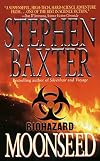
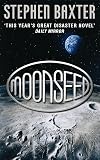
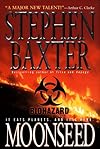
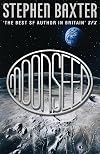
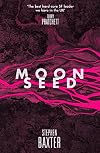
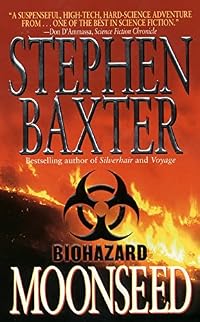
It Eats Planets. And It's Here. It starts when Venus explodes into a brilliant cloud of dust and debris, showering Earth with radiation and bizarre particles that wipe out all the crops and half the life in the oceans, and fry the ozone layer. Days later, a few specks of moon rock kicked up from the last Apollo mission fall upon a lava crag in Scotland. That's all it takes . . . Suddenly, the ground itself begins melting into pools of dust that grow larger every day. For what has demolished show more Venus, and now threatens Earth itself, is part machine, part life-form: a nano-virus, dubbed Moonseed, that attacks planets. Four scientists are all that stand between Moonseed and Earth's extinction, four brilliant minds that must race to cut off the virus and save what's left of Earth--a pulse-stopping battle for discovery that will lead them from the Earth's inner core to a daredevil Moon voyage that could save, or damn, us all. show lessTags
Recommendations



Member Reviews
Not as breathtaking as Titan by the same author, but interesting nevertheless. Humanity brings doom upon itself by bringing a nano-technological grey goo from the Moon that slowly devours the Earth. This is a sad story where there is a very little hope. The first part is especially poignant - destruction of Edinburgh, misery and human stupidity. The interesting thing in Baxter's books is that his characters are full of flaws - not really typical heroes of SF but very much humans troubled by issues. The book is full of technical details regarding space exploration and geology. Large info-dumps are perhaps a nuisance to some but I enjoy them and Baxter certainly makes the subject interesting.
Some issues I had with the book: one show more particular character behaves in a very unbelievable way - I am taking about a teenager rascal turn into Space Religion Guru, secondly I feel that whole shtick in the end with main character convincing US to give him a nuke, no question asked - that rises some doubts - I understand that it was necessary for a big surprise in the end but still.
In the end - not my favorite Hard SF but certainly memorable. I think I will further my interest into Mr. Baxter's works. show less
Some issues I had with the book: one show more particular character behaves in a very unbelievable way - I am taking about a teenager rascal turn into Space Religion Guru, secondly I feel that whole shtick in the end with main character convincing US to give him a nuke, no question asked - that rises some doubts - I understand that it was necessary for a big surprise in the end but still.
In the end - not my favorite Hard SF but certainly memorable. I think I will further my interest into Mr. Baxter's works. show less
Stephen Baxter's work is good hard science fiction, and Moonseed is no exception. It is long and has many characters, but it is a intriguing idea for world disaster, made more so because it doesn't happen over a weekend but takes years to unfold. The political, personal, and technology elements are mixed well.
A slog to get through, at the 50% mark I started skimming chapters, and at 60% I was looking for a summary to get the ending. I enjoyed the premise but the writing didn't flow for me.
So for those in the same boat, you can read below for the spoiler version.
Once they get to the moon to determine why the moonseed acts differently there, the writing is a lot more enjoyable, the cuts back to the Earth where various random people die you can again safely skim/skip.
Henry determines that the moon is also riddled with moonseed, but there is a "hive ship" at the centre which acts as an asimov inhibitor:
"Its cloud of, umm, nano manufacturer insects, is trapped in the Moon's fabric. They stop their destructive behaviour because of some kind of asimov inhibitor".
He then decides that if he nukes the moon's pole he will release enough gas and volatiles to make it habitable for Earthlings. This is a success (with the sacrifice of Arkady) and the moonseed helps sustain the reaction. Earth is destroyed but a lot of people are evacuated to the moon. They also test experimental asimov circuits, to see if the Moonseed could be inhibited (it can) and the book ends with the idea that it can be met as an equal to help humanity explore the stars.
show less
So for those in the same boat, you can read below for the spoiler version.
Once they get to the moon to determine why the moonseed acts differently there, the writing is a lot more enjoyable, the cuts back to the Earth where various random people die you can again safely skim/skip.
Henry determines that the moon is also riddled with moonseed, but there is a "hive ship" at the centre which acts as an asimov inhibitor:
"Its cloud of, umm, nano manufacturer insects, is trapped in the Moon's fabric. They stop their destructive behaviour because of some kind of
He then decides that if he nukes the moon's pole he will release enough gas and volatiles to make it habitable for Earthlings. This is a success (with the sacrifice of Arkady) and the moonseed helps sustain the reaction. Earth is destroyed but a lot of people are evacuated to the moon. They also test experimental asimov circuits, to see if the Moonseed could be inhibited (it can) and the book ends with the idea that it can be met as an equal to help humanity explore the stars.
I couldn't finish this book. Too much detail and I couldn't identify with the characters at all.
The story is far-fetched sci-fi, but the science was interesting and made me think I wanted to do a little amateur reading. Not a bad author.
Very slow, i did plough through it though, started off promising
Members
- Recently Added By
Author Information

260+ Works 43,820 Members
Some Editions
Awards and Honors
Notable Lists
Series

Common Knowledge
- Original publication date
- 1998-08
- Important places
- Edinburgh, Scotland, UK; The Moon
- Original language
- English
Classifications
Statistics
- Members
- 892
- Popularity
- 30,076
- Reviews
- 11
- Rating
- (3.49)
- Languages
- English, French
- Media
- Paper, Audiobook, Ebook
- ISBNs
- 14
- ASINs
- 5