On This Page
Description
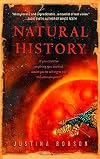
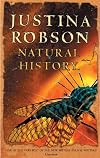
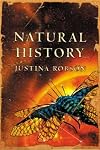
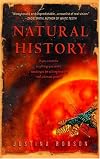
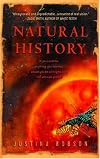
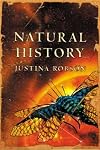
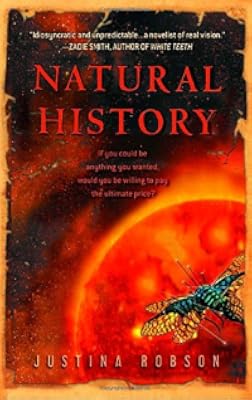
A daring and original new novel from one of sci fi’s most provocative voices, Natural History is a stunning work of bold ideas, unforgettable characters, and epic adventure as one woman seeks to explore what may be the greatest mystery of all. . . . “Idiosyncratic and unpredictable . . . a novelist of real vision.”—Zadie Smith, author of White Teeth Half-human, half-machine, Voyager Isol was as beautiful as a coiled scorpion–and just as dangerous. Her claim that she’d show more found a distant but habitable earthlike planet was welcome news to the rest of the Forged. But it could mean the end of what was left of the humanity who’d created and once enslaved them. It was on behalf of the “unevolved” humans that Professor Zephyr Duquesne, cultural archaeologist and historian of Earth’s lost worlds, was chosen by the Gaiasol military authority to uncover the truth about this second “earth.” And her voyage, traveling inside the body of Isol, will take her to the center of a storm exploding across a spectrum of space and time, dimension and consciousness. On an abandoned planet, in a wrinkle of time, Isol and Zephyr will find a gift and a curse: a power so vast that once unlocked, it will change the universe forever. With civil war looming, Zephyr’s perilous journey will lead her to a past where one civilization mysteriously vanished . . . and another may soon follow. “[Robson’s] strongest novel yet, reminiscent of Moorcock, Banks, M. John Harrison, and MacLeod . . . and should assure her position as being one of the most exciting genre writers at this present time.”—SFRevu show lessTags
Recommendations


Member Reviews
This is a very imaginative science fiction story -- the kind of risk that might work magnificently or fail catastrophically. It fell somewhere in the middle for me.
Robson conjures a future in which genetic engineering has allowed the human race to intentionally evolve special purpose types -- creatures who can do the work barred by human limitations but who remain human at their core. The "forged" have been specially engineered to travel through space or mine asteroids or terraform planets. As time goes along, the interests of the forged diverge from those of the "unevolved", and, of course, there are the downsides of lives devoted entirely to special purposes. The forged do remain human at their core, and they have the needs, show more ambitions, and desires of humans. But their fate, which of course they didn't choose -- they were engineered from conception or birth -- precludes much of that.
The book's plot takes that situation and inserts a discovery by the forged of an alien technology -- something that would allow them to separate from the unevolved and build a civilization of their own, one tuned to their own needs rather than to the service of the unevolved.
The aliens themselves seem absent, but in fact, they are presenting the forged (and one unevolved) with a choice. The use of their technology requires a choice to give up something maybe more fundamental to human life than any of the things that the forged miss in their current world and seek in a new one.
I think the story is a good one, a really ambitious one, and it's great to see science fiction that takes the risks that this story does. And it raises great questions.
It may be unavoidable that, in reading, finding my way through the world that Robson imagines detracts a bit from the focus on the question that she raises about what makes us human and what we would or would not give up. A less risky story would keep as much of the world familiar as possible in order to focus the reader's attention on the question it raises. Robson pays special attention to what is different -- the appearances and abilities of the forged -- though because it is part of the question. How much can we change and still remain ourselves? How much would we really be willing to change? show less
Robson conjures a future in which genetic engineering has allowed the human race to intentionally evolve special purpose types -- creatures who can do the work barred by human limitations but who remain human at their core. The "forged" have been specially engineered to travel through space or mine asteroids or terraform planets. As time goes along, the interests of the forged diverge from those of the "unevolved", and, of course, there are the downsides of lives devoted entirely to special purposes. The forged do remain human at their core, and they have the needs, show more ambitions, and desires of humans. But their fate, which of course they didn't choose -- they were engineered from conception or birth -- precludes much of that.
The book's plot takes that situation and inserts a discovery by the forged of an alien technology -- something that would allow them to separate from the unevolved and build a civilization of their own, one tuned to their own needs rather than to the service of the unevolved.
The aliens themselves seem absent, but in fact, they are presenting the forged (and one unevolved) with a choice. The use of their technology requires a choice to give up something maybe more fundamental to human life than any of the things that the forged miss in their current world and seek in a new one.
I think the story is a good one, a really ambitious one, and it's great to see science fiction that takes the risks that this story does. And it raises great questions.
It may be unavoidable that, in reading, finding my way through the world that Robson imagines detracts a bit from the focus on the question that she raises about what makes us human and what we would or would not give up. A less risky story would keep as much of the world familiar as possible in order to focus the reader's attention on the question it raises. Robson pays special attention to what is different -- the appearances and abilities of the forged -- though because it is part of the question. How much can we change and still remain ourselves? How much would we really be willing to change? show less
A priori ‘Historia natural’ prometía bastante: un futuro lejano en el que la civilización está dividida entre forjados (humanos que han sido manipulados mediante nanotecnología y genética) y no evolucionados (humanos, simple y llanamente), y en donde los forjados son utilizados en misiones que van más allá de lo humano. La manera de conseguirlo, entrenándolos en un ambiente virtual para posteriormente transformarlos y manipularlos como si de máquinas esclavas se tratase para las misiones más variopintas, como exploraciones del espacio profundo o terraformando planetas. Hasta que aparece una extraña entidad y uno de los forjados se hace con un motor espacial con el que recorrer largas distancias instantáneamente.
Pero lo show more prometido en las primeras páginas acaba diluyéndose en una historia que no acaba de cuajar, y en unos personajes nada interesantes y en absoluto carismáticos. Y lo que a primera vista parecía más atractivo, ese primer contacto, no acaba de solucionarse como debería. La novela puede encasillarse en el apartado de ciencia ficción hard, con toques space opera, pero la verdad es que el sentido de la maravilla, algo que se espera en este tipo de géneros, prácticamente no lo he encontrado. Diría que en algunas páginas de Alastair Reynolds o Iain M. Banks, hay más sentido de la maravilla que en toda esta novela. show less
Pero lo show more prometido en las primeras páginas acaba diluyéndose en una historia que no acaba de cuajar, y en unos personajes nada interesantes y en absoluto carismáticos. Y lo que a primera vista parecía más atractivo, ese primer contacto, no acaba de solucionarse como debería. La novela puede encasillarse en el apartado de ciencia ficción hard, con toques space opera, pero la verdad es que el sentido de la maravilla, algo que se espera en este tipo de géneros, prácticamente no lo he encontrado. Diría que en algunas páginas de Alastair Reynolds o Iain M. Banks, hay más sentido de la maravilla que en toda esta novela. show less
In this mash-up of space fiction, post-human identity conflict, and traumatic evolutionary leap forward, most of the action is seen through the eyes of the "Forged;" manufactured sentient beings who share DNA with Humanity, but who seldom have the oppertunity to escape the constraints of their programming and functional limitations. Enter Voyager Isold, a sentient exploration probe who, on the verge of death, discovers a piece of alien technology that will seemingly allow you to do anything, and which just happens to be in the vicinity of a habitable planet. What's a wannabe revolutionary to do but make contact with her comrades and throw the gauntlet of freedom in the face of those pesky Humans? The problem is that the new technology show more is not that simple, and it makes irreversible demands on the users. What those demands actually are, how the assorted characters come to understand the price demanded of real change, and how they make their peace with this situation (or don't) is the real point of this novel. I thought that the pay-off was worth it in the end, but many readers might not have a lot of patience what is basically an exercise in puzzle-solving, with a large dollop of self-loathing on the side from the characters, who really don't spend that much time interacting with each other. show less
Unusually for me, I bailed on Natural History at around the 30% mark - pedestrian world-building, pages and pages of expository text and we never stayed with a character long enough to get any idea of their motivations. Plus it's supposed to be the distant future with transhumanism, nanotech and virtual realities, and yet Earth and the unmodified humans seemed to be at about a present day plus fifty or one hundred years state of organisation, except for speech idioms, which were late 20th century.
One thing about Robson's book: she's certainly given herself a lot of scope for interesting characters. It's the 25th century and, in addition to artificial intelligences, space colonies and virtual realities, humans have created the Forged. These are individuals whose existence started somewhere with H. sapiens DNA but—through admixtures of genetic material from other species, straight out invention of new DNA sequences, massive amounts of cyborg technology, extensive behavioral programming, implanting of symbionts, and just about every other technology you can imagine being applied—have become entirely new life forms. There is everything from small avian-derived messengers, to insectoid space explorers, to kilometer-long creatures show more who can terraform hostile worlds.
Against this backdrop, one of the Forged has discovered some alien technology that allows faster than light travel and has traced that technology to a habitable, but uninhabited, planet far from Earth. Everybody from Government to Organized Crime to Forged Radicals wants the alien technology. Separatist movements in the Forged community don't see eye to eye with regular humans (the Unevolved, as they call us) about the new world. Struggles ensue.
But wait! Use of the technology may have unrealized consequences. Perhaps that planet isn't completely abandoned after all…
…Never mind. It's all a MacGuffin. This isn't what the story is about. More on this in a moment.
Robson often gets billed as one of the "new hard sf writers out of Britain". Don't let the "hard sf" label dissuade you. This book is hard science fiction in the sense that it gives center stage to technology...in fact, the story revolves around it. However, you won't get lost if science isn't your cup of tea. To a large extent, Robson just slings around some terms to let you know, "Science is going on here." The Forged have nanocytes and neuronics and Ti-bone skeletons. Humans and Forged have MekTek implants. AIs are on the Grid. That's it. That's the depth of the science. Don't expect (or dread) explanations that go any deeper.
What this story really is about is what it means to be human. There are subplots on privilege and choice in life, on social classes and resentment, on individuality versus community. There's a bit on what evolution means. In that sense, this is very much soft science fiction.
It's a good start in that direction. The play between the motivations and mindsets of the Forged and the Unevolved, between one type of Forged and another, are interesting and produce some great characters.
I wish she had taken it further. In particular, there were two juxtapositions she set up and then did nothing with. The first was the relationship between, Zephyr, a plain old human, and Anthony, a human so heavily modified with cyborg technology that he had powers far beyond the human scale. The second was between Zephyr and her Artificial Intelligence. This last was particularly disappointing since the AI had a personality as developed as any character in the book and, yet, it remarks that it isn't truly a real person. Exploration of the whys of that would have been interesting. In fact, interactions between the categories of characters are relatively rare…unfortunately so, since they were the most interesting aspect.
In the end, it's a book with flaws. It feels like Robson tried to do too much and simply ran out of room: the ending feels rushed and weak; the explorations of humanity beyond the Unevolved/Forged dichotomy are left hanging. She needed to sharpen her focus and let the technology and world-building simply be a backdrop instead of hogging center stage.
Nonetheless, it's a fascinating world with plenty of potential for future stories. The main plot line of this one is fairly interesting. There are some great characters and Robson has a very enjoyable writing style the makes up for some of the problems. show less
Against this backdrop, one of the Forged has discovered some alien technology that allows faster than light travel and has traced that technology to a habitable, but uninhabited, planet far from Earth. Everybody from Government to Organized Crime to Forged Radicals wants the alien technology. Separatist movements in the Forged community don't see eye to eye with regular humans (the Unevolved, as they call us) about the new world. Struggles ensue.
But wait! Use of the technology may have unrealized consequences. Perhaps that planet isn't completely abandoned after all…
…Never mind. It's all a MacGuffin. This isn't what the story is about. More on this in a moment.
Robson often gets billed as one of the "new hard sf writers out of Britain". Don't let the "hard sf" label dissuade you. This book is hard science fiction in the sense that it gives center stage to technology...in fact, the story revolves around it. However, you won't get lost if science isn't your cup of tea. To a large extent, Robson just slings around some terms to let you know, "Science is going on here." The Forged have nanocytes and neuronics and Ti-bone skeletons. Humans and Forged have MekTek implants. AIs are on the Grid. That's it. That's the depth of the science. Don't expect (or dread) explanations that go any deeper.
What this story really is about is what it means to be human. There are subplots on privilege and choice in life, on social classes and resentment, on individuality versus community. There's a bit on what evolution means. In that sense, this is very much soft science fiction.
It's a good start in that direction. The play between the motivations and mindsets of the Forged and the Unevolved, between one type of Forged and another, are interesting and produce some great characters.
I wish she had taken it further. In particular, there were two juxtapositions she set up and then did nothing with. The first was the relationship between, Zephyr, a plain old human, and Anthony, a human so heavily modified with cyborg technology that he had powers far beyond the human scale. The second was between Zephyr and her Artificial Intelligence. This last was particularly disappointing since the AI had a personality as developed as any character in the book and, yet, it remarks that it isn't truly a real person. Exploration of the whys of that would have been interesting. In fact, interactions between the categories of characters are relatively rare…unfortunately so, since they were the most interesting aspect.
In the end, it's a book with flaws. It feels like Robson tried to do too much and simply ran out of room: the ending feels rushed and weak; the explorations of humanity beyond the Unevolved/Forged dichotomy are left hanging. She needed to sharpen her focus and let the technology and world-building simply be a backdrop instead of hogging center stage.
Nonetheless, it's a fascinating world with plenty of potential for future stories. The main plot line of this one is fairly interesting. There are some great characters and Robson has a very enjoyable writing style the makes up for some of the problems. show less
Justina Robson writes a blend of Space opera, hard sci-fi of the quantum physics variety, New Weird I suppose, with a pinch of moral philosophy thrown in. This was a fairly complicated read for me, constantly interesting but somewhat slowgoing. I guess I hit it at a bad time too – this is not the kind of book to try to attempt a few pages at the time before falling asleep in the evening.
In a far future, mankind is divided into the Unevolved and the fabricated Forged. The Forged are human minds inplanted into bio-constructed bodies, born as adults but with speeded up virtual childhoods. Many of the Forged have no physical resemblance of humans at all, created to operate in deep space. And even their minds are tuned to accentuate show more certain traits. The exploring Voyagers for instance, resemble a kind of mix between Bumblebee and Scorpio, with personalities bordering on the autistic to allow them to be alone for years at the time. The basic human need for company and social interaction is in them instead tweeked to be stimulated by discovering certain radiation patterns. The Forged are considered human, and have equal rights in theory. But with no means of reproduction of their own, and with a programming designing them for specific jobs, many Forged feel like second rate citizens. In fact, there is a rather large Independent movement brewing.
When the Voyager Isol returns to earth, fitted with a strange new technology, and reports stumbling onto a strange new world, fit for human existence but apparently totally deserted, it’s seen as a possiblity to break free, creating a homeworld for the Forged. The governments of Earth demand an investigation to see if the planet is really void. The archeologist Zephyr is chosen to be the first Unevolved to visit an alien planet. She and Isol don’t exactly hit it off, and she soon realises she’s mainly a delaying tactic to buy Earth some time. And on the strange new world with no means of getting home on her own, it quickly becomes apparent Isol hasn’t been telling the whole truth. There is something alive on this planet after all.
One of the most fascinating things about this dense book is Robson’s ability to create characters that are both very human and incredibly strange. Among the main players here are (besides the rude, solipsistic space travelling scorpio) a senile Terraformer, a worker in a collective Hive mind, an Eagle creature that didn’t turn out quite right and a one hundred meter long oval blimp that vainly prefers to manifest as a slender blue humanoid is his capacity as union leader.
Unfortunately, Robson doesn’t quite bring the plot home. The last forty of fifty pages seem too neatly settled in some cases, and too randomly rambling in others. I end up feeling a little unconvinced, but the ability to create relateable post-human strangeness and the boldness of ideas are enough to make me want to give this writer another chance. show less
In a far future, mankind is divided into the Unevolved and the fabricated Forged. The Forged are human minds inplanted into bio-constructed bodies, born as adults but with speeded up virtual childhoods. Many of the Forged have no physical resemblance of humans at all, created to operate in deep space. And even their minds are tuned to accentuate show more certain traits. The exploring Voyagers for instance, resemble a kind of mix between Bumblebee and Scorpio, with personalities bordering on the autistic to allow them to be alone for years at the time. The basic human need for company and social interaction is in them instead tweeked to be stimulated by discovering certain radiation patterns. The Forged are considered human, and have equal rights in theory. But with no means of reproduction of their own, and with a programming designing them for specific jobs, many Forged feel like second rate citizens. In fact, there is a rather large Independent movement brewing.
When the Voyager Isol returns to earth, fitted with a strange new technology, and reports stumbling onto a strange new world, fit for human existence but apparently totally deserted, it’s seen as a possiblity to break free, creating a homeworld for the Forged. The governments of Earth demand an investigation to see if the planet is really void. The archeologist Zephyr is chosen to be the first Unevolved to visit an alien planet. She and Isol don’t exactly hit it off, and she soon realises she’s mainly a delaying tactic to buy Earth some time. And on the strange new world with no means of getting home on her own, it quickly becomes apparent Isol hasn’t been telling the whole truth. There is something alive on this planet after all.
One of the most fascinating things about this dense book is Robson’s ability to create characters that are both very human and incredibly strange. Among the main players here are (besides the rude, solipsistic space travelling scorpio) a senile Terraformer, a worker in a collective Hive mind, an Eagle creature that didn’t turn out quite right and a one hundred meter long oval blimp that vainly prefers to manifest as a slender blue humanoid is his capacity as union leader.
Unfortunately, Robson doesn’t quite bring the plot home. The last forty of fifty pages seem too neatly settled in some cases, and too randomly rambling in others. I end up feeling a little unconvinced, but the ability to create relateable post-human strangeness and the boldness of ideas are enough to make me want to give this writer another chance. show less
About 400 years in the future, we're out in space although not far as we are without FTL but we have engineered a type of being called the Forged, part human and part machine to do our heavy lifting, especially in outer space. This includes living ships, btw, so you travel inside 'someone'. Isol, one of the earlier exploring Forged, stumbles upon a made object in space that has some strange properties; it is hanging about in space close to a planet that is habitable but 'dead', no plant life or animal life. This 'object' subsequently named 'Stuff' and it is a lot more sophisticated and dangerous than it appears to be at first but Isol happens to be a passionate member of the Forged separatist movement and instantly sees both Stuff and show more this planet as the means and the place where the Forged can go to begin new and indepedent lives, free of Form and Function, and the Unevolved, their name for their human creators. Stuff is capable of forming itself into an FTL drive........very seductive to Isol and everyone.... but there is a catch...... Among the many excellent things in [Natural History] the most enjoyable are a steady humour and the descriptions of different types of Forged -- including immense machines used for terraforming (so dedicate however to the form and function principle that they have to be put in stasis when not working or they will destroy themselves). Anyhow, there's the story. Enter Zephyr the anthropologist sent to this plannet named Zia di Notte, (aunt of the night, in italian, which is an obscure meaning if ever there was one, unless it's an idiom?). Robson is a philosopher/linguist and the issues revolve knowledgeably and confidently around the sentience and ethics, and enjoyably around the concept of the 'invisible universes' contained in the 7 dimensions posited but hidden to us in our humble, time-driven, four. Most importantly for a story there are several great characters, in particular Corvax, a Forged of the Roc Handslicer class gone rogue and Zephyr, the anthropologist. Zephyr's first trip in a Forged ship is memorably and funny. The ending was somewhere between predictable and sufficiently surprising to satisfy me although it felt to me as if more could be written about the Forged and their evolution and are Abacands truly not capable, ever, of sentience? A solid ****. show less
Members
- Recently Added By
Lists

Favorite Science Fiction by Women Authors
737 works; 202 members

Broderick and Di Filippo's Science Fiction: The 101 Best Novels 1985-2010
103 works; 7 members
Author Information

31+ Works 3,808 Members
Justina Robson was a teacher (2002,2006) at the Arvon Foundation in the UK.
Awards and Honors
Awards
Distinctions
Notable Lists
Series

Common Knowledge
- Original publication date
- 2003-04-18
- People/Characters
- Voyager Lonestar Isol; Zephyr Duquesne
- Epigraph
- A long, long time ago, I can still remember how that music used to make me smile . . .
- Dedication
- For fun, and for my friends—you know who you are
- First words
- Voyager Lonestar Isol was holed like a Swiss cheese, peppered with tiny wounds like a bird caught in a blast of shot.
- Last words
- (Click to show. Warning: May contain spoilers.)After two thrillering hours of pure enjoyment, he was glad to return to the stuffy office, reclaim his place at his master's feet, and slideinto a restful sleep safe in the knowledge that, tomorrow and tomorrow and tomorrow, life would carry on its limitless paradise of curious instants—each an essential contribution to the inexplicable mystery.
Classifications
Statistics
- Members
- 527
- Popularity
- 56,888
- Reviews
- 24
- Rating
- (3.48)
- Languages
- English, German, Spanish
- Media
- Paper, Ebook
- ISBNs
- 8
- ASINs
- 1