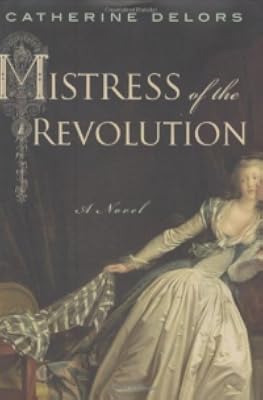
Mistress of the Revolution
by Catherine Delors 
On This Page
Description
View our feature on Catherine Delors' Mistress of the Revolution.An impoverished noblewoman, Gabrielle de Montserrat is only fifteen when she meets her first love, a commoner named Pierre-André Coffinhal. But her brother forbids their union, forcing her instead to marry an aging, wealthy cousin. Widowed and a mother before the age of twenty, Gabrielle arrives at the court of Louis XVI and Marie Antoinette in time to be swept up in the emerging turbulence--and to encounter the man she never show more expected to see again. Determined and independent, she strives to find her own freedom-- as the Revolution takes an ever more violent turn. show lessTags
Recommendations
















Member Reviews
I will not say that Catherine Delors is a bad writer, but I will say that I hated the Mistress of the Revolution. I'll tell you why. I was immediately drawn into the first 60 pages or so. Gabrielle falls in love with Pierre-Andre at the age of fifteen, but is forced to marry another. Eventually, according to the back of the book, Gabrielle will be reacquainted with Pierre-Andre. The back of the book also says that Gabrielle was supposed to be "more independent," a woman shaped by her experiences, when she meets Pierre-Andre. I was eager for her to change her incredibly docile attitude that she had toward her two husbands. However, while Gabrielle matures, she never really changes.
Okay, so I was incredibly disappointed because it wasn't show more even until the last 100 pages (out of a 500 page book) that she even encountered Pierre-Andre. But I tried to push through by telling myself that maybe Delores doesn't want a conventional story full of romance, so she is saving the meeting until the end. I wouldn't have minded reading the mundane life of a woman living in 18th century France if I had at least cared for Gabrielle in any way. However, Gabrielle had no personality, so reading about her going to the opera, gossiping (which fills, it seems, at least 50 pages of the book), hating her husband, and then loving him again was torturous. There are also way too many characters introduced that were hollow and undeveloped.
I finally got to the part where Gabrielle meets Pierre-Andre and became instantly confused. Pierre-Andre is absolutely like all the other husbands Gabrielle has had. Upon their first meeting, Pierre-Andre slaps Gabrielle with no remorse. There was even a part, which I loudly scoffed at, where Pierre-Andre strangles Gabrielle because she is lying! Their whole relationship is based on Gabrielle apologizing for speaking her mind and Pierre-Andre putting her in her place--"do not make requests to me!” Gabrielle pleads and begs and apologizes throughout the entire relationship. She will, occasionally, muster the courage to ask a favor of him, but only after apologizing for interfering with his business first. The only difference this relationship has with her past husbands is that she claims to love Pierre-Andre. Oh wait, no she claimed to love her second husband, too--and even took him back after he cheated on her. Now, I could have handled the book if the relationship was based on some historical character--then I might have understood the concept of the story. However, Gabrielle is completely made up. The back of the book was misleading, Gabrielle never becomes independent and Pierre-Andre is no different than the other husbands Gabrielle received and loved. I was also taken aback by Gabrielle's total of four marriages -- she seemed to go through men like the French's ever changing fashions. If Gabrielle had been based on a historical character, I would have understood the book. However, she is completely fictional and a character I would have preferred be sent to the guillotine. show less
Okay, so I was incredibly disappointed because it wasn't show more even until the last 100 pages (out of a 500 page book) that she even encountered Pierre-Andre. But I tried to push through by telling myself that maybe Delores doesn't want a conventional story full of romance, so she is saving the meeting until the end. I wouldn't have minded reading the mundane life of a woman living in 18th century France if I had at least cared for Gabrielle in any way. However, Gabrielle had no personality, so reading about her going to the opera, gossiping (which fills, it seems, at least 50 pages of the book), hating her husband, and then loving him again was torturous. There are also way too many characters introduced that were hollow and undeveloped.
I finally got to the part where Gabrielle meets Pierre-Andre and became instantly confused. Pierre-Andre is absolutely like all the other husbands Gabrielle has had. Upon their first meeting, Pierre-Andre slaps Gabrielle with no remorse. There was even a part, which I loudly scoffed at, where Pierre-Andre strangles Gabrielle because she is lying! Their whole relationship is based on Gabrielle apologizing for speaking her mind and Pierre-Andre putting her in her place--"do not make requests to me!” Gabrielle pleads and begs and apologizes throughout the entire relationship. She will, occasionally, muster the courage to ask a favor of him, but only after apologizing for interfering with his business first. The only difference this relationship has with her past husbands is that she claims to love Pierre-Andre. Oh wait, no she claimed to love her second husband, too--and even took him back after he cheated on her. Now, I could have handled the book if the relationship was based on some historical character--then I might have understood the concept of the story. However, Gabrielle is completely made up. The back of the book was misleading, Gabrielle never becomes independent and Pierre-Andre is no different than the other husbands Gabrielle received and loved. I was also taken aback by Gabrielle's total of four marriages -- she seemed to go through men like the French's ever changing fashions. If Gabrielle had been based on a historical character, I would have understood the book. However, she is completely fictional and a character I would have preferred be sent to the guillotine. show less
Gabrielle de Montserrat is fifteen when she meets Pierre-Andre, a commoner whom she wishes to marry. Living with her brother, the Marquis, and her cruel mother, Gabrielle's plans are dashed when her brother marries her off to another man who uses his brutality to control her. When Gabrielle's husband dies unexpectedly, leaving her and her young daughter destitute, she must find a way to feed and shelter herself, even if it means becoming the mistress to a notorious cad. As Gabrielle navigates life for her and her daughter, the first rumblings of the French revolution begin to sound, which will eventually put her and everything she holds dear in danger. As the populace and the nobility turn on each other, and arrest and bloodshed become show more the order of the day, Gabrielle comes face to face with the man she left behind. But circumstances and lives have been irrevocably changed. Facing poverty, imprisonment, and the deaths of many of those closest to her in this complicated and unsettling time, Gabreille's life begins to head into unknown and unfamiliar territory. Charged with intrigue and emotion, Mistress of the Revolution tells Gabrielle's extraordinary story.
After reading the first few pages of this book, I was hooked. Gabrielle's story, written in the guise of a memoir, was filled with drama, pathos and excitement. I found her to be a wonderful character, both humble yet wise and forgiving. Through the course of the book, she went from a naïve teenager to a more thoughtful and well rounded woman, a woman shaped by her experiences. I thought that the personal growth evinced in the protagonist was very genuine and frank, and enabled me to really get close to Gabrielle and truly care about her circumstances. Instead of her innocence and naïveté being fractured all at once, there seemed to be a gradual devolving of these aspects of her character, and while this part of her personality was eventually shed, other more salient qualities began to assert themselves in her.
Another thing I liked about this book was the author's ability to flesh out her characters and make them seem like real people who were a product of their times. All of the people that populated this book were multi-dimensional and the morality that each espoused was not black and white, but varying and believable shades of grey. I felt that this aided the credibility of these characters and made them seem very realistic. Though some of the characters in this book were unpleasant, all had my undivided attention and some even my sympathy. The characters in this novel were written with a great depth and experience, and I believe this is one of the things that made this book exceptional.
Although there were elements of romance in this story, I would have to say that this book didn't really fall into the romance genre. Yes, at times, the love-story aspect was the main focus of the narrative, but generally speaking, this was not the main drive nor the primary facet of the book. The romance elements were extremely well done and tasteful, never compromising the historical aspects of the plot, but rather infusing the story with relevance and sensitivity.
I also liked the atmosphere of the story. Though it wasn't really filled with period minutia, the flavor and ambiance was very authentic and lent credence to the plot. I found the descriptions of attire and accommodation very convincing, and many times I got lost in the era, avidly encountering the essence and surroundings in which the characters lived. I found that although I wasn't really familiar with the era or the setting, the level of detail and the general aura of the story was at once engrossing and informative, and not a derivative of this type of literature at all.
The first half of this book dealt mainly with Gabrielle's changing circumstances, from the upheaval of her home life to her tumultuous marriage and eventual escape from the same. The latter half dealt mainly with the machinations of the revolution and the unpredictability of the population and its monarchy. Though Gabrielle was still the star of the show, the latter half of the book cast a much wider net over the political situation in France, thus turning this book from a character driven novel into more of a plot driven novel. I found this to be a bit unusual, but thought that the author handled this very skillfully, and instead of the book losing focus, the effect was one of a gradual widening of perspective and scope.
As I mentioned previously, I was not very familiar with this time period or area of the world, but I felt that the author did a wonderful job of illustrating the confusion and uncertainties of the time, in addition to forming a great chronicle for those of us with scant information about the French Revolution. I also really enjoyed the dramatic tension and elements of suspense that the author threaded throughout the story. The great thing about this was that the dramatic elements were held just long enough to be tantalizing, but not long enough to make the plot feel over-developed. In addition, the author used just the right amount of foreshadowing to facilitate the plot and make the narrative compelling and interesting.
Overall I found this to be a very gripping story. The narrative never lost its focus or drive, but remained compelling and interesting throughout. I did not find the plot to be insubstantial at all, and although the book was lengthy, It didn't feel too weighty or dense. I really enjoyed the multi-layered character portrayals and thought that the book was written with a great skill and a unique style. As a work of historical fiction, I thought it an unqualified success. I would definitely recommend this book to readers who enjoy engrossing historical fiction. show less
After reading the first few pages of this book, I was hooked. Gabrielle's story, written in the guise of a memoir, was filled with drama, pathos and excitement. I found her to be a wonderful character, both humble yet wise and forgiving. Through the course of the book, she went from a naïve teenager to a more thoughtful and well rounded woman, a woman shaped by her experiences. I thought that the personal growth evinced in the protagonist was very genuine and frank, and enabled me to really get close to Gabrielle and truly care about her circumstances. Instead of her innocence and naïveté being fractured all at once, there seemed to be a gradual devolving of these aspects of her character, and while this part of her personality was eventually shed, other more salient qualities began to assert themselves in her.
Another thing I liked about this book was the author's ability to flesh out her characters and make them seem like real people who were a product of their times. All of the people that populated this book were multi-dimensional and the morality that each espoused was not black and white, but varying and believable shades of grey. I felt that this aided the credibility of these characters and made them seem very realistic. Though some of the characters in this book were unpleasant, all had my undivided attention and some even my sympathy. The characters in this novel were written with a great depth and experience, and I believe this is one of the things that made this book exceptional.
Although there were elements of romance in this story, I would have to say that this book didn't really fall into the romance genre. Yes, at times, the love-story aspect was the main focus of the narrative, but generally speaking, this was not the main drive nor the primary facet of the book. The romance elements were extremely well done and tasteful, never compromising the historical aspects of the plot, but rather infusing the story with relevance and sensitivity.
I also liked the atmosphere of the story. Though it wasn't really filled with period minutia, the flavor and ambiance was very authentic and lent credence to the plot. I found the descriptions of attire and accommodation very convincing, and many times I got lost in the era, avidly encountering the essence and surroundings in which the characters lived. I found that although I wasn't really familiar with the era or the setting, the level of detail and the general aura of the story was at once engrossing and informative, and not a derivative of this type of literature at all.
The first half of this book dealt mainly with Gabrielle's changing circumstances, from the upheaval of her home life to her tumultuous marriage and eventual escape from the same. The latter half dealt mainly with the machinations of the revolution and the unpredictability of the population and its monarchy. Though Gabrielle was still the star of the show, the latter half of the book cast a much wider net over the political situation in France, thus turning this book from a character driven novel into more of a plot driven novel. I found this to be a bit unusual, but thought that the author handled this very skillfully, and instead of the book losing focus, the effect was one of a gradual widening of perspective and scope.
As I mentioned previously, I was not very familiar with this time period or area of the world, but I felt that the author did a wonderful job of illustrating the confusion and uncertainties of the time, in addition to forming a great chronicle for those of us with scant information about the French Revolution. I also really enjoyed the dramatic tension and elements of suspense that the author threaded throughout the story. The great thing about this was that the dramatic elements were held just long enough to be tantalizing, but not long enough to make the plot feel over-developed. In addition, the author used just the right amount of foreshadowing to facilitate the plot and make the narrative compelling and interesting.
Overall I found this to be a very gripping story. The narrative never lost its focus or drive, but remained compelling and interesting throughout. I did not find the plot to be insubstantial at all, and although the book was lengthy, It didn't feel too weighty or dense. I really enjoyed the multi-layered character portrayals and thought that the book was written with a great skill and a unique style. As a work of historical fiction, I thought it an unqualified success. I would definitely recommend this book to readers who enjoy engrossing historical fiction. show less
Two parts romance novel, one part history textbook, I was unsure how to take Catherine Delors’ debut novel until nearly at the end, when both the story and characters managed to escape the French Revolution. Don’t get me wrong, the historical setting is the main reason I wanted to read this book, and Delors is a very intelligent, accurate author, but I have read so many novels about the Revolution, from Orczy to DuMaurier, that the protagonist and premise need to be either original or unusual to capture my interest, and Mistress of the Revolution is all too familiar. So the reason why the narrative seemed slow and even dull in places is probably because I’ve already been there and done that, as an aristocratic woman or a sans show more culottes peasant, in first person or third. Apart from the lack of originality, I think I would have been impressed.
The story begins in 1815, just after the reinterment at Saint-Denis of the bones of King Louis XVI and Marie Antoinette. As an opening chapter, Delors couldn’t have crafted a more attention-grabbing, historically interesting and appropriate marker, and I was instantly drawn in. An émigré living in London, narrator Gabrielle de Montserrat is spurred into writing her memoirs upon learning of this ceremony in Paris, committing to paper an account of her life for her children. Born to a noble yet impoverished family in Auvergne, Gabrielle was raised by a country wet nurse, educated in a convent and then brought home to her dysfunctional family as a fifteen year old. After falling in love with a local doctor, Pierre-Andre Coffinhal (a real-life figure of the Revolution), Gabrielle is forced into marriage with a cruel baron twice her age. This sudden descent into an eighteenth century gothic novel jars with the more sedate and serious narrative of the introduction, and for readers of modern historical romance, Gabrielle’s abortive demonstrations of independence are probably just as difficult to stomach. But I applaud Catherine Delors for recognising the limited options of a young girl like Gabrielle, and not allowing her heroine an easy way out of her predicament.
After a brief but brutal marriage to the Baron de Peyre, Gabrielle is left widowed and virtually penniless with a young daughter, Aimée. The first of a series of convenient opportunities brings Gabrielle to Paris to be a companion to an aging Duchess, who nicknames her ‘Belle’ (after Beauty and the Beast) and introduces her to the court at Versailles. ‘Belle’ also meets the man who will become her lover and protector, the Count de Villers. At this point, the infodumps and romantic devices almost put me off, but the retrospective tone of the narrative – Gabrielle explaining the Old Regime to her children – and the realistic treatment of ‘Belle’s new life as a kept woman, or courtesan, adequately balance the clumsy dialogue and perfect praise of the heroine.
In fact, Gabrielle is a strangely nuanced character for this type of novel, and I enjoyed her naiveté and manoeuvring in equal measure. She reminded me of Katherine Windsor’s indefatigable heroine in Forever Amber, except that Gabrielle is less of a tart. She wants what is convenient for her at that moment, without a thought for the needs of others. Villers is much the same – he wants her to become his exclusive property, yet will not make an honest woman of her. Belle accepts his terms, grudgingly, when he lavishes his time and money on her, hires a governess for her daughter, and takes them both to his vast country estate by the sea. But when he changes his mind and wants to marry her, suddenly Belle is too taken with her ‘independence’ and runs away from him in a fit of pique when she learns he has a new mistress. Infuriating, yet Belle manages to make her motivations sound perfectly reasonable. She is the same with her first love, Pierre-Andre, when the two meet again in Revolutionary Paris. He smacks her across the face for propositioning him merely to save her own skin, in possibly the most literal example of ‘slap-slap-kiss-kiss’ I have ever read, but then takes her up on her offer.
Gabrielle, thanks to the stage-managed coincidences which feed the story, finds herself at the heart of the Revolution, but on the wrong side. Arrested again and again, narrowly escaping death in La Force and then thrown in La Conciergerie, she is quickly reduced from an impoverished baroness to a social and political outcast, even though she talks the talk about liberty and equality. Delors has done her research, and Gabrielle’s experience in La Force is possibly one of the most gruesome scenes I have read in this type of fiction. The novel spans the whole of the Revolution, with a historical cast of thousands (pro-Robespierre as per usual), and although Gabrielle’s exile to England is a foregone conclusion, the final few chapters are strangely more engrossing than the melodramas which form the bulk of the story.
Though far from ground-breaking and even formulaic in parts – Gabrielle, a beautiful redhead, is safely republican in her views – Mistress of the Revolution manages to convey the historical background and social turmoil of the Revolution in a simple yet powerful narrative. Delors also claims that she ‘strove to write this novel in the British English that Gabrielle would have used in 1815’, which is commendable if not entirely successful.
Definitely recommended for any readers of historical novels who are not jaded with this particularly chapter in French history! show less
The story begins in 1815, just after the reinterment at Saint-Denis of the bones of King Louis XVI and Marie Antoinette. As an opening chapter, Delors couldn’t have crafted a more attention-grabbing, historically interesting and appropriate marker, and I was instantly drawn in. An émigré living in London, narrator Gabrielle de Montserrat is spurred into writing her memoirs upon learning of this ceremony in Paris, committing to paper an account of her life for her children. Born to a noble yet impoverished family in Auvergne, Gabrielle was raised by a country wet nurse, educated in a convent and then brought home to her dysfunctional family as a fifteen year old. After falling in love with a local doctor, Pierre-Andre Coffinhal (a real-life figure of the Revolution), Gabrielle is forced into marriage with a cruel baron twice her age. This sudden descent into an eighteenth century gothic novel jars with the more sedate and serious narrative of the introduction, and for readers of modern historical romance, Gabrielle’s abortive demonstrations of independence are probably just as difficult to stomach. But I applaud Catherine Delors for recognising the limited options of a young girl like Gabrielle, and not allowing her heroine an easy way out of her predicament.
After a brief but brutal marriage to the Baron de Peyre, Gabrielle is left widowed and virtually penniless with a young daughter, Aimée. The first of a series of convenient opportunities brings Gabrielle to Paris to be a companion to an aging Duchess, who nicknames her ‘Belle’ (after Beauty and the Beast) and introduces her to the court at Versailles. ‘Belle’ also meets the man who will become her lover and protector, the Count de Villers. At this point, the infodumps and romantic devices almost put me off, but the retrospective tone of the narrative – Gabrielle explaining the Old Regime to her children – and the realistic treatment of ‘Belle’s new life as a kept woman, or courtesan, adequately balance the clumsy dialogue and perfect praise of the heroine.
In fact, Gabrielle is a strangely nuanced character for this type of novel, and I enjoyed her naiveté and manoeuvring in equal measure. She reminded me of Katherine Windsor’s indefatigable heroine in Forever Amber, except that Gabrielle is less of a tart. She wants what is convenient for her at that moment, without a thought for the needs of others. Villers is much the same – he wants her to become his exclusive property, yet will not make an honest woman of her. Belle accepts his terms, grudgingly, when he lavishes his time and money on her, hires a governess for her daughter, and takes them both to his vast country estate by the sea. But when he changes his mind and wants to marry her, suddenly Belle is too taken with her ‘independence’ and runs away from him in a fit of pique when she learns he has a new mistress. Infuriating, yet Belle manages to make her motivations sound perfectly reasonable. She is the same with her first love, Pierre-Andre, when the two meet again in Revolutionary Paris. He smacks her across the face for propositioning him merely to save her own skin, in possibly the most literal example of ‘slap-slap-kiss-kiss’ I have ever read, but then takes her up on her offer.
Gabrielle, thanks to the stage-managed coincidences which feed the story, finds herself at the heart of the Revolution, but on the wrong side. Arrested again and again, narrowly escaping death in La Force and then thrown in La Conciergerie, she is quickly reduced from an impoverished baroness to a social and political outcast, even though she talks the talk about liberty and equality. Delors has done her research, and Gabrielle’s experience in La Force is possibly one of the most gruesome scenes I have read in this type of fiction. The novel spans the whole of the Revolution, with a historical cast of thousands (pro-Robespierre as per usual), and although Gabrielle’s exile to England is a foregone conclusion, the final few chapters are strangely more engrossing than the melodramas which form the bulk of the story.
Though far from ground-breaking and even formulaic in parts – Gabrielle, a beautiful redhead, is safely republican in her views – Mistress of the Revolution manages to convey the historical background and social turmoil of the Revolution in a simple yet powerful narrative. Delors also claims that she ‘strove to write this novel in the British English that Gabrielle would have used in 1815’, which is commendable if not entirely successful.
Definitely recommended for any readers of historical novels who are not jaded with this particularly chapter in French history! show less
A book about the French Revolution that manages to be both charming and captivating. The history is incredibly well-drawn, with a brutal distinction drawn between the lavish excesses of the aristocracy in the 1780s and the stark, bloody reality of the Revolution in the 1790s. One wishes at time that the heroine had a bit more of a backbone, but then again, it's almost commendable of the author that she doesn't. Certainly Delors escapes the anachronistic urges that seem to attack so many authors of historical fiction; Gabrielle is precisely what so many women of that era were: sheltered, naive, submissive, and ultimately she makes for an incredibly sympathetic narrator. I thoroughly enjoyed this novel.
This tale of Gabrielle de Montserrat and her first love Pierre-Andre Coffinhal is an engrossing historical epic. Gabrielle's life witnesses some of the pivotal events of the French Revolution and the heroine is often effected by the changing political currents.
The primary thing I found frustrating about this novel was how often the central character of Gabrielle found herself a victim of the men in her life. She is forced into an abusive marriage, and later has a lover who treats her poorly. While a likable character overall, I really wanted her to stand up for herself and take her fate into her own hands instead of simply appealing to another man.
The primary thing I found frustrating about this novel was how often the central character of Gabrielle found herself a victim of the men in her life. She is forced into an abusive marriage, and later has a lover who treats her poorly. While a likable character overall, I really wanted her to stand up for herself and take her fate into her own hands instead of simply appealing to another man.
The book is based upon true events of the French Revolution. Many of the characters are inspired by historical figures.
The story centers on Gabrielle de Montserrat, born of noble blood. Her mistake was to fall in love with a commoner, Pierre-Andrè Coffinhal. Throughout the story, I tingled with excitement as I thought I knew what was going to happen next. This was all a vain attempt on my part, as the author surprised me with each new twist.
Gabrielle’s story is a fictional memoir, told in her own voice as she recounts her life beginning when her brother and guardian, Gèraud de Monsterrat, Marquis de Castel, brought her to live with him. Later on in the story, after meeting and falling in love with Pierre-Andrè Coffinhal, her show more brother finds out and she is forced into a marriage with a sadistic husband.
Her life has many phases, one of which will lead her to Paris where she will again meet Pierre-Andrè. During this time, France is unstable, on the brink of political and social upheaval. The decisions she made seemed the best at the time, but even towards the end, she wondered what would have happened if she had decided differently. It’s something I am still pondering over.
The author should be commended her display of realism. This book took me so far into the story that I completely forgot about my own life. Luckily, we are on spring break and I have some free time. Oh, let me warn you now, although it might be tempting to read the last few chapter to see what will happen in the end, DON'T! I am one to talk since that is what I usually do. For some reason, I didn’t in this book. I guess I was so busy reading that I forgot. Anyway, I’m glad I didn't as it will ruin the book. show less
The story centers on Gabrielle de Montserrat, born of noble blood. Her mistake was to fall in love with a commoner, Pierre-Andrè Coffinhal. Throughout the story, I tingled with excitement as I thought I knew what was going to happen next. This was all a vain attempt on my part, as the author surprised me with each new twist.
Gabrielle’s story is a fictional memoir, told in her own voice as she recounts her life beginning when her brother and guardian, Gèraud de Monsterrat, Marquis de Castel, brought her to live with him. Later on in the story, after meeting and falling in love with Pierre-Andrè Coffinhal, her show more brother finds out and she is forced into a marriage with a sadistic husband.
Her life has many phases, one of which will lead her to Paris where she will again meet Pierre-Andrè. During this time, France is unstable, on the brink of political and social upheaval. The decisions she made seemed the best at the time, but even towards the end, she wondered what would have happened if she had decided differently. It’s something I am still pondering over.
The author should be commended her display of realism. This book took me so far into the story that I completely forgot about my own life. Luckily, we are on spring break and I have some free time. Oh, let me warn you now, although it might be tempting to read the last few chapter to see what will happen in the end, DON'T! I am one to talk since that is what I usually do. For some reason, I didn’t in this book. I guess I was so busy reading that I forgot. Anyway, I’m glad I didn't as it will ruin the book. show less
a great read. i was pulled in instantly. her characters came alive on the page. Her plot moved her themes along, history and religion explained seemlessly into the story.
Members
- Recently Added By
Author Information

8 Works 484 Members
Catherine Delors is a LibraryThing Author, an author who lists their personal library on LibraryThing.
Awards and Honors
Distinctions
Common Knowledge
- People/Characters
- Gabrielle de Montserrat; Pierre-André Coffinhal; Louis XVI, King of France; Marie Antoinette; Thomas Jefferson; Maximilien de Robespierre
- Important places
- Paris, France; Versailles, Île-de-France, France; France
- Important events
- French Revolution
Classifications
Statistics
- Members
- 334
- Popularity
- 94,936
- Reviews
- 9
- Rating
- (3.82)
- Languages
- English
- Media
- Paper, Ebook
- ISBNs
- 3
- UPCs
- 1
- ASINs
- 6