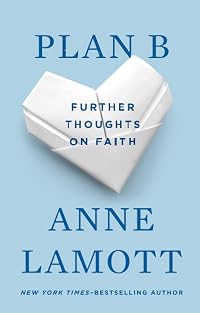
Plan B: Further Thoughts on Faith
by Anne Lamott
On This Page
Description
From the New York Times bestselling author of Hallelujah Anyway, Bird by Bird, and Almost Everything, a spiritual antidote to anxiety and despair in increasingly fraught times.As Anne Lamott knows, the world is a dangerous place. Terrorism and war have become the new normal. Environmental devastation looms even closer. And there are personal demands on her faith as well: getting older; her mother's Alzheimer's; her son's adolescence; and the passing of friends and time.
Fortunately for show more those of us who are anxious about the state of the world, whose parents are also aging and dying, whose children are growing harder to recognize as they become teenagers, Plan B offers hope that we're not alone in the midst of despair. It shares with us Lamott's ability to comfort and to make us laugh despite the grim realities.
Anne Lamott is one of our most beloved writers, and Plan B is a book more necessary now than ever. It is further evidence that, as The New Yorker has written, "Anne Lamott is a cause for celebration.". show less
Tags
Recommendations




Member Reviews
Anne Lamott is sort of off her rocker. And I love her so very much for this. Whereas so many Christian writers seem pulled together, even in the worst of times, Lamott is not. She struggles like the rest of us. She cries. She yells. She says things she doesn’t mean (and says mean things she does mean). She has no idea what she’s doing most of the time. Yet she still manages to practice a very real grace to those around her. She loves deeply, and practices real forgiveness. She is self-depricating yet true to herself. And I just love this about her. The essays in this book are, for the most part, excellent. Of course, some are better than others. I loved the essay on the death of her dog. As I was listening to it, I cried thinking show more about how we lost our dog, Phydeaux, a few years ago. How does that hurt so much? But it does, and she captured it.
My favorite quote from this book shows just how different she is from mainstream Christian authors: “Hope is not about proving anything. It’s about choosing to believe this one thing—that love is bigger than any grim, bleak shit anyone can throw at us.”
Amen.
Read my full review here: http://letseatgrandpa.com/2011/02/11/book-review-9-plan-b-further-thoughts-on-fa... show less
My favorite quote from this book shows just how different she is from mainstream Christian authors: “Hope is not about proving anything. It’s about choosing to believe this one thing—that love is bigger than any grim, bleak shit anyone can throw at us.”
Amen.
Read my full review here: http://letseatgrandpa.com/2011/02/11/book-review-9-plan-b-further-thoughts-on-fa... show less
I suppose it's a little strange that I would really like this book given it's spiritual overtones, but Anne Lamott's unique blend of humor, observations on relationships and life in general ("Everyone has been having a hard time with life this year; not with all of it, just the waking hours"), not to mention her caustic comments about Bush even as she struggles to love him because her faith insists on it, should win over just about everyone. She can have you moved to tears as she describes the painful death of a friend to howls of laughter describing bumps in the road raising a teenager.
Lamott is unfailingly honest about herself and others. Predictably, some reviewers have complained about an occasional "vulgarity," but to me that just show more makes her writing more honest and real. After all Jesus, himself, was nothing if not radical and honest. I suggest that anyone offended by this book has no life and little compassion.
Lamott has all these great lines. We were listening to her read her book; I would recommend this as she is such a great raconteur. I was unable to write down all the great lines, but here's a small sample:
"If you insist on having a destination when you enter a library, you're short-changing yourself."
"Someday the lamb is going to lie down with the lion, but the lamb is not going to get any sleep."
"Jesus was soft on crime; he'd never get elected to anything."
"On my forty-ninth birthday, I decided that all of life is hopeless, and I would eat myself to death. These are dessert days." show less
Lamott is unfailingly honest about herself and others. Predictably, some reviewers have complained about an occasional "vulgarity," but to me that just show more makes her writing more honest and real. After all Jesus, himself, was nothing if not radical and honest. I suggest that anyone offended by this book has no life and little compassion.
Lamott has all these great lines. We were listening to her read her book; I would recommend this as she is such a great raconteur. I was unable to write down all the great lines, but here's a small sample:
"If you insist on having a destination when you enter a library, you're short-changing yourself."
"Someday the lamb is going to lie down with the lion, but the lamb is not going to get any sleep."
"Jesus was soft on crime; he'd never get elected to anything."
"On my forty-ninth birthday, I decided that all of life is hopeless, and I would eat myself to death. These are dessert days." show less
"The devil is in the details," a common saying goes, but for people of faith, it is often true that God is in the details – or at least that God is revealed in the details. With "Plan B: Further Thoughts on Faith," best-selling author Anne Lamott offers another book filled with knowing details that illuminate some of the big issues of faith: parenting, politics, divorce, and death, among others. As in her wonderful "Traveling Mercies," the essays and stories are sprinkled with her trademark humor, much of it ironic and self-deprecating; they also are sprinkled with straightforward comments on adult issues and no shortage of adult language, which may startle some readers.
Published in 2005, there is a recurrent theme of extreme show more frustration with the presidency of George W. Bush and especially with the war in Iraq. Several times Lamott mentions protesting against the war and praying for peace, a not uncommon theme of the period from many liberal American Christian activists. Few, though, have the chops to describe trying to love the person who stands for everything you hate, as Christians are supposed to do, as Lamott does in the ridiculously droll essay, "loving your president: day 2."
While the issue of politics and faith may be emphasized, though, I think the more powerful theme of the book is Lamott's deepening relationship with her son Sam, just entering his teenage years. Aside from the understandable friction raised by some of Sam's inexplicable behavior, Lamott explores the introduction of Sam's father into his life around age 10, writing honestly about the pain this sometimes causes her, but also being surprisingly open to moments of joy and grace. This is most obvious when she shares the story of Sam meeting his much older half-brother.
Probably due to Sam's presence and importance, these essays have a much different feel than many of the essays in "Traveling Mercies." Partially, this may be that none are as memorable as Lamott's blunt, and hysterical, description of her conversion. Mostly, though, I think they reflect a deepening of Lamott's Christian faith, which she more confidently and comfortably claims as part of her identity in "Plan B."
There is a wealth of wisdom and observation here, especially about daily life outside of the comforts of a church sanctuary. Unlike some Christians, Lamott freely admits some of her hypocrisy. For example, even as she can testify to the hand of God at the bedside of a woman dying from cancer, she struggles to cope with her broken relationship with her own mother, even after her death, and finds mostly pain and anger there. Then again, Lamott exhibits a patience with God – and even with herself – that also is uncommon and refreshing, and which suggests an openness to continued growth and change which may lessen such hypocrisy.
Overall, Lamott offers an inviting vision of lived faith in these essays, coping with challenging political times, raising a son as a single mother, and coming to terms with her own aging. While I do not always agree with her, I admire her, and I appreciate her honesty, her earthiness, and her humor as she shares these stories of her faith. Needless to say, I also admire the skill with which she writes, which makes her books easy and enjoyable to read.
This review is also published at http://alongthispilgrimsjourney.blogspot.com/2014/03/book-review-plan-b-further-... show less
Published in 2005, there is a recurrent theme of extreme show more frustration with the presidency of George W. Bush and especially with the war in Iraq. Several times Lamott mentions protesting against the war and praying for peace, a not uncommon theme of the period from many liberal American Christian activists. Few, though, have the chops to describe trying to love the person who stands for everything you hate, as Christians are supposed to do, as Lamott does in the ridiculously droll essay, "loving your president: day 2."
While the issue of politics and faith may be emphasized, though, I think the more powerful theme of the book is Lamott's deepening relationship with her son Sam, just entering his teenage years. Aside from the understandable friction raised by some of Sam's inexplicable behavior, Lamott explores the introduction of Sam's father into his life around age 10, writing honestly about the pain this sometimes causes her, but also being surprisingly open to moments of joy and grace. This is most obvious when she shares the story of Sam meeting his much older half-brother.
Probably due to Sam's presence and importance, these essays have a much different feel than many of the essays in "Traveling Mercies." Partially, this may be that none are as memorable as Lamott's blunt, and hysterical, description of her conversion. Mostly, though, I think they reflect a deepening of Lamott's Christian faith, which she more confidently and comfortably claims as part of her identity in "Plan B."
There is a wealth of wisdom and observation here, especially about daily life outside of the comforts of a church sanctuary. Unlike some Christians, Lamott freely admits some of her hypocrisy. For example, even as she can testify to the hand of God at the bedside of a woman dying from cancer, she struggles to cope with her broken relationship with her own mother, even after her death, and finds mostly pain and anger there. Then again, Lamott exhibits a patience with God – and even with herself – that also is uncommon and refreshing, and which suggests an openness to continued growth and change which may lessen such hypocrisy.
Overall, Lamott offers an inviting vision of lived faith in these essays, coping with challenging political times, raising a son as a single mother, and coming to terms with her own aging. While I do not always agree with her, I admire her, and I appreciate her honesty, her earthiness, and her humor as she shares these stories of her faith. Needless to say, I also admire the skill with which she writes, which makes her books easy and enjoyable to read.
This review is also published at http://alongthispilgrimsjourney.blogspot.com/2014/03/book-review-plan-b-further-... show less
Anne Lamott has been described as witty, gritty, quirky, left-wing, down to earth, reverent and irreverent in the same sentence, funny, fast-talking, and an unlikely circuit writer (rider) spreading the word of God’s love. In Plan B: Further Thoughts of Faith, she is all of that and more. This collection of essays takes the reader deeper into the world of Lamott and her faith journey, which began in her earlier book, Traveling Mercies. She is unabashed about declaring her love for God and Jesus and for sharing her struggles on what that means in her life and that of her son Sam in today’s world. She has said, though, that it is not her intention to convert others to her faith. Rather, she says, readers should understand that “her show more essays and perspectives on life are filtered through her religious view and accept that it is the way she processes the people and events in her life.” (from a Riverhead release on Plan B) And process she does, on varied subjects, in this book.
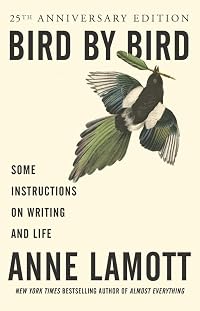
When not writing on faith, Lamott writes novels—Blue Shoe, Joe Jones and Operating Instructions to name a few. The author also teaches writing and wrote an excellent resource for aspiring writers called Bird by Bird.
Although the essays could stand alone, they have a common thread. Each is an attempt by Lamott to show how her faith and life intersect at every turn, whether it be in grieving the loss of a beloved family pet, in starting a Sunday school at her church, or in dealing with her menopausal body, which she nicknamed the “Menopausal Death Crone.” She does not speak in lofty theological terms, but rather in the voice of the common person. She speaks of brokenness and hunger and war and unforgiveness. She speaks of healing and feeding the soul, of peace and of the grace to forgive. She examines and re-examines what it means to be a person of faith. The author invites her readers to do the same in the context of their own lives.
Lamott’s honesty is refreshing, although at times her bluntness can seem harsh. Upon reflection, though, she gives voice to the thoughts that many of us may have but don’t dare speak aloud. Consider this about her mother, with whom she had a difficult relationship at best: “I have to say from day one after she died, I liked having a dead mother much more than having an impossible one.” Later, she adds, “I really loved her and took great care of her. I couldn’t, even after she died, grant her amnesty. Forgiveness means it finally becomes unimportant that you hit back. You’re done, and I guess I wasn’t done.” That won’t resonate with everyone who reads it, but it certainly did with me.
In the next chapter, about beginning a children’s Sunday school class, her observations might move you to tears—and if Lamott had her way, move you to action as well. For her, faith is not abstract; it is a way of life, something to flesh out in everyday existence. She believes in “loving out loud.”
In her earlier work, Traveling Mercies, son Sam is a little guy, and she tells often outrageous and always courageous stories of raising him as a single mom through Sam’s younger years. Now Sam is a teenager, and she has a whole new set of concerns. She wants him to study, to be successful, to be loving, to work hard at whatever he does. In typical teen style, he usually flies in the opposite direction. Every two weeks, the rule is that he must accompany his mother to church. They argue. He sulks. Does this sound at all familiar? Her words: “Of course, he doesn’t want to come to regular worship, but he doesn’t want to floss either. He does not want to have any hard work, ever, but I can’t give him that without injuring him. It’s good to do uncomfortable things. It’s weight training for life.” Sam is a major focus of her life, and she wants what is best for him. For now, that means having Sam understand what role an active faith plays.
Nonetheless, Lamott doesn’t offer pat answers. In fact, she seems aware that there are still many unanswered questions. She doesn’t claim to be an expert. The reader will not be swayed by flowery prose or lofty doctrine. At times, her crude, explicit speech might seem incongruous with a book on faith.
Lamott will not be heard apologizing for either her style or her beliefs. What you see is what you get. Rarely does she get a neutral response, and I think that is just fine with her. Some may be amused, some offended and some just blown away by her particular brand of faith. If what she shares can make us think, laugh, cry, and perhaps even examine our own faith—in God, Buddha, or whatever higher being we connect with— she would, I believe, be pleased. show less
When not writing on faith, Lamott writes novels—Blue Shoe, Joe Jones and Operating Instructions to name a few. The author also teaches writing and wrote an excellent resource for aspiring writers called Bird by Bird.
Although the essays could stand alone, they have a common thread. Each is an attempt by Lamott to show how her faith and life intersect at every turn, whether it be in grieving the loss of a beloved family pet, in starting a Sunday school at her church, or in dealing with her menopausal body, which she nicknamed the “Menopausal Death Crone.” She does not speak in lofty theological terms, but rather in the voice of the common person. She speaks of brokenness and hunger and war and unforgiveness. She speaks of healing and feeding the soul, of peace and of the grace to forgive. She examines and re-examines what it means to be a person of faith. The author invites her readers to do the same in the context of their own lives.
Lamott’s honesty is refreshing, although at times her bluntness can seem harsh. Upon reflection, though, she gives voice to the thoughts that many of us may have but don’t dare speak aloud. Consider this about her mother, with whom she had a difficult relationship at best: “I have to say from day one after she died, I liked having a dead mother much more than having an impossible one.” Later, she adds, “I really loved her and took great care of her. I couldn’t, even after she died, grant her amnesty. Forgiveness means it finally becomes unimportant that you hit back. You’re done, and I guess I wasn’t done.” That won’t resonate with everyone who reads it, but it certainly did with me.
In the next chapter, about beginning a children’s Sunday school class, her observations might move you to tears—and if Lamott had her way, move you to action as well. For her, faith is not abstract; it is a way of life, something to flesh out in everyday existence. She believes in “loving out loud.”
In her earlier work, Traveling Mercies, son Sam is a little guy, and she tells often outrageous and always courageous stories of raising him as a single mom through Sam’s younger years. Now Sam is a teenager, and she has a whole new set of concerns. She wants him to study, to be successful, to be loving, to work hard at whatever he does. In typical teen style, he usually flies in the opposite direction. Every two weeks, the rule is that he must accompany his mother to church. They argue. He sulks. Does this sound at all familiar? Her words: “Of course, he doesn’t want to come to regular worship, but he doesn’t want to floss either. He does not want to have any hard work, ever, but I can’t give him that without injuring him. It’s good to do uncomfortable things. It’s weight training for life.” Sam is a major focus of her life, and she wants what is best for him. For now, that means having Sam understand what role an active faith plays.
Nonetheless, Lamott doesn’t offer pat answers. In fact, she seems aware that there are still many unanswered questions. She doesn’t claim to be an expert. The reader will not be swayed by flowery prose or lofty doctrine. At times, her crude, explicit speech might seem incongruous with a book on faith.
Lamott will not be heard apologizing for either her style or her beliefs. What you see is what you get. Rarely does she get a neutral response, and I think that is just fine with her. Some may be amused, some offended and some just blown away by her particular brand of faith. If what she shares can make us think, laugh, cry, and perhaps even examine our own faith—in God, Buddha, or whatever higher being we connect with— she would, I believe, be pleased. show less
I read this while babysitting my grandchildren for a week. Ms. Lamott's eloquent honesty on living with children was balm in the evening of the day. The column format (each chapter, I assume, was a previous column in some online form) was fine for this kind of intermittent reading. There are some hilarious gems on weddings and funerals and patchwork families. I wrote notes to myself of the advice which felt like a girlfriend had emailed me when I was desperate: "Change the way you treat people to change the way you feel" (p.143) and "Hope is the cousin to grief" (p.238).
Thank you, Anne, for sharing yourself with so much hope. I am grateful.
Thank you, Anne, for sharing yourself with so much hope. I am grateful.
Spent a good part of the last day or so reading these wise and funny essays about parenting, faith (and isn't there a lot of that involved in parenting?), politics, and love. I really like Lamott's style. And her politics. And her particular brand of Christianity (in one part of the book she talks about how God will definitely allow her friend's Jewish sisters into Heaven; I promised my son that God will have Legos in Heaven). Anyway, it was a pure delight to read.
Some of my favorite bits.
From "red cords" in which she's complaining about George W. Bush bringing about the end of the world:
"Sometimes I feel like the big possum who has been coming into our driveway lately, worried and waddly. I hear that the stress hormones possums show more produce are off the charts. Possums live only a few years in the wild. I suppose that if I had two penises and still fainted a lot, I'd be stressed to the max, too."
From "holy of holies 101" about starting up a Sunday School class for kids:
"One secret of life is that the reason life works at all is that not everyone in your tribe is nuts on the same day. Another secret is that laughter is carbonated holiness."
"We did not exclude anyone because Jesus didn't. On bad days, I could not imagine what he had been thinking."
From "good friday world":
"In a library, you can find small miracles and truth, and you might find something that will make you laugh so hard that you will get shushed, in the friendliest way. I have found sanctuary in libraries my whole life, and there is sanctuary there now, from the war, from the storms of our families and our own minds. Libraries are like mountains or meadows or creeks: sacred space."
From "untitled":
"I'm decades past my salad days, and even past the main course: maybe I'm in my cheese days--sitting atop the lettuce leaves on the table for a while now with all the other cheese balls, but with much nutrition to offer, and still delicious."
From "sam's brother":
"I tell you, when God is not being cryptic and silent, He or She is so obvious."
From "cruise ship":
"Once again: If Jesus was right, these are all my brothers and sisters. And they are so letting themselves go." show less
Some of my favorite bits.
From "red cords" in which she's complaining about George W. Bush bringing about the end of the world:
"Sometimes I feel like the big possum who has been coming into our driveway lately, worried and waddly. I hear that the stress hormones possums show more produce are off the charts. Possums live only a few years in the wild. I suppose that if I had two penises and still fainted a lot, I'd be stressed to the max, too."
From "holy of holies 101" about starting up a Sunday School class for kids:
"One secret of life is that the reason life works at all is that not everyone in your tribe is nuts on the same day. Another secret is that laughter is carbonated holiness."
"We did not exclude anyone because Jesus didn't. On bad days, I could not imagine what he had been thinking."
From "good friday world":
"In a library, you can find small miracles and truth, and you might find something that will make you laugh so hard that you will get shushed, in the friendliest way. I have found sanctuary in libraries my whole life, and there is sanctuary there now, from the war, from the storms of our families and our own minds. Libraries are like mountains or meadows or creeks: sacred space."
From "untitled":
"I'm decades past my salad days, and even past the main course: maybe I'm in my cheese days--sitting atop the lettuce leaves on the table for a while now with all the other cheese balls, but with much nutrition to offer, and still delicious."
From "sam's brother":
"I tell you, when God is not being cryptic and silent, He or She is so obvious."
From "cruise ship":
"Once again: If Jesus was right, these are all my brothers and sisters. And they are so letting themselves go." show less
Many say this, but I wholeheartedly agree in saying that Ms. Lamott is a breath of fresh air into the conversation of those with the Christian faith. I really appreciate her honest approach of her faith and also her lack of using a language that only makes sense to a certain group of people. Her stories are without need of translation and speak to the core of many different types of people simply because she is quite open with her thought processes. I am quite thankful for her perspective even if we might not see eye to eye on everything
Members
- Recently Added By
Lists

Books Read in 2007
326 works; 8 members

Mo's Reading List
218 works; 1 member
Author Information

39+ Works 32,670 Members
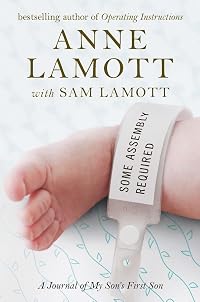
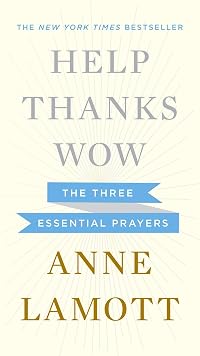
Anne Lamott was born on April 10, 1954 in San Francisco, California. She began writing when she returned to California after spending two years at Goucher College, but her early efforts, mostly short stories, met with little success. The turning point in her writing came with a family crisis, when her father was diagnosed with brain cancer. She show more wrote a series of short pieces about the traumatic effect that serious illness has on a family. These pieces were published, and they eventually became the basis of her first novel, Hard Laughter, published in 1980. During the 1980s, she wrote three additional novels, Rosie, Joe Jones and All New People. In 1989, her life took another turn when her son was born. Her next book, published in 1993, was a non-fiction effort called Operating Instructions: A Journal of My Son's First Year. She wrote ironically, but candidly, about her struggles to adjust to her new role as a mother and a single parent, and her experiences with everything from sleep deprivation to financial and emotional uncertainty to concerns about what she would tell her son when he was old enough to ask about his absent father. Operating Instructions proved to be even more successful than her novels, and led to interviews on network news programs and a regular spot on National Public Radio. Her other works include Bird by Bird: Some Instructions on Writing and Life; Crooked Little Heart; Blue Shoe, Imperfect Birds, and Some Assembly Required: A Journal of My Son's First Son. Her title Help, Thanks, Wow: The Three Essential Prayers made The New York Times Best Seller List for 2012. Her title Stitches: A Handbook on Meaning, Hope and Repair and Small Victories: Spotting Improbable Moments of Grace also made The New York Times Best Seller List. (Bowker Author Biography) show less
Awards and Honors
Distinctions
Common Knowledge
- Original publication date
- 2005
- People/Characters
- Anne Lamott
- Epigraph
- Monet Refuses The Operation
Doctor, you say there are no halos
around the streetlights in Paris
and what I see is an aberration
caused by old age, an affliction.
I tell you it has taken me all my life
to soften and blur and finally banish
the edges you regret I don't see,
to learn that the line I called the horizon
does not exist and sky and water,
so long apart, are the same state of being.
Fifty-four years before I could see
Rouen cathedral is built
of parallel shafts of sun,
and now you want to restore
my youthful errors: fixed
notions of top and bottom,
the illusion of three-dimensional space,
wisteria separate
from the bridge it covers.
What can I say to convince you
the Houses of Parliament dissolve
night after night to become
the fluid dream of the Thames?
I will not return to a universe
of objects that don't know each other,
as if islands were not the lost children
of one great continent. The world
is flux, and light becomes what it touches,
becomes water, lilies on water,
above and below water,
becomes lilac and mauve and yellow
and white and cerulean lamps,
small fists passing sunlight
so quickly to one another
that it would take long, streaming hair
inside my brush to catch it.
To paint the speed of light!
Our weighted shapes, these verticals,
burn to mix with air
and change our bones, skin, clothes
to gases. Doctor,
if only you could see
how heaven pulls earth into its arms
and how infinitely the heart expands
to claim this world, blue vapor without end.
---Lisel Mueller - Dedication
- For Rory
- First words
- On my forth-ninth birthday, I decided that all of life was hopeless, and I would eat myself to death.
- Quotations
- "The problem with God–or at any rate, one of the to five most annoying things about God–is that He or She rarely answers right away. It can take days, weeks. Some people seem to understand this–that life and change take... (show all) time... I, on the other hand, am an instant-message type."
"When you pray, you are not starting the conversation from scratch, just remembering to plug back into a conversation that's always in progress."
"If you haven't already, you will lose someone you can't live without, and your heart will be badly broken, and you never completely get over the loss of a deeply beloved person. But this is also good news. The person lives f... (show all)orever, in your broken heart that doesn't seal back up. And you come through, and you learn to dance with the banged-up heart. You dance to the absurdities of life; you dance to the minuet of old friendship." - Last words
- (Click to show. Warning: May contain spoilers.)Yet here we are in February, with war drums and daffodils everywhere, and popies waiting in the wings.
Classifications
Statistics
- Members
- 2,494
- Popularity
- 7,782
- Reviews
- 44
- Rating
- (3.92)
- Languages
- English, Spanish
- Media
- Paper, Audiobook, Ebook
- ISBNs
- 13
- UPCs
- 1
- ASINs
- 10