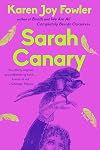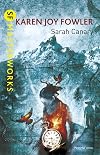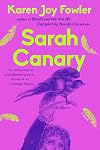
Sarah Canary
by Karen Joy Fowler
On This Page
Description
Set in the Old West, this is the strange, magical tale of Sarah Canary and the ragtag band of misfits and lovers she trails in her wake When black cloaked Sarah Canary wanders into a railway camp in the Washington territories in 1873, Chin Ah Kin is ordered by his uncle to escort 'the ugliest woman he could imagine' away. Far away. But Chin soon becomes the follower. In the first of many such instances, they are separated, both resurfacing some days later at an insane asylum. Chin has run show more afoul of the law and Sarah has been committed for observation. Their escape from the asylum in the company of another inmate sets into motion a series of adventures and misadventures that are at once hilarious, deeply moving, and downright terrifying. show lessTags
Recommendations





























Member Recommendations
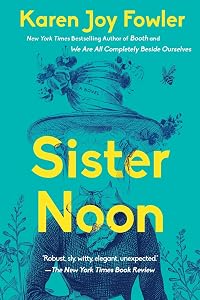
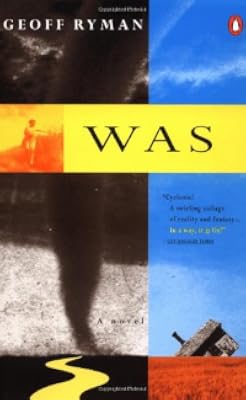
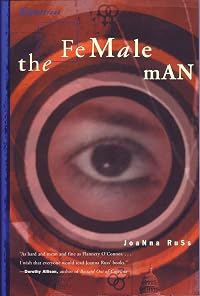
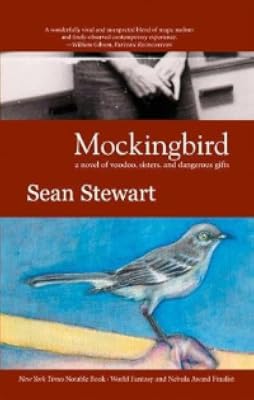
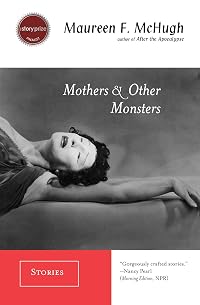
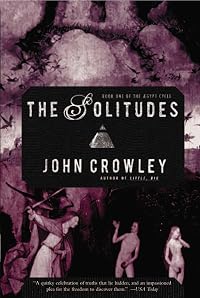
lquilter Gloss writes beautifully, as does Fowler. The settings are similar -- 19th century Pacific Northwest. The premise is also related; an almost realistic novel that slips into SF-ality.

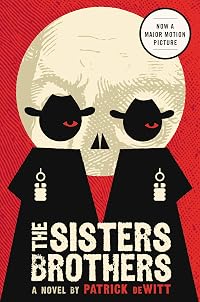
vwinsloe Both books involve a mysterious woman and the perceptions, projections and assumptions about her by others.
Member Reviews
I know this story. Only, instead of Chin Ah Kin, a Chinese immigrant who reluctantly sets off on an epic journey to protect the strange, otherworldly woman who crosses his path, it was a handsome prince. And instead of B.J., a gentle madman who accompanies him on his quest, it was a brave little jester. And instead of strange, otherworldly Sarah Canary (who may be, but almost certainly is not a demon, an enchantress, a mermaid, a wild woman raised by wolves, or a notorious murderess on the lam), it was the Pied Piper, who leads everyone who gets caught up in her wake to their doom – or, if they are truly worthy, a kind of transcendence.[return][return]Except for that, it was exactly the same story….[return][return]This is one darn show more peculiar book. And I mean that in a good, and thoroughly admiring way. If I was commanded to try to sum it up -- put up against a wall, say, and threatened with being mauled by a tiger (this actually happens …) if I didn’t -- I would say that it is the story of America, told from the perspective of those whose stories have usually been ignored and airbrushed away. But through the magic of Sarah Canary, for once we hear a version of those stories – from the reviled immigrant labourer, from the young man whose take on reality is skewed just a little off-center, from the voiceless women, from the Native Americans. Everyone who has had to hide behind an alien culture, struggle into alien clothes, and even adopt alien names, just to survive.[return][return]As usual, Fowler’s story (and its meanings) is multi-layered: a story about “otherness,” which recognizes that nothing is simple: the marginalized are quite capable of great cruelty and exploitation of those who are a little lower down the pecking order from them. A story about “civilization,” and how very uncivilized it can be. A story about story-telling, and its power to make sense of the most absurd situations. [return][return]And as usual, Fowler’s writing is a delight: dreamlike and funny. The “plot” may seem to take a while to get going but, if you’re like me, you will suddenly realize that it’s been there all along. That you, too, have been swept along in the churning wake of Sarah Canary, and nothing will seem quite the same again. show less
"'If Sarah Canary is just what she seems, harmless, vague ...' Chin thought Sarah Canary had never seemed harmless or vague to him. Mysterious, rather. Possibly powerful. Certainly purposeful." -- Karen Joy Fowler, 'Sarah Canary'
When you make assumptions about people, assume you are wrong. That is one conclusion to be drawn from Karen Joy Fowler's mysterious, powerful and certainly purposeful 1991 novel "Sarah Canary."
Sarah Canary, a name just bestowed on her because nobody knows her real name, is mute. She is a "strange and ugly white woman" who shows up in the Pacific Northwest in the 1870s. Everyone has a different idea of who or what she might be. To Chin, who has come all the way from China to work on the railroad, she seems like a show more ghost, and he feels somehow obligated to watch over her. Soon she is assumed to be mentally ill and, along with Chin, is locked away in an asylum. She soon escapes with Chin and B.J., another of the inmates.
Later Sarah is thought to be a wild woman raised by wolves and is made a part of a traveling show, even though audiences find her disappointingly tame. Adelaide, a suffragette, mistakes her for a woman on the run for killing her husband. Others think her a man in disguise. There is even a suggestion she could be an alien from outer space. Readers never discover who Sarah Canary really is. True to the spirit of her novel, Fowler lets us make our own assumptions and draw our own conclusions.
Yet Fowler's novel is more than a satire on people's misconceptions about other people. It could be viewed as a philosophical treatise on reality itself. Consider the following lines near her conclusion:
"What we say occupies a very thin surface, like the skin over a body of water. Beneath this, through the water itself, is what we see, sometimes clearly if the water is calm, sometimes vague if the water is troubled, and we imagine this vision to be the truth, clear or vague. But beneath this is yet another level. This is the level of what is and this level has nothing to do with what we say or what we see."
And a few pages later:
"We listen to stories and forget that the listening also tells the story. The story we hear is ourselves. We are the only ones who can hear it."
Thus, what I see and hear is not what you see and hear, even if we are in the same place at the same time. It helps explain political differences, religious differences and, in fact, the differences that create every division, every argument, every war. It also explains the power of literature itself. What I read in a story, including this story, is not at all what you will read. show less
When you make assumptions about people, assume you are wrong. That is one conclusion to be drawn from Karen Joy Fowler's mysterious, powerful and certainly purposeful 1991 novel "Sarah Canary."
Sarah Canary, a name just bestowed on her because nobody knows her real name, is mute. She is a "strange and ugly white woman" who shows up in the Pacific Northwest in the 1870s. Everyone has a different idea of who or what she might be. To Chin, who has come all the way from China to work on the railroad, she seems like a show more ghost, and he feels somehow obligated to watch over her. Soon she is assumed to be mentally ill and, along with Chin, is locked away in an asylum. She soon escapes with Chin and B.J., another of the inmates.
Later Sarah is thought to be a wild woman raised by wolves and is made a part of a traveling show, even though audiences find her disappointingly tame. Adelaide, a suffragette, mistakes her for a woman on the run for killing her husband. Others think her a man in disguise. There is even a suggestion she could be an alien from outer space. Readers never discover who Sarah Canary really is. True to the spirit of her novel, Fowler lets us make our own assumptions and draw our own conclusions.
Yet Fowler's novel is more than a satire on people's misconceptions about other people. It could be viewed as a philosophical treatise on reality itself. Consider the following lines near her conclusion:
"What we say occupies a very thin surface, like the skin over a body of water. Beneath this, through the water itself, is what we see, sometimes clearly if the water is calm, sometimes vague if the water is troubled, and we imagine this vision to be the truth, clear or vague. But beneath this is yet another level. This is the level of what is and this level has nothing to do with what we say or what we see."
And a few pages later:
"We listen to stories and forget that the listening also tells the story. The story we hear is ourselves. We are the only ones who can hear it."
Thus, what I see and hear is not what you see and hear, even if we are in the same place at the same time. It helps explain political differences, religious differences and, in fact, the differences that create every division, every argument, every war. It also explains the power of literature itself. What I read in a story, including this story, is not at all what you will read. show less
In a word - fascinating. On the first day reading this book I got 50 pages in before I realized I had only wanted to read the first chapter. I wanted to get my toes wet - not jump all the way in. From the moment Sarah Canary begins there is nonstop action in the most surreal way. The entire book is written like a mystery. For starters, there are the poems of Emily Dickinson at the beginning of each chapter. They are not there for show. Each poem serves as a clue to the storyline. Then there is the structure of the story itself. Fowler writes in such a lyrical manner that it was easy to want to quote the entire book: "Chin was a small ant, picking his way over the melodic body of the world" (p 12), for example. Another aspect of Sarah show more Canary I enjoyed is the idea that every main character is an outcast of sorts. It is interesting to try to discover the peculiarity of each character. It becomes easy to do because character development throughout the story is strong. Sarah Canary is not without humor, as well: "Dr. Carr would have liked to see the insane on horseback, too...but he tried to deal in realities" (p 38).
It all begins when a strange woman wanders into Chin Ah Kin's railroad camp. She is dirty and wild-looking and speaking in a series of chirps, clicks, grunts and sighs. As a white woman she is an unwelcome sight in a Chinese labor camp. Chin unwillingly becomes responsible for taking her back, but back to where is unknown. Along the way Chin and the wild woman (nicknamed Sarah Canary) encounter different people who, in their own inexplicable way, are drawn to Sarah and develop an overwhelming desire to become attached to her for one reason or another. show less
It all begins when a strange woman wanders into Chin Ah Kin's railroad camp. She is dirty and wild-looking and speaking in a series of chirps, clicks, grunts and sighs. As a white woman she is an unwelcome sight in a Chinese labor camp. Chin unwillingly becomes responsible for taking her back, but back to where is unknown. Along the way Chin and the wild woman (nicknamed Sarah Canary) encounter different people who, in their own inexplicable way, are drawn to Sarah and develop an overwhelming desire to become attached to her for one reason or another. show less
Apparently this is a sci-fi book ... but I must be a dunderhead, because I didn't get that at all. I thought the writing was exceptionally lovely, the picaresque (episodic) plot kept me engaged, I liked the Wizard of Ozishness of the proceedings (Sarah Canary, the one character we really never get inside the head of, manages to gather a coterie of companions as the novel progresses), and there were moments of charm, humour, surprise, and insight.
Didn't love it enough for 5 stars, but it held my interest throughout.
But sci-fi? No. That's a stretch. You may as well say "Old Mother Hubbard" is sci-fi, because the dog could be an alien, and the bone wasn't there because Star Fleet teleported it out of the cupboard.
Didn't love it enough for 5 stars, but it held my interest throughout.
But sci-fi? No. That's a stretch. You may as well say "Old Mother Hubbard" is sci-fi, because the dog could be an alien, and the bone wasn't there because Star Fleet teleported it out of the cupboard.
Chin is a Chinese immigrant working as a railroad builder in Washington State. A strange white woman shows up at his camp, speaking urgently but incomprehensibly, and he feels obligated to escort her to safety. He also suspects that she might be a manifestation of a goddess who can bring him good fortune. This turns into an epic journey across Washington, involving a night in jail, a mental asylum, a charlatan, a murderous hotel brawl, a canoe chasing a steamboat, a women's suffragist, and all sorts of motley characters and adventures, all of which cause great consternation for Chin but don't seem to faze the mysterious woman.
This is an oddly compelling story, with some oddly compelling characters. The plot is strange, and the ending show more even stranger, but ultimately this is a book about many different types of marginalized people trying to get by in a frontier society where the rules are ever-shifting, and about using stories to make sense of the world. show less
This is an oddly compelling story, with some oddly compelling characters. The plot is strange, and the ending show more even stranger, but ultimately this is a book about many different types of marginalized people trying to get by in a frontier society where the rules are ever-shifting, and about using stories to make sense of the world. show less
I read this novel because I was so smitten by We Are All Completely Beside Ourselves, and the cover blurb was intriguing. It is winter of 1873 near Tacoma, and a woman suddenly appears in a railroad workers’ camp. She does not seem to understand Chinese or English, or to speak intelligibly. Chin Ah Kin is the first to see her, and when she doesn’t leave on her own despite numerous hints, he is appointed to escort her to... where? Perhaps she came from the insane asylum in Steilacoom? Turns out no, after they arrive circuitously and separately, but there she acquires a name, Sarah Canary, and they acquire a companion, inmate B. J. Escaping into the wilderness, the three encounter Harold, who kidnaps Sarah Canary to exhibit as the show more Alaskan Wild Woman, in which capacity she is recognized by suffragette lecturer Adelaide Dixon as a fugitive from justice, a woman accused of murdering her husband. A case of mistaken identity, but now Adelaide rescues Sarah Canary from exploitation, Chin and B.J. are still trying to find her, Harold is trying to get her back, and it remains completely unclear who she actually is. Inserted between chapters are real historical tidbits indicating that fiction is no weirder than fact; the times were strange. I was confused, but that’s intentional, a commentary on perception. I respected rather than enjoyed the story.
(read 27 Nov 2013) show less
(read 27 Nov 2013) show less
Book Review – Sarah Canary by Karen Joy Fowler
Sarah Canary
Karen Joy Fowler
Plume
2004
ISBN: 978-0452286474
Trade Paperback
304 pages
I’ve neglected reviewing this unusual book for far too long and since I’m currently in the middle of at least five reads (see sidebar) I thought I’d post my review of “Sarah Canary” by Karen Joy Fowler during the interim. So stay tuned for a profusion of new reviews in the coming weeks. With that in mind…
I have a weakness for hard to place works, especially those with an historical undertone. (See previous posts – World War II essentials, “Those Who Went Remain There Still,” “The Book Thief,” etc.) Sub-genre? Fantasy, science fiction, mystery, Western, non-fiction, horror it makes no show more difference to me. So this particular work was appealing from the very first page. And, I was not disappointed.
Who is Sarah Canary? And you’ll ask your self this question a number of times throughout the story. And just as often your perception may change. Is she:
A. A lost, pampered member of an aristocratic family?
B. A runaway suffering from a congenital mental defect?
C. A simple feral child raised by forest creatures?
D. An alien outcast banished to Earth?
E. All of the above?
F. None of the above?
The answer is… seven! (I’ll get back to this later.)
Set in the logging region of Washington Territory in 1873 “Sarah Canary” tells the story of a white woman who wanders unexpectedly into a Chinese railway workers’ camp. She is despondent and silent but captivating. And everyone she meets falls under her strange spell, including Chin, a Mandarin scholar working on the railroad; B.J., an escaped inmate from the Territorial Asylum; a union survivor of Andersonville Prison; Adelaide Dixon, a suffragist feminist on a lecture tour; and Harold, a huckster who wants to put Sarah in his traveling side-show. What do they all have in common? They are all discards of society and they all hold their own unconventional perceptions of reality. And, for some unexplained reason, they all see in and want something different for Sarah.
In addition to the flowing narrative Fowler adds quotes from Emily Dickinson before each chapter and interesting news fragments from the era to help provide clues for us to follow as we read. The historical facts give us a perspective of the times and the Dickinson quotes correspond to the action that takes place in each of the chapters. So much so, that they appear as if Fowler wrote them herself. An extraordinary feat of research in and of itself.
Fowler has given us a fine piece of historical fiction, one which manages to remain thoroughly entertaining in spite or perhaps because of the powerful and abstract nature of the subtext which is clearly alienation and perception.
Who is Sarah Canary, then? My answer “seven” above is meaningful in its meaningless. It really doesn’t matter who she is. What she is is a representation of the alienated. She is an outcast and Fowler asks us all take a step back and recall our own lonely moments, our own times of confusion, our own prejudices. And, in the end, the moral is this… even a true alien can find companionship, understanding, and empathy from complete strangers; sometimes, without even looking for it.
Sarah Canary has all the elements of good science fiction, gripping history, the suspense of mystery, and the excitement and action of a Western. In the end the book is genderless, belongs to no one genre, and yet somehow seems to fit them all. It is a retrospective on human nature, superstition, prejudice, and cultural differences and Fowler forces us to examine our own feelings concerning them in minute detail.
4 out of 5 stars
Related websites:
Author site: http://www.karenjoyfowler.com/
Author Wikipedia Site: http://en.wikipedia.org/wiki/Karen_Joy_Fowler
Author page Internet Speculative Fiction Database: http://www.isfdb.org/cgi-bin/ea.cgi?Karen_Joy_Fowler
Sarah Canary page Internet Speculative Fiction Database: http://www.isfdb.org/cgi-bin/title.cgi?1269
The Alternative
Southeast Wisconsin
http://thealternativeone.blogspot.com/ show less
Sarah Canary
Karen Joy Fowler
Plume
2004
ISBN: 978-0452286474
Trade Paperback
304 pages
I’ve neglected reviewing this unusual book for far too long and since I’m currently in the middle of at least five reads (see sidebar) I thought I’d post my review of “Sarah Canary” by Karen Joy Fowler during the interim. So stay tuned for a profusion of new reviews in the coming weeks. With that in mind…
I have a weakness for hard to place works, especially those with an historical undertone. (See previous posts – World War II essentials, “Those Who Went Remain There Still,” “The Book Thief,” etc.) Sub-genre? Fantasy, science fiction, mystery, Western, non-fiction, horror it makes no show more difference to me. So this particular work was appealing from the very first page. And, I was not disappointed.
Who is Sarah Canary? And you’ll ask your self this question a number of times throughout the story. And just as often your perception may change. Is she:
A. A lost, pampered member of an aristocratic family?
B. A runaway suffering from a congenital mental defect?
C. A simple feral child raised by forest creatures?
D. An alien outcast banished to Earth?
E. All of the above?
F. None of the above?
The answer is… seven! (I’ll get back to this later.)
Set in the logging region of Washington Territory in 1873 “Sarah Canary” tells the story of a white woman who wanders unexpectedly into a Chinese railway workers’ camp. She is despondent and silent but captivating. And everyone she meets falls under her strange spell, including Chin, a Mandarin scholar working on the railroad; B.J., an escaped inmate from the Territorial Asylum; a union survivor of Andersonville Prison; Adelaide Dixon, a suffragist feminist on a lecture tour; and Harold, a huckster who wants to put Sarah in his traveling side-show. What do they all have in common? They are all discards of society and they all hold their own unconventional perceptions of reality. And, for some unexplained reason, they all see in and want something different for Sarah.
In addition to the flowing narrative Fowler adds quotes from Emily Dickinson before each chapter and interesting news fragments from the era to help provide clues for us to follow as we read. The historical facts give us a perspective of the times and the Dickinson quotes correspond to the action that takes place in each of the chapters. So much so, that they appear as if Fowler wrote them herself. An extraordinary feat of research in and of itself.
Fowler has given us a fine piece of historical fiction, one which manages to remain thoroughly entertaining in spite or perhaps because of the powerful and abstract nature of the subtext which is clearly alienation and perception.
Who is Sarah Canary, then? My answer “seven” above is meaningful in its meaningless. It really doesn’t matter who she is. What she is is a representation of the alienated. She is an outcast and Fowler asks us all take a step back and recall our own lonely moments, our own times of confusion, our own prejudices. And, in the end, the moral is this… even a true alien can find companionship, understanding, and empathy from complete strangers; sometimes, without even looking for it.
Sarah Canary has all the elements of good science fiction, gripping history, the suspense of mystery, and the excitement and action of a Western. In the end the book is genderless, belongs to no one genre, and yet somehow seems to fit them all. It is a retrospective on human nature, superstition, prejudice, and cultural differences and Fowler forces us to examine our own feelings concerning them in minute detail.
4 out of 5 stars
Related websites:
Author site: http://www.karenjoyfowler.com/
Author Wikipedia Site: http://en.wikipedia.org/wiki/Karen_Joy_Fowler
Author page Internet Speculative Fiction Database: http://www.isfdb.org/cgi-bin/ea.cgi?Karen_Joy_Fowler
Sarah Canary page Internet Speculative Fiction Database: http://www.isfdb.org/cgi-bin/title.cgi?1269
The Alternative
Southeast Wisconsin
http://thealternativeone.blogspot.com/ show less
Members
- Recently Added By
Lists

Best Science Fiction Novels
816 works; 426 members

Magic Realism
371 works; 52 members

Favorite Science Fiction by Women Authors
741 works; 203 members

Historical Fiction
889 works; 90 members

20th Century Literature
1,161 works; 54 members

Best Feminist Science Fiction
188 works; 35 members

Female Author
1,234 works; 65 members

Speculative Fiction: Slipstream Literature
166 works; 16 members
Recommended Speculative Fiction by Women and People of Color
298 works; 45 members

Diversity in Fantasy and Science Fiction
219 works; 33 members

S.F. Masterworks (Complete)
229 works; 15 members

Best books read in 2011
200 works; 50 members

Favorite Books by Mid-List Authors
25 works; 8 members

Fiction with Women's Names in the Title
378 works; 15 members
Animals in the Title
498 works; 11 members

Historical Fantasy
93 works; 14 members

Speculative Fiction to Read
706 works; 31 members
First Novels
373 works; 17 members

SF Masterworks
193 works; 8 members

Broderick and Di Filippo's Science Fiction: The 101 Best Novels 1985-2010
103 works; 7 members
Genre Benders: Historical Speculative Fiction
22 works; 7 members

Myth (Reuse and Retelling)
188 works; 24 members
Author Information

62+ Works 15,188 Members
Karen Joy Fowler is the author of several novels and short story collections. Her works include Sarah Canary, The Sweetheart Season, Sister Noon, and The Jane Austen Book Club. She has received numerous awards including the World Fantasy Award in 1999 for Black Glass, the World Fantasy Award in 2011 for What I Didn't See, and the 2014 PEN/Faulkner show more Award for Fiction for We Are All Completely Beside Ourselves. This same title was nominated for The Man Booker Prize for Best Novel in 2014. (Bowker Author Biography) show less
Awards and Honors
Awards
Notable Lists
Series
Belongs to Publisher Series
SF Masterworks (New design)
Work Relationships
Common Knowledge
- Canonical title
- Sarah Canary
- Original publication date
- 1991
- People/Characters
- Sarah Canary; Chin Ah Kin
- Important places
- Washington Territory, USA; Pacific Northwest, USA
- Epigraph
- You only comprehend things which you perceive. And as you persist in regarding your ideas of time and space as absolute, although they are only relative, and thence form a judgment on truths which are quite beyond your sphe... (show all)re, and which are imperceptible to your terrestrial organism and faculties, I should not do a true service, my friend, in giving you fuller details of my ultra-terrestrial observations. --Camille Flammarion, Lumen, 1973
- Dedication
- For Hugh
- First words
- The years after the American Civil War were characterized by excess, ornamented by cults and corruptions.
- Last words
- (Click to show. Warning: May contain spoilers.)And in the Worldwide Gazette: "Flea Circus Horror! Trainer Attacked by Ravenous Fleas!"
- Original language
- English
- Canonical DDC/MDS
- 813.54
- Canonical LCC
- PS3556.O844
Classifications
- Genres
- Fiction and Literature, General Fiction, Science Fiction, Historical Fiction, Fantasy
- DDC/MDS
- 813.54 — Literature & rhetoric American literature in English American fiction in English 1900-1999 1945-1999
- LCC
- PS3556 .O844 — Language and Literature American literature American literature Individual authors 1961-
- BISAC
Statistics
- Members
- 813
- Popularity
- 34,150
- Reviews
- 27
- Rating
- (3.57)
- Languages
- English, Finnish, German, Polish
- Media
- Paper, Ebook
- ISBNs
- 17
- ASINs
- 14