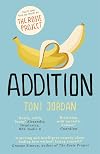
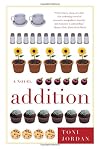
Addition
by Toni Jordan
On This Page
Description
In Melbourne, Australia, a neurotic, 35 year old woman who loves to count meets an Irish transplant named Seamus Joseph O'Reilly and with some gentle encouragement decides to give love a chance. Can she find a happy medium between her obsession and living life to its fullest?Tags
Recommendations


















Member Recommendations
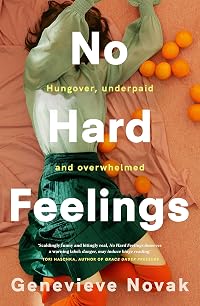
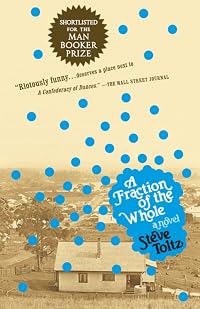
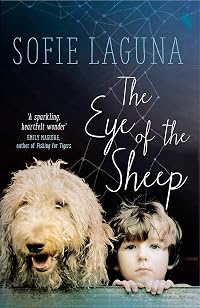
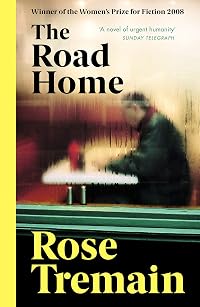
BookshelfMonstrosity Starring appealing but tightly controlled protagonists who struggle with social relationships, these heartwarming and humorous novels (both by Australian authors) explore unexpected chances at love and the emotional growth that results.
Member Reviews
An unconventional love story, Grace has a form of OCD that makes her count everything and ritualise her life in numbers. This makes doing anything out of the ordinary worrying, and Grace is no longer able to work as a teacher. She lives on her own in a small flat and a set routine for her daily life and limited contact with the rest of her family. The only real escape from this is in her fantasies of her hero - the maverick Szerbian scientist Nikola Tesla - also a counter, and the genius who invented radio and AC electricity.
Then one day at the supermarket Grace fills her basket with all the usual items, but when she gets near the checkout she finds she is one banana short! A nice looking man close by has some, so she contrives to take show more one from his basket - he won't notice will he? Fortunately for her, he does and his name is Seamus. He is intrigued by this woman, asks her out and thus begins the central romance of the story.
Over the book's chapters, one for each letter in Grace's full name, the author teases out Grace and Seamus's relationship, as Seamus does to Grace's family history, to try and find out the triggers for her counting. Grace is besotted and surrenders herself to Seamus totally - but it's not all plain sailing of course as Grace is forced to relive episodes in her life that she has blotted out. Grace and Seamus are both likeable characters, she's witty and surprisingly earthy, he's a great teddy bear of a man with a twinkle in his eye. They take you with them on all the ups and downs of their fledgling relationship.
What does intrude slightly into the story is Grace's obsession with Tesla. Interspersed with the romance, we learn about Tesla's life, his grand projects, his great ideas, and his own obsesssions. Tesla is very much everyone's favourite mad scientist these days - he recently got more of a starring role in Samantha Hunt's orange nominated novel, a major cameo in The Prestige by Christopher Priest, (both of which I really enjoyed), as well as popping up in An Abundance of Katherines by John Green - a YA novel which I've yet to read. All these books featuring him just make me want to go and read their source material - notably biographies of the man by Margaret Cheney and Mark J Seifer.
All that said, I really enjoyed this novel. The author, an Australian, writes directly with great wit and handles the aspects of mental health within robustly yet with understanding She is also capable of bringing a tear to my eye, and I was sorry when it ended. show less
Then one day at the supermarket Grace fills her basket with all the usual items, but when she gets near the checkout she finds she is one banana short! A nice looking man close by has some, so she contrives to take show more one from his basket - he won't notice will he? Fortunately for her, he does and his name is Seamus. He is intrigued by this woman, asks her out and thus begins the central romance of the story.
Over the book's chapters, one for each letter in Grace's full name, the author teases out Grace and Seamus's relationship, as Seamus does to Grace's family history, to try and find out the triggers for her counting. Grace is besotted and surrenders herself to Seamus totally - but it's not all plain sailing of course as Grace is forced to relive episodes in her life that she has blotted out. Grace and Seamus are both likeable characters, she's witty and surprisingly earthy, he's a great teddy bear of a man with a twinkle in his eye. They take you with them on all the ups and downs of their fledgling relationship.
What does intrude slightly into the story is Grace's obsession with Tesla. Interspersed with the romance, we learn about Tesla's life, his grand projects, his great ideas, and his own obsesssions. Tesla is very much everyone's favourite mad scientist these days - he recently got more of a starring role in Samantha Hunt's orange nominated novel, a major cameo in The Prestige by Christopher Priest, (both of which I really enjoyed), as well as popping up in An Abundance of Katherines by John Green - a YA novel which I've yet to read. All these books featuring him just make me want to go and read their source material - notably biographies of the man by Margaret Cheney and Mark J Seifer.
All that said, I really enjoyed this novel. The author, an Australian, writes directly with great wit and handles the aspects of mental health within robustly yet with understanding She is also capable of bringing a tear to my eye, and I was sorry when it ended. show less
Addition by Toni Jordan
Addition is a debut novel by Toni Jordan and I certainly hope it won’t be her last. This very clever novel tells 3 stories at one time - it tells us how someone lives with severe OCD and deals with the day to dayness of their lives, it tells us the history of Nikola Tesla; inventor and electrician, and it tells the story on how someone can fall in love with a person suffering from severe OCD, how they cope and what they can do or not do to help.
Grace suffers from OCD; her compulsion is to count and time …everything! The seeds on her muffins, the steps it takes to get somewhere, the amount of things she needs to buy and that is how we meet Seamus Joseph O’Reilly. If it weren’t so tragic because of the OCD show more it would really make a cute “how we met” story to tell the grandkids…on second thought even someone with a mental illness deserves a cute how “we met” story! Things may not be perfect between Seamus and Grace, not by a long shot, but they get much worse when Grace finally decides that she wants to change. When she starts thinking not about what the world may have lost with her being confined because of her illness, but when she starts thinking about how much she has to gain by healing and coming to terms with her OCD. Unfortunately she ends up being severely over medicated and treated by the wrong kinds of people. Luckily Grace realizes she would rather ‘count’ than be a walking talking zombie.
But never fear this story is written with grace, humor, wit, and compassion. It’s never overly emotional even when it could be and it never goes too far for a cheap laugh…’Larry’ a secondary character is an amazing piece of work.
All in all, this is a wonderful book, that recognizes the fact that not all treatment is right for everyone and in this world there will always be square pegs trying to stuff themselves into the round holes of life. I finished in record time practically devouring this novel to satisfy my curiosity. At first glance I thought it was going to be too depressing for me to finish and by the time I neared the end I wished it were longer and I didn‘t have to finish! show less
Addition is a debut novel by Toni Jordan and I certainly hope it won’t be her last. This very clever novel tells 3 stories at one time - it tells us how someone lives with severe OCD and deals with the day to dayness of their lives, it tells us the history of Nikola Tesla; inventor and electrician, and it tells the story on how someone can fall in love with a person suffering from severe OCD, how they cope and what they can do or not do to help.
Grace suffers from OCD; her compulsion is to count and time …everything! The seeds on her muffins, the steps it takes to get somewhere, the amount of things she needs to buy and that is how we meet Seamus Joseph O’Reilly. If it weren’t so tragic because of the OCD show more it would really make a cute “how we met” story to tell the grandkids…on second thought even someone with a mental illness deserves a cute how “we met” story! Things may not be perfect between Seamus and Grace, not by a long shot, but they get much worse when Grace finally decides that she wants to change. When she starts thinking not about what the world may have lost with her being confined because of her illness, but when she starts thinking about how much she has to gain by healing and coming to terms with her OCD. Unfortunately she ends up being severely over medicated and treated by the wrong kinds of people. Luckily Grace realizes she would rather ‘count’ than be a walking talking zombie.
But never fear this story is written with grace, humor, wit, and compassion. It’s never overly emotional even when it could be and it never goes too far for a cheap laugh…’Larry’ a secondary character is an amazing piece of work.
All in all, this is a wonderful book, that recognizes the fact that not all treatment is right for everyone and in this world there will always be square pegs trying to stuff themselves into the round holes of life. I finished in record time practically devouring this novel to satisfy my curiosity. At first glance I thought it was going to be too depressing for me to finish and by the time I neared the end I wished it were longer and I didn‘t have to finish! show less
It was a bit disturbing coming off of reading about manic depression in Hurry Down Sunshine to start this novel and find Grace, an obsessive compulsive! But I loved the book. Grace is funny, intelligent, sexy. She makes one wonder if a cure is necessary and to ask again the ever present question of what is the real reality?
Addition by Australian author Toni Jordan is the surprisingly charming story of Grace, who's need to count everything and to regiment her life means she can no longer work as a schoolteacher. Instead, she spends her days carefully consuming her meals in precisely the correct number of bites, of counting her footsteps and in thinking about her hero, Nikola Tesla. Then she meets Seamus, who destroys her careful scheduling in a way that she doesn't even mind.
What's fun about this variation on the usual chick-lit novel is that Grace doesn't shop, she measures. And falling in love doesn't cure her, but provides a catalyst for her to work toward a less constrained existence which, in the end, may well not include Seamus at all.
What's fun about this variation on the usual chick-lit novel is that Grace doesn't shop, she measures. And falling in love doesn't cure her, but provides a catalyst for her to work toward a less constrained existence which, in the end, may well not include Seamus at all.
This was a really interesting and unusual book about a woman, Grace Vandenburg, who has a distinctive form of obsessive-compulsive disorder. She’s compelled to count everything. Her life goes on in a very ordered fashion – orange cake and hot chocolate at the same café, same time, every day – until she meets Seamus O’Reilly, a young man who’s attracted to her originality. Unsurprisingly, their relationship meets some challenges along the way.
I thought Ms. Jordan did a remarkable job of getting inside Grace’s head and showing how interesting numbers can be. I also learned a lot about Nikola Tesla, Grace’s idol.
I thought Ms. Jordan did a remarkable job of getting inside Grace’s head and showing how interesting numbers can be. I also learned a lot about Nikola Tesla, Grace’s idol.
Books are supposed to make you feel, right? Sometimes you're supposed to come away optimistic about the human condition, sometimes you want to curl up in the tightest ball possible, lock your bedroom door and turn the lights out. Just because the feeling you get is bad doesn't mean the book is bad, or that it's not worthwhile.
So when I say this book made me uncomfortable, I want the context to be preserved. I think it was its goal - to a point. Addition is the story of a woman who's very much in the grips of a counting compulsion - she knows the number of steps it takes to get from one part of her house to the other, then to the cafe, then once she's there she eats the cake she (always) orders in the same number of bits as there are show more poppyseeds on top. And that's one of the more normal bits.
I don't want to give away the plot, but suffice it to say that things change (several times) once she meets The Guy. And it becomes frustrating and infuriating ... and I think that's on purpose, too? One of the great facets of the book is that in reading how the numbers affect Grace, they really start to get under the nerves of the reader. But it's not an obvious thing. I found myself affected not by the things she was counting, but by the sheer number of numbers she was keeping track of. Having to slog through every one of those numbers is analogous, I imagine - though by no means the same thing - the she was going through. I completely understood/felt like it made sense when one activity had to get called off, simply because I was so exhausted trying to keep up with the nervous counting.
What left me short was the ending. Grace goes through a number of different phases, as we'll call them, from full-on incapacitation by counting to love-fueled powering-through to counseling to back to the way it was ... and then we get to the end. How exactly everything turns out is left up to the reader, but I found myself completely unsure if we were dealing with someone who learned to deal with their compulsion and would be moderating it, was just abandoning themselves to the compulsion devil-may-care, or what. Everything up to and including running away to London would have seemed perfectly in keeping with the character's attitudes, which made it a little frustrating. The entire piece is supposed to be a character study - why can't we learn enough about the character?
Nonetheless, it's an excellent work that will appeal to the normal and the rest of us equally. show less
So when I say this book made me uncomfortable, I want the context to be preserved. I think it was its goal - to a point. Addition is the story of a woman who's very much in the grips of a counting compulsion - she knows the number of steps it takes to get from one part of her house to the other, then to the cafe, then once she's there she eats the cake she (always) orders in the same number of bits as there are show more poppyseeds on top. And that's one of the more normal bits.
I don't want to give away the plot, but suffice it to say that things change (several times) once she meets The Guy. And it becomes frustrating and infuriating ... and I think that's on purpose, too? One of the great facets of the book is that in reading how the numbers affect Grace, they really start to get under the nerves of the reader. But it's not an obvious thing. I found myself affected not by the things she was counting, but by the sheer number of numbers she was keeping track of. Having to slog through every one of those numbers is analogous, I imagine - though by no means the same thing - the she was going through. I completely understood/felt like it made sense when one activity had to get called off, simply because I was so exhausted trying to keep up with the nervous counting.
What left me short was the ending. Grace goes through a number of different phases, as we'll call them, from full-on incapacitation by counting to love-fueled powering-through to counseling to back to the way it was ... and then we get to the end. How exactly everything turns out is left up to the reader, but I found myself completely unsure if we were dealing with someone who learned to deal with their compulsion and would be moderating it, was just abandoning themselves to the compulsion devil-may-care, or what. Everything up to and including running away to London would have seemed perfectly in keeping with the character's attitudes, which made it a little frustrating. The entire piece is supposed to be a character study - why can't we learn enough about the character?
Nonetheless, it's an excellent work that will appeal to the normal and the rest of us equally. show less
This was, by turns, funny and bittersweet. It's the story of a woman with severe OCD who is torn between being her genuine self and getting help to lead a more "normal" life. It is kind of a romantic comedy but with a bit more depth. And while I found some of the details about her obsessive need to count things a little tiresome, Jordan does a good job of exploring both the limits and horizons of this kind of life.
Members
- Recently Added By
Lists

Australian Women's Writing 2003 - 2014
49 works; 3 members

Unshelved Book Clubs
579 works; 5 members
Author Information

16+ Works 1,043 Members
Awards and Honors
Awards
Notable Lists
Common Knowledge
- Canonical title
- Addition
- Original publication date
- 2008
- People/Characters
- Seamus Joseph O'Reilly; Grace Lisa Vandenburg; Nikola Tesla
- Important places
- Australia; Melbourne, Victoria, Australia; Victoria, Australia
- Dedication
- To Robert Luke Stanley-Turner Sanx
- First words
- It all counts.
- Quotations
- The fear of 13 is deep inside people, in that part of them that's more animal than human. Imagine the announcement: 'Attention, please. Flight number 911 to New York City is now boarding at gate 13.' How many people would get... (show all) on that plane?
- Last words
- (Click to show. Warning: May contain spoilers.)You could miss your whole life.
- Blurbers
- Giffin, Emily
Classifications
Statistics
- Members
- 624
- Popularity
- 46,836
- Reviews
- 53
- Rating
- (3.63)
- Languages
- 7 — Chinese, Dutch, English, French, German, Italian, Spanish
- Media
- Paper, Audiobook, Ebook
- ISBNs
- 52
- UPCs
- 1
- ASINs
- 12