The Wild Swans
by Amy Ehrlich
On This Page
Description
Eleven brothers, turned into wild swans by an evil stepmother, are saved by the sacrifices of their beautiful sister, Elise.Tags
Recommendations







Member Reviews
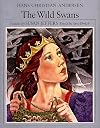
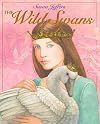
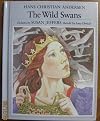
The Wild Swans, illustrated by Susan Jeffers.
Originally published in 1838, Andersen's The Wild Swans - in which a beautiful and virtuous young princess must endure many hardships in order to restore her eleven brothers to their human form, after their wicked stepmother's curse transforms them into swans - has its origins in the Danish folk tradition, rather than its author's fertile imagination. Taken from Matthias Winther's 1823 Danske folkeeventyr (which seems, sadly, never to have been translated into English), it is quite similar to a number of tales from the Brothers Grimm (The Six Swans, The Twelve Brothers), as well as the old Irish story of The Children of Lir.
That folkloric association, which seems to have resulted in a less show more self-consciously moral tone than can be found in some of the author's original creations, may explain the fact that this has always been one of my absolute favorites, of Andersen's many tales. Elisa's epic quest, her meeting with the good fairy, her perseverance in the face of misunderstanding and persecution - even in the face of the withdrawal of the king's love - all enthralled me as a girl, and I read this story again and again.
This version, adapted by Amy Ehrlich and illustrated by Susan Jeffers, offers an engaging narrative and appealing artwork, and was for many years the only retelling of The Wild Swans in my possession. But although quite fond of it, I had always felt that it fell a little short, when it came to capturing the magic and wonder of the tale, an impression reinforced when I discovered the astonishingly beautiful version illustrated by Anne Yvonne Gilbert. Still, while this Ehrlich/Jeffers undertaking may have been eclipsed, it retains a place in my affections, and is worth seeking out! show less
Originally published in 1838, Andersen's The Wild Swans - in which a beautiful and virtuous young princess must endure many hardships in order to restore her eleven brothers to their human form, after their wicked stepmother's curse transforms them into swans - has its origins in the Danish folk tradition, rather than its author's fertile imagination. Taken from Matthias Winther's 1823 Danske folkeeventyr (which seems, sadly, never to have been translated into English), it is quite similar to a number of tales from the Brothers Grimm (The Six Swans, The Twelve Brothers), as well as the old Irish story of The Children of Lir.
That folkloric association, which seems to have resulted in a less show more self-consciously moral tone than can be found in some of the author's original creations, may explain the fact that this has always been one of my absolute favorites, of Andersen's many tales. Elisa's epic quest, her meeting with the good fairy, her perseverance in the face of misunderstanding and persecution - even in the face of the withdrawal of the king's love - all enthralled me as a girl, and I read this story again and again.
This version, adapted by Amy Ehrlich and illustrated by Susan Jeffers, offers an engaging narrative and appealing artwork, and was for many years the only retelling of The Wild Swans in my possession. But although quite fond of it, I had always felt that it fell a little short, when it came to capturing the magic and wonder of the tale, an impression reinforced when I discovered the astonishingly beautiful version illustrated by Anne Yvonne Gilbert. Still, while this Ehrlich/Jeffers undertaking may have been eclipsed, it retains a place in my affections, and is worth seeking out! show less
Media: Pencil Drawing (Covered Using a Fine-Tip Pen with Ink and Dye)
Genre: Fairytale
Age Appropriateness: Intermediate
Review:
This is a great example of a fairytale because it not only begins with the phrase "far far away", a common fairytale lead, but it also includes an enchantment and far-fetched sequence of events. The eleven prince brothers of the princess Elise are enchanted into swans by their evil stepmother. Elise is called on by a mystical woman to help her brothers, but she must endure pain do help them. She was called to weave 11 vests for her brothers out of stinging nettle, and during this period she could not speak. Due to her loss of speech, Elise is condemned as a witch, and would be put to death, but she completes the show more vests for her brothers before her death and they change back into young men. One brother, however, still had one arm that resembled the wing of a swan because Elise had not completely finished his vest.
Character Analysis:
The step-mother served a good example for an antagonist because she enchanted Elise's eleven brothers into swans and caused Elise's father to disown her. Moreover, the step-mother created the conflict that Elise must overcome: to save her brothers from the enchantment they were under. The step-mother inadvertently caused Elise pain and suffering. show less
Genre: Fairytale
Age Appropriateness: Intermediate
Review:
This is a great example of a fairytale because it not only begins with the phrase "far far away", a common fairytale lead, but it also includes an enchantment and far-fetched sequence of events. The eleven prince brothers of the princess Elise are enchanted into swans by their evil stepmother. Elise is called on by a mystical woman to help her brothers, but she must endure pain do help them. She was called to weave 11 vests for her brothers out of stinging nettle, and during this period she could not speak. Due to her loss of speech, Elise is condemned as a witch, and would be put to death, but she completes the show more vests for her brothers before her death and they change back into young men. One brother, however, still had one arm that resembled the wing of a swan because Elise had not completely finished his vest.
Character Analysis:
The step-mother served a good example for an antagonist because she enchanted Elise's eleven brothers into swans and caused Elise's father to disown her. Moreover, the step-mother created the conflict that Elise must overcome: to save her brothers from the enchantment they were under. The step-mother inadvertently caused Elise pain and suffering. show less
This story is about a king her had 11 sons and a daughter. The King married an evil queen who turned his 11 sons into swans and sent the daughter away to live with a farmer. It talks about the daughters ordeal with trying to get her brothers back into human form and falling in love with a king.
A princess' 11 brothers are cursed to be wild swans and she must go on a journey to suffer for them to break their curse.
Ratings
Members
- Recently Added By
Lists

Favorite Childhood Books
1,646 works; 517 members
Author Information

56 Works 4,130 Members
Amy Ehrlich has had a long and distinguished career in children's books, both as an author and an editor. Her books include Rachel, The Story of Rachel Carson and the retelling of many fairy tales like The Wild Swans, Cinderella, Thumbelina, The Snow Queen, Rapunzel and A Treasury of Princess Stories. Ehrlich is also a winner of The Dorothy show more Canfield Fisher Award for her novel Joyride, which was also chosen Booklist Choice Best Book of the Decade. (Bowker Author Biography) show less
All Editions
Awards and Honors
Common Knowledge
- Dedication
- For my three nephews, Chris, Gregory, and Matthew, who are a great joy in my life
- First words
- Far, far away, in a warm and pleasant land, there once lived a king who had eleven sons and one daughter.
- Last words
- (Click to show. Warning: May contain spoilers.)Then great flocks of birds appeared and followed them back to the palace, and churchbells rang out through all the land.
Classifications
Statistics
- Members
- 202
- Popularity
- 161,341
- Reviews
- 4
- Rating
- (4.00)
- Languages
- English
- Media
- Paper
- ISBNs
- 9
- ASINs
- 2