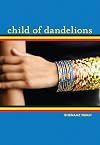
Child of Dandelions
by Shenaaz Nanji
On This Page
Description
In Uganda in 1972, fifteen-year-old Sabine and her family, wealthy citizens of Indian descent, try to preserve their normal life during the ninety days allowed by President Idi Amin for all foreign Indians to leave the country, while soldiers and others terrorize them and people disappear.Tags
Recommendations


































Member Reviews
In 1972 when Ugandan president Idi Amin gave all foreign national Indians 90 days to leave Uganda, Sabine and her family mistakenly think the order doesn't apply to them. They are Ugandan citizens after all. At first things aren't much different. Sabine continues to spend time with her African best friend, Zena. However, their friendship soon shows signs of strain as the ethnic division becomes sharper. By the time Sabine and her family realize they need to leave Uganda, it may be too late.
This YA novel is based on a real historical event. Sabine compares what is happening to the Indians in Uganda to what happened to the Jews in Europe during the Holocaust. Idi Amin's government keeps stripping rights and possessions from the Indian show more population. After witnessing soldiers' attacks on helpless people, Sabine fears for her own and her family's safety. Sabine's eyes are also opened to things she hasn't noticed before, particularly the racism practiced in the Indian community and in her own family.
As in many children's and YA novels, the reader is immediately plunged into danger. It's there from the beginning of the novel, which opens on the first day of the 90-day countdown. The book will appeal most strongly to teen girls. Educators might want to use it for supplemental reading in social science courses (world history, sociology, etc.) Recommended. show less
This YA novel is based on a real historical event. Sabine compares what is happening to the Indians in Uganda to what happened to the Jews in Europe during the Holocaust. Idi Amin's government keeps stripping rights and possessions from the Indian show more population. After witnessing soldiers' attacks on helpless people, Sabine fears for her own and her family's safety. Sabine's eyes are also opened to things she hasn't noticed before, particularly the racism practiced in the Indian community and in her own family.
As in many children's and YA novels, the reader is immediately plunged into danger. It's there from the beginning of the novel, which opens on the first day of the 90-day countdown. The book will appeal most strongly to teen girls. Educators might want to use it for supplemental reading in social science courses (world history, sociology, etc.) Recommended. show less
I think I had heard somewhere before about the expulsion of Indians from Uganda, but beyond a vague recollection I knew nothing about it. Nanji has done teenagers a service with this novel, which tells the story of an episode in recent African history that's been all but forgotten in the West. Idi Amin came out against the wealthy Indian minority in Uganda and gave the entire population ninety days to get out of the country or die. Sabine's family believes the order doesn't apply to them because they are Ugandan citizens who have been living in Africa for generations, but they quickly learn that such niceties mean little to the dictator and his henchmen.
Nanji resists the temptation to turn the characters into stereotypes; there are no show more all evil or all good people in this novel, but you see shades of gray in each one: Sabine's racist but kind family friend. Sabine's family's loyal African servant, who thinks of her family as his own. Sabine's African best friend who worships Idi Amin and agrees that, for the good of Uganda, the Indians must go. Her friend's uncle who is one of those abusing the Indians but protects Sabine's family at risk to himself. Sabine's grandfather, who's carrying a secret. Occasional phrases in African and Indian languages are sprinkled throughout and add authenticity without being distracting.
This story is taut and suspenseful. As the countdown continues and the tensions escalate, readers will keenly feel Sabine's fear and uncertainty. A fine work; I would recommend it, and read this author again. show less
Nanji resists the temptation to turn the characters into stereotypes; there are no show more all evil or all good people in this novel, but you see shades of gray in each one: Sabine's racist but kind family friend. Sabine's family's loyal African servant, who thinks of her family as his own. Sabine's African best friend who worships Idi Amin and agrees that, for the good of Uganda, the Indians must go. Her friend's uncle who is one of those abusing the Indians but protects Sabine's family at risk to himself. Sabine's grandfather, who's carrying a secret. Occasional phrases in African and Indian languages are sprinkled throughout and add authenticity without being distracting.
This story is taut and suspenseful. As the countdown continues and the tensions escalate, readers will keenly feel Sabine's fear and uncertainty. A fine work; I would recommend it, and read this author again. show less
In January, 1971 Idi Amin came to power in Uganda. Uganda was a divided country, along tribal lines and in a loose class system that saw Asians controlling the upper and middle classes. The country’s financial strength was in the hands of these people who originally came from countries like India. They were the bankers and business owners. Amin needed to get his hands on that money both because it would help him buy the loyalty of the military and also for his own outrageous spending. Lumping these people together as Indians, Amin gave them 90 days to leave the country. They were not allowed to take more than one (well searched) suitcase and no large sums of money were to be taken out of Uganda.
Through the eyes of fifteen year old show more Sabine, author Shenaaz Nanji tells the story of this time of terror and confusion in Child of Dandelions. This story captures perfectly the feeling of total disbelief and bewilderment that eventually gives way to acceptance and sadness that she and her family must leave their home forever. Life-long friends turn their backs and refuse to see what is happening, soldiers walk the streets and have total control over everyone. People disappear and are never seen again. Eventually her father becomes a target and he must flee the country. Her mother soon has to join him, leaving Sabine and her brother, with the help of her grandfather, to obtain vistas and get them out to safety in Nairobi.
The title Child of Dandelions refers to a statement that Amin made about “weeding” out the Indians in order to redistribute the land among the native population. Some 80,000 people of Asian heritage were expelled and the countries of Britain, Canada and the United States took the majority of them in. This book defines the shock, horror and brutality of this time by telling this simple story that touches on feelings of love, betrayal, fear and ultimately forgiveness and hope. show less
Through the eyes of fifteen year old show more Sabine, author Shenaaz Nanji tells the story of this time of terror and confusion in Child of Dandelions. This story captures perfectly the feeling of total disbelief and bewilderment that eventually gives way to acceptance and sadness that she and her family must leave their home forever. Life-long friends turn their backs and refuse to see what is happening, soldiers walk the streets and have total control over everyone. People disappear and are never seen again. Eventually her father becomes a target and he must flee the country. Her mother soon has to join him, leaving Sabine and her brother, with the help of her grandfather, to obtain vistas and get them out to safety in Nairobi.
The title Child of Dandelions refers to a statement that Amin made about “weeding” out the Indians in order to redistribute the land among the native population. Some 80,000 people of Asian heritage were expelled and the countries of Britain, Canada and the United States took the majority of them in. This book defines the shock, horror and brutality of this time by telling this simple story that touches on feelings of love, betrayal, fear and ultimately forgiveness and hope. show less
This is the story of Sabine, an East Indian living in Uganda during Idi Amin's reign of terror in 1972. Her family faces persecutions and exile from their home. What shines through is Sabine's courage and strength of character. The violence and suspense are best suited for middle school readers. Overall, an amazing story.
Susan says: Catherine asked me to read this as she thought it might be more of a teen book. This is the story of Sabine, who lives in Uganda in 1972. She is Indian, but an Ugandan citizen. This is the time when Idi Amin is beginning to change the country dramatically, and this book is set in the 90 days in which Indians have to leave Uganda. Sabine's family is violently pressured to leave Uganda - her uncle is killed, although it is done off-stage, so you see nothing but the body tag. Sabine's friendship with an African girl also ends when the girl's uncle is promoted in the military. Sabine's brother has Down's syndrome, which is an interesting twist in 1972. He lives at home, unlike what would happen to him in the United States. show more Overall, I think this book is full of tension, but ultimately not a teen book. There is nothing that really makes it a teen book, other than the age of the protagonist, although she does not act as a teenager, really, I had a hard time remembering that she was older than 10. While there is some violence, historical fiction does circulate better in the children's section, so I think that will circulate better there. show less
I listened to the audio version of this book narrated by Vaishali Sharma. I had no knowledge of this episode in African history. I guess this was just the start of things for Idi Amin who became known as The Butcher of Uganda. It is probably lucky for the East Indian people that they were forced to leave the country. Surely not many of them would have survived. I hope Nanji is going to write another book. I really want to know how Sabine's grandfather made out and I would like to know about Sabine's experience in Canada.
This is classified as a Young Adult read but it would have to be introduced carefully to anyone under highschool age. It also was very interesting for a much older reader.
This is classified as a Young Adult read but it would have to be introduced carefully to anyone under highschool age. It also was very interesting for a much older reader.
Child of Dandelions is a book of a girl's hardships of gettting forced out of the country. Her family has 90 days to leave. The situations are described in great detail, so you can feel Sabine's fear.
I thought the book was just alright. It was slow to get into; I didn't really get into the book until the end.
I wouldn't recommend this book to anyone who likes fast moving actino books. Child of Dandelions was a slow reading book with very little action.
I thought the book was just alright. It was slow to get into; I didn't really get into the book until the end.
I wouldn't recommend this book to anyone who likes fast moving actino books. Child of Dandelions was a slow reading book with very little action.
Members
- Recently Added By
Lists

CBC's 100 Young Adult Books
100 works; 4 members

Africa
109 works; 8 members

Swinging Seventies
255 works; 18 members
Author Information

9 Works 249 Members
Awards and Honors
Common Knowledge
- Original publication date
- 2008
- People/Characters
- Sabine; Zena; Bapa; Uncle Zulfiqar; Munchkin; Katana (show all 11); Lalita; Bapa; Guli; Sadru; Idi Amin
- Important places
- Kampala, Uganda
- Important events
- President Idi Amin declaration that all foreign Indians must leave Uganda (8/1972)
- Dedication
- With love to my family
and to the children of refugee families - First words
- The river of jubilant people alarmed Sabine as they bobbed along Allidina Visram Street in Kampala.
- Last words
- (Click to show. Warning: May contain spoilers.) O Mungu, O Mugu, Bless the child of dandelions.
- Blurbers
- Leavitt, Martine; Matas, Carol; Vassanji, M.G.
Classifications
- Genres
- Fiction and Literature, Teen, Children's Books, Young Adult
- DDC/MDS
- 823.914 — Literature & rhetoric English & Old English literatures English fiction 1900- 1901-1999 1945-1999
- LCC
- PZ7 .C — Language and Literature Fiction and juvenile belles lettres Fiction and juvenile belles lettres Juvenile belles lettres
- BISAC
Statistics
- Members
- 147
- Popularity
- 222,807
- Reviews
- 9
- Rating
- (4.03)
- Languages
- English
- Media
- Paper, Audiobook, Ebook
- ISBNs
- 8