
Charles R. Smith, Jr.
Author of I Am America... and America Is Me
About the Author
Image credit: charlesrsmithjr.com
Series
Works by Charles R. Smith, Jr.
Motown: You're All I Need to Get By - Book #7 (Motown Baby Love Board Books : Jump at the Sun Hyperion Books for Childre (2002) 6 copies
Motown: Pride and Joy - Book #8 (Motown Baby Love Board Books : Jump at the Sun Hyperion Books for Children) (2002) 6 copies
The Blue Boys 2 copies
I am The World 1 copy
I Am American 1 copy
I Am American 1 copy
Associated Works
Tagged
Common Knowledge
- Canonical name
- Smith, Charles R., Jr.
- Birthdate
- 20th century
- Gender
- male
- Education
- Brooks Institute of Photography (BA|Photography)
- Occupations
- photographer
writer
poet
fitness trainer
martial artist - Awards and honors
- NCTE Award for Excellence in Poetry for Children (2025)
- Nationality
- USA
- Birthplace
- Los Angeles, California, USA
- Places of residence
- Compton, California, USA
Poughkeepsie, New York, USA - Associated Place (for map)
- California, USA
Members
Reviews
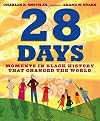
One of the aspects I loved best about this compilation of memorable moments in African-American history is the Author's Note in which Charles Smith begins"
I've always had a love-hate relationship with Black History Month." He details his beefs with it (not unlike mine) --What about the rest of the year? I also loved Shane Evans' illustrations. Highly textured in use of fabrics and fancy papers, and vibrantly colorful the mixed-media art pulses with life. Organizationally interesting, show more tracing 28 people or events one for each day of Black History month (and then a lagniappe for leap year's 29th day), the book takes readers on a whirlwind look of history from Crispus Attucks's role in the Revolutionary War in 1770 to Barack Obams inauguration as president in 2009 to "today"--an invitation to the books' readers to how they will make history. A great book to emulate as a mentor text -- possibly with alternate people and events or with Women's History Month, Hispanic History Month, Asian History Month. show less
I've always had a love-hate relationship with Black History Month." He details his beefs with it (not unlike mine) --What about the rest of the year? I also loved Shane Evans' illustrations. Highly textured in use of fabrics and fancy papers, and vibrantly colorful the mixed-media art pulses with life. Organizationally interesting, show more tracing 28 people or events one for each day of Black History month (and then a lagniappe for leap year's 29th day), the book takes readers on a whirlwind look of history from Crispus Attucks's role in the Revolutionary War in 1770 to Barack Obams inauguration as president in 2009 to "today"--an invitation to the books' readers to how they will make history. A great book to emulate as a mentor text -- possibly with alternate people and events or with Women's History Month, Hispanic History Month, Asian History Month. show less
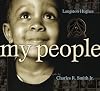
My People is a work that highlights and celebrates the people who identify themselves as African American/ black. Hughes's eloquent language flow very smoothly throughout the book and are both metaphorical and literal in meaning. He points to the beauty and uniqueness of his culture/ identity and presents such ideas as being ones that are universal and applicable to anyone of any race, ethnicity, cultural upbringing, etc. Paired with Smith's photography, it also provides a first hand and show more real life perspective on his culture, making it something further to connect and identify with the viewer.
I think that especially as a person of color (Latina/ Chicana), I greatly enjoyed reading this poem. I believe that when any author and/or artist invests themselves into their work, it gives it a deeper meaning and is strongly conveyed and received. The fact that Hughes takes so much pride and is not ashamed of who he is or of his cultural "group," it sends a great message to young readers. Being able to see oneself as being part of a whole and as being a valid individual and seeing personal attributes and characteristics as being assets rather than burdens, is a powerful thing that should be part of ALL people's identity. show less
I think that especially as a person of color (Latina/ Chicana), I greatly enjoyed reading this poem. I believe that when any author and/or artist invests themselves into their work, it gives it a deeper meaning and is strongly conveyed and received. The fact that Hughes takes so much pride and is not ashamed of who he is or of his cultural "group," it sends a great message to young readers. Being able to see oneself as being part of a whole and as being a valid individual and seeing personal attributes and characteristics as being assets rather than burdens, is a powerful thing that should be part of ALL people's identity. show less
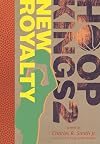
A dozen poems play homage to the same number of basketball stars.
This is the third book in a collection of poems, centered around basketball. It's a short collection with only twelve poems, one on each two-page spread. There's a table of contents in the beginning, so that readers can immediately locate a poem about a specific player. At the end of the book, the author explains the inspiration behind each poem and player briefly.
This book makes a solid impression already from the cover on. It show more holds a basketball-textured siding and keeps the rest simple but clear and eye-pleasing. The illustrations inside follow the same concept, in so far that the highlighted player is clear (black and white photo with colored uniform) while the background is extremely simple and unimportant. The poem is written in larger, bold font with the title huge and bold, and the player's name underneath and obvious. Some poems are short, others longer, but all are easy to read and flow with a similar tick as a real-life game.
The author has chosen twelve, well-known players from the NBA, taken their strengths or known highlights, and let the creative juices flow in a way, which matches the excitement of playing the game. The phrases are short, clip, and spot-on. Some poems are simply a lot of fun, while others take a bit more word play and depth. I'm not sure readers of the age group will grasp everything, especially in one or two poems, but for the most part, they come over very age appropriate. If nothing else, there's a little to learn about most of the players, and that does make it interesting.
I received a complimentary copy and loved how this had the same rhythm as playing a game. show less
This is the third book in a collection of poems, centered around basketball. It's a short collection with only twelve poems, one on each two-page spread. There's a table of contents in the beginning, so that readers can immediately locate a poem about a specific player. At the end of the book, the author explains the inspiration behind each poem and player briefly.
This book makes a solid impression already from the cover on. It show more holds a basketball-textured siding and keeps the rest simple but clear and eye-pleasing. The illustrations inside follow the same concept, in so far that the highlighted player is clear (black and white photo with colored uniform) while the background is extremely simple and unimportant. The poem is written in larger, bold font with the title huge and bold, and the player's name underneath and obvious. Some poems are short, others longer, but all are easy to read and flow with a similar tick as a real-life game.
The author has chosen twelve, well-known players from the NBA, taken their strengths or known highlights, and let the creative juices flow in a way, which matches the excitement of playing the game. The phrases are short, clip, and spot-on. Some poems are simply a lot of fun, while others take a bit more word play and depth. I'm not sure readers of the age group will grasp everything, especially in one or two poems, but for the most part, they come over very age appropriate. If nothing else, there's a little to learn about most of the players, and that does make it interesting.
I received a complimentary copy and loved how this had the same rhythm as playing a game. show less

The original White House in Washington, D.C. was built in the 1790s with the help of slaves rented from nearby plantations. The irony of the Founding Fathers who, in search of liberty and justice for all, utilized slaves to achieve it, is a subtle undercurrent in this poetic history of the construction of the new symbol of Free America.
Smith uses rhythmic repetition that focuses on the hard tasks of mixing mortar and spreading it; chiseling, carving, and transporting stone; and bleeding and show more blistering under a hot son.
"Up, down, push, pull
two men per pit saw,
spraying sawdust
until slave hands are raw."
Perhaps the best part of this book is the way the author’s fierce passion for justice is evinced by his recitation of the names of some of these slaves, names which he uncovered in his research for the book. By giving them identities, he turns them from faceless slaves into real people, whose descendants would go on not only to gain their freedom, but even to see Michelle Obama, a descendant of slaves like them, occupy the White House with her husband.
Illustrator Floyd Cooper (like the author, a Coretta Scott King Award winner) captures the mood of the book perfectly in oil-wash paintings that emphasize the brown tone of the work site, and almost bring to mind the story of the Exodus, with slaves working in the desert to build the pyramids.
In an afterword, Smith shares some of what he learned in his research about the building of the first White House, and includes a list of selected resources.
Evaluation: This book is meant for children 5-8, but I think children will appreciate having a parent co-reader answer the questions they may have about this very different era in our history. After a first "explanatory" reading though, I imagine children will want to return to this book repeatedly. It offers mesmerizing pictures and a compelling story about a symbol of America children will undoubtedly recognize. show less
Smith uses rhythmic repetition that focuses on the hard tasks of mixing mortar and spreading it; chiseling, carving, and transporting stone; and bleeding and show more blistering under a hot son.
"Up, down, push, pull
two men per pit saw,
spraying sawdust
until slave hands are raw."
Perhaps the best part of this book is the way the author’s fierce passion for justice is evinced by his recitation of the names of some of these slaves, names which he uncovered in his research for the book. By giving them identities, he turns them from faceless slaves into real people, whose descendants would go on not only to gain their freedom, but even to see Michelle Obama, a descendant of slaves like them, occupy the White House with her husband.
Illustrator Floyd Cooper (like the author, a Coretta Scott King Award winner) captures the mood of the book perfectly in oil-wash paintings that emphasize the brown tone of the work site, and almost bring to mind the story of the Exodus, with slaves working in the desert to build the pyramids.
In an afterword, Smith shares some of what he learned in his research about the building of the first White House, and includes a list of selected resources.
Evaluation: This book is meant for children 5-8, but I think children will appreciate having a parent co-reader answer the questions they may have about this very different era in our history. After a first "explanatory" reading though, I imagine children will want to return to this book repeatedly. It offers mesmerizing pictures and a compelling story about a symbol of America children will undoubtedly recognize. show less
Lists
Awards


You May Also Like


Associated Authors
Statistics
- Works
- 48
- Also by
- 2
- Members
- 3,216
- Popularity
- #7,957
- Rating
- 4.1
- Reviews
- 169
- ISBNs
- 109
- Languages
- 1
- Favorited
- 1
