On This Page
Description
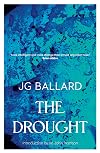
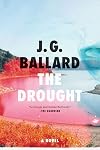
With a new introduction by M. John Harrison and a striking new cover design from the artist Stanley Donwood, this acclaimed cult novel sees human existence threatened by devastating climate change. Water. Man's most precious commodity is a luxury of the past. Radioactive waste from years of industrial dumping has caused the sea to form a protective skin strong enough to devastate the Earth it once sustained. And while the remorseless sun beats down on the dying land, civilization itself show more begins to crack. Violence erupts and insanity reigns as the remnants of mankind struggle for survival in a worldwide desert of despair. Remarkable for its prescience and the originality of its vision, The Drought is a work of major importance from the early career of one of Britain's most acclaimed novelists. This edition is part of a new commemorative series of Ballard's works, featuring introductions from a number of his admirers (including Ned Beauman, Ali Smith, Neil Gaiman and Martin Amis) and brand-new cover designs. Neil Gaiman and Martin Amis) and brand-new cover designs. show lessTags
Recommendations















Member Reviews
The Drought is written in a prose so consistently overwrought that it entertains on a different plane of reading altogether, one that is experiential, and a little bit nauseating. It’s exactly like drinking one of those fragrant, fruity gins. It reminds me of Poe at his most hysterical. It makes me nostalgic for the era when novelists were allowed space and time to develop their craft, because this early Ballard novel is an adjective-laden morass of hokey fun, and I can’t shake the feeling that debut authors would never get away with this kind of thing in these highly competitive days of publishing, when everything must be either deeply earnest and/or sellable as a movie script.
As with the last several Ballard novels I just read, show more just days ago and just days apart from each other, I got the feeling that any one sentence of this novel was a sentence that no one else but J.G. Ballard could have written. Start for instance with this doozy of a first sentence:
At noon, when Dr Charles Ransom moored his houseboat in the entrance to the river, he saw Quilter, the idiot son of the old woman who lived in the ramshackle barge outside the yacht basin, standing on a spur of exposed rock on the opposite bank and smiling at the dead birds floating in the water below his feet. show less
As with the last several Ballard novels I just read, show more just days ago and just days apart from each other, I got the feeling that any one sentence of this novel was a sentence that no one else but J.G. Ballard could have written. Start for instance with this doozy of a first sentence:
At noon, when Dr Charles Ransom moored his houseboat in the entrance to the river, he saw Quilter, the idiot son of the old woman who lived in the ramshackle barge outside the yacht basin, standing on a spur of exposed rock on the opposite bank and smiling at the dead birds floating in the water below his feet. show less
Channel your interior Robbie Krieger and prepare for pondering The End. No. I don’t mean David Beckham’s retirement, but rather closing time, like permanently. One of my criticisms of The Road was its attempt to capture the After with an almost biblical gravity of language. J.G. Ballard appears too savvy for those traps. His exploration is empty. Life is vast and bleak. It isn’t going to rain anymore. We’re sure as hell Doomed, done for. Experiences don’t amount to much anymore. I wouldn’t waste any time on Hope either. It is this arid silence which propels the novel through its second and third sections. After the end is always the challenge. Hobbesean variations usually ensue. Its the wild west (or Somalia) or simply show more wicked medieval madness. There are hints of both here. A disabled man flitting about on six-foot stilts could be out of Fellini. That said, the characters’ responses are never emotional. That aspect of humanity has been deleted for operating purposes. I was impressed. show less
Despite its overwritten moments, I loved this book. I am not a big fan of Ballad, having read the companion to this, The Drowned World and Crash-- I found both cold, alienating and hard to get through. But this novel is full of engaging characters put in fascinating situations. It is very cinematic and convincing. In the second half, I couldn't put it down. Now I see these thirsty characters every time I go to Waitrose or stand in line at the post office. How we would not help each other.
This book is set in a near future where it has stopped raining, and so water is at a premium. Civilisation has apparently collapsed and the population of a small town is deserting it to head for the coast. Its quite a bleak book, and has some interesting ideas. However I didn't find the writing that gripping and found the characters too bizarre (even at the start of the crisis) to be sympathetic.
Starts out a little weird, gets very weird, end's seriously %#@! weird--I'm talking Kurt Vonnegut reading "Galapagos" on helium weird.
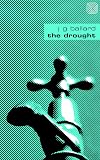
To tell you what the book is about would really be to insult your intelligence, I’m sure the title and the tap on the front cover gives a solid clue but I’ll tell you nonetheless… In a none too distant future the world as we know it is slowly turning to dust and all, unsurprisingly, due to mankind’s disregard for the planet. Increasing levels of industrial waste have slowly formed a large film over the world’s oceans, disrupting the precipitation cycle and leaving the world to die of thirst. The never-ending desert lays waste to society as we know it, destroying all sense of time as survivors struggle to maintain their lives in the present, the majority rushing in desperation towards a redundant coastline. We are introduced to show more those who have remained further inland; religious fanatics, general weirdos and a former doctor called Charles Ransom. His role in society made completely redundant by the global situation, we spend the next 200 pages following Ransom backwards and forwards across the deserted plain, accompanied by a raft of quirky characters that should have been interesting, but were in reality rather dull.
Getting so excited about my first JG Ballard was my first mistake as this novel had much further to fall. And fall it did, flat on its face. Flat characters, flat plot, flat landscape and an overriding desire to drink litres and litres of water is what we are left with. Although surreal vistas with a Salvador Dali-esque drama occasionally peek through the sand and there are some interesting themes to be explored – i.e. the role religion plays in this hopeless situation, this is done in such a distant, unconcerned way that we really struggle to care or understand what happens to characters that, whilst eccentric on the surface, are dead behind the eyes.
Although the fact that we read this for the Christmas book club meet was entirely inappropriate and the burning desire (no pun intended) to read something Victorian and mistletoey may have grasped us all, that doesn’t soften the blow that all those who turned up for the December meet (apart from one lovely lady who defended the book admirably) were Bored, with a capital B. Chapter skimming is not an attractive habit and boy did I develop it, for an entire week. Do I care whether this could happen in some dark, distant future at home? Not a fig. Do I want to read another ‘eco-disaster’ novel anytime soon? Well, if the ‘master’ can’t enthrall me then who can?
http://relishreads.wordpress.com/2013/05/27/the-drought/ show less
Getting so excited about my first JG Ballard was my first mistake as this novel had much further to fall. And fall it did, flat on its face. Flat characters, flat plot, flat landscape and an overriding desire to drink litres and litres of water is what we are left with. Although surreal vistas with a Salvador Dali-esque drama occasionally peek through the sand and there are some interesting themes to be explored – i.e. the role religion plays in this hopeless situation, this is done in such a distant, unconcerned way that we really struggle to care or understand what happens to characters that, whilst eccentric on the surface, are dead behind the eyes.
Although the fact that we read this for the Christmas book club meet was entirely inappropriate and the burning desire (no pun intended) to read something Victorian and mistletoey may have grasped us all, that doesn’t soften the blow that all those who turned up for the December meet (apart from one lovely lady who defended the book admirably) were Bored, with a capital B. Chapter skimming is not an attractive habit and boy did I develop it, for an entire week. Do I care whether this could happen in some dark, distant future at home? Not a fig. Do I want to read another ‘eco-disaster’ novel anytime soon? Well, if the ‘master’ can’t enthrall me then who can?
http://relishreads.wordpress.com/2013/05/27/the-drought/ show less
I have particularly mixed feelings about 'The Drought.' On the one hand, it is an interesting exploration of one person's feelings of abandonment, and his desire for isolation; on the other hand, it's allegedly a story about the end of civilisation that doesn't really go far enough in showing what happens when rational society crumbles. Ballard is at his wordiest, with long expository sections that do a wonderful job of relating the inner world of the main character, Ransom, though such wordiness then makes many of the action scenes seem rough and hard to follow. Overall, a good dystopian story that could have been much better.
Members
- Recently Added By
Lists

Les 100 principaux titres de la science-fiction (1981)
126 works; 3 members
Author Information

291+ Works 37,773 Members
J. G. Ballard was born to British parents in Shanghai, China on November 15, 1930. While a child during World War II, he spent four years in a Japanese POW camp. This experience was the basis for the emotionally moving novel Empire of the Sun, which he adapted into a successful movie, directed by Steven Spielberg. Before becoming a full-time show more writer, he studied medicine at Cambridge University and served as a pilot in the British Royal Air Force. Ballard is best known for his science fiction writings. His early works were heavily influenced by surrealism. Most of his novels deal with death and destruction of the human spirit. Novels such as Crash, Concrete Island, and High Rise portray a society that is devolving into barbaric chaos. Crash was made into a movie by David Cronenberg in 1996. The Drowned World describes an apocalyptic society, with a hero that ushers in the destruction of the world. His novel Empire of the Sun was shortlisted for the Booker Prize and awarded the Guardian Fiction Prize and James Tait Black Memorial Prize for fiction. Empire of the Sun was filmed by Steven Spielberg in 1987, starring a young Christian Bale as Jim (Ballard). Ballard moved away from science fiction, but he is still considered one of the leading authors of the genre. He died on April 19, 2009 at the age of 78. (Bowker Author Biography) show less
Some Editions
Series

Belongs to Publisher Series
Saturnus SciFi (4)
Work Relationships
Is contained in
Is an expanded version of
Common Knowledge
- Canonical title*
- Welt in Flammen
- Original title
- The Drought
- Original publication date
- 1965
- First words
- At noon, when Dr Charles Ransom moored his houseboat in the entrance to the river, he saw Quilter, the idiot son of the old woman who lived in the ramshackle barge outside the yacht basin, standing on a spur of exposed rock o... (show all)n the opposite bank and smiling at the dead birds floating in the water below his feet.
- Last words
- (Click to show. Warning: May contain spoilers.)It was some time later that he failed to notice it had started to rain.
- Blurbers
- Amis, Kingsley; Aldiss, Brian W.
- Original language*
- Englisch
- Disambiguation notice
- NOTE: The English-language work The burning world is an earlier version of The Drought. Please do not combine the two.
*Some information comes from Common Knowledge in other languages. Click "Edit" for more information.
Classifications
Statistics
- Members
- 998
- Popularity
- 26,271
- Reviews
- 21
- Rating
- (3.53)
- Languages
- 8 — Dutch, English, Finnish, French, German, Italian, Japanese, Spanish
- Media
- Paper, Ebook
- ISBNs
- 28
- UPCs
- 1
- ASINs
- 20