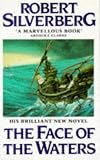
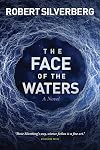
The Face of the Waters
by Robert Silverberg
On This Page
Description
"Deep in the future, after a human offense against the natives of Hydros, the human population of the island of Sorve are ordered to leave. Forbidden on all other islands, in a flotilla of ships they seek the semi-mythical island of the Face of the Waters. During their journey they are forced to learn more about themselves, leading to questions about both religion and the purpose of humanity, all while facing danger from outside and within"--Page 4 of cover.Tags
Recommendations






























Member Recommendations

Member Reviews
This novel, originally published in 1991, features a group of humans, descendants of a long-destroyed Earth, living on a watery world of strange sea creatures. When they offend the alien inhabitants of the island they're currently living on, they're forced to make a journey across the seas in search of a new home.
There's a fair bit of conflict and danger and death here, but the word I sort of want to use for the way this story unfolds is "slow." But not at all in a bad way. In a way, perhaps, that captures the feel of a long sea voyage very well, that stops to be philosophically contemplative, and that allows us lots of time to take in the experience of being on this alien world, all while Silverberg's smooth writing style pulls the show more reader right along. The ending, it must be said, is pretty weird, but it's weird in a way that's interesting, and that does hit some kind of poignant emotional note, and that is more thematically satisfying the more I think about it. show less
There's a fair bit of conflict and danger and death here, but the word I sort of want to use for the way this story unfolds is "slow." But not at all in a bad way. In a way, perhaps, that captures the feel of a long sea voyage very well, that stops to be philosophically contemplative, and that allows us lots of time to take in the experience of being on this alien world, all while Silverberg's smooth writing style pulls the show more reader right along. The ending, it must be said, is pretty weird, but it's weird in a way that's interesting, and that does hit some kind of poignant emotional note, and that is more thematically satisfying the more I think about it. show less
 This review was written for LibraryThing Early Reviewers.
Silverberg is, without a doubt, a great writer of classic science fiction. The storytelling and worldbuilding in this book are spectacular, and the story itself has all the things I love in classic scifi, like religious overtones, scattered high-minded literary references to the Rime of the Ancient Mariner, and searching for human meaning in a meaningless world. But younger readers will be exasperated by the macho gender bullshit by page 10, and the casual racism (strong "magical negro" vibes) and sexism are out of another era, and really interfered with my enjoyment of an otherwise-fun story. I could imagine the story itself, in an updated version with less racism, sexism, and gender stereotypes as an HBO series easily.
Examples of the show more racism and sexism:
The one character described as having "dark smooth skin" calls everyone "captain-sir" or "doctor-sir" throughout the novel, as if he stepped from the pages of a late 1800s slave novel, and is always placed as the simple guy who has nothing much going on in his mind but who has magical skills with algae. It's not great.
"Lawler had never had much to do with her on Sorve, but he had slept with her mother Anya a couple of times twenty years ago... Lawler had been a big man with the ladies at the time he was involved with her--it had been soon after the collapse of his one brief ill-starred marriage--but he hadn't been one for some time now, and he wished Pilya would stop staring at him in that eager, hopeful way, as though he were everything she might need in a man." (10)
We also get a discussion about what kind of name "Valben" is, to which the character replies "It's an Earth name." "No it isn't. John, Richard, Elizabeth, those are Earth names..." (193). The small-minded way in which only contemporary white guy names turn up as Earth names 500 years into the future is cringe-worthy.
It's frustrating because I don't want to downplay how great the storytelling is and the story itself is also great, with some interesting settler-colonial commentary just under the surface if you look for it. But damn, if you're going to reprint a 1991 science fiction book with a great story, wouldn't it have been worth a revision to undo some of the cringe bits? I remember 1991 and this was all very normal then (even our progressive Star Trek:TNG was filled with these problematic themes then). But general awareness of this stuff in 2022 means this story will maybe not find the readership it could've had. show less
This review was written for LibraryThing Early Reviewers.In a far distant future, the Earth has been destroyed and humans live in exile on many worlds across the galaxy. But on one world, Hydros, they share the limited habitable space - drifting artificial islands on a planetary sea - with intelligent indigenous aliens. On one island, Sorve, the aliens want the humans off it because of a transgression one man has made which led to the deaths of two other aliens. The humans of Sorve, some seventy or so, cannot leave the planet, as the aliens have never allowed the construction of a spaceport. Humans who come to Hydros do so in the full knowledge that it's a one-way trip. So the group of humans - now doubly exiled - leave in a flotilla of seven ships to seek refuge on another distant island. show more But the leader of the fleet, whose fault this all is, has different ideas.
As I recollect, when this book was first published in 1991, it represented a return to science fiction by Silverberg after a break of some years producing his Lord Valentine series of fantasy novels. Opinions varied at the time; John Brunner, in a review in Foundation, said that he found little that was new in this book. And indeed, an experienced reader of sf will have seen much of this before. But I doubt that it was Silverberg's aim to write a maritime sf adventure. Rather, we see the voyage through the eyes of Valben Lawler, the island's human doctor; and the novel is a character study of Lawler, his shipmates, and his perspective on the human position on Hydros and in the galaxy, the perils of the voyage, and the motivations of the different people involved.
Hydros is a world not blessed with natural resources except for the harvest of the sea; but that harvest fights back. The plants and creatures that the humans have to live on are either hostile or poisonous. I found the descriptions of the sea creatures reminiscent of Harry Harrison's Deathworld novels, though there turns out to be a good reason for the hostility. I did find myself stumbling over some aspects of the world-building; Earth artefacts are rare objects, and yet we see Lawler using medical instruments which (apart from a locally-originated stethoscope) are little different from those an Earth-bound doctor would use; yet we are told throughout that Hydros is short of natural resources and has almost no metals. Early on, we are shown people dressing in various processed forms of seaweed and algae, yet I doubt that it would be so easy to make pens, paper and filing systems out of these materials.
Yet this is incidental, because the voyage is an exercise in self-discovery, as so many of the best voyages are. Lawler gradually changes his views about the world, his fellow crew, his exile from a world he has never known and his place in the limited society of the ships. It is this which is the meat of the book and it is well done. The conclusion of the plot is telegraphed some way out; how much of a cop-out the reader finds it will depend on what they were expecting from the book in the first place.
The Face of the Waters has recently (2021) been reissued and the book has attracted some attention because some of its attitudes towards race, sex and gender are definitely of their time, if not slightly earlier. Hemingway comes to mind quite a bit. And reissuing a thirty-year-old novel is always going to have its pitfalls in this day and age; quite why this book has been selected for this honour when other, possibly better, books haven't is another mystery of the publishing business. Readers will have to decide for themselves how much of a problem this is. show less
As I recollect, when this book was first published in 1991, it represented a return to science fiction by Silverberg after a break of some years producing his Lord Valentine series of fantasy novels. Opinions varied at the time; John Brunner, in a review in Foundation, said that he found little that was new in this book. And indeed, an experienced reader of sf will have seen much of this before. But I doubt that it was Silverberg's aim to write a maritime sf adventure. Rather, we see the voyage through the eyes of Valben Lawler, the island's human doctor; and the novel is a character study of Lawler, his shipmates, and his perspective on the human position on Hydros and in the galaxy, the perils of the voyage, and the motivations of the different people involved.
Hydros is a world not blessed with natural resources except for the harvest of the sea; but that harvest fights back. The plants and creatures that the humans have to live on are either hostile or poisonous. I found the descriptions of the sea creatures reminiscent of Harry Harrison's Deathworld novels, though there turns out to be a good reason for the hostility. I did find myself stumbling over some aspects of the world-building; Earth artefacts are rare objects, and yet we see Lawler using medical instruments which (apart from a locally-originated stethoscope) are little different from those an Earth-bound doctor would use; yet we are told throughout that Hydros is short of natural resources and has almost no metals. Early on, we are shown people dressing in various processed forms of seaweed and algae, yet I doubt that it would be so easy to make pens, paper and filing systems out of these materials.
Yet this is incidental, because the voyage is an exercise in self-discovery, as so many of the best voyages are. Lawler gradually changes his views about the world, his fellow crew, his exile from a world he has never known and his place in the limited society of the ships. It is this which is the meat of the book and it is well done. The conclusion of the plot is telegraphed some way out; how much of a cop-out the reader finds it will depend on what they were expecting from the book in the first place.
The Face of the Waters has recently (2021) been reissued and the book has attracted some attention because some of its attitudes towards race, sex and gender are definitely of their time, if not slightly earlier. Hemingway comes to mind quite a bit. And reissuing a thirty-year-old novel is always going to have its pitfalls in this day and age; quite why this book has been selected for this honour when other, possibly better, books haven't is another mystery of the publishing business. Readers will have to decide for themselves how much of a problem this is. show less
I really liked the concept of this science fiction story, but... Sigh. It was one of those books that was on the edge of being worth the time to read. It is set on a water planet with a small band of humans trying to survive an overwhelming plethora of alien lifeforms. There is some moderately philosophical pondering about the nature of communities, religion, and the quest for survival in a foreign land.
Personally, I felt this 1991 reissue would have been better served at 50 pages less (tighter editing) and completely rewriting the female characters and their interactions with male characters. I am spoiled (and grateful for it) by reading contemporary science fiction with fully realized female protagonists who stand alone without being show more sexualized plot additions. show less
This review was written for LibraryThing Early Reviewers.The planet Hydros has no land mass--only world-wide ocean. Once on the planet, there's no launch pad for leaving. The few humans who live there know they are stranded for life. The autochthones now want the humans off the artificial islands on the water’s surface, forever.
Forgive me for not being very impressed with the scenario and the lack-luster action. I like most of Silverberg’s books, but this one is not of his best. In the first chapter a sea creature throws part of itself onto the deck of a fleeing ship—this “part” looking like a fishing net—captures and drags off the boat and consumes one of the crew. I’m okay with camouflage, but I can’t buy the ability of an alien deep-water creature that can mimic a human show more fishing net.
While the strength of the book lies more in the philosophical/spiritual/anthropological soul searching that Silverberg explored in some depth: “Unfamiliar shapes danced in his mind. He felt a maddening unreachable itch behind his forehead and pressed his hands to his temples, but it did no good”, the seemingly unending attempts of all sea life to try to destroy the humans provides most of the action: “Nightmarish creatures of half a dozen unfamiliar kinds burst from the water to soar briefly overhead and disappear with great flashes in the distance”—and became tedious for me. Fortunately, at the end of the story we learn why this malevolence was so widespread and prevalent—it’s not normal for this planet to produce so many alpha predators aimed at humans.
Meanwhile, the story line did not go where I expected it to end—it took a turn that really irritated me. I remember a story I read many years ago (if you recognize my description, please let me know the story title/author) where the next evolutionary phase of human existence had people spontaneously being born as amoeba-like combinate life forms which absorbed normal (old-style) humans into a super-gestalt shared-mind entity. Normal humans fought back so well that nature, again spontaneously, produced an improvement on the original lines of humanity, by enhancing the various emotional, physical and intellectual capabilities of the human individuality. And allowed the amoeba-people to disappear.
I give the book 3 stars for the inter-human interactions and the poetic musings; but no more than 3 for the plot & ending.
Addendum: it's 2 years since I wrote the above and it nags me how bothered I was by the ending. Considering the environment of the story what continued to irk me is my belief that no human could possibly consider giving up his “individuality” to merge with an alien consciousness…unless! Let’s face it, living on a planet that has nothing in the way of interest, excitement, challenge, emotional growth, joy, entertainment, etc., I’m beginning to see that the protagonist doesn’t have ANYTHING to lose by the merger. The real question, therefore, becomes “why would anyone intentionally commit himself to an environment blander than a prison cell”? show less
Forgive me for not being very impressed with the scenario and the lack-luster action. I like most of Silverberg’s books, but this one is not of his best. In the first chapter a sea creature throws part of itself onto the deck of a fleeing ship—this “part” looking like a fishing net—captures and drags off the boat and consumes one of the crew. I’m okay with camouflage, but I can’t buy the ability of an alien deep-water creature that can mimic a human show more fishing net.
While the strength of the book lies more in the philosophical/spiritual/anthropological soul searching that Silverberg explored in some depth: “Unfamiliar shapes danced in his mind. He felt a maddening unreachable itch behind his forehead and pressed his hands to his temples, but it did no good”, the seemingly unending attempts of all sea life to try to destroy the humans provides most of the action: “Nightmarish creatures of half a dozen unfamiliar kinds burst from the water to soar briefly overhead and disappear with great flashes in the distance”—and became tedious for me. Fortunately, at the end of the story we learn why this malevolence was so widespread and prevalent—it’s not normal for this planet to produce so many alpha predators aimed at humans.
Meanwhile, the story line did not go where I expected it to end—it took a turn that really irritated me. I remember a story I read many years ago (if you recognize my description, please let me know the story title/author) where the next evolutionary phase of human existence had people spontaneously being born as amoeba-like combinate life forms which absorbed normal (old-style) humans into a super-gestalt shared-mind entity. Normal humans fought back so well that nature, again spontaneously, produced an improvement on the original lines of humanity, by enhancing the various emotional, physical and intellectual capabilities of the human individuality. And allowed the amoeba-people to disappear.
I give the book 3 stars for the inter-human interactions and the poetic musings; but no more than 3 for the plot & ending.
Addendum: it's 2 years since I wrote the above and it nags me how bothered I was by the ending. Considering the environment of the story what continued to irk me is my belief that no human could possibly consider giving up his “individuality” to merge with an alien consciousness…unless! Let’s face it, living on a planet that has nothing in the way of interest, excitement, challenge, emotional growth, joy, entertainment, etc., I’m beginning to see that the protagonist doesn’t have ANYTHING to lose by the merger. The real question, therefore, becomes “why would anyone intentionally commit himself to an environment blander than a prison cell”? show less
This review was written for LibraryThing Early Reviewers.[The Face of the Waters] by [[Robert Silverberg]] (1991) is set on the water planet Hydros, settled by humans during the Earth Diaspora that followed the destruction of their home planet. Silverberg’s short story about a xenoanthropologist traveling through space to visit far-flung planets and cultures inspired me to seek my undergraduate degree in anthropology. While anthropology turned out to be a poor fit at the time, I maintain a sentimental connection to his work. So, I approached this novel with optimism. The story describes the journey of a human community exiled from their home island. The human colony, barely tolerated for five generations by the contemptuously named native Gillies who built the island, ship out in search of show more a new home after the exploitive death of an intelligent native creature. What follows is several hundred pages of shipboard portrayal of the big questions of humanity as told with little introspection or empathy through the eyes of the community’s doctor. Interpersonal relationships, connection, god, capitalism, interspecies relations, leadership, and madness are all touched upon. One particularly strong passage details the process of numbweed withdrawal. Disappointingly, the story ends with a surprise that could have lifted my experience but left me wondering about how we got to this point. This book is a good read for those who enjoy exploring alternative worlds and the possibilities after humans destroy our Earth home without expectation for deep thinking. show less
This is an early reviewers review in exchange for a free copy of the book.
The book sets itself up well with an interesting premise: humankind on this world is living only at the sufferance of the native life, and all people are trapped on the island either as prisoners or willing migrants, but without any infrastructure for spaceport, rockets, etc. to leave. The titular Face of the Waters is a semi-mythical island which a crew of humans goes in search of.
I can see why it is considered a sci-fi classic. The connection of the native life and world cycle on the planet is interesting, which gives us a mental moment to consider the 'alien' point of view. It rubbed me the wrong way, however, largely because of how it mirrors the Rime of the show more Ancient Mariner (Even as it claims it isn't explicitly in the text). I also found the ending unsatisfying, but that may be a measure of personal preference rather than a question of whether or not the book is well written or 'good.' show less
The book sets itself up well with an interesting premise: humankind on this world is living only at the sufferance of the native life, and all people are trapped on the island either as prisoners or willing migrants, but without any infrastructure for spaceport, rockets, etc. to leave. The titular Face of the Waters is a semi-mythical island which a crew of humans goes in search of.
I can see why it is considered a sci-fi classic. The connection of the native life and world cycle on the planet is interesting, which gives us a mental moment to consider the 'alien' point of view. It rubbed me the wrong way, however, largely because of how it mirrors the Rime of the show more Ancient Mariner (Even as it claims it isn't explicitly in the text). I also found the ending unsatisfying, but that may be a measure of personal preference rather than a question of whether or not the book is well written or 'good.' show less
This review was written for LibraryThing Early Reviewers.Members
- Recently Added By
Author Information

987+ Works 62,530 Members
Awards and Honors
Series
Belongs to Publisher Series
Common Knowledge
- Canonical title
- The Face of the Waters
- Original title
- The Face of the Waters
- Original publication date
- 1991
- Important places
- Hydros (imaginary planet)
- Epigraph
- And the earth was without form, and void; and darkness was upon the face of the deep. And the spirit of God moved upon the face of the waters.
-- Genesis 1:2
The ocean has no compassion, no faith, no law, no memory. Its fickleness is to be held true to man's purpose only by an undaunted resolution and by sleepless, armed, jealous vigilance in which, perhaps, there has always been... (show all) more hate than love.
-- Joseph Conrad, The Mirror Of The Sea - Dedication
- To Charlie Brown, the focus of the LOCUS - and probably about time, too.
- First words
- There was blue above and a different blue below, two immense inaccessible voids, and the ship appeared almost to be hovering suspended between one blue void and the other, touching neither, motionless, perfectly becalmed.
- Last words
- (Click to show. Warning: May contain spoilers.)And he could feel the ship moving in a big arc beneath him, already swinging about, heading back through the luminous sea toward the Face of the Waters.
- Blurbers
- Asimov, Isaac; Aldiss, Brian
Classifications
Statistics
- Members
- 544
- Popularity
- 54,795
- Reviews
- 20
- Rating
- (3.40)
- Languages
- 7 — English, French, German, Italian, Polish, Portuguese, Spanish
- Media
- Paper, Ebook
- ISBNs
- 21
- ASINs
- 9