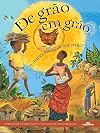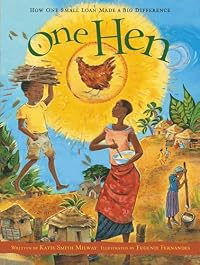
One Hen: How One Small Loan Made a Big Difference
by Katie Smith Milway
On This Page
Description
Based on a true story, tells of how a poor Ghanaian boy buys a chicken through a community loan program, which eventually helps lift him, his mother, and his community out of poverty.Tags
Recommendations




Member Recommendations
Member Reviews
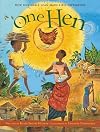
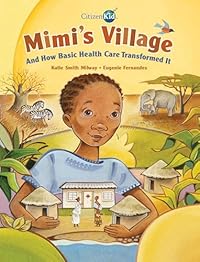
American author Katie Smith Milway and Canadian illustrator Eugenie Fernandes, who have also collaborated on Cappuccina Goes to Town and Mimi's Village: And How Basic Health Care Transformed It, turn in this picture-book to the subject of microfinance. The story follows Kojo, a young Ashanti boy in Ghana who cannot afford to go to school, after the recent death of his father. When he and his mother are given a micro-loan by the village coop, and there is a little bit left after his mother buys a cart for the firewood she sells, Kojo buys one hen. From this small beginning, great things come, as Kojo slowly builds up his flock, sells his surplus eggs, and gains enough money to return to school. From there he studies hard, eventually show more winning a scholarship, and going on to study agriculture. Eventually, he starts a farm and business of his own, going on to great success, and having a beneficial effect on other impoverished people, and on his country...
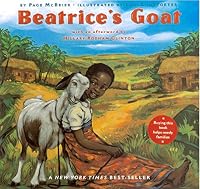
I've read a few books now about Heifer International - Jan West Schrock's Give a Goat and Page McBrier's Beatrice's Goat - an organization which seeks to address international poverty by distributing agricultural animals and training, but this is the first picture-book I have read about the microloan movement. Apparently, the story in One Hen: How One Small Loan Made a Big Difference is based upon the experiences of real-life Ghanaian Kwabena Darko, whose story is given in the after matter, along with more information about microfinance organizations, and a glossary. I found the narrative here engaging, and thought that the way in which Milway used the traditional nursery rhyme, This is the House That Jack Built, as a storytelling template, was quite interesting. Great results certainly do come, sometimes, from small beginnings! The accompanying artwork here from Fernandes, done in acrylic paint, is bright and boldly colorful, grabbing and retaining the reader's attention. All in all, this was an informative and engaging tale, one I would recommend to picture-book readers looking for stories about poverty, and about the microfinance movement that is attempting to address that poverty, one microloan at a time. show less
I've read a few books now about Heifer International - Jan West Schrock's Give a Goat and Page McBrier's Beatrice's Goat - an organization which seeks to address international poverty by distributing agricultural animals and training, but this is the first picture-book I have read about the microloan movement. Apparently, the story in One Hen: How One Small Loan Made a Big Difference is based upon the experiences of real-life Ghanaian Kwabena Darko, whose story is given in the after matter, along with more information about microfinance organizations, and a glossary. I found the narrative here engaging, and thought that the way in which Milway used the traditional nursery rhyme, This is the House That Jack Built, as a storytelling template, was quite interesting. Great results certainly do come, sometimes, from small beginnings! The accompanying artwork here from Fernandes, done in acrylic paint, is bright and boldly colorful, grabbing and retaining the reader's attention. All in all, this was an informative and engaging tale, one I would recommend to picture-book readers looking for stories about poverty, and about the microfinance movement that is attempting to address that poverty, one microloan at a time. show less
This is a beautiful and powerful biographical story of how one boy's loan starts a small business, and how it grows and grows to improve the lives of his family, his village, and his nation. The illustrations are absolutely gorgeous. It basically outlines why I want to get into education. I would love to use this book to teach about economics, entrepreneurship, the importance of education, and so many other social things. There are also areas for math discussions as his chicken farm is growing, room for predictions, and some room for cultural discussion about collectivist culture where everyone shares money like they did in the village, and why we don't use a system like that in America. Definitely geared for older students.
A totally inspiring book about how poor families in Ghana save a tiny amount so that a family in the community can borrow a tiny amount to start a business--such as buying a single hen, selling the eggs, buying more hens with the proceeds from the eggs, returning to school, studying hard, going to agricultural college, beginning a huge chicken/egg farm, employing many others, marrying and supporting a family, buying other livestock, paying taxes that build roads, schools and health clinics, all from the coins to buy one hen!!! The tale told in colorful pictures and relatively simple text is for children but is based on a real entrepreneur who began with a microloan and developed one of Ghana's largest farms and who gives back to his show more community by making thousands of small loans to people who are poor but industrious. The book is used in curriculums in schools to help students learn how a small change can maqke a huge difference one family, one community at a time. I highly recommend this book by Kate Smith Milway and illustrated by Eugenie Fernandes. I also encourage all to visit the site for One Hen (onehen.org). After hearing the author speak and after reading her book, my husband and I added OneHen to the list of charities we support. show less
This is a powerful book that tells the story of one boy and one hen and a unique system that developed and helped many.
Living in the Ashanti region of Ghana, all are poor. But, there is an idea fomenting. If each family saves a little money so one family can borrow that to buy something that would help all, then making profits, they pay back the loan that the next family can use for their project.
The boy named Kojo asked for a loan to buy one hen in the hope that he and his mother would be able to eat. The excess eggs laid by the hen were sold at a local market. Kojo and his mother lived in poverty after their father/husband died. Kojo quit school and helped his mother collect wood they could sell at the market. No matter the amount of show more wood taken to market by physical labor and sold, still, was not enough to have money to eat.
Using the developing idea of a loan to be repaid when profits are created, Kojo is able to sell the excess eggs and repay the borrowed money. And, because he purchased more hens, he can now have enough money to return to school where he learns lessons about how to make a profit.
That money then is lent to the family who purchased a sewing machine. The sewing machine enabled the family to make shirts and dresses from the cloth they weave.
When they repaid the loan, Kojo's mother requested money in order to buy a cart which enabled her to transport more wood than she could normally carry.
And, now in the future, Kojo's egg farm can hire people to feed the chickens and clean their pens. Then, men are hired to drive the trucks to deliver the eggs to market.
From this seedling idea, fast forward to international development organizations such as World Vision, Food for the Hungry, and Habitat for Humanity.
One small loan, which when used wisely so that a profit is made, made a big difference.
And, the moral of this unique story is that in helping each other to wisely make money from the loan received, that money can be used to help again and again and again.
The book notes that the movement is growing as Dr. Muhammad Yunus and his micro-lending organization, Grameen Bank, won the Nobel Peace prize in 2006!
In making changes one person, one family and then one community at a time, positive change can occur.
In helping each other, all are helped and able to continue to cycle. show less
Living in the Ashanti region of Ghana, all are poor. But, there is an idea fomenting. If each family saves a little money so one family can borrow that to buy something that would help all, then making profits, they pay back the loan that the next family can use for their project.
The boy named Kojo asked for a loan to buy one hen in the hope that he and his mother would be able to eat. The excess eggs laid by the hen were sold at a local market. Kojo and his mother lived in poverty after their father/husband died. Kojo quit school and helped his mother collect wood they could sell at the market. No matter the amount of show more wood taken to market by physical labor and sold, still, was not enough to have money to eat.
Using the developing idea of a loan to be repaid when profits are created, Kojo is able to sell the excess eggs and repay the borrowed money. And, because he purchased more hens, he can now have enough money to return to school where he learns lessons about how to make a profit.
That money then is lent to the family who purchased a sewing machine. The sewing machine enabled the family to make shirts and dresses from the cloth they weave.
When they repaid the loan, Kojo's mother requested money in order to buy a cart which enabled her to transport more wood than she could normally carry.
And, now in the future, Kojo's egg farm can hire people to feed the chickens and clean their pens. Then, men are hired to drive the trucks to deliver the eggs to market.
From this seedling idea, fast forward to international development organizations such as World Vision, Food for the Hungry, and Habitat for Humanity.
One small loan, which when used wisely so that a profit is made, made a big difference.
And, the moral of this unique story is that in helping each other to wisely make money from the loan received, that money can be used to help again and again and again.
The book notes that the movement is growing as Dr. Muhammad Yunus and his micro-lending organization, Grameen Bank, won the Nobel Peace prize in 2006!
In making changes one person, one family and then one community at a time, positive change can occur.
In helping each other, all are helped and able to continue to cycle. show less
Inspired by true events, One Hen tells the story of Kojo, After his father died, Kojo had to quit school to help his mother collect firewood to sell at the market. When his mother receives a loan from some village families, she gives a little money to her son. With this tiny loan, Kojo buys a hen. This story tells how from one hen, Kojo built the largest poultry farm in the region.
Kojo's story is inspired by the life of Kwabena Darko, who as a boy started a tiny poultry farm just like Kojo's, which later grew to be the largest in Ghana, and one of the largest in west Africa. Kwabena also started a trust that gives out small loans to people who cannot get a loan from a bank. The final pages of One Hen explain the microloan system and show more include a list of relevant organizations for children to explore. show less
Kojo's story is inspired by the life of Kwabena Darko, who as a boy started a tiny poultry farm just like Kojo's, which later grew to be the largest in Ghana, and one of the largest in west Africa. Kwabena also started a trust that gives out small loans to people who cannot get a loan from a bank. The final pages of One Hen explain the microloan system and show more include a list of relevant organizations for children to explore. show less
One Hen is a book of hope. When children read this, I think they will see the importance of saving and investing money. I also think that they will understand how a business can grow from one small idea. Kojo and his family are poor. When his mom gets her turn for the loan, he gets to have some and buys one hen. When he makes money off its eggs, he buys another hen and so forth. He ends up with 25 hens and making money for his family. He is able to go back to school and studies agriculture. When he gets older, he starts his own farm. This farm grows to be the largest in Ghana and contributes to the economy significantly. The illustrations are beautiful and the story is great for children.
This story can teach children how businesses show more contribute to a country's economy. Kojo's farm gave people a place to work, he payed taxes which helped to build roads. His employees payed taxes because they were making money. All of this started with one little boy and one little chicken. That makes the story reachable to students. show less
This story can teach children how businesses show more contribute to a country's economy. Kojo's farm gave people a place to work, he payed taxes which helped to build roads. His employees payed taxes because they were making money. All of this started with one little boy and one little chicken. That makes the story reachable to students. show less
One Hen is a true story about a boy who uses a small loan of a few coins to purchase a hen. He sells the eggs and continues to invest in more hens until he has a thriving business. He earns enough money to go to school, and goes on to college to study business. He eventually has a large farming company that can employ others, and transforms his family, small village and larger community by providing employment, food, and a stable economy. This story inspires students to work toward big goals by starting small.
Members
- Recently Added By
Lists

A Child's Book Tour of West Africa ::: Côte d'Ivoire, Mali, Ghana, Nigeria
59 works; 5 members

Precious People
119 works; 1 member
Author Information
6 Works 1,339 Members
All Editions
Awards and Honors
Awards
Distinctions
Notable Lists
Series
Belongs to Publisher Series
CitizenKid (5)
Common Knowledge
- Canonical title
- One Hen: How One Small Loan Made a Big Difference
- Original title
- One hen and then : the story of a small loan and a big dream
- People/Characters
- Kojo
- Important places
- Ashanti village in Ghana, Africa; Ghana
- First words
- Kojo tugs the knot tight and hoists a bundle of firewood onto his head.
Classifications
Statistics
- Members
- 948
- Popularity
- 27,833
- Reviews
- 33
- Rating
- (4.22)
- Languages
- English, French, Haitian French Creole, Portuguese
- Media
- Paper, Ebook
- ISBNs
- 15
- ASINs
- 1