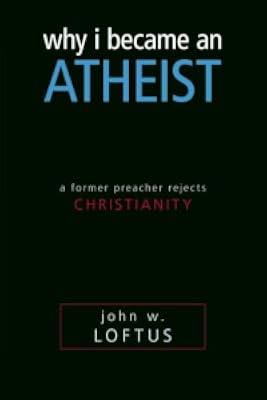
Why I Became an Atheist: A Former Preacher Rejects Christianity
by John W. Loftus
On This Page
Description
For about two decades John W. Loftus was a devout evangelical Christian, an ordained minister of the Church of Christ, and an ardent apologist for Christianity. With three degrees-in philosophy, theology, and philosophy of religion-he was adept at using rational argumentation to defend the faith. But over the years, doubts about the credibility of key Christian tenets began to creep into his thinking. By the late 1990s he experienced a full-blown crisis of faith. In this honest appraisal of show more his journey from believer to atheist, the author carefully explains the experiences and the reasoning process that led him to reject religious belief. The original edition of this book was published in 2006 and reissued in 2008. Since that time, Loftus has received a good deal of critical feedback from Christians and skeptics alike. In this revised and expanded edition, the author addresses criticisms of the original, adds new argumentation and references, and refines his presentation. For every issue he succinctly summarizes the various points of view and provides references for further reading. In conclusion, he describes the implications of life without belief in God, some liberating, some sobering. This frank critique of Christian belief from a former insider will interest freethinkers as well as anyone with doubts about the claims of religion. show lessTags
Recommendations
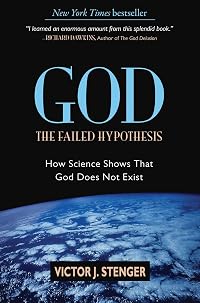
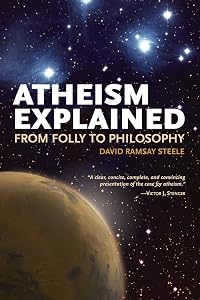
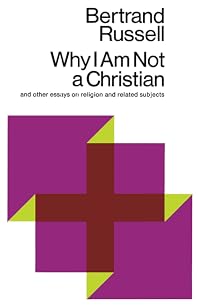

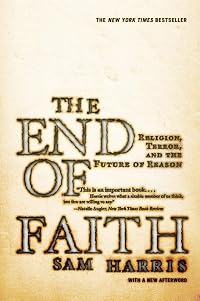



Member Recommendations
Member Reviews
This book is the book that never ends. You think you're getting close, and you look, and you swear you have 30 more pages to read than when you started. Why? I'm guessing turgid prose, comma errors, all sorts of missing words or extra words, and, well, shallow thinking coupled with talking about his shallow thinking. In short, this book would not convince anyone who was not already convinced, and he wrote it for believers, not atheists. I wanted to read it because I heard so much about the outsider test of faith and how important a tool it is. Really? Nope. It's not even a tool. It is just the author making himself important by giving a big important name to something so basic I knew it in 5th grade. The arguments are okay in places, show more but not as strong as many other works that are better written and better edited. In short, a disappointing work that I spent nearly a month of my life on, and I wish I had the month back. I cannot recommend this book for believers (though be comforted; your belief is safe here) or non-believers (many of whom will give this five stars because they favor the pompous pontificating and shallow thinking of this work because the position agrees with their own. That is not enough. The author agrees with my position, too; I am a Christian turned atheist, and I don't find this book convincing at all. I found it mostly boring, with occasional interesting bits, especially where he quotes other people. show less
An interesting book that tends toward high density, abstract arguments. Norman Geisler, author of A General Introduction to the Bible and The Baker Encyclopedia of Christian Apologetics says it "is a thoughtful and intellectually challenging work, presenting arguments that every honest theist and Christian should face." "Thoughtful and intellectually challenging" are simultaneously this book's strengths and the things that make it sometimes rather dull.
When reading this book, one should not forget that this is an explanation of why the author rejected Christianity. The book contains philosophical arguments, but they are the ones that convinced the author that Christianity is false. It is not meant to be an exhaustive catalog. The show more arguments generally focus on Christianity. Some of them may generalize to other religions, but arguing the implausibility of other religions was not the author's main goal.
In my opinion, the most interesting part of the book is the "Outsider Test For Faith". In general, what is convincing to an insider is not necessarily convincing to an outsider. Many arguments that seem flawless from the insider are laughable from the outside. This is true for any division of the world into "inside" and "outside".
The outsider test for faith asks you to "[t]est your beliefs as if you were an outsider to your faith." How would an outsider's view be different from an insider's view? First, it would take into account that there are many religions in the world, all of them faithfully believed. Does the sincere belief of those believers convince you that the religion they follow is true? If not, than the mere existence of your own faith cannot be expected to make a convincing argument. In an similar vein, an outsider viewpoint would take into account that for the vast majority of believers, the religion they follow is determined by their cultural, temporal, and geographic context.
Another feature of the outsider's viewpoint is that purely internal evidence is not convincing. For example, if one claims, without other arguments, that the Bible is true because it is authenticated by the Holy Spirit and that the feeling that you call the Holy Spirit is true and trustworthy because the Bible says it is, your claim will not pass the outsider test. Similarly, if you say that one should give their life over to Jesus because he is the son of God who died for our sins (according to the Bible), your claim also does not pass the outsider test. In both of these cases, the statement has nothing to stand on if one does not already accept the premises that would make them an insider.
The outsider test may sound like a harsh stance to take, but it is the stance you take toward every religion where you are an outsider. If you follow a certain faith, you are just applying the same standards to your own beliefs that you are applying to the beliefs of others.
Of course, no one can truly take on an outsider's perspective. Human beings are almost not capable of fully abandoning their own beliefs. Even so, the exercise can still lead to insights. And even if you are not willing to try the outsider's test for faith, acknowledging the difference between an insider's perspective and an outsider's perspective can, hopefully, help you understand why something that is so convincing to you is completely unconvincing to someone else. show less
When reading this book, one should not forget that this is an explanation of why the author rejected Christianity. The book contains philosophical arguments, but they are the ones that convinced the author that Christianity is false. It is not meant to be an exhaustive catalog. The show more arguments generally focus on Christianity. Some of them may generalize to other religions, but arguing the implausibility of other religions was not the author's main goal.
In my opinion, the most interesting part of the book is the "Outsider Test For Faith". In general, what is convincing to an insider is not necessarily convincing to an outsider. Many arguments that seem flawless from the insider are laughable from the outside. This is true for any division of the world into "inside" and "outside".
The outsider test for faith asks you to "[t]est your beliefs as if you were an outsider to your faith." How would an outsider's view be different from an insider's view? First, it would take into account that there are many religions in the world, all of them faithfully believed. Does the sincere belief of those believers convince you that the religion they follow is true? If not, than the mere existence of your own faith cannot be expected to make a convincing argument. In an similar vein, an outsider viewpoint would take into account that for the vast majority of believers, the religion they follow is determined by their cultural, temporal, and geographic context.
Another feature of the outsider's viewpoint is that purely internal evidence is not convincing. For example, if one claims, without other arguments, that the Bible is true because it is authenticated by the Holy Spirit and that the feeling that you call the Holy Spirit is true and trustworthy because the Bible says it is, your claim will not pass the outsider test. Similarly, if you say that one should give their life over to Jesus because he is the son of God who died for our sins (according to the Bible), your claim also does not pass the outsider test. In both of these cases, the statement has nothing to stand on if one does not already accept the premises that would make them an insider.
The outsider test may sound like a harsh stance to take, but it is the stance you take toward every religion where you are an outsider. If you follow a certain faith, you are just applying the same standards to your own beliefs that you are applying to the beliefs of others.
Of course, no one can truly take on an outsider's perspective. Human beings are almost not capable of fully abandoning their own beliefs. Even so, the exercise can still lead to insights. And even if you are not willing to try the outsider's test for faith, acknowledging the difference between an insider's perspective and an outsider's perspective can, hopefully, help you understand why something that is so convincing to you is completely unconvincing to someone else. show less
An anti-apologetic book, from a former preacher who rejected Christianity. The usual fare, presented well and simply written, but poorly edited. Covers the entire terrain of dispute, and seems to do so in a fair and entertaining manner. I'm on the fence about whether or not I'd recommend it to a Christian looking for a sparring partner.
3.5 stars oc
3.5 stars oc
A fascinating book thoroughly reviewing all the arguments of Christian fundamentalists and counter arguments of atheists, presented by an author who flipped from one side of the debate (as a preacher) to the other (as an atheist). There may be no such thing as an objective observer on such matters, but this book provides an edifying and much needed read on the clashing perspectives (particularly given that politics and religions are getting intertwined nowadays), and an impressive in-depth coverage of all the issues on the table.
Atrocious editing ruins what otherwise could have been a throughly interesting story.The mistakes were so distracting I could barely stand to finish the book. The biography is interesting and I would highly recommend it after it has been reprinted and hopefully edited properly.
Excellent. Very readable compiled research. The footnotes are just as interesting as the text.
Reads like the most boring theological and historical monograph I've ever had the misfortune of picking up. Hours of my life I'll never get back. Boring. Boring. Boring.
Members
- Recently Added By
Lists

Converting to Atheism (memoir/biography)
6 works; 2 members

Atheism, humanism, freethought, &c. — Best nonfiction books in favour of
167 works; 14 members
Author Information

15 Works 758 Members
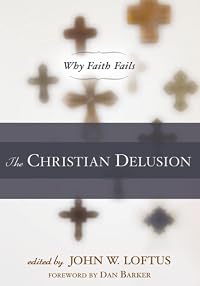
John W. Loftus earned M.A. and MDiv degrees in theology and philosophy and a ThM degree in philosophy of religious. The author of Why I Became an Atheist: A Former Preacher Rejects Christianity and The Outsider Test for Faith: How to Know Which Religion Is True, Loftus is also the editor of The Christian Delusion: Why Faith Fails; The End of show more Christianity; and Christianity Is Not Great: How Faith Fails. show less
Common Knowledge
- Original publication date
- 2008
- First words
- If there is one thing that can be said for me, it is that I am a very passionate man.
- Last words
- (Click to show. Warning: May contain spoilers.)The Christian life is ultimately in vain, because it is built on a false hope.
- Blurbers
- Geisler, Norman L.; Avalos, Hector; Shermer, Michael; Mills, David; Hallquist, Christopher; Beversluis, John (show all 24); Linville, Mark D.; Sennett, James F.; Weisberger, A.M.; Echelbarger, Charles; Harrison, Guy P.; Tabash, Edward; Barker, Dan; Price, Robert M.; Carrier, Richard; Harwood, William; Tarico, Valerie; Holman, Joe E.; Van Allen, David; Atkinson, Andrew; Knight-Griffin, Chris; Green, Matthew J.; Meeuwsen, Greg; Harrison, Paul
Classifications
- Genres
- Religion & Spirituality, Nonfiction, General Nonfiction, Philosophy, Biography & Memoir
- DDC/MDS
- 211.8 — Religion Philosophy & theory of religion Concepts of God Atheism
- LCC
- BL2775.3 .L64 — Philosophy, Psychology and Religion Religions. Mythology. Rationalism Religions. Mythology. Rationalism Rationalism
- BISAC
Statistics
- Members
- 238
- Popularity
- 137,230
- Reviews
- 7
- Rating
- (3.81)
- Languages
- English
- Media
- Paper, Audiobook, Ebook
- ISBNs
- 3
- ASINs
- 5