
David Ramsay Steele
Author of Atheism Explained: From Folly to Philosophy
About the Author
David Ramsay Steele is author of From Marx to Mises (1992), co-author (with Michael Edelstein) of Three Minute Therapy (1997), and editor of Genius: In Their Own Words (2002)
Image credit: Antipas Ministries
Series
Works by David Ramsay Steele
From Marx to Mises: Post-Capitalist Society and the Challenge of Economic Calculation (1999) 41 copies, 1 review
Tagged
Common Knowledge
- Gender
- male
Members
Reviews
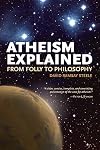
Very good, thorough and systematic walk through the inconsistencies, contradictions and nonsense of theistic belief. It's not a technical philosophical book, so the arguments are all very approachable to a non-specialist, but it's also not shallow enough to waste your time, and deals directly with a number of the star arguments of theistic proponents (like the popular Kalam argument).
There's a couple of sections in the beginning that deal with creationism that you can skip if you have heard show more it all before, or just don't want to engage with the most primitive of theistic arguments. I appreciated that it builds up toward more theologically mature arguments over time so you get a complete view of the debates at each stage.
As the author's introduction makes clear there's a notable focus here - the abrahamitic religions, as they represent virtually all of the theistic space in religion, and there's a very large opening for religious belief and claims that are not covered by this book nor the strict definition of atheist (which has nothing to do with religion at large). It also has little to say about deistic conceptions of a creator, simply because it's so vague and untestable a position there's next to no claims made by that camp to challenge.
If you take a general skeptical stance against all religious claims and all supernatural claims, this book covers only some of them as they pertain to theistic claims (life after death for example). show less
There's a couple of sections in the beginning that deal with creationism that you can skip if you have heard show more it all before, or just don't want to engage with the most primitive of theistic arguments. I appreciated that it builds up toward more theologically mature arguments over time so you get a complete view of the debates at each stage.
As the author's introduction makes clear there's a notable focus here - the abrahamitic religions, as they represent virtually all of the theistic space in religion, and there's a very large opening for religious belief and claims that are not covered by this book nor the strict definition of atheist (which has nothing to do with religion at large). It also has little to say about deistic conceptions of a creator, simply because it's so vague and untestable a position there's next to no claims made by that camp to challenge.
If you take a general skeptical stance against all religious claims and all supernatural claims, this book covers only some of them as they pertain to theistic claims (life after death for example). show less
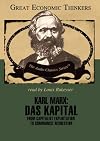
Karl Marx believed that workers were being exploited by their capitalist employers; that they were being underpaid. He thought that the "surplus value" expropriated by bosses was too high relative to the value created by workers. To prove his point he had to assess the values of commodities, not a simple thing to do. Is the value of a commodity to be determined by the labor time that went into it? By its utility? By its scarcity? In the capitalist system, values were determined by market show more demand, how much consumers were willing to pay. If communism eliminated market competition, how then to determine values? This is only one of many complex problems raised by "Das Kapital," which predicts and calls for revolution because capitalism, says Marx, is wasteful and unstable and pursues money, not human welfare. Whether Marx proved his point is endlessly debatable. His predictions have had mixed results. But his book asks the right questions.
This audiobook is a good introduction to the economics of Marx and the historical impact of his book. It concludes that the Communist ideology of the Soviet Union had little to do with him. show less
This audiobook is a good introduction to the economics of Marx and the historical impact of his book. It concludes that the Communist ideology of the Soviet Union had little to do with him. show less
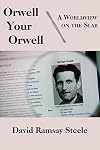
This is an important book. The author is rational, thorough, and— perhaps most importantly — not a deluded Orwell cultist. He thinks Orwell was a great writer, but not a great thinker ... or even very original.
Some friends of mine and I interviewed the author soon after the book came out:
https://youtu.be/kvENlKjZobM
Some friends of mine and I interviewed the author soon after the book came out:
https://youtu.be/kvENlKjZobM
[(Karl Marx: Das Kapital: From Capitalist Exploitation to Communist Revolution )] [Author: David Ramsay Steele] [May-2013] by David Ramsay Steele
I decided to read this after being called a Marxist/Communist by a former patron. I'm pretty sure she doesn't know the definition of either and I am not at all convinced that I would fall into these categories. I DO know that capitalism as we know it does NOT work in the best interests for all and it thrives and functions off the oppression of the poor. I'd say more about the actual book but I am an artist and not an economist and the theories therein were only somewhat comprehensible to me.
Lists
el (1)
You May Also Like


Statistics
- Works
- 6
- Members
- 172
- Popularity
- #124,307
- Rating
- 3.8
- Reviews
- 5
- ISBNs
- 14
- Favorited
- 2